


Nissan was among the last to offer a full-sized SUV with a big V8 engine as standard equipment. Most of the rest – including Ford and Toyota – have already replaced the big V8s that were standard in their big SUVs with much smaller sixes.
And now so has Nissan.
But while the engine has gotten smaller, the numbers have gotten bigger – contradicting the axiom that there is no replacement for displacement.
What It Is
The Armada is Nissan’s full-size SUV. It competes with others of its type, including the Ford Expedition, Chevy Tahoe, Toyota Sequoia and Jeep Wagoneer.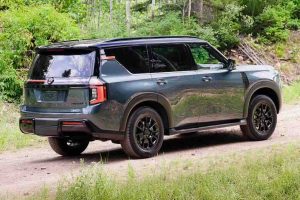
Like most of them – excepting the Tahoe (and its divisional cousins, the GMC Yukon and Cadillac Escalade) – the Armada no longer comes with the big (5.6 liter) V8 it used to come standard with. Instead, it comes with a 3.5 liter V6, which is a size (and type) of engine that just five or so years ago was typically found in much smaller family cars such as the Toyota Camry and Honda Accord (which both now come only with much smaller fours).
But the Armada’s new V6 makes much more power – 425 horsepower – than the previously standard 5.6 liter V8 did and it uses slightly less gas to make it.,
Prices start at $57,520 for the base SV trim, which includes the new V6 and also comes standard with dual 12.3 inch LCD displays, automatic LED headlights, running boards and synthetic leather seat covers. Rear-drive is standard. 4WD can be added as an option and that brings the MSRP up to $60,520.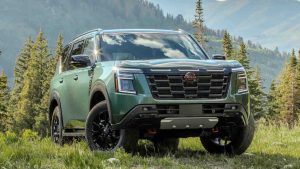
There are also SL ($62,970), Platinum ($69,930), Pro4X ($73,740) and Platinum Reserve ($76,900) trims. All of these trims except the Pro4X come standard with rear-drive; 4WD is a $3,000 stand-alone option. The Pro4X comes standard with 4WD plus all-terrain tires on 20 inch wheels, an electronically locking rear differential, skid plates, tow hooks, adaptive suspension and a different front clip that allows for increased angles of approach.
The Platinum has quilted leather seats, a panorama sunroof, dual 14.3 inch LCD displays heated second row seats and a 12 speaker Klipsch ultra-premium audio system (this system is also included with the SL, which also gets a heated steering wheel).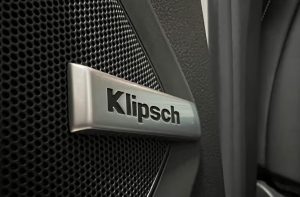
Massaging front seats and puddle lighting come standard with the Platinum Reserve.
What’s New For 2025
The Armada gets a total makeover – centering on the new twin turbo V6.
What’s Good
New V6 may be small but it makes big power; uses a little less gas, too.
Though big, it doesn’t feel huge.
Maybe the most comfortable seats of the bunch.
What’s Not So Good
Some rivals – like the Ford Expedition – have higher maximum tow ratings.
All of the SUVs in this class have become pricey. On average, they are all about $8-10k more to start than they were as recently as three or four years ago.
The old V8 sounded bigger.
Under The Hood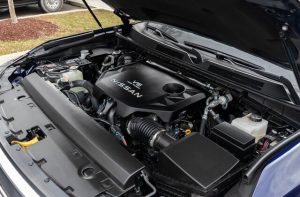
Every Armada trim comes with a twin-turbocharged 3.5 liter V6 that makes 425 horsepower and 516 ft.-lbs. of torque. This is a respectable bump in horsepower – and torque, especially (the previous 5.6 liter V8 touted 400 horsepower and 413 ft.-lbs. of torque). But the most impressive stat is that even though there’s more power on tap, the new engine uses slightly less gas: 16 city, 20 highway vs. 14 city, 19 highway for last year’s V8.
This proves that there is a replacement for displacement.
It used to be that case that a power increase meant an engine increase – and a mileage decrease. It doesn’t anymore. Nissan – and other vehicle manufacturers – have figured out that a smaller engine can be used to reduce fuel consumption (important for complying with federal fuel economy standards) and that a turbo (or two) can be used to pump up the power when it’s wanted, while delivering better overall fuel economy than a bigger V8 can.
The Armada’s V6 is also much stronger than the V8 that still comes standard in the Chevy Tahoe (5.3 liters, 355 horsepower) and bests the output of the Ford Expedition’s twin-turbo V6 (400 horsepower) too. The latter is available with a stronger (440 horsepower) version of its 3.5 liter V6, but it’s an expensive option.
The Toyota Sequoia boasts the strongest standard (and smallest) engine of the bunch: 437 horsepower and 583 ft.-lbs. out of just 3.4 liters. It is also the only one of the bunch that comes standard with (or is even available with) a hybrid-augmented drivetrain.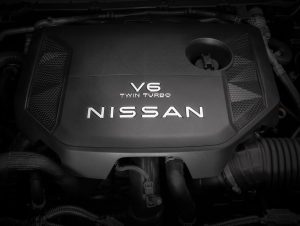
Like the others, you can stick with rear-wheel-drive (2WD) or select the optional 4WD system. It’s a full-time/automatic 4WD system with driver-selectable Low range that can be engaged by pushing a button on the lower center stack. There are also a variety of driver-selectable drive modes, including Snow, Mud/Sand, Eco, Normal and Sport. Selecting the mode you prefer alters how the engine responds to pressure on the pedal as well as shift points and firmness.
A nine speed automatic transmission is standard.
Despite the new V6 engine being significantly stronger than the previously standard V8, the Armada’s 8,500 lb. max tow rating remains the same. The Expedition and Sequoia come standard with a 9,500 lb maximum tow rating. The Tahoe – with its standard 5.3 liter V8 engine – comes with an 8,400 lb. max tow rating.
On The Road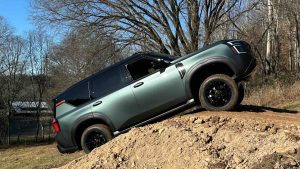
Driving a big SUV with such a small engine is interesting in that it pulls harder and feels stronger than one with a bigger engine. This big thing can accelerate to 60 in just under six seconds.
It’s like watching the YouTube videos of that average-sized/average-looking Anatoly guy who goes to meathead gyms and lifts much heavier weights than the meatheads are working out with.
The Nissan’s V6 even sounds bigger than it is – and that is something lacking in other small-engined big SUVs. Some of them try to compensate for the higher-pitched sound of their small engines by piping in the deeper bass sounds of a bigger engine (through the car’s speakers) but that’s cheesy because it’s fake. Nissan’s twin-turbo V6 sounds good on its own. Not like a V8, but not like something that sounds too small.
The turbos – plural – punch up all 516 ft.-lbs, of torque at 3,600 RPM – much more torque and much sooner than the old V8 conjured – and that is the chief reason why this big SUV feels so light on its feet. It takes less pedal pressure to get more response. It’s almost like having an even bigger engine than the previous 5.6 V8 – just without the lower gas mileage.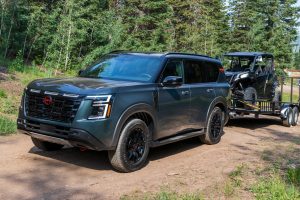
There’s another thing about the Armada that’s superlative – and also unique as well as subtle. It is Nissan’s “zero gravity” seats. As the trade name implies, they are designed to make your backside feel unoppressed by gravity. This is tricky because floating in space is not what you want while you’re driving. The trick is to keep you planted while keeping your legs and butt from going numb on long drives and your back feeling great for as long as you drive. These seats manage that trick and they make buying this rig worth it – relative to its rivals – on this score alone, because no matter how otherwise nice a vehicle is, if it makes you sore to drive it after more than an hour, you’ll want to drive it less.
If you are considering a big SUV, drive them all and compare how your backside feels afterward. The Armada is likely to be the one that makes you feel best. You’ll feel even better if you get the seats with the available massagers; unfortunately, these are only offered with the top-of-the-line (and so, most expensive) Platinum Plus trim. Nissan ought to offer them optionally with the less expensive trims as it would probably help Nissan sell more Armadas.
At The Curb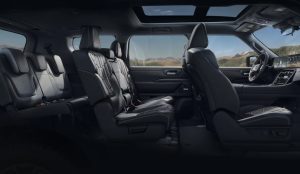
The Armada is big – but not overwhelmingly so. It is 209.6 inches long, so a little bigger than the previous-generation (2024) Armada, which was 208.9 inches long. But either way, that’s not crazy big. To put the Armada’s length in context, a current (2025) Toyota Crown sedan, which is a little bigger than mid-sized, is 196.1 inches long. The Armada’s about a foot longer but that’s really not that much bigger.
Except on the inside.
There are three rows of seats and room for as many as eight people. Good luck fitting even six people in a Crown. That’s not to slam the Crown – or other mid-sized or even full-sized sedans. They have their virtues. But one of them isn’t room for six, let alone more. Five is getting cozy.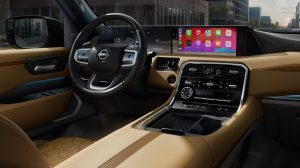
Big SUVs such as the Armada are popular because they do have room for more – plus much more room for the things that often come with people (especially kids) such as their sports gear and such. In addition to room for as many as eight, there is also 20.4 cubic feet of space for gear and whatever else you need to carry behind the third row and if you fold the third and second rows forward, there’s 97.1 cubic feet of space available to make room for big stuff you might need to cart home.
The new Armada has more cargo space behind its third row and overall than the previous generation Armada, which touted 16.5 cubic feet behind its third row and 95.4 cubic feet overall (with both rows down).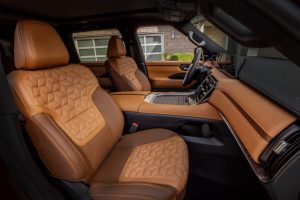
Others in the class do have more room – and space. The Chevy Tahoe, for instance, touts 25.5 cubic feet behind its third row and 122.7 cubic feet overall. But the Armada’s room and space compares favorably with the room and space inside other rivals such as the Toyota Sequoia (22.3 cubic feet behind its second and 86.9 overall).
All Armada trims come with dual flatscreen displays; the higher trims get larger (14.3 inch) ones but – regardless – you also still get some non-tap/swipe controls, including a rotary knob to adjust the volume and a rotary knob selector for the drive modes. There are also toggles for adjusting the AC, heat and fan speed. In other words, there’s an ergonomically intelligent mix of modern appearance and timeless functionality. It makes driving this big SUV much more pleasant because you can concentrate on driving – because you’re not distracted by having to tap/swipe icons on a screen to warm or cool the cabin or turn up or down the volume.
All trims have nearly 10 inches of ground clearance and the available height-adjustable suspension can increase or decrease that, as conditions warrant. The Pro4X has the goods to tackle serious off-road terrain, too – if you are ok with scratching the paint!
The Rest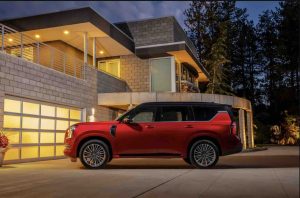
This is a nice rig with few flaws – if any – that can be pointed to as reasons not to buy it. Except for the one flaw that arguably afflicts all of the currently available full-sized SUVs. That being how haltingly – and suddenly – expensive they have all become. The Armada and its rivals are not luxury-brand SUV yet they all now list for what luxury-brand SUVs listed for just a few years ago. The luxury-brand SUV have, of course, risen even higher in price; many are six figure SUVs now or close to being.
To be fair, the Armada – even in SV standard trim – is more luxurious than the luxury-brand SUVs of just a few years ago. The problem is that luxury is exclusive – in both meanings of the word. You get more niceties than you used to. But you’ll also pay more for them – and that can exclude people who can’t afford to.
The Bottom Line
The new Armada’s a nicer SUV than it has ever been – if you’re able to buy one.
. . .
If you like what you’ve found here please consider supporting EPautos.
We depend on you to keep the wheels turning!
Our donate button is here.
If you prefer not to use PayPal, our mailing address is:
EPautos
721 Hummingbird Lane SE
Copper Hill, VA 24079
PS: Get an EPautos magnet or sticker or coaster in return for a $25 or more one-time donation or a $10 or more monthly recurring donation. (Please be sure to tell us you want a magnet or sticker or coaster – and also, provide an address, so we know where to mail the thing!)
If you’d like a Baaaaa hat or other EPautos gear, see here!









Everything has become so expensive, and features a heavily boosted turbo engine with so many features guaranteed to make the thing grenade after just a few years.
Costs more and needs replacement sooner. What a crappy time to be alive.
[…] https://www.ericpetersautos.com/2025/11/16/2025-nissan-armada/ […]
Something to mention is that the Armada is essentially the exact same truck as the global Patrol, which makes it underneath the same thing you might see traveling the Outback of Australia or on a poor road in Africa.
To get the global flagship Land Cruiser 300 series from Toyota you have to buy a Lexus LX. They stopped selling this version of the Land Cruiser in the USA a couple of year ago (at the end of production of the 200 series). The Sequoia shares some of the same platform bits but it’s a different frame and body.
The Land Cruiser they do still sell is a 250 series, which globally is known as a Land Cruiser Prado or a Lexus GX. It’s a fine truck but generally considered a step down to a lighter duty vehicle compared to the flagship.
An Armada was parked at the post office yesterday. Its hood level was even with my mid-chest. Even SUVs are slavishly following the design trends of hypertrophied pickups, to appeal to the meathead cohort.
It’s not all to appeal to knuckledraggers. A loophole in CAFE after 2011 is that a car or truck’s footprint goes into the calculation. So if the wheelbase and track width grow the target a vehicle needs to hit is adjusted down. This footprint exception is why everything has grown into a cross-over, which are defined for the purposes of CAFE as light trucks, and made compact trucks into full size and full size into essentially commercial sized trucks. They grew taller so they wouldn’t look stupid as much as anything.
I honestly can’t envision buying new again. Too expensive and too complicated.
I’m having a hard time digesting $80k for a Datsun!
I have a 99 Ram 1500 which averages around 14 mpg. The 360 magnum is a great mill, and has plenty of torque to tow my car trailer at freeway speeds. That 5mpg/.05$/mile difference means after 1.5 million miles that Armada will pay for itself.
On the other hand, the Armada is a really nice luxury SUV, I’ve driven them.
ie,
Yes, I can attest to this. The Armada is very nice. I just wish it were more affordable!
I once had an Armada. Vastly more comfortable than any other full size SUVs I drove. Surprisingly good snow driver too.
I towed a camper with it and it struggled. The realistic tow rating on this should be 5000 lbs because it just wasnt up to the task.
An odd note, the wheelbase is the exact correct size to amplify bouncing on highway concrete segments that are uneven when towing to the point you have to let off the gas to surivie.