


A century ago, many urbanites drove Baker electrics – which could easily and quickly be charged at home because the batteries were simple lead acid batteries that could easily be removed and left to charge, then reinstalled when ready. These early electric cars did not require complicated charging apparatus nor did they need the extremely high voltage modern EVs need to “fast” charge because these early electrics were designed to be sensible short-range/low speed transportation. Modern EVs – the ones Americans are allowed to buy – are weirdly designed to be ferociously quick, which is why they’re much less sensible.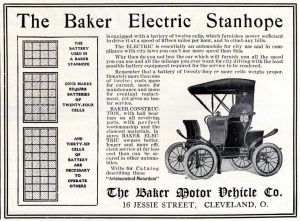
As well as expensive.
It takes a big – and heavy – battery pack to store the electricity needed to feed powerful electric motors – if you want to get to 60 in three or four seconds. Lead acid batteries are much too heavy for this, which is why other chemistry batteries are used (such as lithium-ion) but they still weigh a ton – literally, in many cases. This weight, in turn, reduces the range and increases the recharge time, as well as the cost of the EV.
This is fascinating, when you think about it. That is, when you remember that they told us EVs were existentially necessary because the “climate” is “changing” – whatever that means, exactly. If so, then 0-60 times would be way down on the list of priorities, you’d think. Practicality and affordability would be the main things, so as to encourage as many people as possible to get an EV – which many probaby would, if the things were practical and affordable.
Like the Baker was, a century ago. 
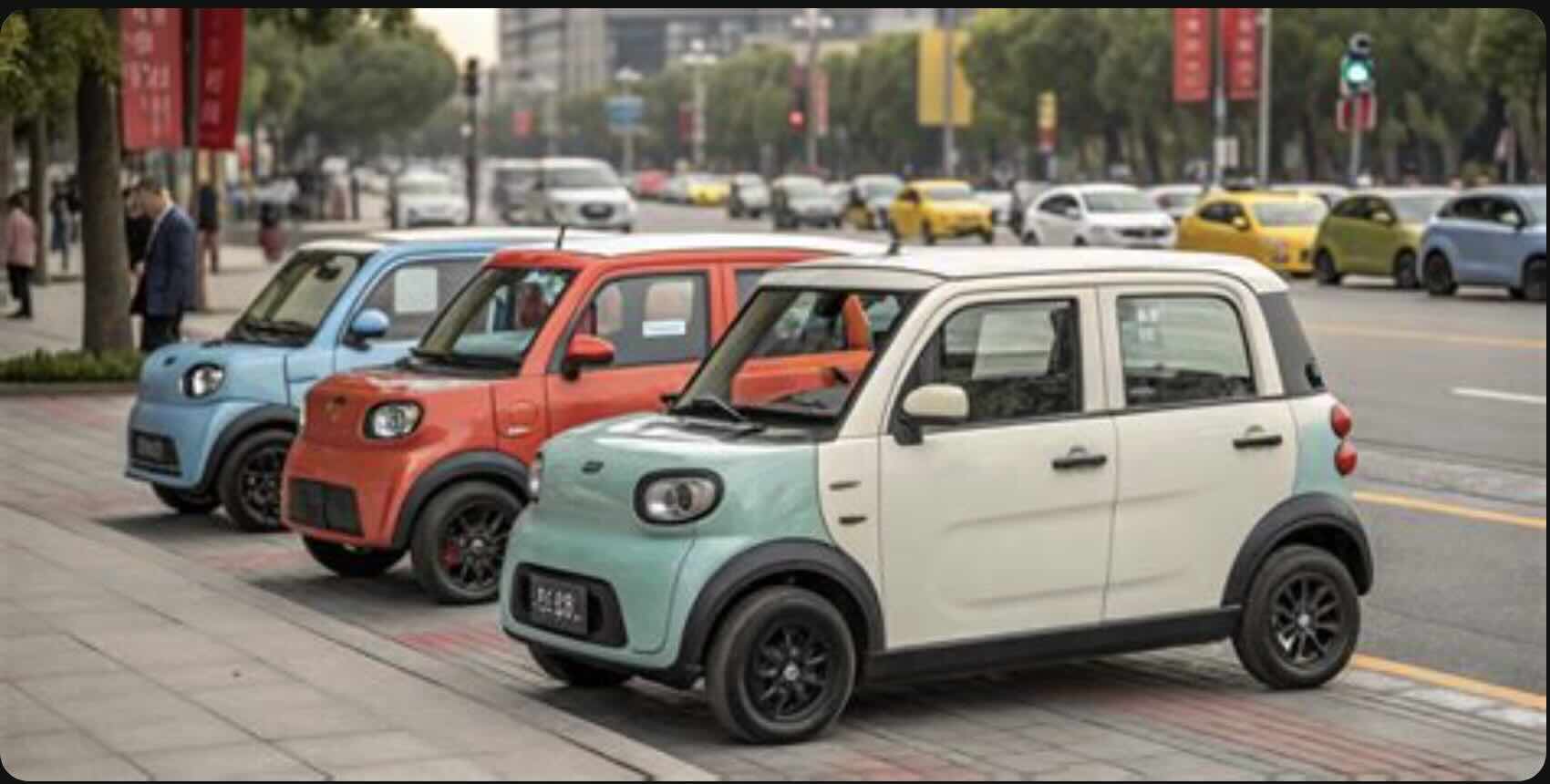
The Chinese are currently making cars that are akin to the Baker in that they are designed to be practical and affordable. They do not get to 60 in three or four seconds, but they don’t have battery packs that weigh a ton and many cost under $10k. It is a mystery for the ages as to why such affordable, practical EV are not available in the United States. After all, the “climate” is “changing” – right? (In this regard, note that the “climate” is “changing” mantra has faded from the repertoire of the organs now that we’ve just got to beat the Chinese in the AI race and need data centers in every hamlet in America.) 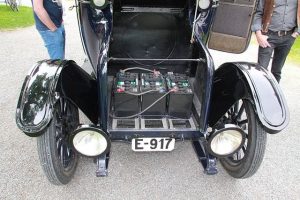
An EV designed to be practical would be more than just affordable. It would also solve the biggest problem that EVs have, which is how long it takes to get them back on the road when their batteries run low. That problem is easily solved by using batteries like the ones the Baker electric used a century ago. Batteries that can be easily taken out and put on a shelf to charge up using ordinary household 120V current, no need for “Level II” charging apparatus and a dedicated 240V circuit on at least a 30 amp breaker. While the tired batteries are charging, you could slip in the ones that are already charged – so no need to wait even 10 minutes to get back on the road again. Ten minutes being the “fastest” iteration of technically feasible “fast” charging – which can only be done via extremely high voltage DC apparatus not available at home.Or anywhere else – outside of the handful of research labs that have the capability. 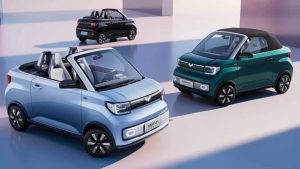
Lead acid batteries are also very inexpensive; they cost a fraction of what a lithium-ion battery pack costs.
Perhaps the most appealing thing about EVs like this would be the realistic possibility of using solar to charge them. The word is italicized to make the point that the power requirements for charging a couple of deep cycle lead acid batteries would be much lower than they are to induce charge into a typical EV’s lithium-ion battery pack and so you wouldn’t necessarily have to spend many thousands to get the panels and so on needed to charge up the batteries.
Of course, you wouldn’t get to 60 in three or four seconds. And you wouldn’t be able to go much farther than about 100 miles on a charge, probably. But it’d be enough to get to work and back (or to the store and back) for most people and isn’t that enough? Isn’t that what most of us do every day, anyway? This isn’t to suggest everyone ought to be pushed into a small, low-powered EV. But wouldn’t it be nice to have the option, if that’s all you need?
Especially if it’s true the “climate” is “changing.”
. . .
If you like what you’ve found here please consider supporting EPautos.
We depend on you to keep the wheels turning!
Our donate button is here.
If you prefer not to use PayPal, our mailing address is: EPautos 721 Hummingbird Lane SE Copper Hill, VA 24079










Weight limit 200 lbs which includes the driver, right? Always left out of the equation. Then comes freezing weather, ice, snow. A/C is a big deal once you read the mid 80s … children/pets. NHTSA smash up derby ratings.
Chat says – The Baker Electric car (1899–1915) primarily used lead-acid batteries, but some models could be equipped with Thomas Edison’s nickel-iron (nickel–iron alkaline) batteries.
————-
Yes. Jay Leno owns a restored 1909 Baker Electric, and its battery history is particularly interesting.
Current battery: Modern 6-volt lead-acid deep-cycle batteries, commonly described as golf-cart batteries.
Configuration: Twelve 6-volt batteries, providing a nominal 72 volts.
Range: Reportedly around 100 miles on a charge, depending on conditions.
The interesting detail is that Leno reportedly still has the original Edison batteries, but he uses the modern lead-acid batteries to run the car.
Edison’s nickel-iron batteries were designed to be exceptionally durable. Unlike lead-acid batteries, they use nickel and iron electrodes with an alkaline electrolyte rather than lead plates and sulfuric acid.
A nickel-iron (NiFe) battery, also known as the Edison battery, can last 25–50 years or even longer with proper maintenance. Some historical batteries have remained usable for many decades
“Facts, schmacts. You can prove anything even remotely true with facts.” – Homer Simpson.
The thing I find fascinating is the amount of cognitive dissonance that the general population walks around expressing. If the “climate” was truly “changing” and it was known that the outcome for humanity was bad (its not known), the only solution would be to stop doing everything. The solution would definitely not be for everyone to have $80k EV’s. What we have is a giant “Rube Goldberg “ machine of regulations that create more leviathan.
Ever watch the weather? Every weather person on tv refers to the average temperature as “what were supposed to be at” instead of what the “average “ actually is, the sum of the data points divided by the number of data points. Critical thinking is a lost concept for most people.