


Battery powered devices could be simpler (and cheaper) than vehicles with engines; the fact that they’re neither is precisely why they don’t “work” – and so rely on being pushed by the government. It being always necessary to push that which does not work.
About 100 years ago, there were battery powered vehicles that did work, mainly because they were not pushed by the government and because they were not devices. The distinction is important.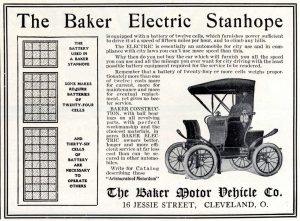
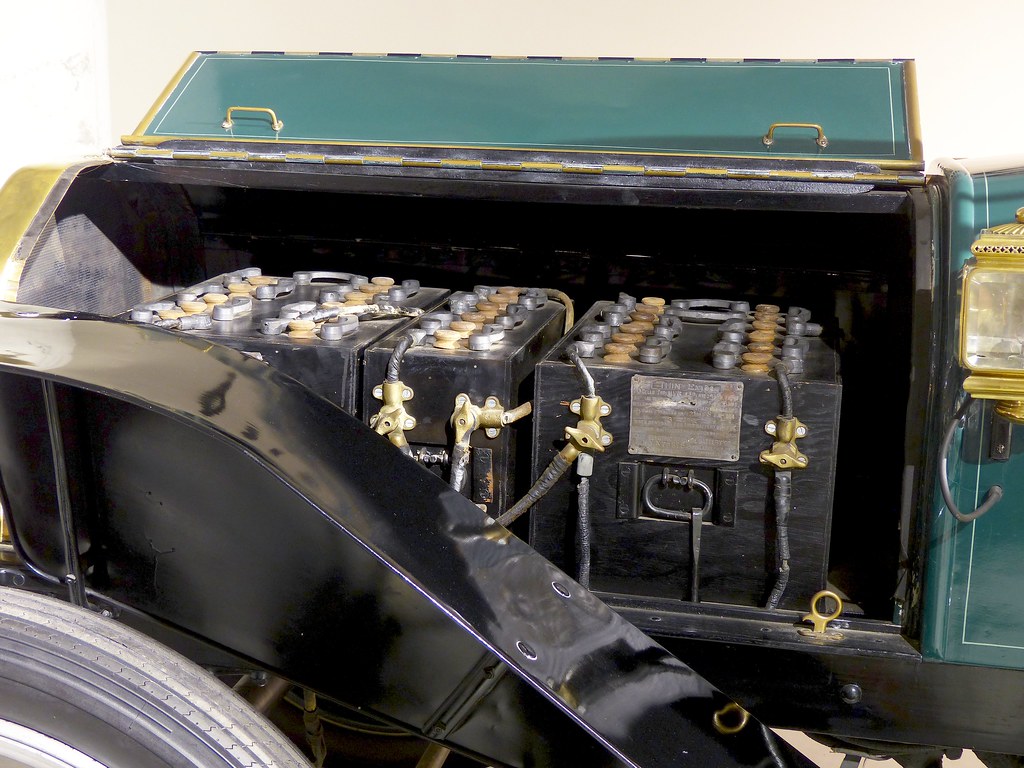
A battery powered vehicle such as the Baker Electrics of 100 years ago were devoid of electronics. They had deep cycle lead acid batteries connected in series and these were in turn connected to the simple electric motor that turned the drive wheels. There was a switch that turned the electricity on and off. But no electronics controlling anything because it wasn’t necessary.
Today’s devices are laden with complicated electronics that negate the inherent simplicity of the electric drivetrain. These include the electronics that control the thermal management system that is necessary to keep relatively fragile (vs. lead acid) lithium battery packs (which have a lattice of individual cells within the pack) from being damaged by extremes of temperature and also to allow for relatively safe high-voltage “fast” charging – without which it is necessary to plan around home charging, which takes many hours if not overnight. High-voltage “fast” charging has been pushed because it is seen as necessary by those pushing today’s devices, which they market as being as practical for everyday use – including long distance driving – as a vehicle powered by an engine.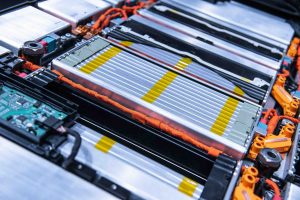
That is only hypothetically possible via “fast” charging.
The Baker was marketed as a “city” car; i.e., a car that wasn’t trying to pretend it could serve as a long distance car. It was very practical as a city car because it had enough range (about 50 miles out and 50 miles back) to make it practical for such use. It would not have been practical if – at the same time – Baker had tried to make it a car that could be driven from one city to another (assuming no overnight layover along the way) because it could be “fast” charged along the way (assuming high-voltage “fast” charging infrastructure had been available 100 years ago). Then it would have had to have had the elaborate and delicate as well as expensive electronics necessary to hand-hold the battery pack along the way – assuming lithium ion or some other fancy kind of battery had been available back then.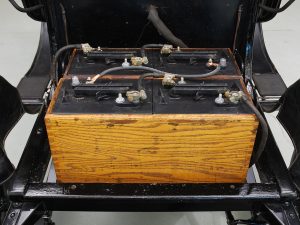
Ironically, the lead acid batteries the Baker relied upon to store electricity were in many ways far more practical than lithium ion battery packs. For one thing, they were not dangerous – no small thing.
For another, they could be changed out relatively quickly and easily by the owner. Probably faster, too, than the time it wastes to “fast” charge a lithium-ion battery pack. This typically takes at least 20-30 minutes and that’s only enough time to recover a partial (up to 80 percent) charge because any faster charging is likely to damage the battery pack, so the electronics slow down the charging rate to avoid that fate.
The Baker’s lead acid batteries could be removed easily and quickly and replaced with fully charged batteries in part because they were accessible as well as identical. The battery packs in modern devices are sandwiched in between the floorpan and the body of the vehicle; to get at the battery pack, you generally have to remove the body (or drop the floorpan; take your pick) which is not a simple or easy process that can be done in just a few minutes. Also, the battery packs in modern devices are typically specific to the make/model vehicle and so even if it were feasible (as a practical matter) to remove a dead battery pack in order to replace it with a charged-up one, you’d need to have the exact type for that particular device, both in terms of physical size and shape as well as kilowatt-hour rating and so on.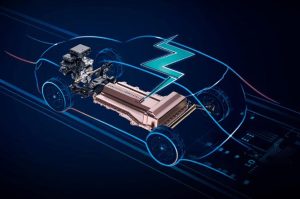
A deep cycle lead acid battery, on the other hand, is not dissimilar from the ordinary 12V batteries that vehicles with engines have had for decades that provide the electricity that turns the starter motor that starts the engine when you turn the ignition key (or push the “start” button) in that they’re generally generic. A 12v starter battery will start pretty much any make/model car with an engine, assuming it is charged up and swapping a discharged one for a charged one is generally a simple matter involving disconnecting the two terminals, removing the discharged (or dead) battery and replacing it with the charged-up one.
This was the procedure with the Baker Electric, by the way. People kept spare/fresh batteries ready to go so that the Baker would be ready to go. Just swap out the batteries, easy peasy. These batteries were also relatively inexpensive, just like the 12V starter batteries that store the electricity to start a vehicle’s engine. A modern device’s batteries are, as everyone knows by now, so as expensive as to not be worth replacing.
One of the chief reasons why they are so expensive is because modern devices are marketed as high-performance devices. It requires a great deal of energy to deliver high performance, whether it is in the form of liquid (gasoline) or electric energy but a key difference is that it takes a very big battery pack to store the energy needed to deliver high-performance as well as long-distance (sort of) driving range.
The Baker did not get to 60 in 3 seconds. It just got you there, assuming there wasn’t too far away. Fifty miles out and back is enough to be practical for a lot of people who rarely need to go farther (or very fast). A modern Baker could do that today just as easily as they did it 100 years ago – and that’d work for a lot of people.
Instead, the government pushes expensive devices that are the very antithesis of what those early Bakers were – probably because the very last thing those pushing devices want is simple, easy and affordable.
. . .
If you like what you’ve found here please consider supporting EPautos.
We depend on you to keep the wheels turning!
Our donate button is here.
If you prefer not to use PayPal, our mailing address is:
EPautos
721 Hummingbird Lane SE
Copper Hill, VA 24079
PS: Get an EPautos magnet or sticker or coaster in return for a $25 or more one-time donation or a $10 or more monthly recurring donation. (Please be sure to tell us you want a magnet or sticker or coaster – and also, provide an address, so we know where to mail the thing!)
If you’d like a Baaaaa hat or other EPautos gear, see here!










As others have said, I do believe these used NiFe batteries originally. Those batteries had their limitations but could be discharged 100% thousands of times and still maintain their capacity. And when they finally did begin to falter, you could just change out the electrolyte and have essentially a brand-new battery.
If this is the car I’m thinking it is, one of them had ran for 80 years on the original batteries and they only had to replace them because the steel cases began to leak electrolyte.
If someone would manufacture NiFe batteries to any significant extent, and using modern techniques, I think their cost could decrease enough to be used in low-maintenance, off-grid systems, and last a lifetime. They were still far too expensive last time I checked ’em out, unlike LiFePO4 batteries, whose price has come down precipitously over the years.
To note: I keep my LiFePO4 batteries (off-grid power) between 32*F and 110*F. Doesn’t take that much work keeping them in that range. On cold winter days, they are kept warm with reptile pad heaters inside their modestly insulated box.
Also of note: I found some LiFePO4 cells I’d kept in storage for nearly a decade. They all are still FULLY charged. ~3.3V! I’m curious if they still have their full capacity, but haven’t checked yet.
A Baker in 1900 cost $850, which would be around $30,000 now. That was $25 more than a Model T in 1908.
The car used Edison’s nickel-iron batteries. By the way, a Baker’s batteries weighed nearly the same as a Tesla’s, around 1,200 lbs.
They are abuse tolerant but lose their charge quick, have low energy density and perform poorly in cold temperatures. The can’t be discharged at high rates, which works against their power to weight.
They need to be limited to about max of around 25% of capacity, lead acid and lithium have no issue discharging at multiples of their capacity. You also have to be careful during charge. Where they fall short practically is if you don’t limit their discharge and aren’t careful during charging they can be pushed into thermal run-away. All batteries have some susceptibility i this regard, even lead-acid can develop internal shorts that lead to run away. Not many are as dangerous as lithium, that is true. But any time you’re dealing with batteries the risk of heat, explosion or chemical burns must be respected. The typical failure mode for lead-acid is heat that melts the case and leaks acid.
They are a fine choice for a hybrid battery (they were at one time common on diesel-electric locomotives for example) or intermittent use, slow moving vehicles like a forklift. As an electric vehicle battery they proved to be a poor choice.
They were an early attempt to improve upon the lead-acid. It’s the same pattern repeated. They actually remained in production until not long ago since they had a good niche as UPS batteries where their charge cycle could be well controlled (this is their main weakness, a complex charge requirement) and their size and weight were not critical negatives.
And comparing a Baker to a current Telsa is like comparing a Model T to a current RAV4. The similarity is that they are both wheeled vehicles but the complexity is polar opposites. A Baker lacked sophistication because thing just weren’t complex then. Indeed a diesel-electric locomotive that had nickel-iron traction batteries would have a battery maintenance system that is every bit as complex as a Tesla.
All that technical stuff (like battery controllers) you don’t understand is why they could only get 25 miles from a Baker while the same weight of battery now would get 200. And the energy density of lithium is a different class altogether from lead-acid, nickel-iron, etc.
City driving and set route/miles commute to work. My commute round trip on 50 MPH roads was 72 miles. 5 days a week, with stops on the way home for hardware, groceries , etc.
A decent no frills electric rig would have been great for this. $60k or more for a modern version no thanks.
The modern iteration of this was the GEM car. They were started down the road from me in Fargo, ND. Then they were bought out by Chrysler in the Daimler era, then by Polaris. Im not sure but I think the big corps have run them out of business.
The GEM is simple, light, quiet,enclosed and street legal. I bought one at auction last year, replaced all 6 dead deep cycle batteries, with Chinese LiFePo batteries.
It turns out to be the family favorite for running around town. Quick, low maintenance, quiet, and just fun.
Yes, this is what an electric car should be.
Good for you, Ernie. I know electric cars can be done properly and at low cost, but their simplicity and modesty should be maintained. I’d like to keep one to go back and forth to town. It would always remain charged by solar power as I seldom travel far.
One of these days.
(quote about the Pandemic from UK rapper Zuby Oxford educated):
“Most people care more about looking like they are doing the right thing,
rather than actually doing the right thing.”
Liberals, every man Jack and harpie/trans Jane of them, believe they are saving the planet via buying an EV device. Only when Elon sided with Trump for a while did looking like doing the right thing with a Tesla changed via their hatred.
The technology of the 19th and early 20th century was very simple and practical. Remember this was not long after the Industrial Revolution, in which machines were used to do “work” for the first time in human history. The principle of using a machine to do work was taken very literally, whether steam, electric, or internal combustion. All of these machines were tried and tested in the truly free market of the era.
ICE vehicles proved to be more practical and durable for the masses and more easily mass produced. That is why they became dominant — true market forces, not government intervention. By the late 1920s Ford sold his Model T so cheap that the average American couldn’t afford to NOT have one. And they worked — well. Ford grew up on a farm and hated farming. He saw his Model T as something that would appeal to rural people, which it did. It was capable of driving on unimproved rural roads and through snow. It was designed not only for transportation, but could double as a stationary engine and as a farm tractor. It was a flex-fuel vehicle that could run on kerosene, gasoline or moonshine.
City people of the era had electric cars, all right — electric public streetcars. These were much more practical for the urban dweller than personal cars. For the farmer, a Ford was a godsend.
I think Leno presented these Baker cars as having a different kind of battery as well..I believe it was a nickel iron battery, and they are known to last super long. One had the original batteries for 50 years, still taking a charge. These are expense though and charge slow, and have low overall power output
Allis Chalmers dabbled with an electric tractor in the 1950s. Well, a hydrogen cell anyhow. See:
https://theweekendhistorian.com/2015/02/28/allis-chalmers-fuel-cell-tractor/