
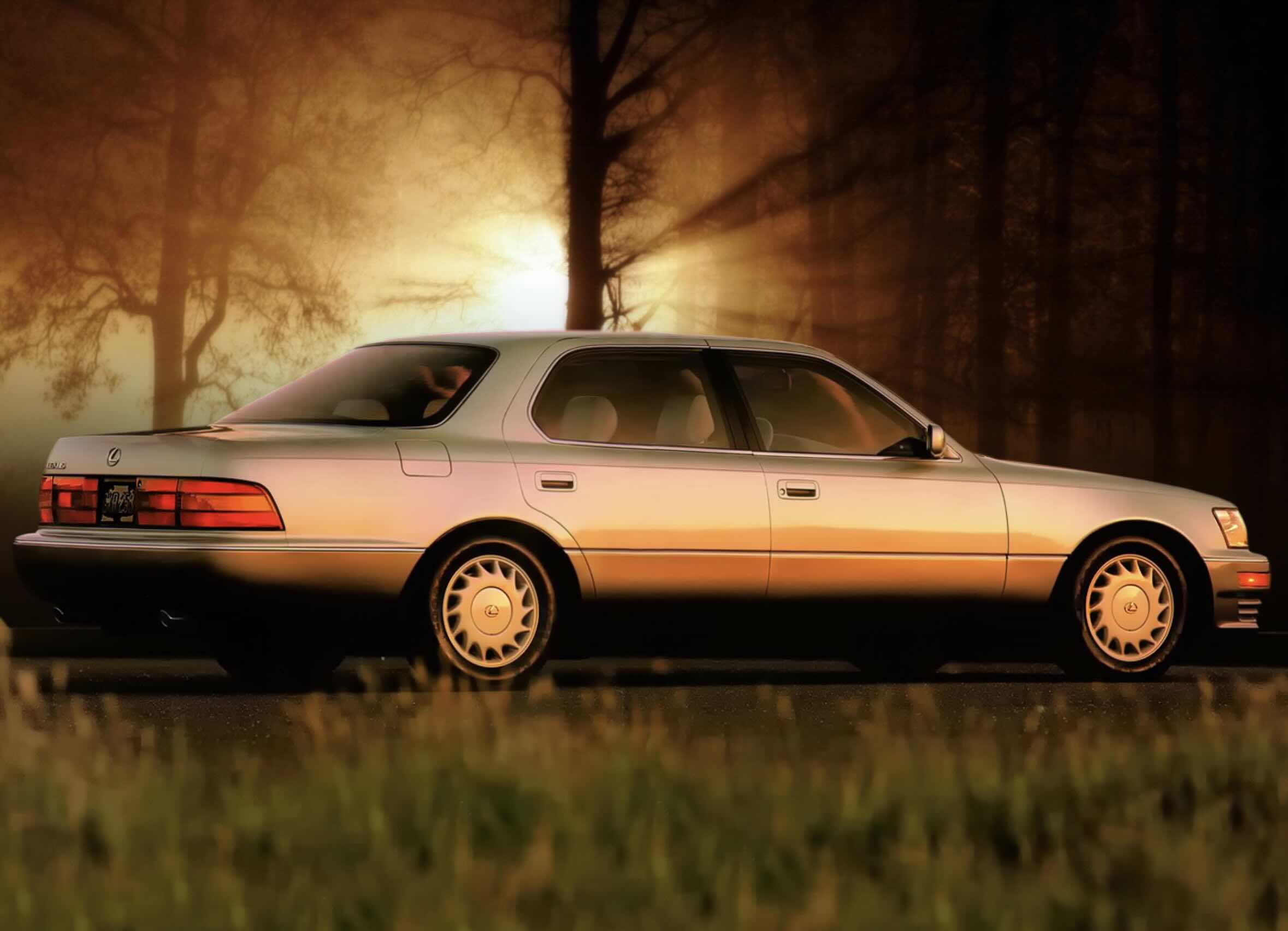

Another car has been cancelled – and it’s not just any car, either. It is the Lexus LX. The 2026 model will be the last call.
Why is this significant?
Well, to understand why, it’s necessary to go back in time 36 years – to 1990. That was the year for the first LS sedan (the LS400) made its debut, along with Lexus – which Toyota launched as the company’s luxury brand. Almost everyone laughed. A Lexus? What is that? They soon found – in the form of the first LS sedan.
It was built like an anvil and a bargain compared with the Mercedes and BMW luxury sedans it was built to compete with. It did more than just compete with them. It tore savagely into their market share as buyers began to realize that not only was a Lexus a better car than its Mercedes and BMW analogs, it was a better value. One could buy a new LS for thousands less than the equivalent Mercedes or BMW and own a car that held its value tenaciously, lasted longer and gave its owner less trouble. In addition to that, Lexus dealers quickly established a reputation for treating customers better, too. Loaner cars were a given as a matter of course on the rare occasion a Lexus needed service. Customers were never taken for granted but fawned over.
People forget all that because it’s almost 40 years later and Lexus feels like it’s always been around. But it wasn’t, once.
I remember – because I was just beginning my career as a car journalist at right around the same time Toyota launched Lexus – and the LS sedan and the RX300, which was the first luxury crossover and the archetype of all the ones that came after. I got to test drive these early Lexus vehicles and – like pretty much everyone else in the business – was amazed by them. They were not like the first Hyundais, which were cheap and obviously so. Their virtue was their low price – and that was about all. Today’s Hyundais (and Kias) are much better but it took awhile for them to get there. The very first Lexus models were excellent from the start. That is quite something, especially for a brand-new luxury brand.
Of course, it’s true that they were Toyotas – and those were already very good by then. Lexus just kicked it up another notch.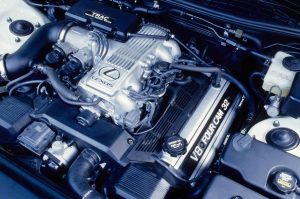
For the next several decades, Lexus kicked some ass – to put it bluntly – and much of that ass-kicking was done by the LS sedan.
So why is it being retired after all that ass-kicking? Well, because it’s no longer selling very well.
There are several main reasons why.
The first probably has something to do with the current LS being something less than the LS used to be. Literally. In 2018, Lexus replaced the silky smooth and anvil-reliable V8 that had been standard in every LS since the beginning with a much smaller, twin-turbo V6. This engine made more power but the previously standard 386 horsepower V8 wasn’t lacking that. To really make the point, the original 1990 model LS400’s 4.0 liter V8 (the early version of the V8 that Lexus continued to improve over the ensuing years) only made 250 horsepower – yet the early LS sedan had no problem attracting lots of buyers.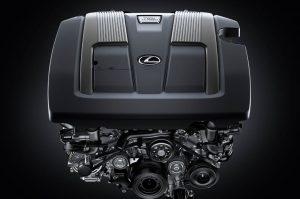
The current LS does. Perhaps because it is lacking something.
It’s important to notice here that rival Mercedes and BMW models – the S-Class and 7-Series, respectively – also used to put V8s in their top-of-the-line sedans. But that was then. They are all something less now – including the current (and final) LS, which Lexus oddly denoted as the LS500 for a few years after it replaced the LS460. Odd because the car’s name used to signify what it was; e.g., an LS with a 4.6 liter V8 engine. But the LS500 came with a 3.5 liter V6.
So why not christen it the “LS350”?
For the same reason Mercedes calls the current S-Class sedan the S500 – which implies a 5 liter V8 (which is what you’d used to get if Mercedes used that nomenclature). Instead, what you get is 3.0 liter six. It is not a bad engine. Not at all. Just as Toyota’s 3.5 liter V6 is not a bad engine (in fact, it is a great engine). The problem is the 3.5 liter V6 is a Camry-sized engine. Well, it was. Toyota pulled that one in 2023 and replaced it with a turbo-hybrid-augmented four.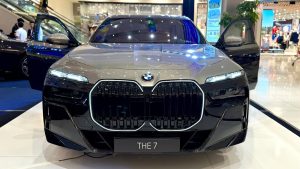
BMW did the same with the 7-Series, which used to come standard with a V8, too. The current (2025) “740i” comes standard with a 3.0 liter six. The same size engine that is available in BMWs that cost a third as much as a new 740i (base price $97,300). It is interesting to note that all of these manufacturers hide these downsized engines under black plastic covers. One hides what one does not wish to show. The original LS was proud of its beautiful V8 – which you could see when you raised the hood. 
Also, elegance has been supplanted by obstreperousness – inside and out. Braying, aggressive faces made of lots of cheap plastic, with more staring you in the face inside. The LCD touchscreen displays that were once so exclusive – a mere ten years or so ago – are now as common as the smartphones owned by almost literally everyone. They have all the exclusivity and class of a McDonald’s drive-thru.
The LS and its analogs have been diminished in substance – but increased in price. The original 1990 Lexus LS400 had a base price of $35,000 – believe it or not. Granted, that was back in 1990. Adjusted for inflation – according to the Bureau of Labor Statistics – that works out to about $80,000-something dollars in today’s much-less-valuable dollars. Just about the same as a 2025 LS (they dropped the “500”) lists for. But you get less than what you used to pay for. 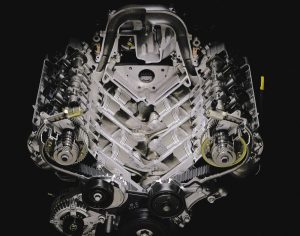
Without the substance of a V8 – an engine type that used to set apart high-end sedans – you have expense rather than exclusivity. It is reasonable to attribute the waning willingness of people with six figures to spend to spend it on six figure cars that have engines the same size as those that come in $30,000 cars.
Maybe the thought was that a 3.5 liter V6 would seem prestigious when cars that used to come with engines that size now feature 2.0 liter fours – if they feature that much.
The thought was wrong. It’s not just the LS that’s faltering. Mercedes isn’t selling more than a relative handful of its S-Class sedan, either (about 8,810 last year). Ditto BMW as regards the big Seven with the small engine. Audi also – as regards the A8.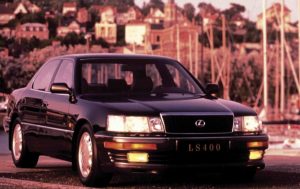
Power is not a substitute for exclusivity – and V8s were that. A six can never replace a V8, no matter how powerful they make the six. Size does matter.
It would be interesting to see whether interest in cars like the LS would revive if they were to be offered with standard V8s again. It’s a good bet they would. For the same reason basically, that people are willing to pay top dollar for a hefty ribeye steak. A hamburger, no matter how good it is, can never be a steak.
It’s a shame the people running the car companies don’t understand that it’s hard selling people who like steaks a hamburger. Especially when you try to trick them into believing the patty you just served up is really better than a steak.
. . .
If you like what you’ve found here please consider supporting EPautos.
We depend on you to keep the wheels turning!
Our donate button is here.
If you prefer not to use PayPal, our mailing address is:
EPautos
721 Hummingbird Lane SE
Copper Hill, VA 24079
PS: Get an EPautos magnet or sticker or coaster in return for a $25 or more one-time donation or a $10 or more monthly recurring donation. (Please be sure to tell us you want a magnet or sticker or coaster – and also, provide an address, so we know where to mail the thing!)
If you’d like a Baaaaa hat or other EPautos gear, see here!










The Lexus LS is the ultimate “Pimp My Ride” vehicle.
Yo dawg, we heard you like the Lexus LS. So we LS’ed your LS, so you can rev your LS while you drive your LS!
I was in high school when Lexus came out. I remember thinking a Benz was about flashing wealth, impressing the ladies. You’re not going to do that with a glorified Toyota.
“it’s hard selling people who like steaks a hamburger”
The end goal is to remove steaks from the collective consciousness. Steaks never existed, only hamburgers. Then, people will line up to pay steak prices for hamburgers not made of bugs.
Historic for Lexus ending the LS, like it was for Ford when they finally stopped making Model T’s. It still defines the brand even nearly a hundred years later. Will Lexus even exist in a hundred years?
At least for Ford, it was because the Model T had been replaced by things more modern. The LS is being replaced mainly by declining sales of everything……
I looked up Toyota.jp – there is a dazzling variety of cars Toyota sells in the domestic market.
Is it the certification expense that prevents them from coming to the US market?
BTW, this is what pops up about Toyota Hilux: (google translated)
“Notice of production suspension
Hilux has suspended production for the time being,
so we have stopped accepting orders.
While we are waiting for our customers, we are sorry,
but we will inform you as soon as we have the prospect of resuming production.”
Any idea what’s behind it?
Toyota is supposed to debut the 2026 Hilux any day now, perhaps at the Thailand Motor Show, which is at the end of November. So production of the previous generation Hilux was stopped sometime this spring or summer to allow the factories to retool. What’s the date of the article you read?
It is on Toyota.jp, their domestic website
A hamburger goes for around $32 with an $8 plastic cup of beer on the Vegas strip. Thats $40 for what was once a perk for sitting at a damn machine for half an hour.
Wont be seeing V8s for the masses again this time around.
“it’s hard selling people who like steaks a hamburger”
It’s even harder to sell hamburger that is priced like a steak to people who have realized they can’t afford either.
Even if the cost is spread over a loan that exceeds the life of the warranty, the cost of insurance, maintenance, and debt service is not affordable for a much greater number of buyers when compared to the original target market of the Lexus brand.
Government meddling in products, the insurance mafia, and the banking cartel have destroyed the middle class target market.
In ’92 the owner of the company I worked for at the time bought a beautiful gleaming gold LS400, a stunningly beautiful sedan. I saw right away it was a direct hit on Mercedes et al.
That same year I rented one for a weekend trip to the Bay Area from the Cental Coast. What an incredibly fine automobile it was! On the deserted “Bradley stretch” (old 101), it purred along on cruise control at 130 mph, rock-steady and quiet as a morgue. I knew then and there a major milestone had been reached by Toyota.
Another sad day in the slow-motion train wreck playing out before us.
Hard to imagine what Lexus meant when it hit the market. People loved their Toyotas because the maintenance schedule was “check for wear and change the oil” for thousands of miles. Thing is, there was no wear. Compare that to a BMW or Jaguar. Owners were tethered to the dealer and always had some maintenance milestone on the odometer. The luxury of not having to take it to the dealer all the time turned out to be a major selling point.
Obstreperousness –had to look that one up.
The premise of so many of these articles is that customers worship at the altar of the V8. This just isn’t the case.
The reality is that most car buyers simply don’t make their purchase decision based on engine architecture. A small subset of enthusiasts do, but the reality is enthusiasts are a TINY minority of car buyers.
As is often stated in these articles, the V6’s replacing outgoing V8s often make MORE power than the V8. So much for the idea that you had to buy the V8 to get more power.
It used to be that a V8 was a smoother running engine. Again this is no longer true. V6’s with balance shafts, modern engine management, and engineered NHV solutions make it impossible for the average customer to discern the difference in engine smoothness idle shake.
The reality is that customer purchase habits have changed. Sedans have fallen out of favor with consumers and for the most part, it had nothing to do with whether or not a particular sedan had a V8. Lexus knows this.
The V8 isn’t going to save the luxury sedan market any more than V12’s or W12s did when those were tried.
Hi BID,
I disagree with you on this. V8s aren’t just about the type or the size – though those matter. I can tell you as a guy who test drives these things that a near-$60,000 BMW or Lexus with a four sounds disappointing. Tinny, wheezy. Even if it has power. You feel gypped.
The same for a six-figure S-Class with a six. A V8 has gravitas; you can hear it and feel it. A six is a fine engine for a $30k family sedan. A four is a fine engine for a $15k economy car.
A $100k car with a six is just sad.
The manufacturers know this, by the way. How else to explain “sound augmentation technology”? That is to say, making a six sound like it’s more than that?
Why?
Let’s face it you love V8’s, that’s fine.
I love V12’s and to a lesser degree W12’s. I love all boxer engines; 4, 6, 8, or 12’s.
So what?
The reality is that sedans are a dying market. The industry knows this and a V8 isn’t going to save it.
You wrote: “It would be interesting to see whether interest in cars like the LS would revive if they were to be offered with standard V8s again. It’s a good bet they would.”
With a price tag to develop a new engine of around $1B and almost the same to develop a new platform, would you really gamble $1.5 – $2B to develop a new v8 luxury sedan?
Hi BID,
No need to “develop” anything new. The Lexus V8 is thoroughly modern. It is merely not sufficiently compliant. The only reason Lexus (Toyota) replaced this magnificent engine in models such as the LS and the Sequoia I am driving this week is because of compliance pressure. The same goes for Toyota’s brilliant 3.5 V6 in models such as the 4Runner and Tacoma.
It’s inarguable.
Yes, these smaller engines make more power. That is beside the point – which is that they are only where V8s and V6s used to be because of the regulatory regime.
At some point we have to stop playing this game about compliance.
It’s fine for us to bitch about it. We can sit here and pine for the good ole’ days if yore but that has zero effect on reality around us. I desperately miss the industry of the 90s. It was a dynamic, fun industry at the time. It is no longer which is why I left.
The reality is that if you are Toyota, you will have to develop a new V8. Not only to be compliant but you also have to develop a new V8 to top the power output of the new V6’s. No one is going to buy a luxury sedan with an obsolete V8 that weighs more and makes less power than the new V6 variant.
Why do you call it a “game”?
It is very real. Compliance comes before the customer (and his freely expressed wants). The 2017 iteration of the Lexus V8 in the LS460 made nearly 400 horsepower. If more power were deemed necessary to sway buyers, how difficult would it be to pull another 50 out of that V8? Without a turbo?
I call it a game because you refuse to accept the reality that the industry operates within.
I agree with you fully that the industry should have stood up and pushed back. Both for its own survival as well as for the customer.
There are many paths that could have been taken. They weren’t. Here we are.
Acting like Toyota can simply ignore the compliance regulations not only here but worldwide is disingenuous.
We have seen what happened to VW.
No CEO is going to stand up and say let’s just use that old V8, bump the HP, and tell the governments of the world to go pound sand regardless of what you or I might think or how much you love your V8’s.
That’s because all car CEOS are ball less wonders to boot. Automakers spend scads of money on advertising.
Even at this late stage, they could have taken a page from Mobil Oil’s 1970’s “advertorials” that influenced the general public and the government to back off their insistence on price and allocation controls on the oil and gasoline industry. The advertorials began some time around 1976 and continued through around 1980. Mobil’s marketing and promotion played a minor, but significant role in changing the course of the arguments, influencing people to accept oil deregulation, which also led to the election of Ronald Reagan.
The automakers, by contrast, showed the public how to take it in the proverbial ass.
Like him or not, Trump (and I hate him), Trump dropped immigration into this country to near zero. He said, all we needed was a new president. Although I hate his guts, he is right. All the automakers need is new leadersihp.
Gentlemen, I am currently shopping for a car because my 2008 Saab 93 is no longer repairable. I cannot find a suitable replacement because new cars look like spaceships and have so much tech they are undriveable. Solve those problems and then I’ll worry about engine size.
When my 2005 Dodge Stratus crapped out on my, I bought a cheap 79 Firebird. Been driving it every day for 3 years now.
Yr sposed to just bend over and accept unseen incoming is what Im hearin too. Good luck.
They make more “power”, but not more TORQUE. Torque is what gets the ride moving, or, in a truck what giving it the ability to pull a load. The ponies come at literal expense, but also an overstuffed engine compartment, great complication, and reduced reliability and engine life. All to get a 0.5 mpg increase in fuel economy in the EPA mixed-cycle. No thanks.
I’m not so sure about that. Maybe the lessors and real estate types don’t care, but I think there are still plenty of people who want a V8. I recently met up with an old friend who sells for the local Mercedes dealer. He had a client looking for a good used Suburban/Yukon. My friend mentioned in passing that he was having a lot of trouble tracking one down. I just said people are holding on to their V8s, and the lightbulb went off when he realized that was the reason (and probably why his client wanted one too).
Anecdotal stories are great and we all love them.
The industry is based around demographics, sales data, and development costs. Billions of dollars are spent but they are not spent based on anecdotes.
Hi BID,
Well, “sound augmentation technology” isn’t anecdotal.https://www.youtube.com/watch?v=V4wM7A2SLS0
Why does Toyota (and Lexus) feel the need to make its turbo sixes sound as if they were V8s?
How come the EV Charger has a system to replicate V8 noises? Why aren’t people buying EV Chargers, if the V8 doesn’t matter?
Now you’re being silly. Both you and I hate EV because they lack soul.
Likewise we both know that putting sound augmentation on a EV isn’t the same as discussing differences in ICE powertrains. The Fratzonic BS or whatever they call it was a colossal mistake. EV buyers don’t want fake V8 engine noises and real V8 buyers don’t want an EV. It was a desperate, panicked, feral reaction to a problem Stellantis created for itself. I’m still laughing 😆 about that!!!
It’s an apples to oranges analogy.
As a generalization, sound augmentation hasn’t done well on ICE engines either. No one likes fake. When sound augmentation has focused on in cabin. noise reduction, it has been very well received. Especially in the luxury sedan market that we’ve been discussing.
I am being “silly” for asking why Toyota (and it’s not just Toyota) has resorted to “augmenting” the sound of smaller, compliance engines to make them sound like bigger engines?
How so?
Were you against sound augmentation when it was applied to the BMW M3/M4 around 2015?
Was BMW trying to convince customers that they had a different engine?
Why assume that they are trying to mimic a bigger engine like a V8?
Or could it be that customers want a quiet vehicle for cruising, and commuting but want a little more exciting sound when they “get on it” and are having some fun?
Reality is that there are pass by noise regulations that restrict exhaust and muffler timing. Sound augmentation is one way to give customers what they want (ie more aggressive sound note). It doesn’t automatically imply that the OEM is trying to imitate a larger or different engine architecture.
Again, I think we would both agree the federal government ought not be regulating pass by noise.
Eric isn’t talking about easing flow restrictions in the exhaust at WOT. He’s talking about fake exhaust sounds through the speakers.
If BMW was doing that back in 2015, they are even lamer than even I could imagine.
BMW Active Sound Design (ASD) that utilizes the audio system to enhance sound.
Other OEMs have different names but the principle is similar – change the in cabin sound experience when the customer accelerates heavily.
“[T]he in cabin sound experience. . .?”
Good grief with the marketing speak. This is the big boy equivalent of clothes pinning a playing card in one’s bicycle spokes for that simulated “on-board, motorbike experience.”
Hard pass for me.
Fun fact….Lexus (inexplicably) has a sound augmentation system in the ’25 IS500.
The money wasted on making a V8 sound MORE like a V8 would have been better spent on a more finely tuned exhaust – like the LC500 has.
“Trust the industry experts,” said Edsel, Nash, AMC, Mercury, Pontiac, Oldsmobile, Chrysler, Jaguar, etc.
The industry is based on saddling dupes with baker usery chump. Bottom line.
Check
The F150 in 2024 still had a range of engines.
As best as I can figure the sales are estimated to be:
2.7L EcoBoost is 32%
3.5L EcoBoost is 27%
3.5L PowerBoost is 15%
5.0L V8 is 25%
These would not strictly be a poll since the Ecoboost is a standard engine and changing to a V8 is an option. Also trim levels dictate what engine would be standard and optional. But a V8 is your top priority Ford was still making it possible but only 25% of the buyers did. You have to think truck buyers are more likely to understand reliability and they still seemed to be fine with turbos.
Hmph, “You have to think truck buyers are more likely to understand reliability and they still seemed to be fine with turbos.”
All, crap. Don’t want it. Electronic digital sheet IS NOT RELIABLE. Plain and simple.
You and most people here are not representative. The car market is cratering broadly and the manufacturers have to build what is actually selling, which isn’t V8 and sedans. For all the complaining what moves off the lot is what they’re going to build. If we weren’t such tightwads about keeping them until the wheels fell off the past decades and actually bought new plain pickups with V8s and sticks they’d still be making them. But instead it was numb nuts turning over King Ranch trims in EoBoosts every 3 years who put their Fed Bucks down and the market shifted to accommodate them.
Hi Kenny,
Yes, the V8 is available – for close to $40k to start in the least expensive XL trim. No wonder its buy rate is just 25 percent!
It became a question of what buyers could AFFORD, especially when interest rates shot up about three years ago and have remained since. I had my 2020 Fusion refinanced in mid-2022, rather than spring for a late model or new Escape (I WAS “tempted”, but I had my “get thee hence” moment when I realized that I’d have essentially lease my (con)Fusion for almost $500/month for 2-1/2 years. Not a good deal!), and I’ll never get 3.375% fixed interest again, even if I put a third down on a new ride. BTW, I probably WON’T spring for any other ride, save another “steal” comes along like the ’06 Corolla I just picked up as a “beater”, but it has onl 57K miles and is flawless…got it off an 85 y.o. woman (grandmother of my son’s neighbor) who’s “retired from driving”. It’s FIXABLE, not that I expect to do much fixing in the near term!
Just TRY to find a new truck, V8 or “puny” V6 or four-banger, for about $40K in DFW or Sacramento! Hell, finding ANY full-sized new or late model pickup for under $50K is like the proverbial “hen’s teeth”. The “stealerships” are pushing those $80K to over $100k “dream” rigs, but most of them are going BEGGING. GOOD. The dealers abused their core market of pickup buyers, and many of them are FAILING, and to that, I say, Fook ’em!
I have to agree with BID on this. Sedans are no longer a “go to” automobile. Why continue to manufacture something that the public doesn’t want? If sedans came out with V8s or V12s tomorrow would sales pick up? Highly doubtful. The costs, the nanny technology, the constant software updates, and the inability to be able to work on the vehicle without getting a dealership involved are all considerations that have made all cars no longer worth purchasing. The discontinuation of Lexus’s LS not only has to fight the above, but has to do it with the American public preference toward small SUVs/crossovers. Why would I buy a Lexus LS when I get a Toyota RAV4 for significantly less?
RG –
It’s all about marketing and promotion, an art that has been completely lost on the car inustry. If a company wants to sell sedans, he probably should show how they might fit into a garage that has nothing but SUV’s.
Sedans are cheaper to insure, handle better and get better fuel efficiency. Well, mostly. Government regulations have killed sedans, not buyers.
Cars are expensive and a SUVs/Crossovers have filled a niche as an all-in-one type of vehicle.
Hi swamp,
Not every sedan on the market has suffered, but certain brands of sedans. The Lexus LS’s top sales year was in 2007 with about 35K units sold. Since then it has cratered annually. In 2024, the LS sold around 2K units. I don’t blame Lexus for getting rid of it. It is not a middle class car (at a price of $80K) nor is the wealthy continuing to purchase it.
I don’t dispute that government interference affects a lot of vehicles today, but sedans have been replaced with crossovers over the last 35 years.
Hell, growing up, I remember my parents moving from the station wagon to the GMC Jimmy SUVs in the early 1990s. My entire history of car buying (that I have purchased myself) consists of crossover/SUVs. Ask any Mom out there with a few kids, a couple dogs, and a back full of groceries. Even my grandmothers were driving them because they could get in and out of them with ease since they sat a bit higher.
Hi RG and swamp,
I miss station wagons, they were the perfect compromise between sedans and SUV’s. Handled well since they were built on the sedan frame and got decent mileage so was good as a daily driver while also having enough room for the occasional trip to the lumber yard. I guess crossovers are the closest equivalent today.
Yes, I liked the station wagons, too. Even the small ones. like the Chevy Cavalier and Ford Pinto versions, were extremely useful and could haul quite a bit. The bigger ones were even better. They could carry 8 foot boards with ease.
Because it’s more PLEASANT to drive. However, it doesn’t have the UTILITY of the RAV4. And the larger Toyota or Lexus X-over is more the equal of the LS, RG. A “Rav 4” is a better Suzuki Samurai w/o the tendency to go “wheels up”, at least not so much. Also, X-overs are simply the latter-day STATION WAGON. In the days of yore, like when I was a kid (and Dino got loose from the Flintstones and shat all over our yard), full and mid-sized station wagons outsold the four-door sedans they were based upon, as usually just OLD PEOPLE bought those sleds, while the wagons were for piling the tribe inside. There were also two-door hardtop coupes until the 70s, at which point the “personal luxury” two-door car, like the Chevy Monte Carlo and the Pontiac Grand Prix, or, starting in 1975, the Chrysler Cordoba with that “Cor-reenthian leather”, which is what REALLY saved Chrysler from extinction, not the K-car, it was the sales success of the ‘Doba which convinced the Carter administration that Chrysler under Iacocca wouldn’t default on the government-backed loan. Once those soon-to-be-lowriders were common, that was the demise of the full-sized two-door “coupe”. The Station Wagon, at least the “Family Truckster” versions, fell out of favor as families got smaller, and it was finally Chrysler’s own mini-van which did so well that they immediately dropped any wagon versions of the K-cars and the stretched versions of same (the Caravan was based on the K-car, but considered a different platform altogether). GM and Ford were late with minivans, and theirs were rather ugly, ungainly, shortened RWD vehicles that were ok for a plumber’s truck, but not that great as a family vehicle. Toyota at least tried, but that Previa…not one of the better ideas out of Toyota City!
You? Still? Dude, just shut up.
Add luxury sedans, along with personal luxury coupes, to the growing list of cars we can’t buy anymore.
Hi Bryce,
I have to disagree. We can buy these cars all day long, but most personal luxury coupes are maintenance nightmares which is why they aren’t selling on the new car market or the used car market.
They always WERE a maintenance headache. The “trick” to owning a Mercedes, unless you were REALLY talented and had quite the garage yourself, was to find an independent garage that was reliable and decently priced, OR, a moonlighting Mercedes mechanic, who risked his job at the stealership if caught, though they all knew their mechanics did that. Trouble is, everything got so PROPRIETARY that the independents can’t or won’t work on BMWs and Benzes, at least the late-model offerings, anymore, and the moonlighting mechanic simply can’t bring the analyzing equipment that the stealership spends over $100K to have, and has to be online with Stuttgart anyway. Maintenance is MBZ’s “profit center”, and too many folks simply won’t or CAN’T pay for that anymore!
‘Another car has been cancelled.’ — eric
Internally, the auto industry is rotting to mush. It stopped listening to its actual customers, and decided to cater exclusively to Big Gov. Now car buyers yawn in boredom at its look-alike, Soviet-style white-goods appliances with big rims, tiny engines, and ‘assistance’ tech out the wazoo.
Yes, the useless, brain-dead auto industry is headed for a huge shakeout. That don’t confront me. 🙂
Another car done gone
Another car done gone
From the fedgov farm
Another car done gone
— Vera Hall, Another Man Done Gone (Alabama, 1940)
The reason why “car companies don’t understand that it’s hard selling people who like steaks a hamburger” is because corporate boards across the entire spectrum of major industries have been completely infiltrated by Communists (disguised as activist investors). And for a Communist, the profit motive is secondary to their primary objective, which is spreading Communism — and using the company they’ve taken over as a capital base for achieving it.
A big part of Agenda 2030 is taking cars away from the peasantry so their movements can be completely controlled by the Party. Their agents in the big motor companies are doing everything in their power to help accomplish this, profits be darned.
And if anyone requires proof that Agenda 2030 is still on the table, listen to U.K. Prime Minister, Keir Starmer, tell the peons that they’ll all have a digital ID card by 2029…or else!
https://www.truth11.com/agenda-2030-digital-id-equals-the-mark-of-the-beast/