

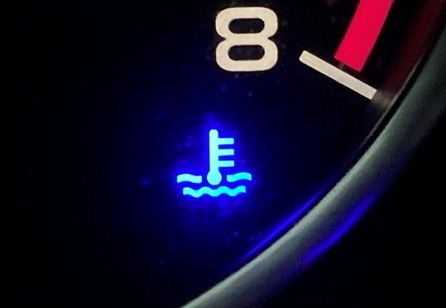

Most people instinctively know that when a red or orange light illuminates in the dashboard, there’s probably something wrong and it’s probably a good idea to figure out what it is. But what about the blue light? If you see that one light up, should you be worried?
Probably not – assuming it’s working properly.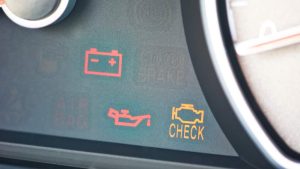
Many newer cars have a blue light in the dash that lights up when you first start the car’s engine after the car has been sitting overnight – or at least, long enough to have cooled down. That ought to give you a hint about what the blue light means (it does not mean attention K-Mart shoppers). It means the engine is cold – and that you ought to give it a couple of minutes to warm up before you floor the accelerator pedal.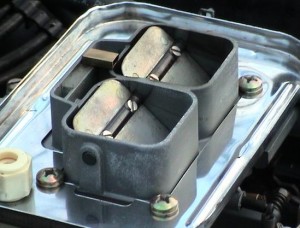
In the analog days – when engines had mechanical fuel delivery devices – carburetors – they had these things called a choke. The choke was basically a metal door that snapped closed when you pushed down on the gas pedal, which is not the same thing as the modern car’s accelerator pedal. The gas pedal was physically linked to the carburetor via ca able. When you pushed down on the gas pedal, you caused gas to be squirted (via a spring-loaded plunger-like thing called an accelerator pump) into the intake manifold, which is what the carburetor sat on top of. Pushing down on the gas pedal also caused the choke to close – to snap shut – via a mechanical linkage mechanism, typically triggered by a heat sensing metal coil that expanded or contracted, according to engine temperature. This was a kind of analog-era iteration of the electronic sensors modern, fuel-injected engines all have. Just without the electronics and sensors.
Anyhow, the function of the choke is to restrict airflow into the carburetor – hence “choke” – which serves to temporarily richen the air-fuel ratio. The richer (more gas in the air-fuel mix) package helps cold-start the engine and the choked airflow also raises the cold idle speed to rise to about 1,500 RPM to help the engine warm up and also to keep it running while it’s warming up. After you got the engine started, the next thing you did – in the analog era – was give the engine about 15-30 seconds to warm up a bit and then you pushed down again on the gas pedal, to release the choke. If the engine had warmed up enough, the choke door would snap open and the engine would settle down to normal idle RPM, usually around 750 RPM. At this point, you knew the car was warmed up enough to drive – but in those days – people also knew that it was sound policy to drive with a light right foot for about five minutes or so, to let the engine fully warm up. Metals/alloys expand at different rates as they heat up. Oil is tucker when it’s cold. Giving everything time to reach normal operating temperature is something analogous to stretching before you work out.
Well, cars haven’t had carburetors (or chokes) in decades – not since the mid-1980s. Instead, they have electronic fuel injection – and accelerator rather than gas pedals. Pushing down on the accelerator pedal of a not-yet-running, computer-controlled, electronically fuel-injected engine does not squirt any gas into the intake manifold – nor does it set the choke that isn’t there. It is not necessary to push down on the accelerator pedal at all to cold start a modern car’s engine. When you key the ignition, the electric fuel pump pressurizes the electronic fuel injectors. There is usually a cold-start enrichment circuit that automatically performs the same basic function that a choke used to (i.e., it richens up the air-fuel mix to help get the engine started). The electronics that control the whole thing also raise the cold-start engine RPM, for the same purpose that the choke did in the analog era.
The thing is, it’s all automatic; nothing for the driver to do – other than sit down and push the “start” button.
Well, there is one thing for the driver to do. More specifically, that he ought to do. It is the same thing drivers did back in the analog days – that being to go easy on the engine until it has had a chance to fully warm up fully. Enter that little blue light. It lights up to let you know the engine is cold – and to suggest going easy on the engine until it goes off, which is usually within a couple of minutes of starting the engine. Once it does, you can drive normally.
And now you know about that light – in case you didn’t!
. . .
If you like what you’ve found here please consider supporting EPautos.
We depend on you to keep the wheels turning!
Our donate button is here.
If you prefer not to use PayPal, our mailing address is: EPautos 721 Hummingbird Lane SE Copper Hill, VA 24079








I’ve noticed that the blue temp light, along with any other other idiot lights/sensors, also replaced the temp gauge. You know, something that allows you to GAUGE if the engine is STARTING to overheat, and not when it’s already in the red zone. Ditto with the oil pressure, battery, and pretty much every other gauge on the no-longer-driver-friendly digital dash. With digital lights and sensors, there is NO nuance. It’s either “good” or “bad”.