

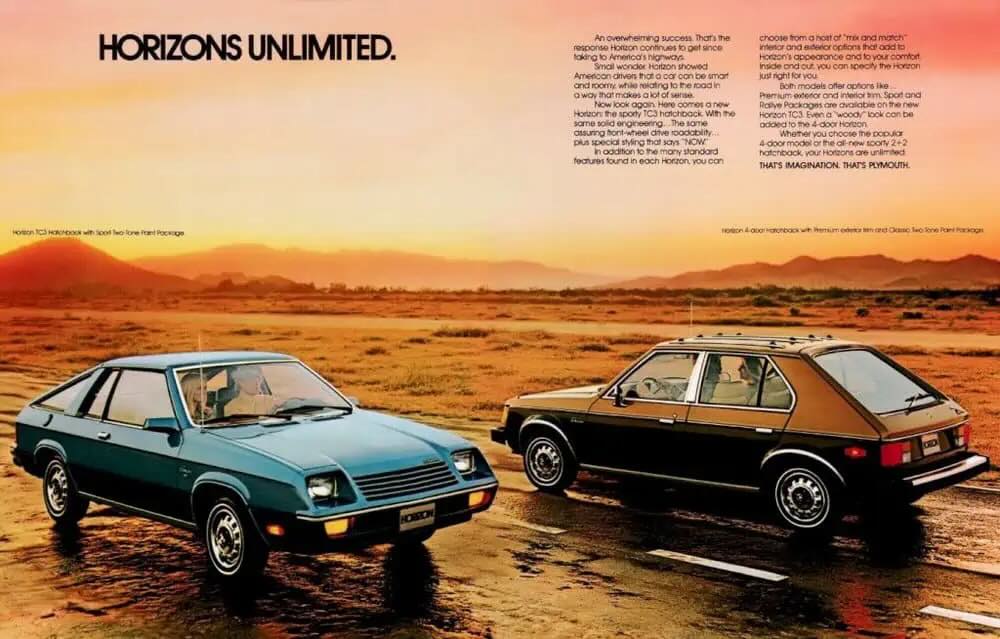

Well, you probably can buy strippers – just not the vehicular iteration. For those who don’t remember, a stripper – in vehicular parlance – was a car without many of the things that are now unavoidably standard in every new vehicle, such as AC, a full array of gauges (typically displayed via an LCD screen) as well as power pretty much everything (such as windows and door locks and outside rearview mirrors) as well as electric rear defrost, cruise control and at least a four speaker stereo system.
Not that there is anything wrong with any of those features. Assuming you want them and – more to the point – can afford them. Once upon a time, there were strippers – for those who didn’t or couldn’t. They came with tires – usually mounted on steel wheels that had cheap plastic trim covers and sometimes not even that. You got a heater. In summer, you rolled down the window. This was called “450” AC, which meant four windows down and 50 MPH.
It wasn’t exactly climate control, but it was free.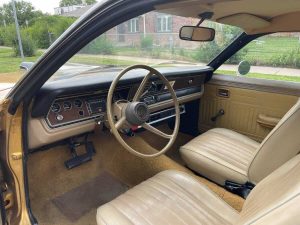
The great thing about strippers was that you didn’t have to buy one to get the benefit of one, because their availability served as a check on the more loaded stuff the salesman tried to steer you toward. He knew – and you knew – that you could buy the stripper rather than the loaded car and that incentivized the salesman to offer up a better deal on the loaded car. It also kept something of a damper on the manufacturers, too. They had to make a case for their more expensive models because they knew if they didn’t, a customer could always go with a stripper.
Another nice thing about strippers was that – usually – you could a la carte the extras you did want and were able to afford, such as AC. Or power windows and locks. Pretty much anything that was standard in the higher trim version of the car you were looking at could be bought as an option on the lower trim version. My ’76 Trans-Am, for instance, is basically a loaded Firebird. It has power windows and locks, AC, rear defrost, the “custom” (nicer) seats and so on. Any of these items could be ordered with the base Firebird, which cost a lot less than a loaded Trans-Am.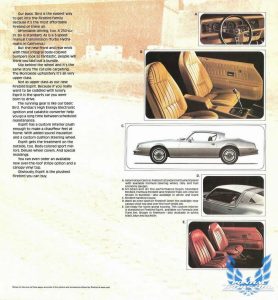
This way of selling cars was once the normal way, believe it or not.
Today, it is not the way. The new way is to sell everything loaded – and to “bundle” the extra thing (singular) you might like to have in a package that includes other things (plural) you may not want to have (or want to pay extra for). The main thing is you cannot buy anything that’s new that does not have AC or power windows/locks and many other items that were – back in the days of the stripper – considered luxury items. This is why all new cars are luxury priced cars. There’s nothing you can buy that’s new that has a base price under $22,000. (And there are very few of those. Most new vehicles start closer to $30k.)
We can deconstruct this a little to get a sense of what that $22k car might cost if it were available as a stripper by recalling what loaded features such as AC, power windows/locks, rear defrost, a pretty good stereo, full gauges and – let’s not forget! – an automatic transmission cost to buy back when these things were optional.
AC – when it was optional – typically added about $500 to the price of a new vehicle. Power windows/locks were another couple hundred; same for the stereo and the rear defrost and a full se of gauges. An automatic transmission – back in the days when a manual was commonly the standard transmission – added about what it cost to add AC. Add in the upgraded seats and maybe the alloy wheels and the total tab is probably in the $3k range. Then there’s all the government-mandated “safety” equipment – most especially air bags – that adds at least that much again to the sticker price.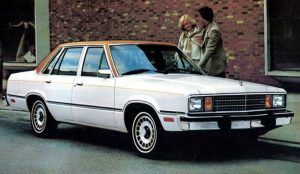
Imagine being able to lop $6k off the price of that $22k new car. It would be stripped – but it would also be $16k. It would also probably help reduce the selling price of the loaded $22k car – because the salesman would know you had the option of buying the stripper.
So why aren’t there strippers? Several reasons. One, most people got comfortable paying for loaded cars. Loans went from three or four years to six, making the loaded car seem more affordable, because many focus on the monthly payment rather than the total payment. Two, the vehicle manufacturers reduced their offerings – by making what had been optional standard – because it reduced manufacturing costs and increased profits. Both depended on most people being both willing and able to afford the upsell. It worked for years. It is not working as well now, because many people are feeling pinched by the cost of everything.
Maybe the stripper will make a comeback. I think it’d be a good thing for everyone, even if you don’t want to drive one.
. . .
If you like what you’ve found here please consider supporting EPautos.
We depend on you to keep the wheels turning!
Our donate button is here.
If you prefer not to use PayPal, our mailing address is: EPautos 721 Hummingbird Lane SE Copper Hill, VA 24079








After reading the headline this is not what I assumed this conversation was about, but carry on. 😉
‘Maybe the stripper will make a comeback.’ — eric
Yes and no … In the grip of Depression I in the early Thirties, which half of auto makers didn’t survive, auto design was forced to change in a hurry. But not only in the direction of economy: finally, in the Thirties, designers abandoned the horse-drawn coach as their design motif, in favor of the contemporary, streamlined automotive shape which maximizes volume within a given envelope.
Reliability also took a big jump from ‘tin lizzy’ days with buzzing sheet metal, mechanical brake linkage, crappy tires, and the like.
Ultimately, auto makers’ response to the severe economic distress of their customers was to significantly boost performance and reliability, while holding prices steady-to-lower.
This was a different incentive than today, when production is geared to the most profitable models, such as big luxury pickups. These overweight, oversized, overpriced codpieces for the peasantry are the first in line to die in the Jurassic tar sands when the popping of the AI Bubble ushers in Depression II — as is, I pray, the contemporary design motif of an iPhone-on-wheels, studded with useless electronic gimcrackery, multicolored douchescreens and non-transparent, dictatorial algorithms.
It’s the end of the automotive world as we know it — and I feel fine! 🙂
Buildable options (complexity) has been driving this train for a long time. It’s how the car companies have kept assembly costs in check (along with automation and other productivity tools). The assembly line moves very fast and the production assembler can’t be running around trying to figure out which part to put on. Every second counts.
Depending on what the customer is looking for, there are still lower cost options available. Vinyl seats and floors are still possible on Super Duty trucks. We all have heard of the $100k pickups, however, get the stripper Super Duty and it is closer to $50k. People just don’t like making tough choices.