


If you could buy a new vehicle like the ones you could have bought in the late 1990s or early-mid 2000s, would you? Let’s look at a few random examples.
In 2000, Lexus’ largest and fanciest sedan was the LS400. For about $54k – the car’s base price – you got a top-of-the-line luxury sedan with a DOHC 4.0 liter V8 engine paired with a five speed automatic. The late ’90s/early 2000s Lexus LS is considered perhaps the finest vehicle Lexus has ever offered, in terms of matchless build quality and reliability.
In 2026, Lexus no longer sells the LS sedan, but the last year it was available – in 2023 – you got a 3.5 liter V6 paired with a ten speed automatic for about $77k. You also got a huge LCD dash display and an array of “assistance technology” for the money.
How about something more . . . economical?
Back in the early 2000s, you could have bought any of several new economy cars, which is a species of car that is no longer available in 2026. The economy car having been supplanted by the entry level car. The latter is a car that comes standard with everything that used to be extra in an economy car, such as AC, power windows and locks, cruise control and an automatic transmission. The entry-level car has made the luxury car slightly ridiculous as the main distinction it offers is that it’s more expensive.
Anyhow, back in 2011 you could have bought a brand-new Ford Fiesta for about $15k – which was the base price for this car back then. For that you got a non-turbocharged four cylinder engine paired with a manual transmission which enabled the car to go nearly 40 highway miles on a gallon of gas. AC was standard. It even had power windows and locks. What it do not have was smartphone-emulating tap/swipe controls. There was no Lane Keep Assist, either.
It was up to you to steer the car.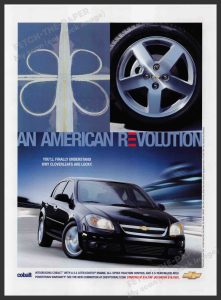
Go back a few years more and you could have bought a 2005 Chevy Cobalt (which succeeded the Cavalier) for $13,625 – or about $10,000 less than the least expensive new vehicle available in 2025, which is the Hyundai Venue. It stickers for about $23k to start – but you do get a touchscreen for that, plus a CVT automatic and a drowsy driver warning system.
Reach back just a few years more and you could have found actual economy cars that came standard with manual roll-up windows and some without AC. These sold for around $10k when they were new – which is why people were able to have them paid off in three rather than six years.
How about a performance car?
The 2004 Mustang GT stickered for $23,675 and for that you got a 4.6 liter V8 paired with a five speed manual and a real (as opposed to virtual) gauge panel with a tachometer, speedometer and other necessary gauges. ABS and traction control were optional, if you can imagine that. This was back in the Before Time, when such things were available if you wanted to pay extra for them rather than forced on you, whether you wanted them or not. A functional shaker hood scoop was also available back then as well – and the engine wasn’t hidden – as if it were an embarrassment – under an ugly plastic cover.
Today, a new GT stickers for $46,560 to start.
It is not available without a virtual – LCD/digital – display that will probably prove to be as long-lasting as your last smartphone but much more expensive to replace. You cannot buy this performance car without a bevy of driver-interference “technologies” that presume you need them, even if you don’t and would rather not pay for them.
How about a small truck?
Not a small hybrid made to look like a truck – that’s you, Ford Maverick. Not that the Maverick is a bad vehicle – in the context of this time. But it’s not really a truck, being built on the same platform as the Ford Escape – which is a small FWD-based (AWD optional) crossover. Not – again – that there is anything wrong with FWD/AWD crossovers. The thing is, they’re not trucks and the Maverick isn’t inexpensive, at last not by the standards of the late ’90s, early 2000s.
It lists for $28,145. That’s with FWD and – of course – a big touchscreen, nanny “technology” and Big Brother “technology,” too. An “EVT” automatic transmission is standard, meaning a CVT with electric/hybrid augmentation.
The bed is only five feet long.
Back in 1998, you could have bought a new Nissan Frontier – which was actually a truck, body-on frame, rear-wheel-drive (4WD optional) for $11,990 or roughly one third the price of the new Maverick. It came standard with a six foot bed and a manual transmission and could be ordered with 4WD that included a two speed transfer case and 4WD Low gearing, engaged mechanically rather than electronically and so there was no chance of electronics failing. The 2.4 liter engine wasn’t high-powered but it was powerful enough and – far more important in a truck – it would (and did) provide 250,000-plus miles of service before it might need a repair, such as a new timing belt guide – which didn’t cost a fortune to repair, either.
Would you be interested in any of these late ’90s/early 2000s vehicles if – by some wave-of-the-hand miracle – they were available again, right now, as brand-new vehicles?
I know what my answer is!
This isn’t just nostalgia, either. It is a an indictment of new vehicles, which – for the first time in the history of the evolution of vehicles – are arguably (objectively) getting worse with each new model year rather than better. Reliability and durability are in decline. Value is decreasing. Emotional detachment is increasing.
Few of us ever cared about a toaster. New cars have become something like that – only they don’t even make toast very well anymore.
. . . .
If you like what you’ve found here please consider supporting EPautos.
We depend on you to keep the wheels turning!
Our donate button is here.
If you prefer not to use PayPal, our mailing address is:
EPautos
721 Hummingbird Lane SE
Copper Hill, VA 24079
PS: Get an EPautos magnet or sticker or coaster in return for a $25 or more one-time donation or a $10 or more monthly recurring donation. (Please be sure to tell us you want a magnet or sticker or coaster – and also, provide an address, so we know where to mail the thing!)
If you’d like a Baaaaa hat or other EPautos gear, see here!










I’ll take a ’97 Bronco that should’ve been. The ’96 was nice, but the 97 would’ve had that beefed up Explorer 5.0. Nice power, good offroad, relatively simple to fix, reasonable price.
1990s Lexus are the finest cars ever built and I live in the past 1998 discovery 1 is my car and I’m trying to get a 1970 bug if the seller will get real on price.
100 percent, Angelo. I speak from direct knowledge, too. My mom bought a new RX300 back in ’98. My sister and her husband still have this vehicle and it is still running great. The thing is almost 30 years old. Even the paint still looks pretty good.
Still working on my Time Machine. If I could turn it back I’d have held on to my 96 Ranger. Will eventually find the one I’m looking for. It’s hard to do with the travel involved, to inspect and test drive across the country. Especially now, with tptb having Bibi’d up air travel even worse than it was before. Keeping my search close to home. Once I find the one I’m after, most likely it will be driven, along with my T-bird until the day I die.
My cousin was on that ship when Cher made that video. It is by his own accounts, one of the great highlights of his life. Excited by a stupid shiksa and a bunch of sweaty dudes on a boat. Pretty freaking pathetic that. Made me question just how deep my gene pool is.
When the Plandemic came, all of the sudden, that same cousin became an expert in virology, infectious diseases, and quakecines. unfortunately he convinced many members of that side of the family to embrace the narrative suck. Masks, social distance, ramming shit into the sinuses and the full array of safe and effective. I hold him responsible for three deaths of people I cared for that acted in haste, based on his retarded superstitions.
The Frontier picture you posted is the EXACT model sitting in my garage right now.
https://postimg.cc/9wrSbwJZ
So yes.. I would be interested in buy this 2000 King-Cab V-6 4×4 5 speed manual. 😀
You can keep Sher tho..
I already “turned back the clock” seven months ago by purchasing a 2006 Toyota Corolla with 56K miles on it. It’s just passed 60K and is my daily driver. Zippy, easy to handle in traffic, 33 mpg around town…what’s not to LOVE?
Our ’06 has ~500k on the clock with no major issues. Water pump, rear wheel bearing and one clutch on the 5spd. Change the oil religiously at 5k and it should run forever.
It’s the most well laid out vehicle I’ve ever owned. Enjoy the ride.
“EV Demand Surges Across Asia After Energy Shock Sends Consumers Into Panic Mode”
ZeroHedge Headline.
India: Induction stoves fly off shelves in India as gas shortage fears spark panic buying
Higher gas prices spark a surge of search interest in EVs
Online interest in electric vehicles has ticked higher in recent weeks in US as fuel costs climb, according to data from car-shopping sites and Google
You don’t suppose? Naaaaaa.
I’d trade every “mobility blob” on the current market in a heartbeat for a new 1998 Chevrolet K1500. 350 and a 5speed, definition of perfection.
If we could turn back time … to the 19th century transportation mode that preceded cars: railroads. The steam locomotives are gone. But in some places, the tracks are still there.
Couple of buddies built a simple rail cart with a lawn mower engine, and took a joyride on an abandoned track in SoCal:
https://www.youtube.com/watch?v=UUz92f1h8SE
Greg commented that his DJI drone doesn’t have a ‘follow me’ mode. So he was manually flying it during this 5-minute excursion, which starts with a raised embankment and ends up in a rock cut.
Darling, let’s turn back the years
And go back to yesterday
Let’s pretend that time has stopped
And I didn’t go away
— Hank Williams, Let’s Turn Back the Years
Two I’d like to see offered for sale again. My daughter’s 2010 Acura MDX and my 1991 Silverado.
That Acura is extremely comfortable, great steering response and straight line tracking.
The truck is also comfortable, easy driver, easy keeper. It sat over the winter, started it and rolled it out yesterday. Immediate start runs perfect. Off to chores with it, this morning, now that the road chemicals are gone.
Just to sit and think that we actually had choices in the auto market 30 years ago. Today, not so much. Looking into the future, and it is trending towards the American version of the Lada. Only if your social credit score is acceptable and you can wait years for delivery.
Sadly Allen the Lada might be more reliable than a new car or at least more repairable. If you watch the Garage 54 YouTube channel you can see them getting a level of abuse that would kill western cars.
For me the 97-2000 Explorers with the GT40p 302 are about the high water mark. Yes they have electronic engine and transmission management, and air bags, but they are a just right size, not too huge, not too small, great handling (no, they aren’t sports cars, but spectacular for a pickup), and that engine was just sweet.
After the communist government first raped our cars in the early 70s, things got really grim. The late 70s and early 80s stuff had abysmal quality control (screw it, ship it!), power and efficiency was way down with loss of compression and one choking catalytic converter, rust was a short term issue with downsizing and thinner metal. Engines were festooned with vacuum hoses and plastic fittings, as well as really primitive computer controlled carbs. 79 was about a nadir in general.
Sometime around 82-84, we started to see improvement in things like the 302 Mustangs. Through the 80s, that healing process continued as the auto industry made very real improvements and learned how to get around the commies restrictions. We got things like the T type and Grand National Regals, improved, lighter Camaros and Trans Ams, handy little trucks like Rangers and S10s. But along with the improvements, more and more plastic and electronics were going in.
Unfortunately the commies got away with the first rape and wanted more. So they started with the endless regulations, strangling that golden goose that once was the engine of the American economy.
For me the peak year was about 95, just because most cars didn’t have an air bag required until 96. OBD2 also came in 96. After that, there have been some great efforts, but the trend has been ever more diluted, corrupted, feminized, junky cars.
But I guess it’s just a symptom of our society. Cars will get better when actual freedom returns. And I dread the day when they ban my old stuff from the roads because it isn’t compliant. Because then I will be in the position of hoisting the black flag and slitting as many throats as I can before they get me.
Hi Ernie,
Yup. Well-said. I am sitting here trying to come up with good points (there are some) about the ’26 VW GTI… while my mind wanders out to the garage and the prospect of getting my TA running later today.
Get the Trans Am done! The VW piece can wait for later.
I had three peak Hondas, a 91 Accord coupe, a 91 Prelude and a 96 Civic that didn’t even have power steering or a radio!
None were rocket sleds, but they had SOULS. They handled brilliantly, had great visibility and got great gas mileage.
Also, all of them had easy to service engines where, with a few exceptions, you could reach everything.
And the interiors were driver oriented, with the controls laid out perfectly.
I’d take any one of them in a second.
Fact is, that basic car should be even cheaper than it was. Take away the backup camera, the airbags, the over-engineered seats, the automatic transmission and direct injection… pretty soon you’re working with extremely well understood easy to manufacture technology. Turbo charged extreme compression engines need tighter tolerances than a big sloppy V6 of the 1990s. Stuff that can be built easily by overseas manufacturers still increasing their industrial base. Even accounting for body styling updates it should still get less expensive to manufacture over time.
And why we are where we are. Big biz/gov can’t have these pre-90’s cars made/sold here from the 2nd-3rd world. emmissions, crash crap, etc… is all just smoke and mirrors.
I perfect example is we are ‘allowed’ to ride motorcycles and ‘put our lives in danger’……………..
“Fact is, that basic car should be even cheaper than it was. “ . . . Take pretty soon you’re working with extremely well understood easy to manufacture technology.”
Whenever someone here writes stuff like this you can be sure they have no experience with manufacturing anything and especially not automobiles.
You’ve never built anything. If you had, you’d realize how ridiculous that statement is. Even simple home projects, when looked at in hindsight, are subject to self-criticism. If you accomplish a task, you can probably think of a way to refine the task next time. This will make the outcome better, or save time, or money or just make the task easier next time. Now multiply that post analysis across the hundreds of people working in factories. Even under extreme supervision people will still find ways to do the job better. Even if they don’t just muscle memory will improve performance over time.
And management will cull the poor performers from the line, leading to fewer mistakes and rework. Eventually the factory will be an expert at performing the tasks necessary to build the product. Until the product changes, of course.
RK It’s hilarious you think building something at home is comparable to how a factory works. You probably built a bird house once in your garage so you think that makes you an expert on the nuances of automotive assembly operations.
You have no idea what you’re talking about.
You clearly have no knowledge of the difficulties of manufacturing process control, gauge variability, automated tooling control, GD&T, and supply chain management. Somehow you perceive that the capital expenditure necessary to operate a plant is irrelevant and there is no floor on costs if line is workers develop “muscle memory”. Give me a break!
You are just another of the dozen or so numbskulls that have taken over the comments section here constantly writing about things you know nothing about.
Rather than humbly admit that you might not be an expert on how automotive plants operate, you double down with an overly simplistic rationalization of how you think things work.
Classic American stupidity and arrogance on display.
Process improvement is an entire industry in itself.
Don’t be so literal.
Well I guess you schooled me. Process improvement industry huh? Don’t be so literal.
Guess you don’t care to discuss how capital expenditures for facilities and tooling establish a cost floor? Regardless of process improvement there is a minimum cost to operate.
You went and stated “Fact is, that basic car should be even cheaper than it was.”
You completely neglect inflation, regulatory costs, CapEx costs, increasing labor costs, and imply that cars ought to be cheaper than they used to be.
Defend that statement with an honest argument or not, and prove that you know nothing of the auto industry.
Henry Ford was obsessed with process improvement in order to drive down costs. The model T was the definition of deflation through process improvement. In 1908 the retail price was $825 ($25,000 today). In 1927, its last year of production, the price of a Tin Lizzy was around $290 for a base model ($4,800 today). That’s while increasing wages and inflation and even a war.
Now of course competition helps to drive down costs but Ford’s obsession with driving out waste did much more than the Dodge Brothers to push prices down. And it is true that regulatory capture helps prop up prices by locking out younger, hungrier startups who can absorb losses to gain market share. But reality is if a company continues to build the same product year over year, they’d better be improving their build process and driving down costs or investors will find someone who will.
Generally true, however, that’s not “Deflation”, which is the correction of years and/or decades of inflation that drove the currency to the point of being insolvent.
In the case of the “Model T”, it was a matter of the not just simply driving down production costs, though Ford did so RELENTLESSLY. It was also getting together two things which transformed automobiles from being the thing of the wealthy, then at least the “comfortably well-off” (which Daffy Duck seemed to be satisfied with, his insane greed notwithstanding), to something that by 1914, Ford, at age 47, observed that his own labor force at the Rouge plant needed to be able to afford themselves! However, that wasn’t why his famous, at the time, $5/day wage paid, that was to get a STABLE labor force! As much as Ford and his Industrial Engineers sought to simplify the production line, there were still skills that the worker needed to acquire to become proficient, and turnover was COSTLY.
The price of a “Tin Lizzy” could be drastically reduced for more than simply greater-realized efficiency. There was also recouping of the considerable capital investment in the River Rouge Plant, then others as Ford expanded throughout the WORLD. The final step, though, was when Ford didn’t have to rely on the BANKS(ters) to keep the company running, then to expand it. And that’s when the charges of he being a “horrible anti-Semite” began to fly. He freed his company, at least at the time, from DEBT.
The other pressure, of course, to lower the price of a Model T was COMPETITION, including from the Dodge Brothers. It was once General Motors was formed, originally as a holding company for Buick (Chevrolet would be started AFTER GM’s founding), that Ford actually had serious mass-market competition. FWIW, Walter Durant, when CEO of GM, had tried to buy Ford in 1909, but foreseeing trouble (Panic of 1910), the banks refused to back it. How DIFFERENT things might have BEEN.
I have a feeling RK knows a lot more about cars, in a broader sense than you do. If you are the uncontested expert on the ‘automotive industry’ then all hail your expertise on all things American automotive excellence. It also partly explains our current predicament.
“ where do you find someone who can repair that new to you antique?”
Turn in your man card if you can’t repair a 50 year old vehicle by yourself.
Hi Bobby,
Yep. Anyone who is reasonably intelligent and basically handy who is willing to (and capable of) reading a manual and being patient and using the right tools can repair a 50 year old car.
The issues aren’t the “skills” necessary to repair a half-century-old ride; they come down to two things:
1. PARTS. They’re available…until they’re NOT.
2. REGULATION. Here in California, it’s TERRIBLE, as to register a vintage ride for the road, one has to keep the original emissions functional. Many have become “Unobtanium”. Furthermore, most “smog” shops aren’t even performing smog checks on pre-OBD II vehicles, as the “smog check” with that tech is to simply connect up to the OBD II device, run the engine through some cycles, and check for codes and measure the tailpipe. WIth a pre-OBD II, most mechanics that actually KNOW those vehicles are retired, dead, or otherwise gone. Yet CARB insists you get that piece of paper to legally drive it. Hence why “Leno’s Law” is being tried, and CARB is acting as if California will be smogged in over the relatively few survivors still plying its highways.
Well Bobby a car is considered an antique at 25 years old. I’ve rebuilt carbs, alternators, starters, very basic electrical diagnosis, fabricated and welded exhaust parts, patched floors and a host of other stuff but I don’t have a hoist nor am I set up nor have a desire trying to diagnose a complex problem on a computerized car.
I’ll hold onto that man card a little longer, thanks.
Here’s the thing – a 25 year old car puts you at 2001.
That means OBDII for the fuel injection and maybe ABS for the domestics and the Japanese. German cars from 2001 will be more slightly more complicated.
If you can’t handle that basic level of “computerization” you’re going to be in a world of hurt eventually. Learn how to use a $50 OBD scan tool or pony up to pay a mechanic. If you can somehow figure out how to post comments here you can operate an OBD scan tool.
Per Bobby’s point if you can’t maintain a 50 year old car from the 70s, . . . Well his point stands.
Hi Tex,
Yup. OBD II can be helpful – and more importantly, it is accessible. As you say, a basic scan tool that can be bought for under $100 will give access to the codes and even what those codes mean, which can isolate/identify problems (especially those related to the emissions controls) and help the owner fix the issue on his own.
I think the OEMs dislike this. I think it is why many have gone over to systems that require more than an OBD II scan tool to deal with. They want you to be at the mercy of their dealership network.
If you actually read my entire comment to bobby you’d have noted that I do service older cars. I also own a bottom end Launch Millennium. At a certain point I pass it on to professionals that I know. In the last few weeks I did a brake job with caliper service, fluid replacement and an oil and filter change.
You do realize that not everyone knows how to work on their own car and doesn’t care don’t you? I do what I feel like doing and hire someone if the job requires a hoist. I’ll pull parts in a junkyard but no one comments when you cut a hole in the floor to get at the part directly below it. I’m not doing that to my own car though.
I know mechanics that complain that they can’t take the car from a wrecking yard so they could pull the engine in their shop and couldn’t grasp the logic of piling wheels under the body to cut up the chassis to make pulling the engine easier.
Let’s face facts. You’re a tool.
First you complain about what it takes to maintain antique cars & Bobby calls it out.
Then when people point out that it isn’t rocket science or give you some info on OBD you resort to buffoonery to try to show us your repair skills resume and junkyard parts wrangling.
Then you flip flop to “ I do what I feel like doing and hire someone if the job requires a hoist.”
There are no jobs that require a hoist. A hoist makes life a lot easier but people have been working on cars without hoists for eons. Complete restorations have been done without a hoist. So basically you’re old and lazy and don’t want to work on the ground. . Just say that but don’t pretend a hoist is required.
Then you resort to not everyone knows how to work on cars nonsense. Yeah, true. But then they have to hire a mechanic just like you do huh or take the bus. Mechanics are fully capable of working on 25 year old cars.
Your man cars is revoked for being a whiner and a tool. Lol!
Troll much?
So, if you cant do a certain repair without a hoist or without paying someone, then your man card should be revoked? IDK, Did you wear a mask, or take the orange goo to keep a job? then perhaps your man card should be revoked.
We were just in central america. They still have new cars/vans with old school analog controls.
Saw those old slide hvac control, and analog gauges. and it was a 2yr old toyota van, so they still make them. A diesel engine that sounded like they should, or used to, and with no smoke.
We’ve been scammed by big biz and gov cooperation/corruption.
Some will say “but the market demanded it”. Maybe for high end stuff, but not lower trim cars that still get most of this crap and the middle class and lower can’t afford them nor afford to fix used ones.
I was just in tractor spply and i gave my farm tax exempt info for some farm stuff, and it was declined, “gotta pay the tax she said, I don’t know why this is happening?” and then she wigged out on how she can’t afford to live anymore. people are coming apart.
Contrary to most comments here, I’d pass. Cars have never been as reliable and powerful and maneuverable. Cars reached the state of the art. Yes, they came with warts.
Hi Agustine,
Well, I don’t know about that. About “reliable.” Toyota had to mass recall almost all of its new 3.4 turbo engines; this is unprecedented – for Toyota. GM has had major issues with the 6.2 V8 (ask RG, a regular here). Most of the initial run of Dodge Charger EVs literally bricked – before they could even be shipped to dealers. These are not isolated problems. I can attest that I now regularly experience glitches in brand-new vehicles – the ones I test drive each week. I have been doing this a long time – 30 years – and it has never been as bad as it is now.
Regardless of specific cases. In general, I remember when tinkering on cars in the 70s every weekend was not a hobby, but a necessity. Cars just needed TLC that frequently. And not only mechanical tinkering, but body tinkering too, retouching the rust spots. I don’t recall having to do any of that in this century. And contemporary cars last much longer than ever before, lowering their total cost of ownership.
Don’t get me wrong, the warts that you mentioned bug me too, but I still wouldn’t trade a new car for an old one. I value my time and wallet.
Yes, Augustine –
But which would you rather deal with? Occasional tinkering – minor adjustments and so on – or catastrophic and catastrophically expensive repairs? Unless you are very skilled and have some very expensive tools, all but the most basic service/repair work is no longer within the capabilities of most non-professionals. I can put a clutch in my ’02 Nissan pick-up in an afternoon for about $300. A new CVT for a current year pretty much anything is $3,500 on the low end. You don’t even want to know what a new 10 speed GM/Ford automatic will cost you…
That’s a false choice. Modern cars fail catastrophically less often. As I said, cars have never lasted so long. The average age of the car fleet in the US has never been as long:
– 2000s: ~9 years
– 2010s: ~11 years
– 2020s: ~12 years
This indicates that the dreadful and so common CVTs are not less reliable than hydraulic automatics. And you can still put a clutch in a brand new Tacoma in an afternoon for $300. Oranges, apples.
Hi Augustine,
Ask RG about that!
PS: The only new Taco that comes with a manual is the very expensive one! Probably for not much longer, either. Also, the turbo/direct-injected/hybrid augmented four is already having problems. The old V6 almost never did.
Another TROLL paid by the auto industry to attempt to debunk you. You’ve got their attention, Eric!
Thanks, Douglas!
Thes trolls are helpful to an extent in that they reveal how weak and shallow their arguments are.
Did you ever stop and think one of the major reasons the average age of the US fleet is now longer due to the fact that new cars are double the price of the cars back then?
You do have a point, but do you still earn as much as back then?
Three words for you: Cash for Clunkers. Many very reliable cars were euthanized with lots of service life left.
Get a flipping clue.
Cash for clunkers took 600,000 cars off the road decades ago. The market is 15 million annually.
600k of cars is a drop in the bucket.
Yet you goobers regurgitate this nonsense endlessly.
I agree automobiles are currently the fastest and generally the best handling in history, but they are certainly not the most reliable. The high point in automobiles for reliability and longevity is probably between 1995 and 2005 (possibly through 2010 or so).
That automobiles are fast and better handling then ever isn’t really all that great though because speed limits haven’t changed. A 500 hp car is great for a couple of acceleration runs, but the novelty wears off very quickly. Also, who can even use that power. within 3 seconds you are travelling at a speed that’s considered reckless and you can be severely fined and lose your license. Automobiles are also dreadfully complex now and have become nearly unserviceable. With CANBUS, everything is centralized to a single point of failure.
Agree with that timeframe ML, I love my 2003 Corolla. Has a/c and a cd player in the dash but otherwise just basic; hand crank windows, regular flat key, no nanny crap, etc. Just hoping to keep the rust from killing it before I can no longer drive, this past winter was especially bad with so much snow and the consequent wet salty roads. I take it through the car wash once the roads are dry but it’s a constant battle, rust never sleeps.
“ With CANBUS, everything is centralized to a single point of failure.”
Great way to repeat more crap you’ve heard that isn’t true while simultaneously telling us you know nothing about how a CAN bus actually works.
Not only would I drive a car of that vintage, I do. Have an early 2000s Ranger and F-150. Bought the 150 new and still have it; bought the Ranger with a blown motor and put one in. You can keep these things running a long time — even if you have to do major internal work.
Not so with the contemporary offerings, i.e. a 1.5 three-cylinder SUV with a turbo and a wet timing belt. No thanks.
As far as price is concerned, were they more affordable? That depends. It took me until I was over 40 to afford my first new car and that was a deeply discounted, with rebates, base model Focus — $10,600. Rebates aren’t as prevalent as they used to be, though, and neither are base models. There was a sweet spot for me personally but also in terms of macroeconomics in the early 2000s when stuff was more affordable. I remember thinking it was insane that people were paying $10-12k for cars in the 1980s. Twenty years later that seemed like a great deal and the cars themselves were better.
The other thing that changed is the fact that the Fed doubled the money supply since 2020. So a car that might have stickered for $15 or $20k before then is now $30-40k. Or more. Is a $50k truck any less affordable than a $25k truck was 20 years ago? If your wages have kept up with the Fed’s inflation, not really.
If your wages haven’t — well that is the problem right there, and that is a structural problem with the economy more than an auto problem.
> Have an early 2000s Ranger and F-150. Bought the 150 new and still have it;
Paid cash ($7000 & change) for my 1989 F150, the year I turned 40. 300 CID straight 6, port f.i., 4 speed (3 + granny). Single cab, 8 ft. bed. Still driving it, 37 years later. Replaced engine @ 250,000 mi.
I’ve long contended that my ’00 GMC Sierra was the high-water mark of trucks.
The only engineering issue I, and others have had with GMs of that era, is the crappy electrical system. I added a ground and cleaned the other grounding lugs, but it still gives wonky errors associated with weird behaviors (usually associated with starting the engine with the AC running).
That said, the truck has been solid over the years. The to-do list as I can afford it:
-rebuild the engine
-replace the rear end
-replace all suspension components
-replace the wiring harness
-remove or replace the cats
-reupholster the interior
-strip to bare metal and prime / paint
Check connections on the positive feeds for the high draw stuff. My 91 Silverado had HVAC issues, though it was the electronic control box. Nope, online forum said check behind the glove box (91 box is an insert that is easy to remove). Sure enough, a large gauge red wire had cooked and melted a connector. Clipped, wired and soldered in a jumper around the cooked connector (it holds several other light gauge wires).
Done and done, perfect since then 8 years ago.
‘Mornin’ Landru. Come to the Piedmont of the Carolinas for that 25 year old car. Rust is virtually unknown in this part of the country. You have great bodies to choose from but, the mechanicals might need some attention.
>Piedmont of the Carolinas for that 25 year old car. Rust is virtually unknown in this part of the country.
Good to know. Also some of the lowest property taxes in the U.S. GF & I are planning to visit Charleston in 3 weeks. Weather Underground is predicting mid 70s & no rain.
For that, I could even put up with Miss Lindsey (a.k.a. “Ladybug”).
>You have great bodies to choose from
Myrtle Beach?
Eric, your critics will cast you in the role of a Neo-Luddite. That is, someone who just “doesn’t like change”. We are to be conditioned to think that anything “new” is better than the “old”. And that the “old” is a reflection of our ignorant, racist, misogynist past and must be shunned lest we acquire those attributes. We now live in an “enlightened” age where Truth is whatever you want it to be and progress comes from diktats from GovCo on high.
It’s not just motorized conveyances, either.
Look at music and dance. Where in the not-too-distant past we had symphonies to accompany ballet, we now have electronic log thumping with simian fertility gyrations. And we are to think of this as better than before.
As a species, we’ve reverted to the level of a seagull pecking at a piece of aluminum foil.
I’ll leave how we got here for another time.
>someone who just “doesn’t like change”.
If it ain’t broke, don’t “fix” it.
Actually, from their point of view, the Luddites were right. The factory system was destroying their comfortable, family oriented, pastoral way of life, and polluting the streams, for the benefit of a few extremely wealthy capitalists who lived in London. And the London “gentlemen” got cheaper stockings.
Eric: If you could buy a new vehicle like the ones you could have bought in the late 1990s or early-mid 2000s, would you?
Is this a trick question? Since most of your readers either despise the latest technology or have watched their new car rapidly fall apart shortly after purchase. Luckily all my regularly driven cars are all late 90’s to early 2000’s cars. Sadly rust never sleeps and I live in fear of suddenly needing a replacement daily driver in say January when I only have one car on the road and then trying to find a good condition 25 year old car.
Based on what I see with new cars I’d be tempted to even buy an Edsel but as my mechanic pointed out that the mechanics who know how to repair antique cars are dying off so where do you find someone who can repair that new to you antique? Luckily even if the shop near me closes the mechanics there will work on my car still for cash (as they will not have poached them from the shop they worked at).
Eric: New cars have become something like that – only they don’t even make toast very well anymore.
Not fully true, if the fire department puts out your EV battery fire in time the loaf of bread in your car will be toasted perfectly. 🙂
Always liked the Edsel styling, myself. They are way older than I am, but I’ve seen 59 Edsel Rancheros made from a Ford and a Edsel front clip.
Best of all though, is being a part of the MELF fan club. (Mercury Edsel Lincoln Ford, of course, what are you thinking)?
I looked at the Edsel Rancheros Ernie and they do look nice. Coulda been a contender but never made back in the day. Some car site did a rendering of a Cadillac styled late 60’s Suburban that looked nice also. It looked like an interesting concept but never actually made back then.