

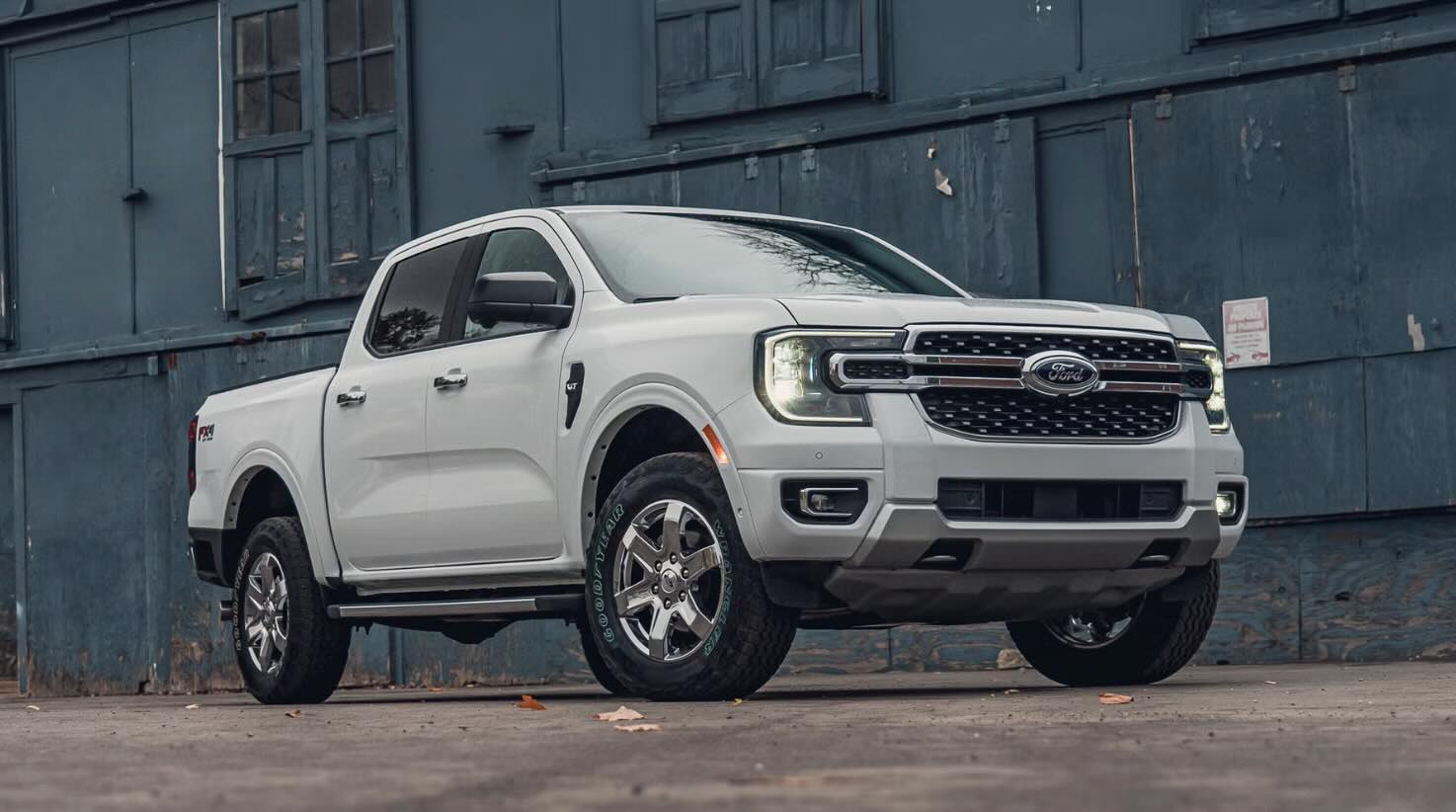

Ford is apparently going to offer a new 3.0 liter V6 in the Ford Ranger pickup sometime next year. Unfortunately, it’s not the right V6. It’ll be an another over-the-top powerful one, made so by twin turbos. A V6 like the one that’s standard in the high-performance Raptor iteration of the current Ranger, which touts 405 horsepower and 430 ft.-lbs. of torque – which is marvelous, if you can afford it.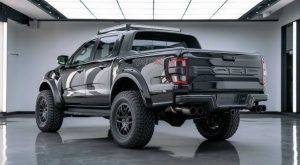
The 2026 Ranger Raptor’s base price is $57,070 – which is $23,720 more than the Ranger’s $33,350 base price and that difference is equivalent to what it cost to buy a Ranger with a V6 back in 2011, which was the final year for the compact-sized (and modestly priced) Ranger. Ford upsized it in 2019 – and the price along with it. What cost $18,160 to start back in 2011 cost $25,395 to start in 2019.
Today, it costs $7,995 more than it did seven years ago.
Part of the reason the current Ranger costs about twice what a Ranger cost back in 2011 is because it’s bigger. You’re paying for more – literally.
But – interestingly – it doesn’t have a bigger engine. The 2011 Ranger came standard with a 2.3 liter four cylinder engine – and so does the 2026 Ranger. The difference is the current Ranger’s 2.3 liter four is turbocharged, which had to be done to get enough power out of it to adequately move the now 4,203 lb. “mid-sized” Ranger that’s this close to being full-sized by the standards of the early 2000s. The compact-sized Ranger only needed the 2.3 liter engine to move its 3,136 lbs. adequately. You do get more power – 270 horsepower now vs. 143 back then – but also slightly worse gas mileage (21 city, 25 highway vs. 22 city, 27 highway) and you are having to pay a lot more for it, too. This includes the cost of the new truck’s mandatory ten speed automatic.
The old truck came standard with a five speed manual.
Interestingly, the old Ranger’s optional engine – a 4.0 liter V6 – was bigger than the current Ranger’s optional (in the Raptor) 3.0 liter V6, which has two turbos. The old Ranger’s 4.0 liter V6 had none. It didn’t need them to make 207 horsepower, which was more-than-adequate to move the old Ranger. The new Ranger Raptor’s twin-turbo V6 makes 405 horsepower, which is superfluous power. It’s fun to have it on tap, certainly. But it’s not much fun if you can’t afford it. This encompasses almost all of us since there probably aren’t that many of us who can afford to buy a nearly $60k truck – only about 7 percent of Ranger sales are Raptors – which of course is going to cost considerably more than that if you can’t pay cash for it and have to finance it.
Even without interest, the payments on a V6-powered Ranger Raptor would be pushing $800 per month over six years. Then there’s insurance and all the rest.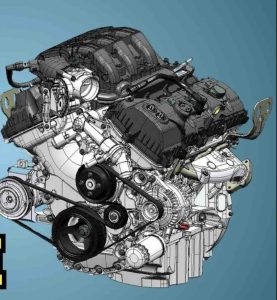
How much will this new – also twin-turbo’d V6 Ranger – cost? Less than a Raptor, which has a bunch of hard-core off-road upgrades (lifted suspension, special shocks, Watts link rear, 33 inch knobby tires, etc.) but probably it’ll still sticker out in the high $40k range. What would it cost without the twin turbos? It’s an interesting question, isn’t it? After all, they’re not necessary to adequately move the Ranger – because a V6 is all that’s necessary to adequately move a vehicle like the Ranger. The Jeep Wrangler and the Dodge Durango are generally similar vehicles and they weigh about the same (in the case of the Jeep) or more (in the case of the Durango) and both get by just fine with V6s that have no turbos – because they don’t need them.
The Ranger’s soon-to-be-available 3.0 V6 probably wouldn’t, either.
Ford used to offer a 3.7 V6 in models like the Mustang that absolutely didn’t. It made 300 horsepower and 280 ft.-lbs. of torque without turbos and that would be plenty in a Ranger. It might not get to 60 in 5.3 seconds as the Raptor does. And? Does every car – every truck – have to be capable to getting to 60 as quickly as a high-performance car? Why? Do people actually drive in a way that is congruent with that kind of performance capability? Maybe once in awhile, when the coast is clear. But given cops and speed cameras and the insurance mafia, more than occasional and furtive use of high-performance capability is likely to cost you. Besides which, most people don’t drive that way anyhow and that gets at the fundamental silliness of this obsession with getting to 60 supercar quickly. It is an expensive and destructive obsession, like heroin. It – alongside the obsession with “safety,” which has led to monstrous-sized (and ponderously heavily) vehicles – is at least as responsible for the car (and truck) becoming a kind of luxury item fewer and fewer can afford rather than the utilitarian things that cars and trucks once were.
Mind, I am not saying there is no place for high-performance. Far from it. I love it. I have a high-performance muscle car with a huge V8. But it is an occasional use toy I drive for fun because I could never afford to drive it regularly. Driving it every day in traffic would be as ridiculous as the guys you see at the gym flexing in the mirror. I drive my old truck – which hasn’t got a turbocharged engine – most of the time because it has adequate power to get to Lowes and back.
I think it’d be nice if Ford were to figure out a way to offer a truck like that again. Like the one it used to sell.
. . .
If you like what you’ve found here please consider supporting EPautos.
We depend on you to keep the wheels turning!
Our donate button is here.
If you prefer not to use PayPal, our mailing address is: EPautos 721 Hummingbird Lane SE Copper Hill, VA 24079






My old Ranger has the 3.0 engine, and a manual transmission, and they can bury me in it. It had minor problems when it was new – not too bad and not too costly to remedy. Past repairs have made it even easier to repair.
May be a while before automakers are forced to produce simple reliable products again, not in my lifetime I guess.