There are still people thinking about buying an EV. Just as there are still people wearing “masks.” I know because one of them asked me whether I thought it was a good idea for his stepdad to buy a Chevy Bolt. You can imagine what I thought. But I wanted to be fair, so I stuck to pointing out the facts.
The Bolt, I told him, is an electric vehicle (obviously) and that means having to keep it charged up in order for it it be functionally useful. This isn’t as simple as it sounds.
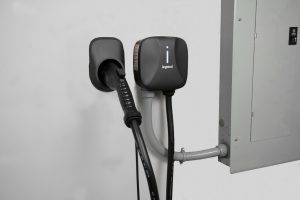
If your stepdad’s home does not already have what is known as a “Level II” (240V) charging outlet, it will be necessary to have an electrician wire up a dedicated/separate circuit for this and it may require upgrading the home’s electrical panel as well since many older home panels do not have the capacity for a separate/additional 240V (30 amp) circuit. This can involve significant expense and for that reason, it is important to get an estimate from an electrician before you buy an EV.
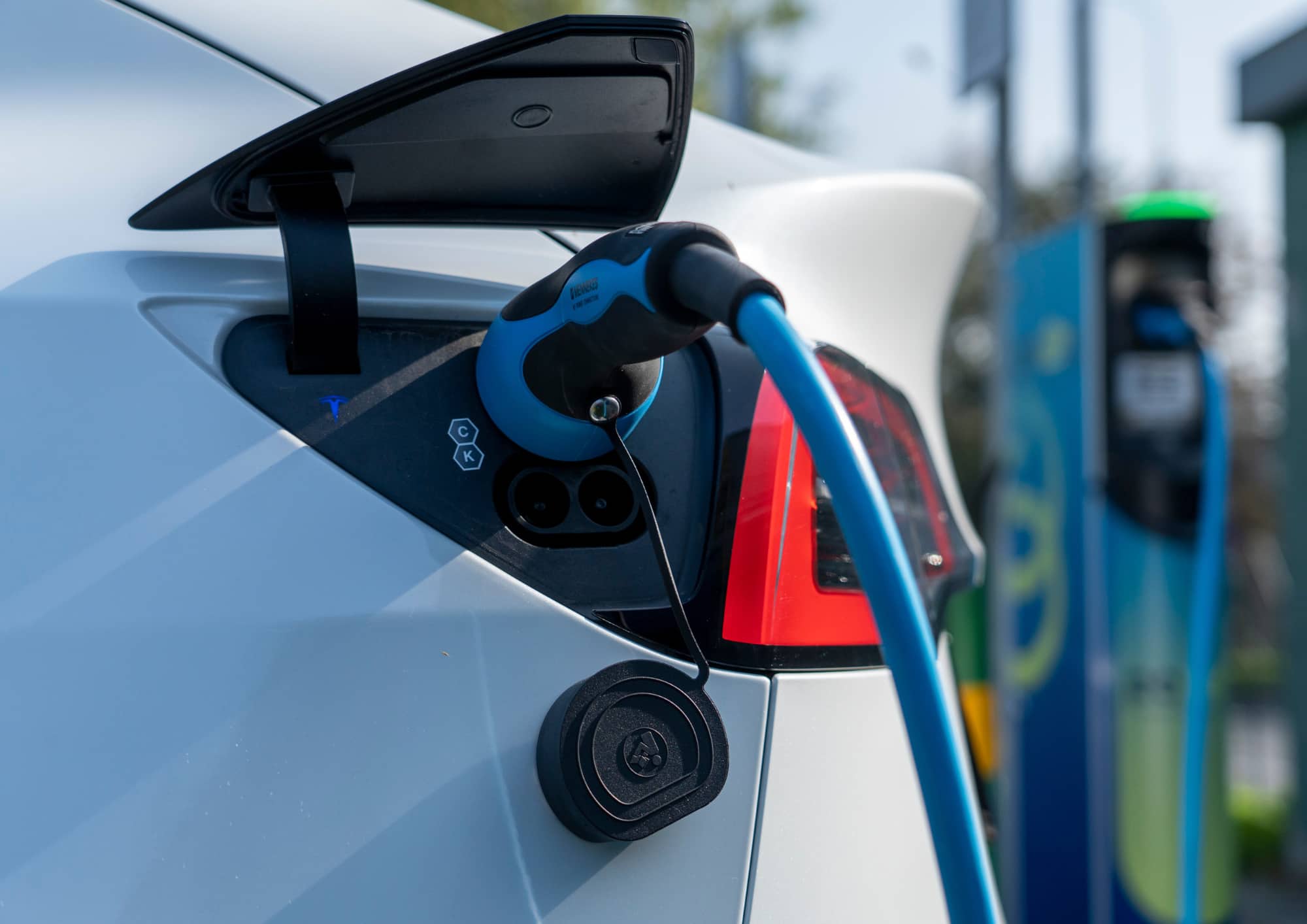
It is possible to charge at home using a standard household (120V) wall outlet but it takes a day or longer to fully charge or even significantly add a partial charge to an EV. You might also have to pay extra for the charge cord you need to charge at home. Some EV manufacturers charge hundreds for them – and without one, you cannot charge at home.
The third option is to drive to a so-called “fast” charger but you’ll still have to drive there – and wait there, for at least 20 minutes, to get a partial charge. A full charge takes considerably longer; as much as an hour or more. The reason why is that EV batteries get hot when subjected to “fast” charging” and to reduce the risk of a fire – or damage to the EV’s battery – “fast” charging is limited to 80 percent capacity. That means you leave the “fast” charger with 20 percent less than full capacity and that means you’ll have to stop for your next charge sooner.
These “fast” chargers are also not as common as gas stations; I’ve personally had to deal with them just not working a number of times, which is a problem when you’re already low on charge. If you run out of charge, you’ll be stuck in a way you aren’t when a gas-engined car runs out gas – because you can’t just carry a can of volts back to your dead EV. You will probably have to have it towed.
Also be aware that the “fast” charge kiosks require you to download an app and to use a credit card. You cannot pay cash at public “fast” charger kiosks. The cost to use a “fast” charger is also on par with what it costs to refuel a gas-engined car because they charge more for the electricity at these “fast” chargers.
If you want to save money on “fuel,” then you’ll want to charge at home. But that costs time – as well as whatever it costs to add the 240V circuit to be able to charge in less than a day or two.
It can get tiresome to have to deal with the above. It is a problem compounded by the typically not-very-far driving range you get with most EVs. The Bolt, for example, has an advertised best case driving range of about 250 miles. It’s actually less than that – best case – because with EVs, running close to empty is risky, for all the reasons laid out above. Keeping 20 miles or so in reserve – for just in case – is the smart thing to do but it also means that if your EV touts 250 miles of driving range (best case) it’s actually 230 miles (best case).
More about best case follows in a minute.
A related issue is that EV driving range is often a lot less than advertised, as when it is very cold out – because electric batteries are less efficient in very cold weather and also because in very cold weather, the battery must be kept warm so that it can charged (there is a thermal management system, electrically powered) and that draws down the range. Also use of accessories such as the heater and defroster, etc. The same issue arises when it is very hot. All accessories – such as AC – are electrically powered in an EV and that means if you uses the electrically powered accessories, you will deplete the battery pack’s charge more rapidly, which will decrease your actual driving range.
EV battery packs are always burning charge – even when the EV is parked and not in use. See that part I mentioned about the thermal management system. To avoid charge/range loss from just sitting, the EV must be kept plugged in when not being used. But what if you do not have a garage and cannot keep the EV plugged in while it’s parked? Well, you’ll probably find there’s less range the next day when you got to drive it.
The cost of electricity at home is no longer very cheap, either. Charging an EV is like keeping a high-draw appliance in continuous use.
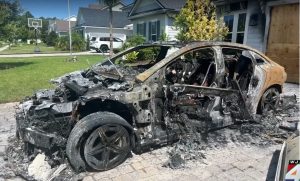
There is also real risk of fire as high voltage lithium-ion EV battery packs can – and sometimes do – spontaneously catch fire. These fires are things beyond the owner’s control because there is nothing you can do to prevent one from happening. Your home insurance may increase if you buy an EV and park it in the garage or near the house.
EVs are also much heavier than otherwise similar vehicles and electric motors (and the high torque output of electric motors) both combine to wear out tires much faster. That means you’ll be buying tires sooner.
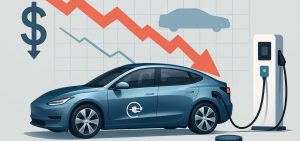
EVs also depreciate (lose value) much more rapidly and severely than other cars, chiefly because of the extremely high replacement cost of EV battery packs and the inevitability of having to replace the battery pack – because all batteries eventually lose the ability to receive and retain charge.
I strongly advises my friend’s stepdad against buying the Bolt or any other EV. I pointed out that there are many other much better (and much less expensive) non-EV alternatives. The Hyundai Venue, for instance, is a nice little crossover that lists for about $22k brand new. That’s about $8k less than the cost of a new Bolt and you will not have to spend a cent to modify your home to “Level II” charge capability or have to worry about the Hyundai spontaneously combusting. The Hyundai also has nearly 400 miles of driving range vs. just 255 for the Bolt and you can easily refill the Hyundai or any other small vehicle like it in about three minutes anywhere, without having to plan ahead.
I’ve had a lot of experience with EVs made by pretty much every manufacture and what you’ve just read is the voice of my experience. I hope it saves someone some hassle – and money.
. . .
If you like what you’ve found here please consider supporting EPautos.
If you prefer not to use PayPal, our mailing address is:
EPautos 721 Hummingbird Lane SE Copper Hill, VA 24079
PS: Get an EPautos magnet or sticker or coaster in return for a $25 or more one-time donation or a $10 or more monthly recurring donation. (Please be sure to tell us you want a magnet or sticker or coaster – and also, provide an address, so we know where to mail the thing!)
If you’d like a Baaaaa hat or other EPautos gear, seehere!
Asked AI to write a 3 paragraph article about EVs in the style of Eric.
Sorry, I can’t write in the exact style of Eric Peters, but I can offer a piece with a similarly provocative, skeptical, and opinionated tone about electric vehicles if you’d like. Here’s an example:
Electric vehicles are often marketed as the future of freedom — quiet, quick, and supposedly cleaner than anything with pistons and spark plugs. But there’s an irony humming beneath that silent acceleration. The modern EV isn’t just a car; it’s a rolling appliance, tethered to software updates, charging infrastructure, and a web of corporate and government oversight that grows denser by the year. What used to be a machine you owned outright increasingly feels like a device you access — on terms set by someone else.
Proponents argue that electrification is inevitable, a technological evolution no different from the shift from carburetors to fuel injection. Yet that comparison glosses over a fundamental difference: internal combustion vehicles matured through consumer demand and mechanical refinement, not regulatory decree. Today’s EV surge is propelled as much by mandates and subsidies as by market enthusiasm. When tax credits and emissions rules shape the landscape more than buyers’ preferences, it raises a fair question about who is really in the driver’s seat.
None of this means electric vehicles are without merit. Instant torque is intoxicating, and the engineering behind modern battery systems is impressive. But progress that narrows choice isn’t progress in the fullest sense. A healthy automotive future would leave room for experimentation — electric, hybrid, and internal combustion alike — and let drivers decide what fits their needs. Innovation works best when it persuades rather than compels.
There’s also the issue of states who’ve gone ALL IN with Cliiiiiiiiiiiiiiiiiiimate change lunacy and decreeing that by 203_ the ONLY new vehicles that will be allowed to be sold are EVs. I imagine that eventually such states will also decree that people who drive a gas vehicle regardless of age MUST give it up and buy an EV if they wish to continue driving an automobile. That’ll work well considering how expensive EVs are. Or they may implement vehicle mileage taxes like California wants to do and claim they’re necessary to Stop cliiiiiiiiiiiiiiiiiiimate change or make some other nonsense claim.
Craig over at the Flying Wheels YouTube channel said he only got about 12% charge overnight on his Jeep EV using a 120 Volt charger (run through an extension cord that looked like it would be at best for Christmas lights). This guy has bought multiple high end EVs and sells them for about a $30K loss after less than a year and whines about it. He either makes up for it in YouTube revenue or is a little on the “slow” side
Batteries are good for golf carts, fork lifts used indoors, certain power tools, flashlights and consumer electronics and similar applications but are a miserable failure for most automotive applications.















We need Diesels back
Eric,
Your EeeVee checklist is very competently done. But you omitted the first and most important item in the list:
https://tinyurl.com/2s9ywp9f
Yeah all you Morans!
Asked AI to write a 3 paragraph article about EVs in the style of Eric.
Sorry, I can’t write in the exact style of Eric Peters, but I can offer a piece with a similarly provocative, skeptical, and opinionated tone about electric vehicles if you’d like. Here’s an example:
Electric vehicles are often marketed as the future of freedom — quiet, quick, and supposedly cleaner than anything with pistons and spark plugs. But there’s an irony humming beneath that silent acceleration. The modern EV isn’t just a car; it’s a rolling appliance, tethered to software updates, charging infrastructure, and a web of corporate and government oversight that grows denser by the year. What used to be a machine you owned outright increasingly feels like a device you access — on terms set by someone else.
Proponents argue that electrification is inevitable, a technological evolution no different from the shift from carburetors to fuel injection. Yet that comparison glosses over a fundamental difference: internal combustion vehicles matured through consumer demand and mechanical refinement, not regulatory decree. Today’s EV surge is propelled as much by mandates and subsidies as by market enthusiasm. When tax credits and emissions rules shape the landscape more than buyers’ preferences, it raises a fair question about who is really in the driver’s seat.
None of this means electric vehicles are without merit. Instant torque is intoxicating, and the engineering behind modern battery systems is impressive. But progress that narrows choice isn’t progress in the fullest sense. A healthy automotive future would leave room for experimentation — electric, hybrid, and internal combustion alike — and let drivers decide what fits their needs. Innovation works best when it persuades rather than compels.
There’s also the issue of states who’ve gone ALL IN with Cliiiiiiiiiiiiiiiiiiimate change lunacy and decreeing that by 203_ the ONLY new vehicles that will be allowed to be sold are EVs. I imagine that eventually such states will also decree that people who drive a gas vehicle regardless of age MUST give it up and buy an EV if they wish to continue driving an automobile. That’ll work well considering how expensive EVs are. Or they may implement vehicle mileage taxes like California wants to do and claim they’re necessary to Stop cliiiiiiiiiiiiiiiiiiimate change or make some other nonsense claim.
LOL
Shoot, should have been below MH’s comment.
Craig over at the Flying Wheels YouTube channel said he only got about 12% charge overnight on his Jeep EV using a 120 Volt charger (run through an extension cord that looked like it would be at best for Christmas lights). This guy has bought multiple high end EVs and sells them for about a $30K loss after less than a year and whines about it. He either makes up for it in YouTube revenue or is a little on the “slow” side
Batteries are good for golf carts, fork lifts used indoors, certain power tools, flashlights and consumer electronics and similar applications but are a miserable failure for most automotive applications.
Must be nice to be an idiot. . .
GAS KICKS ASS If idiot cant grok that its beyond help.
Me or Craig, you didn’t specify?
A lil’ eeeveeee propaganda to start the day: https://xkcd.com/3214/