
Fixing your car yourself used to be a thing most people did because they got satisfaction from doing it. As the cost of life has gone up, necessity begins to enter into it. Put another way, the money you save on car repairs by doing the work yourself (dealer hourly rates are now commonly $120-180 per hour) means money you have available for life’s necessities, such as food and the mortgage/rent.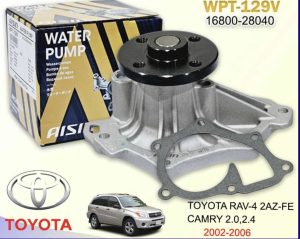
How much money can you save? It’s always a lot. As an example, a few weeks ago, I replaced the failing water pump in a 2005 Toyota RAV4 owned by my girlfriend. The cost of the replacement pump was about $70 – and that was for a high quality, original-supplier replacement pump rather than a penny-wise (but pound-foolish) off-brand Chinesium pump such as those typically sold at many car parts retail outlets such as AutoZone and O’Reiily’s. These cost as little as $25 but you’ll pay for them again, soon – when the new pump fails after two or three years. The original-supplier replacement pump will hopefully last about the same 20 years that the RAV’s original water pump did.
In any event, the cost to replace the pump was less than $100 – if you don’t count the weekend (off and on) I spent replacing it. It’s not the easiest job to replace a water pump on any FWD/AWD car because the pump is typically mounted on the front of the engine, which is mounted sideways in the chassis. This means there’s usually very little room to get at the bolts and so on that must be removed/loosened to get at the part that has to be replaced.
That’s why the typical cost to have this job done is around $400-$600. So, I saved about $300-$500 – which means I have that available to spend on necessities such as food. A good thing, too – given how much food costs in the Golden Age.
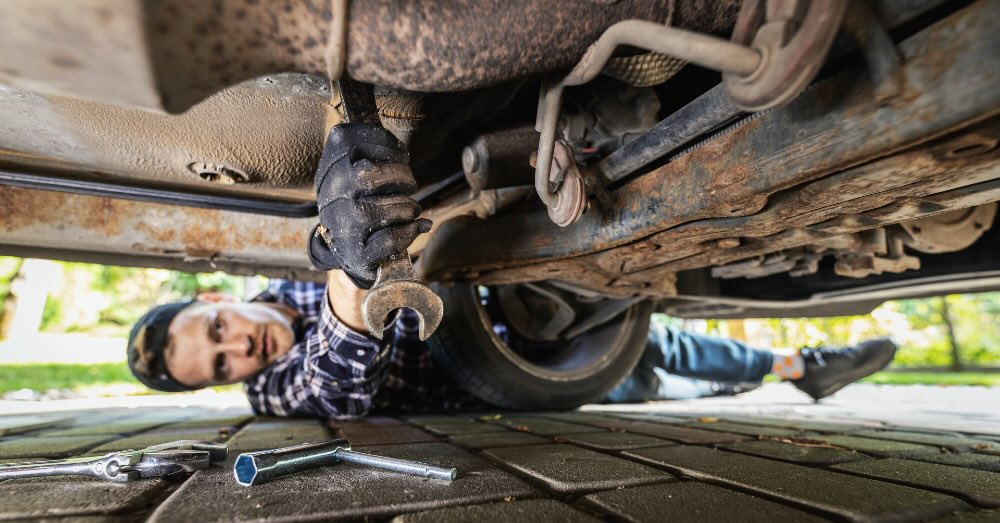
But in order to be able to save money this way, you’ve got to have the tools and the skills. The skills you get from doing it; but you can’t do it without the tools. This raises the obvious question: Which tools? It is not an easy question to answer, because there are so many tools and so many different repairs. Some require specific tools. Sometimes, it’s necessary make your own tools – as I had to do in order to get that water pump off the RAV4. Specifically, I had to figure out a way to get a 12 mm wrench (a socket would not fit due to the absence of clearance) on the four bolts that hold the water pump pulley on the hub of the pump. More finely, I had to figure out a way to get enough leverage to break those bolts loose. My 12 mm wrenches weren’t long enough. So I made one long enough, by inserting one end into a pipe that added about two feet of leverage. This broke loose the bolts with ease – and it didn’t cost me $40 to buy a probably once-every-20-years-use specialty 12 mm wrench.
The important thing is to not use the wrong tool for the job. It is very tempting to try something that you hope might work because it’s what you’ve got on hand; for example, a regular Phillips head screwdriver to loosen what look like Phillips head screws on many Japanese-made vehicles. In fact, these are often Japanese-spec screws that require the correct JIS screwdriver to get them out without ruining them (and possibly having to extract them, which will require more specialty tools). Except in emergencies, it’s almost always worth the slight hassle of going to the store to buy the right tool for the job. You may not even have to do that. Most car parts stores (e.g., O’Reilly’s, AutoZone) have specialty tools you can rent for much less than it costs to buy them.
It used to be true that the off-brand tools were hardly worth buying. That’s less true today. What’s sold at Harbor Freight or Northern Tools might be made in China and might not be of the same quality as the Snap On tools used by a professional mechanic, the quality s usually good enough and unlike the pro who works with his tools every day, you probably will use them every once in awhile. I have both “professional grade” and Chinesium tools in my chests and they both work for me.
Probably for you also.
In the past, a shop manual was as necessary as the right tools. It still is, because procedures (and torque values, for tightening bolts; you’ll need a special tool called a torque wrench for this) matter. The difference today is it’s not necessary to buy the often very expensive factory manual; you can often find a PDF online and there is also YouTube, which is a tremendous resource for walking you through how to do the job.
There is one other thing that’s even more important than having the right tools – and the right manuals, to understand how to do the work correctly. It is the time that allows patience. When a car needs to be fixed, the ideal scenario is to have another car to drive while you’re fixing it. When I did the water pump on the RAV4, its owner – my girlfriend – had my truck available for her to use. That eased the pressure on me to get it done in a day rather than over a weekend, which gave time to nurse busted knuckles, take breaks and not get irritated to the point of exasperation. When you’re in a hurry, the chances you’ll rush increase and that increases the chances you’ll make a mistake. Professional mechanics are on the clock. You have the advantage of being on your own schedule (assuming you have another way of getting around while the car is apart).
It’s also a godsend to have an out-of-the-weather place to work, such as a garage or even a carport. It’s much easier to keep track of your tools – and nuts and bolts, too. The real nirvana, though, is having both a garage and a lift in the garage. I finally got myself one about three years ago and it’s been life-changing. Even more so because the cost of home lifts has gone way down. You can get a drive-on/scissors-style lift like I got for not much more than it costs to have a timing belt changed these days. With a lift, it’s much easier to rotate tires, do brake work and oil changes as well as more major jobs that would otherwise be almost Jesuitical exercises in car repair hair-shirting.
The take home point here is that while we can’t control what we have to pay others to do things, we have complete control over what we don’t have to pay to do things ourselves.
. . .
If you like what you’ve found here please consider supporting EPautos.
We depend on you to keep the wheels turning!
Our donate button is here.
If you prefer not to use PayPal, our mailing address is: EPautos 721 Hummingbird Lane SE Copper Hill, VA 24079