

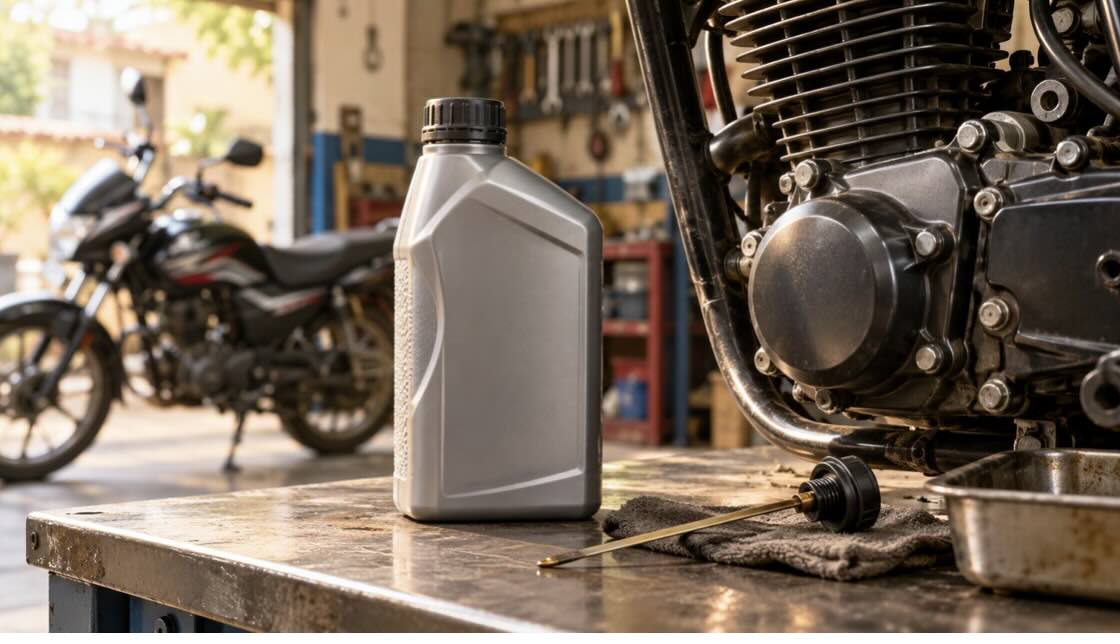

Your bike is due for its next service, and the mechanic asks which engine oil you want. The shelf holds many bottles, and each label carries numbers and codes that most new riders have never seen. Engine oil lubricates the moving parts, controls heat and keeps the engine clean between services. The choice therefore affects how the bike performs and how long the engine lasts. Many riders end up trusting a shop’s suggestion without knowing whether it suits their bike. A few facts about the label remove that guesswork.
This beginner’s guide explains how to identify the best 2-wheeler engine oil for your motorcycle or scooter, so that you can choose with confidence.
Where Do You Find the Right Oil Specification?
Your owner’s manual lists the specification. Before you look at any bottle, open the manual and find the engine oil section. The manufacturer lists the viscosity grade, the performance standard and the quantity of oil your engine needs. The best 2-wheeler engine oil for your bike is the one that matches them. The viscosity grade comes first.
What Does the Viscosity Grade Mean?
The viscosity grade tells you how easily the oil flows when the engine is cold and when it is hot. It appears on the label as a code such as 10W-30 or 20W-40, which follows the SAE J300 classification.
The number before the letter W describes flow at low temperatures. The W stands for winter. A lower number means the oil reaches the engine parts faster during a cold start. The number after the hyphen describes thickness at normal running temperature. A higher number means the oil keeps a thicker protective film when the engine is hot.
Common grades on Indian two-wheelers include 10W-30, 10W-40, 20W-40 and 20W-50. Each manufacturer picks a grade to suit its engine, so use the grade printed in your manual. If the manual lists more than one, pick the one that suits the temperatures where you ride. Next, check the certifications.
Which Certifications Should the Label Show?
Certifications confirm that an oil has passed recognised tests. Two matter most on a two-wheeler.
API Service Category
The American Petroleum Institute (API) rates petrol engine oils with a two-letter code that starts with S, such as SL, SN or SP. The second letter moves forward each time a new standard is introduced. A later letter therefore points to a more recent specification. Your manual states the minimum category for your engine, and the oil you buy should meet it.
JASO Rating
The Japanese Automotive Standards Organisation (JASO) created the T903 standard for four-stroke motorcycle oils. In most geared motorcycles, the clutch runs in the engine oil. If the oil has the wrong friction properties, the clutch can slip.
JASO MA, MA1 and MA2 ratings suit motorcycles with a wet clutch. JASO MB suits many automatic scooters, where the clutch does not run in the engine oil. Choose the rating your manual specifies. JASO-certified oils also print a registration number on the label, and you can check that number against the list JASO publishes. After the certifications, the next choice is the oil type.
Which Oil Type Suits Your Riding?
Engine oils are made from different base oils, and the base oil affects how the oil behaves under stress. Mineral oil is refined from crude oil and suits many commuter motorcycles. Semi-synthetic oil blends mineral and synthetic base oils. Riders who cover longer distances often use it. Fully synthetic oil is made from engineered base oils and is designed to stay stable at high temperatures and high engine speeds. Many performance motorcycles call for it.
Long highway rides, heavy traffic and hot weather all add stress to the oil. If you ride in these conditions often, a semi-synthetic or fully synthetic oil may protect the engine better, as long as your manual permits it. With the type chosen, look at the brand.
How Do You Judge a Brand and Spot Fake Oil?
A reliable brand delivers the same quality in every batch. It also prints the grade, the API category and the JASO rating clearly on the pack, so you can check it against your manual.
The place of purchase matters as well. Counterfeit lubricants are a known problem in the Indian market, and a fake bottle can look identical to a genuine one. Buy from authorised dealers or brand-owned outlets such as Gulf Oil. Check that the seal is intact and that the pack shows a batch number, a manufacturing date and an MRP. Some brands add a QR code or hologram for verification. After buying the right oil, change it on time.
When Should You Change the Oil?
Your manual states the oil change interval in kilometres, months or both. Change the oil at whichever limit arrives first. Heat, combustion by-products and dirt slowly reduce the oil’s ability to protect the engine.
Between changes, check the oil level every few weeks through the dipstick or sight glass. If the level falls below the minimum mark, top it up with the same oil. Riders who want expert help can visit a bike stop, an independent workshop with Gulf branding that offers regular servicing and engine oil changes. The mechanic there can read your manual with you and confirm the right oil for your bike.
Final Thoughts
Choosing the best 2-wheeler engine oil starts with your owner’s manual. It names the grade, the certifications and the change interval. When the label on the bottle matches those details, the oil is right for your engine.
Good habits keep the choice working. Buy from a trusted seller, check the seal and the batch details, and note the date of every oil change. Check the level every few weeks so that a small drop never turns into a bigger problem.
A rider who follows these steps gets a smoother engine and a bike that stays dependable through daily use. The effort takes a few minutes at each service.