


Toyota has just revealed the new (2026) RAV4, the latest iteration of its very popular small crossover that was one of the very first mass-market vehicles of this type. It’s been on sale now for 30 years, since 1996. Its success inspired dozens of emulators. Just about every major car company now sells a “RAV4” of its own.
None of them used to be hybrids. You used to be able to get a V6 in a RAV4. You used to be able to get a manual transmission, too.
Now they’re becoming exclusively hybrids. Which means they’re all becoming pretty much the same things.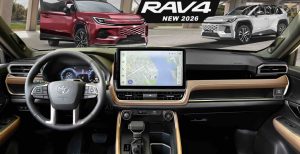
It’s true they are becoming more fuel efficient as a result. But they are also becoming more expensive.
The 2026 RAV4 will start at $33,350. This year’s RAV4 – the last new non-hybrid RAV4 you’ll have the opportunity to buy – stickers for $29,800 to start. That’s a $3,550 upsell, in case you’re wondering. It’s true the new, hybrid-only RAV4 will deliver higher mileage. Toyota says 48 city, 42 highway. This year’s RAV4 – the last year for the non-hybrid – touts 27 city, 35 highway.
This amounts to a 14 MPG advantage – averaged – for the 2026 hybrid RAV4 vs. the current (and last-ever) non-hybrid RAV4.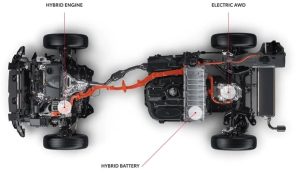
But does the difference amount to any real savings? The additional $3,550 you’d spend – assuming you were interested in buying it – on a ’26 hybrid-only RAV4 could buy about 1,200 gallons of gasoline at current prices (about $2.70 per gallon). The current (2025) RAV’s tank holds about 14 gallons of gas. That works out to about 86 full tanks of gas you’d have to burn through in a non-hybrid RAV4 before the hybrid began to save you any money, assuming you’d bought one.
The non-hybrid RAV4 has a fully-fueled driving range of about 400 miles combined (city/highway). Thus, you’d have to drive it about 35,000 before you’d burned through $3,550 in gas money. At that point, you might begin to save some money, if you’d bought the new RAV4 hybrid.
But not actually. The hybrid’s depreciation losses (relative to what you paid) will be proportionately higher, for openers. You will also have paid more for insurance coverage, because insurance costs are always higher when the replacement/repair costs of the insured vehicle are higher. In states that charge property tax on vehicles, you’ll pay more for that, too – because the tax is based on the retail value of the vehicle.
Even leaving that last line-item out, because you may not be living in a state that forces you to pay a fee to the state as the price of being allowed to retain physical possession of what’s for exactly this reason not your vehicle – the first two line-items are unavoidable because you’re required to buy insurance and you cannot do anything to avoid depreciation.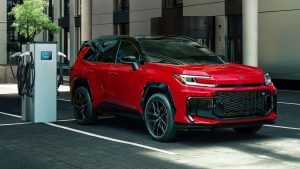
If it costs $100 more each year to cover the more expensive hybrid than the less expensive non-hybrid, you’ll have spent another $600 over the course of six years, which is now the duration of the average new car loan. Depreciation costs most new car buyers about 30 percent of the original purchase price after about three years. A 2025 non-hybrid RAV is likely to be worth about $8,500 less than it listed for when it was new in about three years’ time. A 2026 hybrid RAV is likely to be worth about $10,000 less than it listed for when it was new after about three years.
Combined, these costs add up to about $2,100 more that you’ll be paying for the 2026 hybrid-only RAV4 vs. the non-hybrid. On top of the $3,550 more you paid for the non-hybrid. That brings up the total buy-in costs to at least $5,650 more – and that’s not factoring in the probability of higher (and more frequent) repair/maintenance cost for the inherently more complex hybrid and the certainty – eventually – of the expense of replacing the hybrid battery pack when it loses its capacity to hold charge.
It all circles back to a question few seem to ask: If hybridizing a vehicle costs the buyer more, how does the buyer save money? The answer, of course, is that it does not. So why would Toyota – and it’s not just Toyota – decide to offer models like the RAV4, which were once very affordable little runabouts – as much-less-affordable hybrids only? Doing this is very likely to assure lower (and slower) sales because fewer people can afford to spend $3,550 buying in, not to mention the other costs they inevitably buy into.
It does not make sense, except in one sense. The compliance sense. This is the hidden cost we’re all (effectively) going to be charged – assuming we want to by into anything that’s new – because it is becoming difficult and may soon become all-but-impossible to buy anything new that isn’t hybridized. It is a form of offloading of the cost of government, which posits regulations – as for example gas mileage “standards” and “emissions” requirements – that must be complied with. The car companies figure out ways to comply – as by hybridizing pretty much everything they sell – and pass the costs along to us, marketing these costs as “savings.”
And this is why we’re rapidly going broke.
It’s the same as regards what it costs to buy a light bulb now vs. what it used to cost to buy an incandescent light bulb. Also what it costs to fix your home’s AC system – which will probably have to be replaced the next time it needs fixing because it uses the “old” refrigerant that cannot be used anymore. Instead of fixing the system you replace it.
Assuming you can afford to.
The real problem is that many people do not understand the source of these costs and so resign themselves to paying them. But it isn’t “just because.” It’s because government – and until enough people understand this – and get really angry about it; angry enough to demand these costs be reduced – they will continue to pay until they can no longer afford to pay.
At which point few of us will own anything – and aren’t likely to be happy about it.
. . .
If you like what you’ve found here please consider supporting EPautos.
We depend on you to keep the wheels turning!
Our donate button is here.
If you prefer not to use PayPal, our mailing address is:
EPautos
721 Hummingbird Lane SE
Copper Hill, VA 24079
PS: Get an EPautos magnet or sticker or coaster in return for a $25 or more one-time donation or a $10 or more monthly recurring donation. (Please be sure to tell us you want a magnet or sticker or coaster – and also, provide an address, so we know where to mail the thing!)
If you’d like a Baaaaa hat or other EPautos gear, see here!










i filled up my car yesterday, in central NYS, and paid $3.20 per gal. THAT “average” $2.70 price sounds great. So does the Emerald City.
I have long wondered how it may be possible that a hybrid driven at ~65 miles per hour on a highway can supposedly have a lower fuel consumption than a straight ICE vehicle.
After all, at that speed, you will be using only the gas-powered drive train, not the electric one.
I used to know a guy some 15 years ago who had a Prius. He told me that the car did save fuel in city driving, but not on highways and in addition, the gas engine didn’t have much oomph in it, which made it a pain for overtaking.
What has changed? Or is it just straight out BS, like the ‘EV range’?
The financials improve with higher assumptions for the cost of gasoline. Oil has been mostly in a bear market since the 2008 peak at $147. With all the money printing and shale oil no longer adding tremendous supply, the bear market in oil will end and will eventually translate to much higher fuel prices. If you plan to keep the car for 200k, you’ll be ahead.
Toyota isn’t going to have the volume it once had with the $25k V6 Rav4 of old. Just like its small cars, so it’s not learning from that experience……….
Used car demand for non hybrid Toyotas: high
Used car demand for hybrids: what demand
So if it takes x amount of gas to move you a mile, wouldn’t it take more gas to charge a battery to move you than just move you?
Sold a ’12 V6 RAV4 (last year of the V6) a couple of years ago because my wife wanted a new car. About as fun to drive as an ordinary crossover can be and cheap to insure and operate. By the time I figured how how screwed up cars have gotten, her heart was fully set on a new one.
I don’t mind the CX-50 that replaced it, but time will tell if the Mazda is as durable and reliable. If I had it to do over again, I think I would have pushed harder to keep the Rav.
Ever since 1973 the government has been obsessed with fuel economy. Makes sense, whole departments were created specifically for hand-wringing over efficiency and reducing consumption. The polar opposite of improving people’s lives. And when they are effective at making lives better, it usually backfires because it allows for fuel cost to be less of a factor. So people will build bigger houses, buy bigger cars and generally use as much energy as possible for their budget. That’s why oil consumption is fairly constant, something that I’m sure frustrates some bureaucrat at the EPA.
Even if these do go further on a gallon of fuel than the old model, it will probably just lead to more miles driven. Why the hell not? It don’t cost hardly nothin’! And now that the cost of flying is up and services are worse than ever, the return of the classic road trip might just be the next big thing.
What is even more amusing is that the EPA Highway Fuel Economy Test Cycle is based on a 10.26 mile highway drive at an average speed of 48.3 mph.
This short test allows hybrids to show higher fuel economy over non hybrids but I’m pretty sure if you drive for 40 minutes it won’t make much difference. As an added bonus you are definitely in Clover territory if you drive at 48.3 mph on the interstate.
As for city driving it represents urban driving, in which a vehicle is started with the engine cold and driven in stop-and-go rush hour traffic for about 11.04 miles at 21.2 mph.
https://www.fueleconomy.gov/feg/fe_test_schedules.shtml
I’m guessing “tests” like this are we aren’t allowed to have nice things anymore.
I’ve never driven a hybrid. Assume it’s underpowered for its size and weight?
The new Camry hybrid does not feel underpowered. I’ve had two as rentals in the last year, and both had excellent acceleration while offering 600+ miles of range on the highway.
Like a lot of people who comment on this site I hold onto my cars as long as I can. Based on that I suspect that many who do that will have little interest in a hybrid because once the battery or related EV system parts die and if the parts become available you wind up with a future shed or chicken coop as the car won’t be any good as a car again. Creative people can swap engines into vehicles that never had those engines but computerized EV parts I suspect won’t transfer over as easily.
I find one of the most nauseating aspects of this “consumer demand for hybrids continues to increase!!!” claim in the automotive press always lacks context.
The last Camry (2023) model year available withOUT hybrid power only sold 13% hybrids.
Allegedly through the 3rd quarter of 2025, the current MY RAV is selling 47% hybrids (which I would attribute to Toyota “pushing” them onto the market to help prepare buyers for 2026.)
But nobody wants to be honest and acknowledge the point of this article – is that buyers now have no choice.
Thanks, Flip!
And – yup. The “demand” for hybrids is like the “demand” for EVs in that both are the result of government demands. Hybrid tech has been around for 20-plus years. For years, there was just the Prius and one or two others. That was all the actual demand justified. If there had been more actual demand, there would have been many more hybrids. It took government demands to force all these hybrids on the “market,” which no longer is one.
The hybrid drive wasn’t truly necessary in the last gen Camry.
I once again brushed up against 50 MPG in my non-hybrid 4-cylinder 2.5 L 2018 Camry driving up to Dallas and back to Austin this past weekend.
Thank regular maintenance — oil changes at 5000 miles, not 10000 like Toyota suggests — and ethanol-free gas.
In town, I routinely average 35 MPG.
I like the 2018-23 Camry. It is a very competent automobile. The only thing that is insufferable is the nanny tech onboard.
How fast do you drive it to get mileage close to 50?
35 mpg around town is very good as well.
70-75 gives optimal MPG.
The nanny tech can be turned off or sensitivity dialed down to minimum, but the long term concern with those systems is the windshield mounted camera longevity.
The lane “assist” nearly killed me driving the vehicle home from the dealer after picking it up so I went through the manual and turned off everything that I could.
Mechanically, the eight speed transmission was new for 2018, and that could be a problem as the vehicle ages.
Thank that infamous eerily steady 71 mph elephant roll on the 35 between Round rock and Dallas.
Not through Waco lately.
I did the 10k oil changes like the owners manual said on my car. After 19 years at 535,000 the mechanic told me engine needed rebuild, so I sold it. So would I have gone farther doing 5000 mile changes?
‘It does not make sense, except in the compliance sense.’ — eric
Four years ago, when auto makers were greenlighting the new models that are on the market now, EeeVee Fever prevailed. All kinds of cockamamie ideas, such as Lightning Jim Farley’s ludicrous electric pickup, were thought to be surefire money makers. Today we know that EeeVee Fever was just another chapter in Mackay’s classic work, Extraordinary Popular Delusions and the Madness of Crowds.
But ask yourself, what are auto makers greenlighting today that will hit the market in 2029? All hybrids, all the time, I’ll venture. And with dangerous AEB (Automatic Emergency Braking), another insane ukase which takes effect in that year.
These are just more reasons to write off the entire auto industry, and all of its worthless products. To take the RAV4 as an example, I own a first and second gen RAV4, both with 5-speed manual shift. But I wouldn’t touch today’s RAV4s — zero interest.
Automaking is a dying industry. Our job is to finish it off and bury it like the old p.o.s. Dick Cheney — preferably by torching a few EeeVees to mark the happy occasion. Got shish kebabs? 🙂
Amen, Jim!
My girlfriend has an ’05 RAV4 with the five speed. It’s a fine little runabout that’s both fun to drive (a quality drearily absent from almost all new vehicles) and extremely durable/reliable. The thing is 20 years old now and has given her zero problems.
You’re right of course but in doing so we’re going to put the final nail in our U.S. economic coffin.
Nope, finishing nail is aka Raytheon and that aint happenin for decdes at least.