



You have probably heard about what are styled right to repair laws – or efforts to get such laws passed. They are a response to the encoding of cars; more finely, to the denial of access to the coding that runs the computer-controlled modern car. Not just the engine but everything, down to the power windows (which are controlled by mini-computers called body control modules). Your name may be on the title and you’re the one who paid for the vehicle – but ownership is effectively claimed by the vehicle’s manufacturer, who claims perpetual ownership over the code (the software) that runs the vehicle and its systems.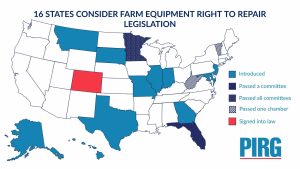
It is the Bill Gates model applied to vehicles.
You may remember when you bought a box that contained a CD that had the software in it. Once you bought what was in the box, you owned what was on the disc that came in the box. You could install it on multiple computers. You could give the CD (and so the software) to your kid or a friend and they could use it, much as you could hand-me-down your old car to your kid. That changed – as regards software – when Gates decided to sell you a license to use the software rather than the software itself. This license was limited. You could not make a copy or hand it down to your kid. You also had to pay again at some point to continue to be allowed to continue to use the software.
This same business model – a polite term for it – is being applied to vehicles, piece-by-piece, in the manner of getting the frog used to the warming water. You have probably heard about how Tesla and BMW want people to buy subscriptions to features such as heated seats. You’re allowed to use these features so long as you continue to pay for them. But you never stop paying for them (assuming you want to continue using them). Even if the car is paid off.
A subtler implementation of this extractive scheme is to deny the owner the right to repair his own vehicle – effectively – by denying him access to the computer code needed to diagnose and repair it. In some cases, even to the extent that a new/replacement part will not work – even if it is a correct, brand-new part and properly installed – if the computer does not “recognize” it. The vehicle must be hooked up to the vehicle’s manufacturer’s Hive Mind in order to “pair” the new part with the vehicle. Otherwise, the part won’t work. The trick – the extractive scheme – is that access to the Hive mind is controlled by the vehicle’s manufacturer, who only allows access via its “authorized” network of dealers and repair shops – effectively forcing you to pay them to “unlock” your vehicle’s otherwise ineffable electronica.
Enter what are styled right to repair laws. The idea is laudable. It is that the owner ought to be the owner of the vehicle he bought. Including the invisible stuff that runs it. Or at least, he ought to be able to freely access it, so that he can diagnose and repair problems himself. This is fine – as far as it goes.
The problem is it does not go far enough.
First, even if laws are passed affirming the right to repair, what does it mean – as a practical matter – if the owner still has to buy access to the equipment needed to access the information (the data) needed to repair it?
You can buy a hand-held scan tool and plug it in to any new vehicle’s OnBoard Diagnostic (OBD II) port. All vehicle made since the early 2000s have these OBD II ports and they are universal; i.e., the scan tool will plug into any and all of them. However, the scan tools don’t necessarily provide all the information needed to service the car. Repair shops have access to all the latest information but they have to pay a subscription to keep it viable (updated). Right-to-repair laws would affirm you have the right to the information – but (probably) you’ll still have to pay for it. If the cost is exorbitant, your “right” is as meaningless as your “right” to buy a new Ferrari.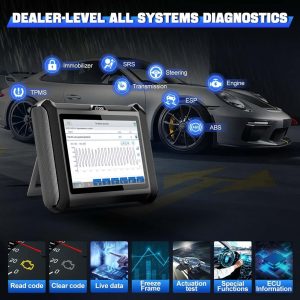
Go right ahead – if you can afford to.
The more interesting thing brought up by these right-to-repair efforts is the broader reality that we do not control our vehicles anymore; not if they are new or made since the dawn of the connected car era, which dawned about a decade or so ago. Since that time, all new vehicles are at least in principle externally controllable, via over-the-air “updates.” This “updating” is presented as benign; your car is merely receiving the very latest software – to make it run more efficiently, you see. But the fact is the vehicle can be controlled externally and by dint of that, they control you. By extension, you do not own your vehicle anymore than you own the right to your own labor or the home you paid off but which you’re still obliged to pay the government thousands of dollars every year in “property taxes” – else be ejected from what isn’t and can never be your property for exactly that reason.
You can at least still assert ownership over a vehicle and your right to repair it without having to pay a fee to be allowed to try to repair it – by not buying a connected or encoded car. My old muscle car is actually mine, because no one else can access it or “update” it. I control it. Every last bit of it.
If you want a car like that, you have to be willing to own a car made before encoding and connectedness became a thing, which means at least a decade old as regards the connectedness and decades old as regards the encoding. Computers began to control cars circa the early 1980s. That’s how far you’ll need to go back to be really free of what Paul Joseph Watson styles modernity.
He does not mean electricity or hot and cold indoor plumbing. He means the world the technocrats have in store for us. The one in which we rent to use and are thus reduced to propertyless serfs, owning nothing – and probably feeling pretty miserable on account of it.
. . .
If you like what you’ve found here please consider supporting EPautos.
We depend on you to keep the wheels turning!
Our donate button is here.
If you prefer not to use PayPal, our mailing address is:
EPautos
721 Hummingbird Lane SE
Copper Hill, VA 24079
PS: Get an EPautos magnet or sticker or coaster in return for a $25 or more one-time donation or a $10 or more monthly recurring donation. (Please be sure to tell us you want a magnet or sticker or coaster – and also, provide an address, so we know where to mail the thing!)
If you’d like a Baaaaa hat or other EPautos gear, see here!






Eric wrote: This “updating” is presented as benign; your car is merely receiving the very latest software – to make it run more efficiently …
and it can be used to disable your vehicle by hackers, say IDF goons in Tel Aviv, or the SPLC, ADL, Trump loyalists, Leftists, etc.
All computer systems are hackable, from Michael Hasting’s Mercedes to Iran’s centrifuges by STUXNET.
it should be dawning on us not to buy these cars that are wified to the parent company. if we don’t buy them they won’t build them
When people hear: “You will own nothing and you will be happy.” They don’t take into consideration that there are two ways to own nothing. The right way is the way people like Bill Gates, Jeff Bezos, George Soros do it which is by forming non profits, foreign LLC’s, international trusts, etc. They put everything into these instruments and on paper they own nothing. When you own nothing on paper, the government can’t take anything from you in the first place. The other way is to just let them drain your hard-earned money away until you’re broke and forced to rent everything.
Nobody really owns their own home so why would we suddenly become interested in working on our vehicles when the house we’re working on isn’t even ours to begin with? Whenever people get around to the point where they’ve had enough, they’ll soon realize that they’re too late. If you want less onerous rules and regulations, lower or no taxes at all, fighting a corrupt government isn’t going to work. I moved 3000 miles to eliminate my property taxes, lowered my cost of living by about 50% and my standard of living improved dramatically. Even so, I’m already looking for greener pastures. I can afford to since I left California, but Florida is now being inundated by transplants from California and New York, and there’s no doubt in my mind they’re already looking to screw this place up as well. A lot of people have already made their escape. It’s so much easier to see how screwed up things really are when you’re actually living free. Why would I purchase a new car when I can buy a perfectly restored classic for a fraction of the price, and work on it with aftermarket parts that are also significantly more affordable?
Property rights need a revision. To wit, if the manufacturer still wants to claim ownership, by their “right” to control how the vehicle can be accessed to be repaired, they should be fully responsible for the costs of the repair. ALL the costs. Since it’s always the owner that has to pay for upkeep of the property. Or if they still want to assert that the user is the true owner, then the user shall be entitled to all the benefits of ownership, including access to all systems within the property.
No one buys a home, and then is told that the air conditioner that is permanently attached to the home, is not theirs to use. And possession is 9/10ths of the law. So the law needs to be re-written to correct that specific fault.
Class action suit, anyone?
Intel used to produce a DX and SX version of their CPU chips. The DX was faster and cost more. It was manufactured on every chip. To create an SX chip, Intel would actually break a link to cripple a DX chip!
[…] https://www.ericpetersautos.com/2026/06/06/right-to-repair-is-meaningless/ […]
In the end, fewer and fewer people will be able to afford a new vehicle. That means there will be a mad scramble for used vehicles. Still fewer and fewer will be able to afford to repair them and keep them running. As they age, they require more repairs and eventually you will have paid for the car twice or three times over like when you mortgage a house and pay all that interest. It all leads to no driving and depopulation. If the Muskrat has his way, we won’t even own our bodies anymore.
I have a 2012 Toyota Tundra, and I don’t believe that is gets any automatic updates to the software. Am I wrong? I know my 2007 For Mustang GT sure does not. Neither vehicle has any touch screen.
Hi Fred,
I checked and it looks like your Tundra does not have telematics. I am certain your ’07 Mustang does not, either. Some good news to start the day!
Open source is the only course!
What is needed are good people and companies to buck this trend and make repairability a sales point. This would funnel the money in the proper direction and make “right to repair” laws unnecessary. In the meantime, what we need are *hackers*. >:D
From an email I received today from Senator Rand Paul:
‘I introduced the Fuel Choice and Deregulation Act. This bill lifts outdated government barriers, makes it easier for older vehicles to convert to alternative fuels like ethanol, biodiesel, and methanol, and ensures year-round access to E-15 gasoline.
‘By removing unnecessary EPA rules and anti-tampering restrictions, we can expand competition, support our farmers, strengthen domestic energy production, and lower transportation costs for working families.’
What are these ‘anti-tampering restrictions’ of which Dr Paul speaks? Though I have zero enthusiasm for E-15, its sounds like ‘deleting’ diesel emissions systems may become more feasible at the federal level … though that won’t stop state emissions nazis.
Very interesting, Jim.
I’m not having any difficulty finding E-15 these days. In fact, it’s the E-10 and less that is becoming increasingly rare.
Now, I do hope that the good doctor can successfully push significant removal of “unnecessary EPA rules and anti-tampering restrictions”, which I hope means what I think it means, but I am doubtful. There are commoners that are hungry for such things, but the corporations probably see that as a threat to their now ingrained business models.
To hell with the corporations.
We the people should rule. We should make the rules. End of story.
In a free-enterprise, private-property system, a corporate executive is an employee of the owners of the business. He has direct responsibility to his employers. That responsibility is to conduct the business in accordance with their desires … the key point is that, in his capacity as a corporate executive, the manager is the agent of the individuals who own the corporation … and his primary responsibility is to them. – Milton Friedman, The Friedman Doctrine
At the time, Friedman was writing about social responsibility and the CEO’s activity around it. And at that time shareholders were holding the shares directly, not through a derivative. But it was used as a bludgeon to align CEOs with investors’ desires and created the modern soul-less firms who think nothing about, for example, laying off experienced (high dollar) employees and replacing them with H1Bs (and making the last task of the laid off to train their replacements) who’s primary responsibility will be to maintain the systems built by the laid off people. Shareholders also became anonymous, people who held mutual funds and ETFs, not actual shares. Do you own Ford or GM stock? Is your 401(k) tied up in an index fund? Well, you don’t own it, but your fund does. Do you get to voice your opinion on right to repair during the earnings call? How’s that ownership working out for you? Money’s good but not if it doesn’t buy you anything.
So the CEOs become beholden to a professional governance class. One that has a fiduciary responsibility to the shareholder, not the corporation. Of course these big fund managers are stuck too, because they control so many shares they can’t just dump stocks without hurting their fiduciaries, so they pressure the CEOs to do whatever gets the most cash out of the customer. “Leaving money on the table” has become the cardinal sin of the 21st century.
Well RK, corporations are a creation of the state. No reason to expect moral behavior from them.
Hi Eric, and friends! As you point out, ownership is now circumscribed by the “Ruling Class” – whether it’s the “Gov’t”, or “Corp” – either of which has power over us, the “Rentier Class”.
This is regression, a move from personal independence back to medieval feudalism, with residual trappings of democracy for the hoi polloi.
This is of a piece with the housing “crisis”, and job “crisis”, manufactured by the privileged to curb real freedoms, especially that of real personal independence. Just look at the barriers placed in the way of small business owners, typically sole proprietors or family-owned business’s, to growth.
“Average Joe” (or Jane) now has just the freedom to grovel, either to “the man” or big business. The game is called “Pay-to-Play”, until things get ugly. Today, only the lucky few can enjoy “movin’ on up!”
The “rulers” have limited liability, and almost unlimited economic power. We’re left with the inverse – unlimited liability and limited economic power. Serfdom is back in style. “You will own nothing – and be happy!” /s.
Absolutely, Dutchman –
My hope is that percolating awareness of this reality outpaces their plans – which could be stopped if enough of decide this has got to stop. Back during “COVID,” I urged people to passively refuse to go along with the idiocy – as for example by refusing to “mask up.” Had even 25 percent of us refused, the regime of Sickness Kabuki would have ended much sooner than it did. Same as regards the TSA and Security Kabuki.
We can win. We just have to want to win – and be willing to do something to win.
My state actually passed a right to repair law a few years ago, it was immediately tied up in the courts by dealer/manufacturer lawsuits. I think it survived with some modifications but at this point it’s moot, since few independent repair shops can afford to pay for the diagnostic equipment for all the different brands.
They think they have a stranglehold on technology. In fact what they’re doing is cartelization, it’s technically natural and normal to improve on all technology, and their products are becoming more and more inferior to places like (gag) China which dont put up with exploitation.
Wouldn’t it be shocking if the trigger for widespread rebellion wasn’t outrageous tax regimes or surveillance or gun control, but impoverishment via technology cartels?
I wouldn’t be surprised at all.
I think Adobe beat Microsoft to the subscription model.
Microsoft is reneging on perpetual licenses too. Office 2019 for the Mac will stop working on July 13.
https://byteiota.com/microsoft-kills-office-2019-mac-july-2026/
The age-old rentier economy writ digital. Widespread in antiquity (feudalism), now the modern face of govcorp capitalism. There’s nothing new under the sun. You will own nothing, and you probably won’t be happy either. Although there are rumours that Middle Ages serfs had a lot more free time than we do.
I saw a video putting forth the following explanation: In 1996 Fedgov decreed that all the codes must be (for lack of a better word) “the same”. I suppose standardized. Reckon this meant across all mfrs, at least. We saw this as OBDII. Reckon that once the codes and communication of codes became standardized across mfrs, then the repair market responded in kind, with code readers and diagnostic tools that were brand agnostic. What the video said was that this standard was to be kept for 10 years. (2016, maybe applicable to the 2017 model year cars) Once the requirement for standardization was removed, then proprietary codes, communication, software, etc., could resume. I believe that is where we are now.
I have a 2020 F150 and, while not knowing for certain, people say there are certain codes, or certain diagnostics that can only be addressed with the FORSCAN software tool. (Dunno if FORSCAN is independent, or a Ford product). At any rate, they say you install the FORSCAN on your laptop and use another piece of hardware to connect from your computer to the OBDII port.
A simple example of this is changing the battery on your proprietary-software car. As the battery capacity diminishes, the computer alters the charging profile of the battery. Evidently, weaker batteries can only sustain lower charging rates. If you were to swap your old battery, and not reset this function, then your new battery would get charged using the old battery profile. You guessed it: Only way to reset is with the proprietary software. (Particular video I saw, had the guy reset it with FORSCAN, but you get the idea.)
That’s a big deal for me, on principle, like Eric alludes to above. Eh, another thing (which Eric says too), is that the damn truck has many computer modules, all talking on the CAN bus. I saw another video of a horror story whereby Ford truck taillight was out (water got in there), and due to other high-tech sensors located within the taillight assembly, the whole CAN bus got taken down! Then there was an avalanche of problems: I think the video culminated in that the guy couldn’t start his truck! So, at any rate, that is just an example of too much gadgetry and tech. I’m seriously considering getting rid of my 2020 and getting the holy grail of trucks: 1996 F150, 4.9L straight six (last year of that engine), with manual trans and 4wd…
Nowadays things aren’t fixed (think rebuilding a carburetor) –they are removed and replaced. Getting to a failed widget is more of a PITA than ever. I recall daddy replacing a fuel pump on the side of a country road. Truck died, walked to nearby house & called my uncle, quick trip to a local autoparts store, fixed & back on the road in just a few minutes.
Repairability was an integral, assumed feature of cars from their invention around 1900 until roughly the early 1990s, when it began to recede. Electromechanical technology can be diagnosed as physically broken or electrically failed using tools and a multimeter. Broken parts can be removed and replaced by a competent individual.
Proprietary black boxes with chips take away repairability. Manufacturers thought few would notice. But we did. Now 1995-2005, give or take a few years, is recognized as a golden era when only a limited number of essential functions were chip-controlled. These vehicles are not connected with cellular telematics and do not receive over-the-air updates.
Was cellular connectivity really essential to maintain black-box technology, given that software-related recalls often still involve a trip to the dealer? Don’t know … but I know this: I don’t want it. My late 1990s vehicles are not connected. They are not updated. And they completely serve my needs in a way that my phone, which still pesters me with operating system updates, does not.
A properly designed product does not require updates. The shitty Apple/Microsoft model of endless patches to the operating system probably derives from competitive pressure to ship out first-generation garbage and then attempt to fix it on the fly. Eff that noise.. That is not how classical electromechanical product design is done. Flake off, coder-losers.
If I remember correctly on Eric’s last weeks call with Bill Meyer a caller reported that he could no longer access most data on his Ford or it coulda been a Dodge after it went in for recall work.
Either way if you’re holding onto an older vehicle and a recall is offered, ask them what they are actually doing in total to your car.
Hi Eric,
This goes beyond cars…..Apple has essentially made it impossible to repair their computers for a while now. There’s a guy, Louis Rossman, who had a computer repair shop for years in Brooklyn but he was essentially forced to migrate to Austin by means the mafia would be familiar with. Tis a strange world we live in.
Though resisiding in Cupertino, Louis and Jessica showed me the inside detail of what a filthy racket is Apple Inc. Rotten to the core purveyor of snob tracker trinkets.
There is hope coming from an unlikely place–the European Union.
Under European laws, Apple is being forced to use a standard interface for the charging/data port on its Iphones. Gone is the proprietary lightning port which is being replaced by USB-C.
It gets better.
The European Union has decreed that cellphones and other devices shall have end-user replaceable batteries. Yes, batteries that are easily replaceable by the end-user.
There are a few good things finally coming out of the European Union, roundabouts being but one of them.
You’re right but that’s about the only good coming out of the EUSSR.
IBM was the OG “no user serviceable parts inside” tech company. They were also the last of the mainframe manufacturers to rent equipment, as was their business model since Thomas Watson cobbled together a bunch of office equipment manufacturers.
The hapless customer, with their payroll due and month end reports to be run, called the IBM man, who arrived in his blue suit and black tie uniform to perform the highly skilled surgery to get the system back online. He might insist that everyone leave the room because so they can’t be witness to the protected internals of the device. Soon the culprit was found and service restored. IBM to the rescue.
But then the stuff got too reliable. And the differences between the different models (and price points) began to blur. So IBM, wanting to optimize manufacturing, built the same base hardware for everyone and just ran different clock speeds. This led to the “golden screwdriver” update where a process was taking far too long to run on the customer’s base system. The sales rep sold an “upgrade” which was again performed by the IBM service man, again with everyone out of the room. Once alone with the equipment it was just a matter of moving a few jumpers or dip switches, rebooting and suddenly twice the instructions per second!
If you take your vehicle to a chain or the dealer, you can’t go back into the bay and talk to the mechanic. You can’t see what’s going on. You have to trust that they’re not ripping you off. Now imagine that everyone gets the same drivetrain but behavior is programmed to be different for every vehicle. So that turbo inline 4 in an econobox gets 0-60 in about ten seconds. But the same turbo inline 4 in a “sporty” car gets there in seven, and only four in the supercar.
Don’t laugh, it can absolutely happen with EVs.