


Henry Ford is said to have said his customers could have any color they liked, so long as it was black. Well, what he actually wrote – in his 1922 biography, My Life and Work, was “Any customer can have a car painted any color that he wants so long as it is black.” This applied to the Model T from 1914-1925. Why did Ford paint all those cars black?
Because it was cheaper – and faster. Black paint dried faster, which helped speed along the assembly line. Ford was almost monomaniacal about reducing the cost of making Model Ts, so that he could sell more Model Ts. Today – 100 years later – it seems you can have any color you like, so long as it’s white. Or a shade of gray.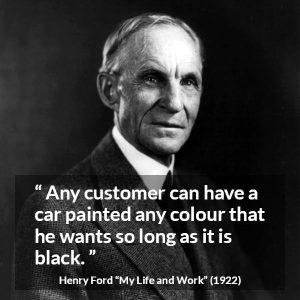
Your eyes are not lying to you about this.
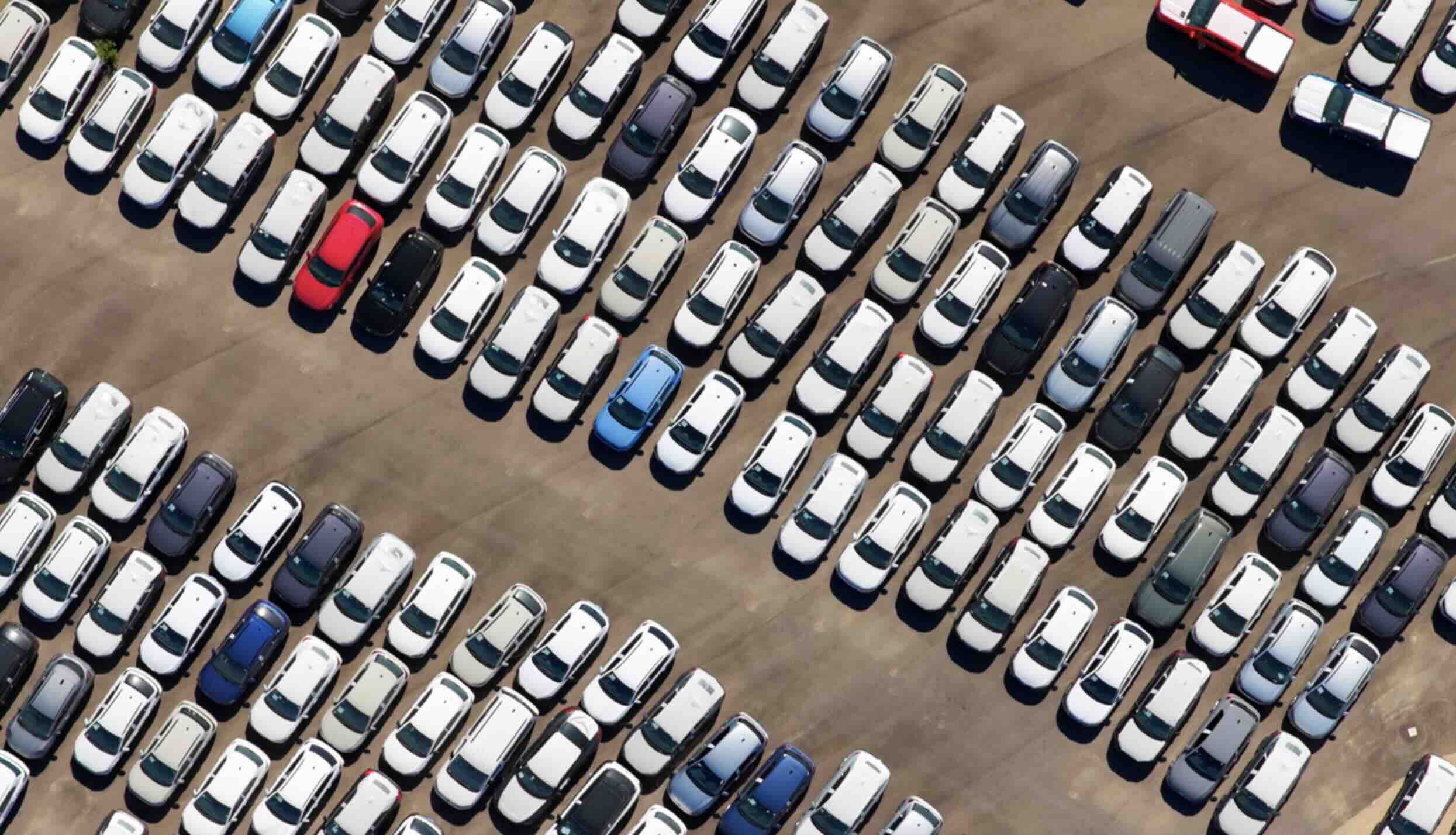
More than a quarter (25.7 percent) of all new cars are painted white. More than 80 percent (80.4 percent) of all new cars sold are painted grayscale colors – white, gray, silver and black. That’s why parking lots increasingly look like the appliance aisle at Lowes or Home Depot. It’s apt, because the typical new vehicle is an appliance. A crossover or an SUV of some kind and for the most part, these already all look the same same. Why bother painting the same thing a different color?
Especially when it costs extra.
Ford didn’t charge his customers anything for the black paint and – today – the grayscale colors are also no charge. But if you want an interesting color – especially a metallic red or yellow or something like that – you might be looking at an option that costs as much as air conditioning used to back when most cars didn’t come standard with that. For example, if you want a new Subaru Forester in blue, it’ll cost you $395 extra. Jeep wants $595 extra for yellow or dark green metallic on models like the Compass. But the real heart attack comes when you find out how much it costs to paint a luxury-brand car something other than grayscale.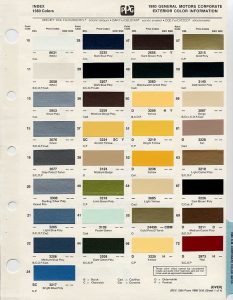
BMW includes black and white at no extra charge, but if you want your new 3 Series painted metallic black, it’ll be another $650. Red is the same – and if you want a really interesting color such as Tanzanite Blue Metallic it’ll add $3,600 to the car’s price.
It’s a weird thing when you think about it. Features that used to be options – and even luxuries, such as climate control AC – are pretty much standard in most new cars, even the entry-level ones. This column has mentioned on prior occasions that no one sells economy cars anymore. Economy cars were cars that did not come with AC – or much else beyond seats, a steering wheel and a heater. But you could usually get whatever color you wanted at no extra charge. There were a lot of options. Here’s an example. The 1980 Chevy Chevette – which was very much an economy car – was available in the following colors and none cost extra:
Can-Am White, Classic White, Polar White, Frost White, Linen White, and Yellow White), Silver Metallic, Charcoal Metallic, various Blue shades (Light Blue Metallic, Medium Blue Metallic, Bright Blue Metallic, Dark Blue and Dark Blue Metallic); Green options included Medium Green, Bright Green, and Dark Green Metallic. Yellow tones included Adonis Yellow, Yellow, Light Yellow, and Yellow Bird. You could also go with shades of Beige (Cream Beige/Frost Beige, Medium Beige, Camel Beige), Brown (Saddle Metallic, Dark Brown Metallic). How about Omaha Orange? Varieties of red included Scarlet Red, Cardinal Red, Claret Metallic, Dark Claret Metallic, Cinnabar Red, Red). You could also specify hues of Carmine (Carmine, Dark Carmine). Richmond Gray was also available.
The Chevette was vanilla – but you could get it in just about any color. Two-tones, even. The same was true for most cars in the Before Time – defined as before the early 2000s, which not coincidentally is when America became the Homeland. Before that happened, Americans didn’t have to worry about standing out. Now they do. We live in a surveillance state. Cameras are everywhere and everyone is being watched, everywhere they go. It’s not a coincidence that people want to blend into the crowd and what better way to do that than to drive a looks-like-everything else crossover or SUV that’s painted a grayscale color, like pretty much everything else?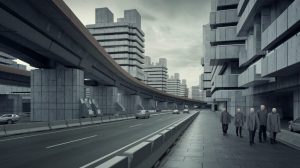
It’s interesting to point out the truism that as a country becomes authoritarian, it goes grayscale. Everything begins to look the same, bleak and and gray-ish. It is a symptom of the crushing of the creative spirit. In its place, a dreary homogenous sameness that is as soul-less as it looks. It makes you want to look down, not up. It makes you want to scream, but you don’t because someone might see you and say something.
Best to just turn up the AC, keep your head down and be a Good Citizen, all buckled-up and safe.
. . .
If you like what you’ve found here please consider supporting EPautos.
We depend on you to keep the wheels turning!
Our donate button is here.
If you prefer not to use PayPal, our mailing address is:
EPautos
721 Hummingbird Lane SE
Copper Hill, VA 24079
PS: Get an EPautos magnet or sticker or coaster in return for a $25 or more one-time donation or a $10 or more monthly recurring donation. (Please be sure to tell us you want a magnet or sticker or coaster – and also, provide an address, so we know where to mail the thing!)
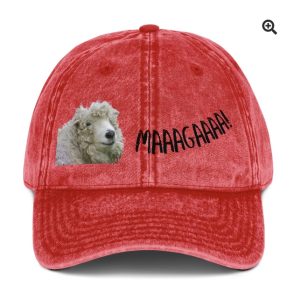
If you’d like a Baaaaa hat or other EPautos gear, see here!







 of all new cars sold are painted grayscale colors.)
The towns the cars are in all look the same too, Corporate Shitbox Nuveau.
Eric, have you heard about car companies threatening to leave California over their desire to have your personal data?
https://youtu.be/i1_8Lj6El8M?is=egwhgm7Bcv-or1kQ
And some states will not be waiting for Orange-a-tang… kei now roadworthy in AK.
https://www.alaskasnewssource.com/2026/07/07/kei-here-stay-new-alaska-law-makes-import-vehicles-roadworthy/
Hi J,
Yes. There is a rising percolating. I hope the pressure builds to the boiling point. There is a German saying: Der Tag Kommt.
It’s all white or gray I wish they would stop making these colors I noticed few brands are offering other colors now but I noticed with Toyota only the highest prices trim’s get the cool colors to try and get people to spend more all base model look like a refrigerator.
As a side comment to the extra costs of certain colors, some below have already commented on the cost of different colors. To me, the costs are also about manufacturing costs.
Our environmentally regulated paint booths costs are off the charts. A paint booth can not change the colors it paints easily. The Manuf. has to decide ‘do we add another paint booth at $M’s, or do the labor to change the colors in the 1-2 we currently have’.
This has a lot to do with extra/different paint color costs.
The 2025–2026 Mustang GTD is the most expensive Mustang on the road today, with a starting price near $328K and the potential to go over $400K with options. You can get it in green if you order it with a custom paint code. There is no mandatory extra charge simply for choosing a “green” paint
I saw a green one in nearby Birmingham MI and thought it looked strange, especially with that big wing in the back
https://mustangforums.com/wp-content/uploads/2023/10/Mustang-GTD-on-Track-4.jpg
That is as much as “Mustang” as a Nascar Toyota “Camry” resembles a real Camry.
When my friends buy cars, one of the first questions is, “what color has the best resale value?”. I sit them down, and show them used car prices, and for typical cars, the color affects price maybe $200 out of $25k+ for a used car, so call it 1%. Buy the color you like, damn it.
New car values plummet the moment you drive them off the lot, might as well have a color that you like.
This attitude makes me wonder how this feedback loop happened. People buy conservative colors, that they think have good resale value, so manufacturers make more conservative colors.
Morning, OL –
Yup. I tend to agree. Unless the color is just obnoxious, I doubt it has more than a trivial effect on the value of the vehicle.
I just had my 2010 (last year made) PT cruiser repainted at a local shop ‘cuz I’m keeping it. Runs well and rock solid for what I need and no surveillance tech. The Deep Aqua Blue stock color really stands out in all that Grayscale America.
In a similar vein, these people who like to adorn the interior of their houses with those 6000K bright white/blue LED bulbs in ceiling mounted cans! I walk in and it’s like I’m in a hospital. Sterile. Other-worldly.
I love the look of our old fashioned floor and table lamps all giving off a warm 3000K glow. Real contraband bulbs, no LEDs.
3000K LEDs are easy to find.
Nice warm light, & only use 14 watts.
Much “warmer” light than “warm white” fluorescents & use half the power.
Maybe, but LED light is still sterile, free of infrared, and has a flicker rate that can be controlled through a smart meter. Incandescent is like fire light. Much healthier for the eyes and mood. Worse case scenario, we will be back to filling jam jars with CO2 or argon and a tungsten wire or carbon filament made in the oven. LED is good for workspaces and flashlights. And for headlights if you are the one behind them, but I really hate the brightness coming at me.
2700K LED bulbs produce a slightly warmer white than 3000K bulbs.
I despise LED lighting, so I made a supposedly lifetime buy of 60 W incandescent bulbs in 2011 before Shrub’s ban (EISA bill passed in 2007) went into effect in 2012. Alas, I’m burning through them faster than I expected to.
Our new-to-us house has a lot of in-ceiling can lights that require LED floodlight style bulbs. First thing I did after moving in was get rid of all the previous owner’s annoying and depressing 5000K bright white/blue bulbs, and replaced them with 2700K bulbs. To me, 2700K looks the most like my old incandescent friends.
>2700K looks the most like my old incandescent friends.
[nodding assent]
Yep, and they use a whole lot less electricity (14 watts vs. 100 watts),
which also menas the down light cans will be much cooler with LEDs than with incandescents.
The early LEDs really sucked, but I actually like the lower color temperature new ones. JMO.
Way back when I wrote an article for Eric to use if he chose on this subject. I think it got wiped out in the hack attack. Anyway it’s much worse now. I think it’s a deliberate choice to make the lived in environment depressing. To take the color out of life. A Soviet or communist like approach to things. Which is odd because commie cars often came in a variety of odd pastel colors. Not great colors but still colors and the kind of color you knew at glance that was a Lada or Trabant. Same as we could just see a brief splash of color and knew it was GM, Ford, Dodge, or some european or Japanese car.
Even in traffic today I spot the 1980s and prior cars easily by color. I see a certain color out of the corner of my rear view mirror and I know it’s an Oldsmobile Cutlass or Chevy Chevelle or a Mustang, or a Dodge Dart or whatever. Their colors are easily remembered.
I see luxury brands but you can’t tell that they are from a distance. You have to get up close and see the badging or trim. No seeing a color and knowing that’s a 1969 Lincoln Continental or a 1975 Cadillac. It’s just another white or black or grey cross over. It’s just dumb.
Bring back color. Sell cars. It’s like they don’t want to sell cars anymore.
Amen, Brent!
One of the reasons I love my old Trans-Am is that it’s painted Carousel Red, a kind of bright orange with reddish tendencies. It is a color very specific to certain Pontiac models, including mine and also (more famously) the 1969 GTO Judge. The car really stands out. No more so than ever!
As Jim H commented below, it reflects social attitudes. Grayscale attitudes abound.
Why?
Perhaps it’s because we see the world as a pretty great place that is being ruined by sociopathic misanthropes. Many may not be able to put their finger on it but, when was the last time a “happy” song topped the charts or became a social phenomenon?
Another poster mentioned Mazda’s Soul Red. Yes, it’s a pretty great color in bright sunlight (candy apple anyone) but the rest of their palette sucks. They even managed to ruin a blue. If you look at the first and second gen Miatas they had some great colors from yellows to greens to a variety of blues (Crystal Blue being my favorite).
Now, nothing.
And do people really buy a car and steer toward grayscale for resale prospects?
“And do people really buy a car and steer toward grayscale for resale prospects?”
Doesn’t surprise me. Just like houses no longer being homes, cars are now only seen as “investments”, as opposed to transportation. Ironic, given the rapid depreciation of higher-end, feature-laden vehicles.
Bright colored pigments like that — particularly the ones that don’t fade as fast in the sun — are something like 100x more expensive and most of them require high film buds to achieve hiding (1 mil vs. 4 or 5) which makes them even more expensive in terms of applied cost. And when your film build starts getting higher you increase the risk of internal delamination problems.
Then there’s the (potential) issue of certain meyallic pigments causing a Faraday effect that interferes with e.g. LIDAR sensors, one of the ways to mitigate this is to use less metallic & more mica (if you need sparkle), and soray thinner films.
One of the problems with straight black, is yes it hides well but it shows off every single paint defect extremely well.
Hence, lots of whites & grays.
(I may have a small amount of professional experience with this)
Gotta disagree with you on this one, bro. I don’t think the prevalence of near-monochromatic paint schemes has anything to do with the surveillance state we’re living in. As you said yourself, Uncle Henry built millions of black Model Ts, and it wasn’t because Flock cameras were everywhere in 1918.
To the contrary, you can stand out from the crowd with your color scheme it you’re willing to pay for it. My boss’s daughter has a Cyber Orange Bronco and you can literally see it coming a mile away. She wanted that color and happily paid extra for it.
Personally, I LOVE white vehicles — I have two of them. From a maintenance standpoint white hides dirt and scratches and flaws better then any other color (until they rust, then white looks like Hell).
There are some beautiful metal-flake blues, reds, grays and blacks out there but when the clearcoat starts getting dinged up and scratched they look like shit. Matching touch-ups on them is damn near impossible. And after you wash and wax them as soon as you go through one puddle or the pollen or dust hits them, it’s all for naught.
I’ll take a plain white car every time.
You’re on target. No one notices a white Corolla in sea of white Corollas. Hide in plain sight.
When I bought my 1990 Toyota Pickup it was in Super White (code 040) because that was free. They’d charge for any other color. One reason for this was white was done in one-stage lacquer while all other colors were two-stage with a clear coat.
That was the first generation of truck that was like this. The trucks 1988 and older where all single stage primary colors which was why Toyota trucks in the 1960s to 1980s were simple dull tan, white, green, red.
Funny thing, when I finally retired that truck with the old, plain paint it was rusty in spots but the paint itself was fine on the good metal. That was not the case with clear coated trucks where it was only garage queens driven by grandpas weren’t peeling.
What’s even more interesting is the 2007 Tacoma I replaced it with was painted, checks notes, yes, one-stage Super White II, paint code 040.
Although it’s starting to get some areas of peeling, which was a known problem of 040 in the 2nd generation Tacoma. So not everything is great in rainbow unicorn world. But similar vintage Tacomas I see are getting the peeling clear coat and my problem is easy to fix with some very fine sandpaper and touch up paint.
Peeling in my case I meant the color layer did not adhere to the primer. The primer coat seems fine so I deal with the loose paint, scuff, clean and repair the top coat. Doing this with a clear coat that comes off can be a little more difficult because the clear yellows over time so painting small sections is obvious with fresh clear. Also it’s different in where it happens. Mine is at corners and behind doors with concave profiles, obviously a prep issue at the factor, probably bits of solvent or water in the paint shop, while clear coat tends to peel in the middle of panels exposed to heat and UV like the roof and hood. So it’s easy to see.
Hi Kyle,
The thing with modern clearcoat paint jobs is that once the clear begins to flake or cloud up, the only fix is to strip the paint and repaint the car. My old Trans Am has its original (mostly) single stage (non clearcoat) enamel finish and it still looks sharp even though the car is 50 years old. Part of this is due to the car being garaged and never rained on but also because, over the years, I have been able to use compound to bring back the shine. The clearcoat is what gives modern car finishes their shine; you can’t buff these finished. Once the clear is shot, the shine is gone.
In Oregon any business that installs tint over useless 70% on a windshield is subject to FELONY charges.
Panopticon
Were getting very tired of that endless rolling blue verification icon on this site. Put up a paywall please.
Hi Rain,
I hear you about the verification swipe; that said, I want to keep the site open to everyone. I need to make a living, like most people – but I don’t like being extractive. I do wish I could personally slow-torture every bot farmer out there. Get some pipe hittin’ niggas to get Medieval on they asses!
This is analog. And red. For your enjoyment.
https://youtu.be/8jbeAzgsRCc
I noticed that a lot of the Tesla’s around here are white. I know that’s been a popular color for the past few years but then I read that white is the only color that is included in the price. If you want any other color, it is $1000 extra.
Personally, I miss the browns and earth tones that the German brands used to offer.
And Mazda makes a fantastic red. Looks brilliant in the sun.
Beautiful color indeed! ..until you become to poor bastard at the collision repair facility that has to match that color on a repaired or replaced panel..
It’s called Soul Red.
In a few US climates any paint but white or silver parked in UV 15 sun for half an hour overheats the interior. It doesnt get below 100 at night for weeks in summer.
Yet some people in these areas still spend fortunes on black infernos parked in attached garages fighting their HVAC ?
Dark colors show dirt worse than light colors, silver being the best. Since one can’t see much of the paint while driving, I never cared much about the color. In 1986 I bought a new pickup for work, at night. Didn’t really know what color it was until I picked it up the next day
That’s partially correct: dark colors show certain kinds of dirt worse than light colors. Light colors show mud, oil, etc. worse than dark.
I not always been particular to yellow on a car. The exception is the Alpha Romeo GTV:
https://www.youtube.com/watch?v=wWKEvraVzAs
>Currently there’s a backlash against ‘millennial gray’ in home interiors
I should hope so. I call it “corporate gray,” which seems appropriate, given its ubiquitousness in corporate remodels, which were not even a thing, years ago,
Whatever happened to “earth tones?”
I am going with lots of copper and brass for my own kitchen remodel. GF (who lives in CT) is of the same mind, even though she drives a Commie Gray E91. Bicoastal romance, and we are not even rich, so we have to fly commercial . Bummer. Life in th fast lane. 😉
There was bound to be a backlash. Can’t come soon enough in my mind. I have a relative who is redoing parts of his home. Ruining it in my mind with the horrible open concept treatment. He showed me some pictures. It’s nothing but that horrible “Greige”. It’s slightly less bad than the straight gray look.
Hi Klink,
All that “open concept” crapola is the fault of HGTV. My sister in law did that with a kitchen remodel a few years ago, then discovered how sound travels everywhere when there aren’t many walls to block it. Ended up hanging some floor length drapes for privacy. My wife is always watching those shows and getting stupid ideas that I reply to with “uh-huh” 😆
Hey Mike, my sister in law did the same thing! They did a total HGTV treatment to most of the main floor. Even had to have a very expensive beam installed. She was so proud of it. We had Thanksgiving there and you couldn’t have a conversation it was so noisy. Plus, it’s just so cold and impersonal. I’m sure in a few years it will run its course too and people will be putting walls back up.
I bought a Pure Red 2025 Subaru Crosstrek off the lot last year. I chose red because it makes my car easier to find in a parking lot—and more visible in bad weather.
If we’re so concerned about Saaaaaaaaafety, then why isn’t anyone saying anything about how hard it is to see a white, gray, or silver car in a dense fog or in a blizzard? Yeah, that’s why your headlights come on automatically in the daytime, but still, they’re hard to see.
So I guess not only loud pipes, but also bright colors, save lives.
PS: I miss colors like Big Bad Blue, Plum Crazy, Sublime, Panther Pink, Go Mango, Saturn Yellow, Tor-Red, Thanks Vermillion, and Gold Rush.
Yes. Even in light rain or just an overcast sky, gray and silver cars can be hard to see. I avoid them like cottage cheese, tofu, and opera.
Seen a few cars around that I would describe as Pussy Pink.
don’t know who painted those, but evidently the color is not a factory option.
I do like the aftermarket repaint of my ’89 F150. Factory color is deep shadow blue mettalic, which is nice. But the factory paint is one coat baked enamel, whereas the aftermarket paint is clear coat over, which has a depth you cannot get in any factory paint I have ever seen.
Saw a beautiful Porsche 911 (I think) in that precise color a couple weeks ago, driven by a gorgeous young woman who no doubt earned it the old-fashioned way (hard work, long hours, personal sacrifice…).
Leave any maroon car parked in full sun for 20 years if you wanna drive pink on a budget.
Some of those have to do with selling lots & lots of Mary Kay products.
Let’s not forget that interiors came in a multitude of colors and not just grey. For those youngins reading this there were certain limitations based on the exterior color chosen, and yes I did run into a guy that wanted a silver (If I remember correctly) interior with what Pontiac decides was not an appropriate exterior color on his Fire Bird or Trans Am, and yes it was a hideous combination but that’s what he wanted and managed to get and he was happy with his decision.
Regarding BMW’s Tanzanite Blue, to be fair, that paint is “formulated using actual crushed tanzanite gemstones, giving it an exceptionally deep, brilliant luster and crystalline sparkle.” Having seen it in the the show room, it is a beautiful color. Pigment itself is getting more expensive, especially with the modern paint formulations that have been foisted on us in the name of “preserving the environment”. Red is especially expensive. I sure do miss the non clear coated lacquers!
They don’t call it “Bring More Wallet” for nothing.
Speaking as a 4 time BMW driver (3 owned, one leased).
‘As a country becomes authoritarian, it goes grayscale.’ — eric
Bright colors to grayscale — in cars, clothing, home decor — goes in cycles tied to social mood. An extraordinary example, fueled by widespread availability of LSD, occurred in the mid to late 1960s when psychedelic colors were ubiquitous, including on hand-painted VW hippie vans. Peter Max Finkelstein [usually he omitted the surname], who is now 88 years old and tonto, personified the era.
Currently there’s a backlash against ‘millennial gray’ in home interiors, and probably soon against ubiquitous white farmhouse style exteriors. Excavated Pompeii shows that Roman color choices were garish by our standards.
AI claims that standardizing production on grayscale colors saves money for auto makers, reduces risk for dealers, and also reduces resale risk.
Colored dyes once were costly. Only royals were allowed to wear purple, the costliest. Periods of prosperity tend to encourage bright colors to accompany the bright mood. Whereas authoritarianism, often accompanying or following economic disaster such as warfare, promotes a somber social mood and muted colors. Artem Stisovyak, a Ukie boudoir photographer whose country actually is at war, shoots in muted colors on actual film.
It’s hard to read where the US is right now on a social mood scale. Stocks are near record highs, but consumer confidence is plumbing record lows, as the lions share of capital gains accrue to one-percenters like the MFOB [Monstrous Fat Orange Bastard] and the Tech Lords.
Official stats claim that we’ve had but two (2) months of recession in the past 17 years, an unprecedented run fueled by years of zero interest rate policy in the 2010s, and now by $2 trillion deficits. The next recession is gonna be a doozy. Likely it will kill off two-thirds of auto makers. Survivors will consolidate into Big Auto, a wholly-owned subsidiary of Big Gov. And like the late Amy Winehouse, we’ll be ‘back to black.’ Any questions?
“It’s hard to read where the US is right now on a social mood scale.”
I’m guessing that’s a result of the much-ballyhooed “K-shaped” economy where the upper classes are booming and everyone else is sinking under inflation. Probably it means the rich are wearing vibrant colors this summer while the dying middle and poor are on the grayscale.