

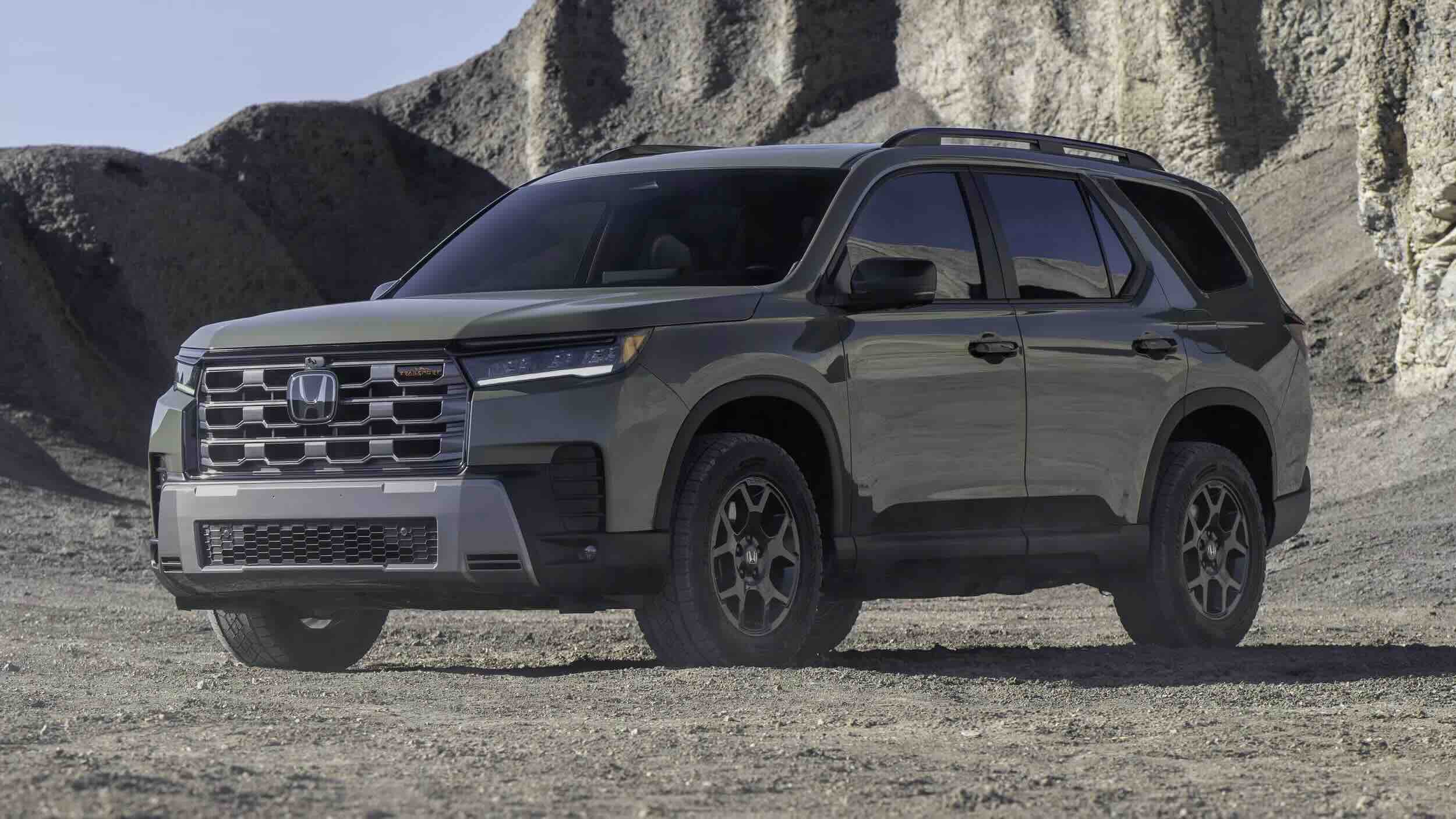

As the number of mid-sized, three-row crossovers that still come with a V6 dwindles (one of the latest casualties is the Kia Telluride) the few that still do seem almost exotic.
aIt’s a measure of the way things we used to take for granted have to a great extent been taken away.
For now, Honda hasn’t taken away the V6 that’s still the standard engine in the Pilot – though for how much longer it’ll be able to hold the line out against the pressure to comply – and retire the six in favor of a turbocharged or hybrid-augmented four, as Kia has done to the 2027 Telluride – remains to be seen.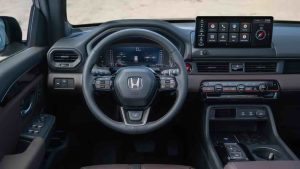
What It is
The Pilot is a mid-sized, three-row crossover that competes with similarly-sized and generally similar rivals such as the Kia Telluride, the Toyota Grand Highlander, the Subaru Ascent and the VW Atlas, among others. It differs from all of those in one significant way: It is the only one of the bunch that still comes standard with a V6 engine. You might care about that if you don’t want a turbo-or-hybrid-augmented four cylinder engine. Or a CVT automatic transmission, which comes in the Ascent and the Grand Highlander.
Prices start at $42, 395 for the base Sport trim, which is FWD; AWD can be added as a stand-alone option. So equipped, the MSRP increases to $44,495. The Sport comes standard with 20 inch wheels, LED headlights, leather trimmed steering wheel, three-zone climate control, a power rear liftgate, a nine speaker audio system, a digital main instrument cluster, a 12.3 inch secondary touchscreen and second and third row bench seats (seats for eight people, total).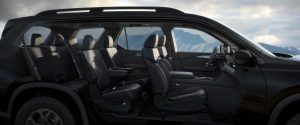
The $44,695 EX-L adds wireless phone charging, leather seat covers, rear side glass sunshades, extra USB outlets for the third row and a cabin intercom system. AWD is also available as a stand-alone option; if ordered, the MSRP goes up to $46,795.
Trailsport ($50,595), Touring ($51,295), Touring ($52,295), Elite ($53,695) and top-of-the-line Black Edition ($55,195) Pilots all come standard with AWD. The Trailsport has additional snow day/off-road equipment, including 18 inch wheels with all-terrain tires, a suspension lift (for more ground clearance) and skid plates. It also comes with a heated steering wheel, panorama glass roof and all the extras that come standard in the EX-L.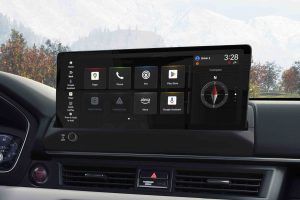
Touring trims get an upgraded 12-speaker Bose audio system and a configurable second row with a removable/stowable center seat section as well as a 360 degree outside camera system.
The Elite adds a HUD, heated second row seats, rain-sensing wipers and a household (115V) accessory power outlet. Black Edition Pilots come with all of that and feature unique-to-this trim gloss-black 20-inch wheels and interior/exterior trim touches.
What’s New For 2026
In addition to some exterior styling tweaks, all Pilot trims come standard with a new (larger) 12.3 inch secondary touchscreen.
What’s Good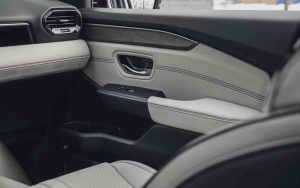
Standard V6 isn’t under pressure; you’ll never have to worry about paying for a new turbocharger – or hybrid components, such as the hybrid’s EV-like battery pack.
Significantly more cargo room than you’d have in a Mazda CX-90 (which is one of the other handful of vehicles in this class that still comes standard with a six cylinder engine).
Hondas tend not to depreciate as much – or as quickly – as some other brand vehicles.
What’s Not So Good
Significantly more expensive than the Hyundai Palisade ($39,435 to start) and the Hyundai also comes standard with a V6 and a higher (5,000 lb.) standard max tow rating. The Pilot’s standard tow rating is 3,500 lbs.
Mazda CX90’s also less expensive to start ($39,300) and also comes standard with a six cylinder engine as well as the option to buy a much stronger iteration of that six cylinder engine.
The new big touchscreen looks like a Pop Tart erupting from the top of the dash.
Under The Hood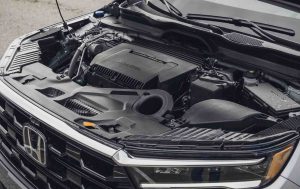
Every Pilot comes with Honda’s highly-rated 3.5 liter V6. It is highly rated because it is one of the most reliable and trouble-free engines of the past 20-plus years. Honda made millions of them – and probably most of them are still running. They have a track record of running for 250,000 miles or more without needing major work. Honda used to offer this engine in the Accord sedan and also various Acuras. Sadly, it is now only available in the Pilot and the Pilot’s sibling, the Ridgeline (which is basically a Pilot with a pick-up-style bed).
The V6 touts 285 horsepower and 262 ft.-lbs. of torque. It is paired with a ten speed automatic – another plus, if you do not like CVT automatics. There is a rational reason for not liking them. More finely, for being leery of them. CVTs do not have the best record for durability; it is a function of their design – which uses (typically) a pair of pulleys and a belt to continuously vary the range (as opposed to shifting up and down through fixed gear ratios). The problem there is that, over time, the belt fatigues and eventually snaps. When it does, the transmission is toast. Non-CVT automatics sometimes fail, too. But they have a better track record for long-term durability.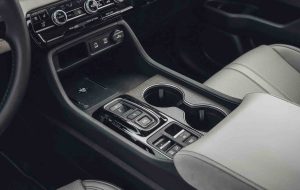
Same goes for the V6, which is big enough to adequately power a vehicle the Pilot’s size. Smaller, four cylinder engines are not adequately powerful by themselves; that’s why these engines are augmented by turbochargers and hybrid systems. The problem there is you have a more complicated drivetrain, with more potential failure points. You also have an engine that is under pressure – which is what turbo boost is. The pressure adds stress and added stress tends to not be congruent with a long engine life.
To be fair, some of the Pilot’s turbocharged/hybrid-augmented (and CVT equipped) competitors get better gas mileage than the Pilot’s 19 city, 27 highway. But not bigly. For instance, the Toyota Grand Highlander – which comes standard with a 2.4 liter turbocharged four – rates a just barely better 21 city, 28 highway. The new Kia Telluride only gets 20 city, 28 highway out of its 2.5 liter turbo’d four. Mazda gets 23 city, 28 highway out of its turbocharged and hybrid-augmented 3.3 liter inline six. This is a very smooth engine but it is also a very long and complicated engine that will probably cost more to service than the Honda’s simpler and more accessible V6.
Though not regarded as a particularly sporty vehicle, the Pilot is respectably quick. It can get to 60 in about 7 seconds. The Mazda CX90 – which is seen as sporty – is only slightly quicker.
A weak spot – if you are looking for a three-row crossover that can pull stuff – is the Pilot’s modest 3,500 lb. max tow rating. The upside is that it’s available with a 5,000 lb. max tow rating but to get it, you have to buy the AWD system.
On The Road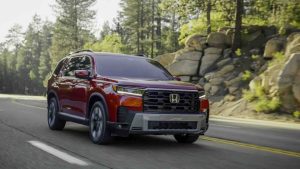
The Pilot’s not exactly exciting to drive – but that’s the appeal. As in no surprises – probably for the next 15 years. The V6 is a quiet companion with a track record for being long-term reliable. That’s what people who buy family haulers tend to be interested in. Car reviewers are interested in other things, sometimes – such as how much power there is or how quick it is. Well, there’s 285 horsepower there. It’s pretty remarkable how jaded we’ve become when almost 300 horsepower and the capability to get to 60 in 6.9 seconds is looked upon as nothing special. Here’s a point of comparison: One of the quickest muscle cars of the ’70s was the 1973-74 Pontiac Trans-Am with the Super Duty 455 V8, which was a detuned race car engine. It made a claimed 290 horsepower and the SD-455 Trans-Am got to 60 in about 6.5 seconds. It just barely beat this Honda family hauler to 60.
That’s actually pretty exciting when you stop to think about it.
The Pilot feels big and solid – but not huge and hulking. Because the hood is not very long (because the V6 is mounted sideways, or transversely) it’s easier to pull into (and back out of) parking spots than an SUV of about the same size that has a long hood – such as a Dodge Durango, for instance.
You just get in, too – rather than climb aboard.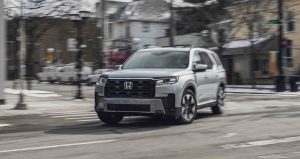
Your view to either side is expansive because the door side glass is not crimped by tall door sides (the cheap way to improve side-impact crash test scores). The controls for the AC and heat/fan speed are still separate from the touchscreen, so you don’t have to look at the touchscreen while you’re driving to adjust the AC or the heat/fan speed. The Pilot’s transmission is controlled by a console-mounted, push-button set-up similar to the set-up in the Accord sedan and other Honda models. This frees up space on the center console that would otherwise be taken up by a traditional pull-it-back-and-forth gear selector, but be careful about spilling your drinks on the buttons.
The seats, like the suspension, are designed for long-haul comfort. Even the TrailSport – which has a lifted (1 inch) suspension and 18 inch all-terrain tires – is as quiet as a minivan on the highway at 75 MPH. The Pilot does not sell itself on an obvious wow factor but on quiet, all-around excellence. It’s very hard to find anything to dislike about it – which is another way of saying there’s a lot to like about it.
At The Curb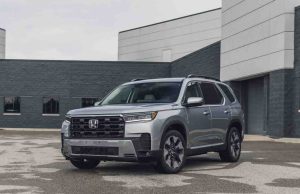
At 200.1 inches long, the Pilot is within a few tenths of an inch of others in the class such as the Mazda CX90 (200.8 inches) and the Hyundai Palisade (199.2 inches).
The Toyota Grand Highlander (201.4 inches) and VW Atlas (200.7 inches) are a wee bit longer and can tout more interior space (they each have about 96 cubic feet of total cargo space with their second and third rows down, vs. 87 cubic feet for the Honda) but both come standard and only with undersized four cylinder engines that are augmented by turbos to make up for their being undersized.
There’s ample room in the first two rows (the second row has essentially the same amount of legroom – 40.8 inches – as there is up front, which is 41 inches) and the third row has enough room to be not-uncomfortable for normal sized adults. Regardless of trim, it’s a nice space to be in, too. Even the base trim has three-zone climate control and wireless connectivity for devices, along with a very good nine speaker stereo. You do have to move up to the EX-L trim to get USB ports for the third row, however (as well as pull-up/down sunshades for the rear passenger side glass.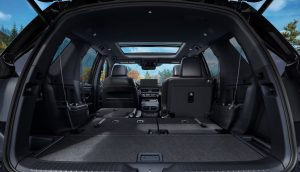
Speaking of glass. The Pilot has unusually shaped rear quarter glass sections that sort of kick up at a jaunty angle. It’s a small but visually distinctive difference that can help identify a Pilot in a parking lot full of other crossovers. Said another way, there’s nothing off-putting-looking about the Pilot. It might not turn heads, but it doesn’t turn stomachs and there’s good sense in that (especially as regards depreciation/resale value).
The Rest
The big touchscreen looks like a Pop Tart that popped out of the dash but it has large, easy-to-accurately tap icons. You can easily tune the station you want by entering it into a keypad input, so no need to scroll through listings while you’re trying to keep your eyes on the road. There are also two manual ways to increase/decrease the volume of the stereo – via a knob on the touchscreen or via a switch on the steering wheel. The door panels have huge molded in cupholders and there’s also a handy storage shelf built into the dash on the passenger side.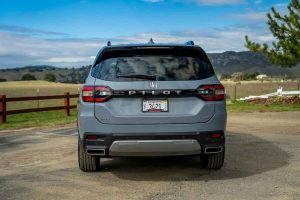
The Bottom Line
The Pilot’s not the flashiest choice but that’s arguably why it makes a strong case for itself. Its chief deficit is that it costs about $2k more to start than some of the others in the class. But it is also likely to lose value (depreciate) less fast – not just because it’s a Honda, but because of that standard V6.
. . .
If you like what you’ve found here please consider supporting EPautos.
We depend on you to keep the wheels turning!
Our donate button is here.
If you prefer not to use PayPal, our mailing address is:
EPautos
721 Hummingbird Lane SE
Copper Hill, VA 24079
PS: Get an EPautos magnet or sticker or coaster in return for a $25 or more one-time donation or a $10 or more monthly recurring donation. (Please be sure to tell us you want a magnet or sticker or coaster – and also, provide an address, so we know where to mail the thing!)
If you’d like a Baaaaa hat or other EPautos gear, see here!








I know a lifelong Toyota buyer who is considering the Pilot since no turbos or batteries. That’s a lot of money, my advice was that she could get a used low mile SRT Durango with 475hp for less.
I can vouch for the Honda Pilot, owning a 2011 4WD all these years, miles, and family road trips. An alternator is the only mechanical repair ever needed in it’s 215,000 mile journey so far. It is showing it’s age and mileage lately though. We redid some interior pieces and gave it a Maaco paint job to alleviate some of the wear and tear. The dreaded cylinder deactivation has not presented any problems.
If you must put another God-damned SUV on the road, make it a Honda Pilot.*
*Any Honda execs out there who wish to use that tagline, please get in touch.
Hi Philo!
The biggest thing with these cylinder deactivation systems is clean oil. Change the oil twice a year – never mind what the service recommendations say – and it’ll likely never give you any trouble.
For me, it’s been every 5,000 miles like clockwork.
[…] https://www.ericpetersautos.com/2026/07/05/2026-honda-pilot/ […]
It’s nice that Honda is still using this engine, but I believe it has a cylinder deactivation system. It is too bad they have to resort to things like that which add a bunch of complexity. I’ve read about previous systems causing oil consumption issues.
Anyone have any experience with this VCM tuner?
Sorry, forgot linky:
https://www.vcmtuner.com/
I use a similar “muzzler” for my Odyssey. Works great!
Wheelbase remains a viable way to compare the size of cars, along with length and weight. Here are selected specs for a 2026 Honda Pilot and a 1966 Chevy Impala:
______________ Pilot _____ Impala
Wheelbase ………113.8 ………119.0
Overall length ….. 200 ……….. 213
Curb weight …….4,334* ……. 3,600
Trans speeds ……. 10 ………….. 3
* Weight with 2WD. With AWD: 4,658 lbs
Long overhangs made the Impala’s length 13 inches greater than the Pilot, despite only 5 inches of extra wheelbase. Yet despite its extra length, the Impala was almost 750 lbs lighter than the 2WD Pilot.
To game EPA mileage testing, the Pilot has ten (10) transmission speeds. Whereas the Impala got by with three, though overdrive was an option with the 3-speed manual.
Auto design took a wrong turn during our lifetimes. Vehicles could have remained simple, relatively lightweight, and cheap, with a long list of options. Instead, despite a near tripling of engine specific output, the vehicles themselves became festooned with chips, body control modules, airbags, cameras, sensors, and porked out in weight.
It didn’t have to be this way. 🙁
Absolutely, Jim –
This Pilot – were it 750 pounds lighter – would probably be capable of 35 (maybe 40) MPG on the highway. The V6 would work better paired with a four or five speed automatic. All those extra gears are for compliance reasons only.
The durability, practicality, and overall capabilities of these SUV’s is pretty impressive.
I bought one in late 2023, as opposed to a Tahoe or Expedition for about $50 grand.
We still have our 2004 Pilot, bought new for $30K, with 270K plus miles, it’s still chugging along, on its 3rd or 4th timing belt. It overheated last year and blew the head gasket, but not badly. The shop repair cost to replace them exceeded the car’s value, but the magic chemicals for sealing small head gaskets leaks have kept it running smoothly since then, so I’m keeping my fingers crossed and one eye on the temperature gauge!
Aside from replacing the entire transmission in 2010, just before the warranty expired, its been relatively trouble free, and extensively reliable. But stay on top of the maintenence, or repairs can get expensive.
It’s the EX-L model with 4WD, and it’s easy to add stuff like tablet-type touch screens to it, as my kids have done. It’s performance impressed me enough to buy an Accord recently, not to mention how affordable it was, like the Pilot was some 23 years, at over $20K less than the average new car price of some $51K today.
And, Honda dealers actually have cars for sale, unlike Toyota or similar, with reasonable amounts of room for bargaining with the total price.
But, it’s just my two bits…good luck with whatever you decide for your ride.
YMMV…
Morning Saxons,
Yup. Treat these things welland they will treat you well. It’s sad Honda no longer offer the 3.5 V6 in the Accord. Especially with the six speed manual. Cars used to be fun…
Why is it, with all the money put into the design of cars that very few have been able to integrate the touch screen into the layout? It usually appears that everyone forgot they were putting in a touchscreen until the last minute.
Hi Dan,
It actually is kind of last-minute! In the sense that yuge touchscreens are still relatively new and many current-year models such as this Pilot are basically the same as they were several years prior. In other words, they were designed prior to this current mania for yuge touchscreens. So they get grafted on as an afterthought. Redesigning an entire dashboard gets into money…