

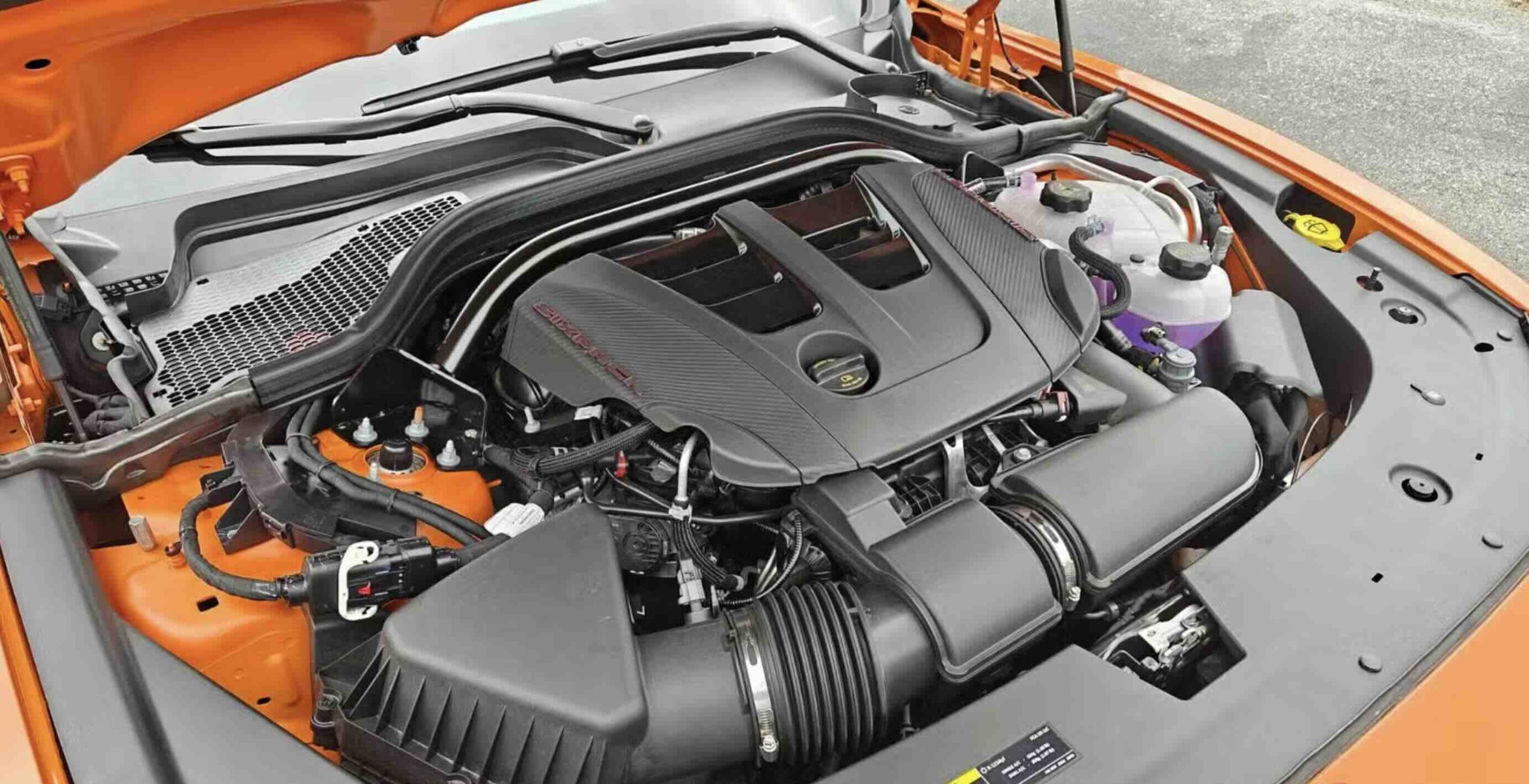

When Dodge finally put an engine back in the redesigned Charger, lo and behold – sales began to happen.
So far this year, Dodge has sold 4,583 Chargers that don’t have to be recharged vs. 534 Chargers that do need to be recharged. The latter figure amounts to an 88 percent decline in battery-powered Charger sales relative to last year. That makes the “electrified” Charger something of an exotic – as well as a disaster.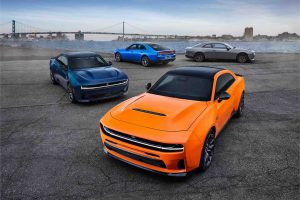
To get a sense of just how big a disaster, here’s another number: In 2023, the final year for the last-generation Charger (which came standard with an engine and wasn’t available with a battery pack and electric motors) Dodge sold more than 76,000 of them. It is astounding to reflect that Dodge stopped selling a car that was selling well and replaced it with a car that Dodge ought to have known wouldn’t sell.
It has cost Dodge dearly.
It has cost Chrysler more. When Dodge cancelled the last-generation Charger, it also effectively cancelled the Chrysler 300, which was a shared platform vehicle. Dodge got a battery-powered Charger that people didn’t want to buy. Chrysler got nothing – and has had nothing (other than the Pacifica minivan) for going on three years now. The plan was to bring forth a roster of new Chrysler EVs – but things didn’t go according to the plan. When it became obvious the electric Charger was a disaster even worse than the Ford Edsel disaster (which wasn’t really so much a disaster as it was a disappointment; the Edsel just didn’t sell as well as Ford hoped it would ) the plug, so to speak, was pulled on the planned roster of battery powered Chryslers.
That left Chrysler to die on the vine, which it almost has. Whether the rebadged/re-skinned Fiat “Chryslers” that are in the works can pull the brand back fron the edge of the abyss remains to be seen. It’s doubtful, but at least these re-skinned Fiats are going to have engines rather than battery packs and electric motors.
Dodge ought to have known better because it’s a basic thing to know your own brand. Tesla can sell battery-powered cars because it’s Tesla. That’s what people want who buy Teslas want. Dodge’s mistake was believing it could sell Teslas to people who want a Dodge. The “electrified” 2024 Charger was a Tesla in all but name. It had a different look, of course – but it was nonetheless fundamentally the same, because batteries and motors are fundamentally the same in the same way that a cinder block is pretty much the same as other cinder blocks. This isn’t a disparagement. It’s observational fact. The Charger – when it had an engine – was as unlike a Tesla as Elliot Page is unlike Sophie Cunningham. If you like Elliot Page, that’s fine. But if you like Sophie Cunningham, you probably don’t particularly like Elliot Page. Trying to sell Elliot Page to people who like Sophie Cunningham is a hard sell.
So why did Dodge try?
Well, because it was having to buy so many carbon credits from Tesla – for not selling (effectively) Teslas. The old Charger’s “carbon footprint” was too big, in the eyes of the federal regulatory apparat.
So Dodge – Stellantis, the parent company – had to buy carbon credits from Tesla to reduce the size of the “carbon footprint” created by the Charger ( as well as the Challenger and the 300). It was either that or pay the government fines for having too large a “carbon footprint.” All of this was based on the assertion that “carbon” (as in dioxide) constitutes a pollutant – one that causes or exacerbates what is styled “climate change.” 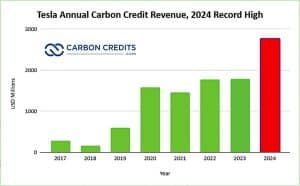
These carbon credits cost Stellantis billions ($2.4 billion between 2019 and 2021 alone). That’s a lot of money, even for a corporation as big as Stellantis. A lot of losses, to be more precise. Stellantis figured it could cut its losses by “electrifying” the Charger. This worked, in the sense that Stellantis no longer had to buy carbon credits from Tesla.
Elon’s Tesla Grift gets “credit” from the government for manufacturing only “zero emissions” electric vehicles; it sells these credits to other car companies (like Stellantis) that sell vehicles with engines that have to find a way to reduce their “carbon footprint.” They can do that by making “zero emissions” EVs themselves or buying credits from Tesla that are considered the equivalent.
So Stellantis management decided to make EVs. The trick was selling them to people who don’t want them.
Dodge – Stellantis – no longer has to worry about the size of its carbon footprint, because the Trump administration nixed the so-called Endangerment Finding that insisted carbon dioxide is a pollutant. The pressure to “electrify” (or pay extortion to Tesla for not “electrifying”) has been relieved. Stellantis wasted no time – because it hasn’t got much time, if it wants to save Dodge, at least. The Charger is now available with engines again – and would you look at that. Sales are up almost 200 percent.
Who could have imagined?
But the blood has already been let. While sales are back up they are nowhere near what they were. If the rest of this year turns out to be as good (relatively speaking) as the first half of this year, Dodge might sell 10,000 or so Chargers with engines – but that is a lot less than 76,000 Chargers, the 2023 total.
It takes time to claw back lost ground. Especially when the ground was just given up.
. . .
If you like what you’ve found here please consider supporting EPautos.
We depend on you to keep the wheels turning!
Our donate button is here.
If you prefer not to use PayPal, our mailing address is:
EPautos
721 Hummingbird Lane SE
Copper Hill, VA 24079
PS: Get an EPautos magnet or sticker or coaster in return for a $25 or more one-time donation or a $10 or more monthly recurring donation. (Please be sure to tell us you want a magnet or sticker or coaster – and also, provide an address, so we know where to mail the thing!)
If you’d like a Baaaaa hat or other EPautos gear, see here!









The EV sales show how little people buying a Dodge want an EV. I’m surprised at how low that number is even, on track to sell 1,000 EV Chargers this year. Maybe Dodge will sell 10,000 Chargers this year. This car, though technically impressive, is a commercial failure. It’s too heavy and too expensive. For $50,000 you’re better off buying a 3 series. But on top of all this are they bringing back the V-8 Charger as the picture in article implies?
If my electric lawnmower experience can be extrapolated to cars, it ain’t worth it. 6ish year old mower needs a $200 battery. The mower, battery, and charger is $350.
That said, trumps joo war had local gas at $4.15. Going back to gas is equally unappealing.
Evidently, the deluded simps at Stellantis thought the Dodge Charger brand and model name completely superseded minor details such as whether its propulsion system used gasoline or electricity. They couldn’t have been more wrong — ICE vehicles and EeeVees are as different as apples and oysters; not substitutable at all.
In the mid 20th century, automakers had developed clear gradations of quality, features and price which customers understood. Example included Chevy-Pontiac-Olds-Buick-Cadillac; Ford-Mercury-Lincoln; and Plymouth-Dodge-Chrysler.
Now that’s all blown to hell. What is a Charger or a Mustang — an EeeVee or an ICE vehicle? What is a Chevy Blazer — a K5 truck or a mid-size SUV?
It takes a serious reverse Midas touch to wreck things this thoroughly. What do you do, when you flunk out of flogging cars? That’s easy: run for Clowngress, where you can screw up on a truly epic scale. Victory in Iran! /sarc
The higher cost of the V8 option isn’t helping sales either. For that matter high gas prices make people more likely to stick with the base engine which is probably as powerful as the optional engines were back in the 60’s.