


If you have ever stood behind a running muscle car, you have smelled why the muscle car – the genuine thing – is an extinct species of car. Powerful performance cars are still being made, of course and many of them are much quicker and faster than the old muscle cars were. But your eyes do not water and your nose hairs do not curl when you stand behind a modern performance car because the exhaust has been chemically scrubbed such that it’s mostly just water vapor and carbon dioxide, which has no smell.
A muscle car has a very distinct smell. It is the smell of unscrubbed exhaust emanating from an uncontrolled engine. Gas literally drips into the muscle car’s engine via the big four barrel carburetor (some muscle cars had two carbs and a few had three of them, if you can imagine that). It is burned less completely than the precisely sprayed mist of fuel that a modern performance car’s engine is fed. Most muscle car carbs are also set to run rich – more gas in the air-fuel mix – because it is preferable to running lean. Since the system is mechanical it can only be set to run one way or the other. You an adjust the carb to run rich – or lean. There is no in between. Modern performance cars run the ideal air-fuel mix at all times because their fuel is electronically injected and electronically controlled. This greatly improves efficiency and reduces emissions without hurting performance. With the old muscle cars, the carbs were set for performance and to Hell with the rest.
Sometimes, though, the smell is stronger than usual. Your eyes water sooner than usual. This is a clue that the engine is running too rich – even for a muscle car. It can entail more than just a smell, too. If excess gasoline is getting into the engine, it is probably getting into the oil, too – and that’s a bad thing because gas is a solvent and oil is a lubricant. You don’t want gas in your oil because it can cause real damage to the engine. Hence the importance – if you own a muscle car or any old car that has a carburetor – of heeding what your nose is trying to tell you.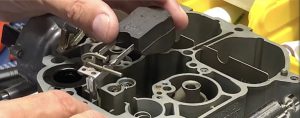
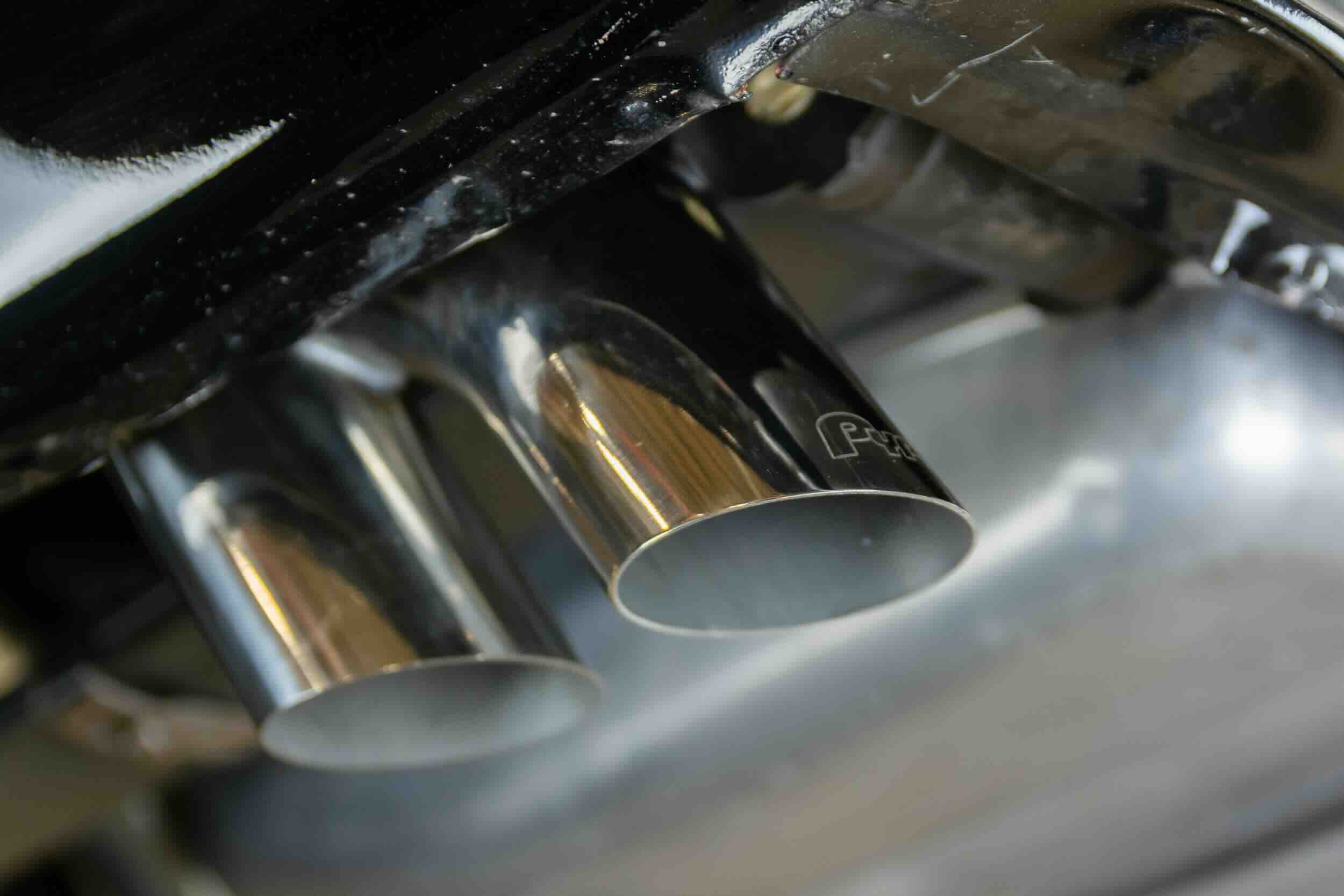
One day – this was a couple of years ago – I noticed I could barely stand to be in the vicinity of my ’76 Trans-Am’s rear end on account of the fumes. They were literally eye-watering and nose hair-curling. I also noticed the black soot stains on the garage floor just under each of the TA’s exhaust tips (these “splitters” face straight down; they are a Trans-Am trademark). This was clear evidence that the TA’s V8 was running really rich. As in way too much gas in the air-fuel mix. There are several ways this can happen, including a leaking carb – as via the well plugs or a stuck/maladjusted float, which is the thing that is supposed to shut off the flow of fuel into the bowl once it’s filled up enough; it works kind of like the float inside a toilet tank. Another possibility is a worn needle and seat, which is the thing the float acts on to allow fuel to flow into the bowl and stop the flow when the bowl is full. 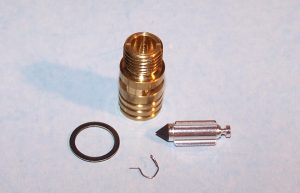
The happy thing about carbs is they are mechanical things, which means you can take them apart and examine the parts to see what’s not right. So that’s what I did – before I drove the car anymore. This was a kind of prime directive after I smelled the oil, which smelled more like gas than oil. Do not run the engine when the gas smells like oil. The oil was also suddenly black, which was another clue – since the oil had been changed only about a month prior to this and ought to have looked light brown at worst after only a month (and not many miles) in the engine.
So I took the carb off the engine and took it apart – and found the reason for the eye-watering fumes and nose-curling smells. The needle and seat – more finely, the tip of the needle that goes into the seat – had decayed and was no longer sealing when it was supposed to. A lot of extra gas was getting through – and into the engine. Into the oil, too. This is a pretty common problem with carbureted old muscle cars because they were designed to burn gasoline – not 10 or 15 percent ethanol-laced “gasoline.”
The alcohol-laced fuels can and do ruin plastic/rubber parts not made to tolerate alcohol-laced fuels; this includes parts such as the needle and seat and floats and power pistons, etc. That’s why it’s sound policy to replace all these parts with alcohol-compatible parts. Same goes for rubber fuel lines. I wrote about a near-disaster that almost happened a couple of weeks ago (see here) that almost happened due to a section of fuel hose that had become brittle and cracked, allowing an arterial spray of gas – which is potentially much worse than an eye-watering event.
The lesson being, pay attention to the smells and other such signs. They are your old car trying to tell you something’s not right. It’s wise to pay attention to that!
. . .
If you like what you’ve found here please consider supporting EPautos.
We depend on you to keep the wheels turning!
Our donate button is here.
If you prefer not to use PayPal, our mailing address is:
EPautos
721 Hummingbird Lane SE
Copper Hill, VA 24079
PS: Get an EPautos magnet or sticker or coaster in return for a $25 or more one-time donation or a $10 or more monthly recurring donation. (Please be sure to tell us you want a magnet or sticker or coaster – and also, provide an address, so we know where to mail the thing!)
If you’d like a Baaaaa hat or other EPautos gear, see here!










If I remember you’re a fan of TBI, Throttle Body Injection. The 35 year old system in the 350 Silverado still works fine, one rebuild which took just a few minutes. One fuel management computer, still has a distributor with its module for ignition. Simple and effective.
I still have my carb knowledge, it’s like you’re a magician when you solve a yougin’s head scratching carb problem!
One Quadrajet warning, the underside of the main body has some soft plugs than can start to weep after the years roll by.
It’s ok to run low ethanol fuel in a carbureted vehicle, but only if you run it every day. So long as it’s fresh, it works. Ethanol will slowly embrittle and degrade rubber parts and some plastic, but the real damage is because the stuff is so hygroscopic, it sucks in water and eats up pot metal, aluminum, and even brass gets verdigris.
Restoring an antique which had gasohol in the system for 20 plus years is awful and it is usually necessary to replace every part of the fuel system from the tank to the carb.
This is very informative. Thank you. Has gasohol been introduced because the oil fields are running dry?
Ethanol Merman sings there’s no business like Slow business.
In the UK, a few years ago, standard lead free petrol became E5; now it is E10.
My petrol gauge now appears not to know how much gas is in the tank. Has the ethanol corroded the float?
Project Farm’s YouTube channel showed that Stabil brand fuel stabilizer prevented corrosion in the aluminum it was tested on. It’s better to run ethanol free but depending on where you live you don’t have that option.
When I was stationed in California this is what I did and it worked well
Eric, are you not able to get ethanol free gasoline in your area? Luckily for me, for now, there are several places around town that sell 91 octane, ethanol free. Expensive, but needed.
Hi Philo!
Yes, but (my bad) I have in the past filled up with E10. No more, though.