

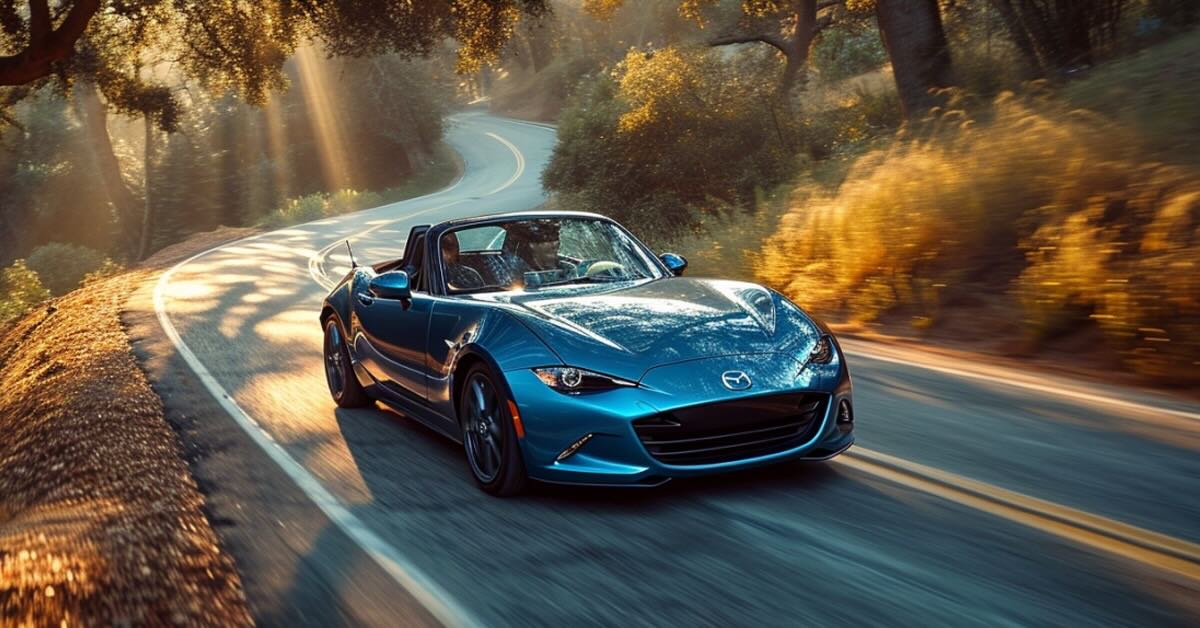

Cars – in general – were more fun when they were much less powerful than they are now. This is not nostalgia for the past. It is a measure of the bleakness of the present. Most new cars – most of which are crossovers now – have more power (and are quicker to 60 MPH) than most of the performance cars of the ’70s.
Which are more fun to drive?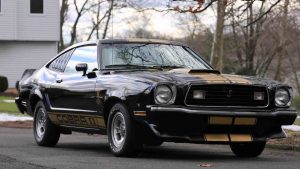
A ’78 Mustang Cobra’s 5.0 liter V8 made less power than most current 2.0 liter turbo fours, but the Mustang had a personality, something no new crossover appliance has. A little pickup truck from the early-mid 2000s such as my 2002 Nissan Frontier has less than half the horsepower a 2026 Frontier’s got – but my truck has a manual transmission, which you can’t get in the new Frontier.
Which is the more fun to drive?
Why is the Mazda Miata considered one of the most fun-to-drive cars ever made? It does not have a lot of power – the current Miata’s four cylinder engine touts just 181 horsepower, which is several hundred fewer horsepower touted by the “electrified” Dodge Charger. Which is more fun to drive? The answer can be gleaned from the fact that Mazda sold about 20 times more Miatas in 2025 than Dodge sold “electrified” Chargers. An interesting thing about the Miata is that it has about the same power – and offer about the same performance, in terms of acceleration, as one of my most favorite fun cars, the mid-late 1970s Pontiac Trans-Am and its Chevy sibling, the Camaro Z28. These typically same with V8s that offered up about 180-220 horsepower, max.
What’s especially interesting is that both sold in volume – as in more than 100,000 of them annually. Even though they were – like the Miata – not particularly practical (ot speedy) cars.
So why did they sell so well? For the same reason the Miata sells. They were – and are – fun.
A great mistake has been made – by the car industry – in equating power (and power alone) with fun. This is especially obvious with EVs, which sell so poorly the government has to bribe people to buy them. This is so even though many EVs tout “ludicrous” speed. It is a kind of sugar rush in that dissipates quickly, leaving you sleepy (and bored). Do you remember the first time you rode up in a high-speed elevator such as the ones they have in skyscrapers? The first – and maybe the second time – it has the excitement of a new experience. The more you experience it, the less the excitement. By the fifth or six time, you just get in and push the button. It’s as exciting as yawning.
The government never had to bribe people to buy Trans-Ams and Z28s back in the ’70s and ’80s – or Miatas even since the ’80s all the way to the present (Mazda introduced the Miata was back in ’89; it has been in continuous production since then). These cars are desirable cars and they are desirable because they were – and still are – fun. As readers of my stuff know, I still have a ’70s Trans-Am and even though it is completely outclassed by a new Corvette, which do you think is more to fun drive? The Corvette – like the high-speed elevator – is initially breathtaking. But because it is focused so much on numbers, it is less fun to drive than a ’60s or ’70s Corvette is merely to look at. The latter turn heads.
The new Corvette doesn’t.
VW used to sell millions of Beetles and Beetle-derived vehicles such as the Microbus, Karman Ghia and oddities such as the Thing (yes, really). Even though these VWs were underpowered and slower than a Geo Metro – which is to say, really slow – people loved them. Ask anyone who owned one. They will almost certainly smile as they tell you stories about their car. Does anyone smile when they tell you about their crossover appliance? Do they even have stories? Even though a late-model crossover typically has three times (or more) the power and gets to 60 in half the time it took a Beetle to get there?
It speaks for itself, does it not?
So what would make cars more fun again?
A good start would be making them more fun to look at again. Getting the government out of designing new cars via the regulations it lays down that have homogenized the way new vehicles look would allow for the creative expression that used to make cars interesting and even exciting to look at. Cars made 60 years ago are remembered today.
Does anyone remember the appliances made ten years ago? Or five?
Making them functionally interesting would be the next step and – once again – getting government out of the way would make it feasible for car companies to (once again) offer new designs that differed from the homogenized, 2.0 liter turbo fours that have become the almost universal thing you find under the hood today. In the past, you might find the engine in the rear. It might be air cooled. Maybe it didn’t even have pistons (e.g., a rotary engine). Let the engineers use their imaginations and let the market rather than the government decide what people want. The same goes for “safety.” Let the people buying cars decide whether they want air bags and back-up cameras and so on.
Instead of one-size-fits-all, we might once again have the panoply of personality that made cars interesting, even exciting and certainly more fun than the dreary, Sovietized appliances foisted on us today via the government.
. . .
If you like what you’ve found here please consider supporting EPautos.
We depend on you to keep the wheels turning!
Our donate button is here.
If you prefer not to use PayPal, our mailing address is: EPautos 721 Hummingbird Lane SE Copper Hill, VA 24079










[…] https://www.ericpetersautos.com/2026/08/17/fun-cars-boring-cars/ […]
Two reasons: Getting all that weight to move, and because of the “comparison shopper.”
There’s a small but noisy group of customers who come in with their checkboxes. These days they do their research before coming in, usually on the fan forums and Reddit. Who’s got the biggest number? That’s what matters. And the salespeople encourage this behavior too, having “the best in class” (whatever that means) 0-60 times gives them a feature to brag about. Or the “most torque available.” Ask 20 people what torque even is, and I doubt you’ll get an answer. But it matters to some who want to back up their decision to buy the white one with the comfy seat.
It’s really Eric’s favorite subject rearing its ugly head again. Compliance. Look at the emissions regulations by ‘silhouette’, it’ll blow your mind. The smaller car silhouette had tougher regulations than generic suv silhouette, which have tougher regulations than pickups. It was a further push away from small cars for the automakers because the tighter standards reduced the profit margins further. When Ford and gm shrunk their respective production capacities to fit their actual sales volumes and eliminated the low/negative margin products, multi-decade high profit margins were the result. Had they not thrown away the ev investment cash, balance sheets would be in great shape.
All of which explains why avaricious auto makers just luvvvv government regulation:
‘Please, Brer Fox. Whatever you do, don’t make me comply with that brier patch of CAFE regulations! Pleeeeeze, NO!!’
Compliance is Eric’s favorite peeve???
How about illegal mandates, requirements and (((government regulations))) that have no businesses in private enterprise???
Customers considering vehicles of any kind shouldn’t have to shoulder extra expenses added to those prices because of Unconstitutional interference, period.
Illegal government agencies, like the DOT, DMV and similar, at the federal and state levels, that are not constitutionally mandated and shouldn’t exist, except when approved by voters….not politicians!!!
YMMV….
Exactly, Saxons!
The whole edifice of “regulations” and “compliance” must be leveled. There are tort claims for harms/defects. Everything else ought to be between buyer and seller.
My LHMF (along with low reliability) goes all the way back to a ratty Bugeye. 78 and still driving a roadster, my current Z4 is ten times the car but only half the fun.
David Freiburger from Roadkill always said it’s more fun to drive a slow car fast than a fast car slow.
Ain’t just cars. Everything under the sun has been jewified and shitified till it’s not only useless but ugly as sin. Architecture, art, movies, politics, sports…jewugly, boring corporate kike nonsenseicle shit. This is what they want, destruction of the West, beauty. originality, nature and God. Don’t take my word for it…listen to their rabbi’s, bragging about it. Fucking Demons.
More Electronics and Less Fun?
I was told there would be safe hybrids …
‘Modern [sic] vehicles don’t need to be moving — or even turned on — to catch fire. That’s fueling lots of safety recalls and tough choices.
‘An estimated 3.2 million vehicles nationwide currently have an outstanding “park outside” recall, according to vehicle history provider Carfax, which described the surging numbers as “concerning.”
‘The rise in park-outside recalls is being driven by the growing number of electronics and batteries packed into modern vehicles, involving ordinary wiring, seat motors, starter relays, high-voltage batteries and more, according to experts.
‘They’re known as “key-off fires,” said Frank Borris, a former NHTSA investigator who now works as a safety consultant. “The engine is off, but the circuits are still hot, and they stay hot all the time,” Borris said. “There is a lot more electronics in vehicles today,” he added, “and that means more stuff can go wrong.”
‘In the first seven months of 2026, there were 17 park-outside campaigns covering about 1.7 million vehicles, making this year among the busiest since NHTSA first created the park-outside designation more than a decade ago.’ — WaPo
https://archive.ph/B3Xh8#selection-1121.0-1121.222
This is completely effed up. Not only are ‘modern’ vehicles soulless appliances, they are dangerous fire hazards. Auto makers to the electric chair! 🙂
I bought a used 2019 ND Miata RF this spring. It’s so much fun to drive, and it doesn’t feel _slow_. Non-metallic light grey with 6MT and the power top – it’s gorgeous and very affordable.
Top shelf, Wally!
I feel the same about my old Trans-Am. It’s not a Corvette killer, but it makes me feel great every time I just sit in it!
What government doesn’t fukk up it shits on. It should be kept away from anything of value.
‘the dreary, Sovietized appliances foisted on us today’ — eric
Over the weekend, the WSJ published an article titled From ‘Piece of Junk’ to Prize Showpiece: The Rise of the Everyday Classic Car.
Collectors are ditching the rare Corvettes and picking up Honda Civics and Ford Tauruses as classics
‘David Cascino is among a growing crowd of car enthusiasts who are collecting and showing off rides that would make most car-show attendees pause, because they are remarkably normal. Moreover, they are much newer than the archetype collector car.
‘As long as a car has a story to tell, it doesn’t matter whether it’s a classic collector’s car, Cascino said. “You can make it collectible,” he said.
‘Every month, when Richard Owens brings one of his eight Ford Tauruses ranging from model years 1986 to 2003 to a Cars and Coffee show in Concord, N.C., people stop to share their childhood memories that resurface at the sight of the once-widely-sold sedan. Owens, 38, bought each of the cars for between $2,000 and $5,000.’
————
Like most shallow Lügenpresse scribbling, the WSJ article doesn’t delve into the reasons why this is happening. Eric has been patiently explaining them for ten years, as above. Also, beginning around 2013, cars morphed into spyware with telemetry, over-the-air updates, and digital douchescreens.
Cars became, in a word, anathema to those actually interested in them. Meanwhile, those golden age vehicles from the Nineties through the early Aughts are still out there … and ‘they’ aren’t making any more of them.
Stick it to an overpaid auto exec: buy used … deep used, as in 15 years or more. We’re all Cubans now.
With all the electronic surveillance on the roads today a quiet car that accelerates quickly is not as fun to drive as a slower car that revs happily through it’s gears. For that matter with the higher belt line and window heights of newer cars it’s definitely less comfortable to drive with your arm resting out the window of the door today than with cars from decades ago.
I want to like the current Miata, but I just don’t like how it looks. It might be fun to drive, but not a fan of how it looks.
And the color selection sucks, big time. The only one that pops is the 30th Anniversary Edition metallic orange.
I’m not sure the car companies are totally to blame for the massive horsepower mentality. Inevitably if someone who does not race finds out I race a 1.6 Miata the first question is, “How fast does it go?”. Bump drafting downhill I might hit 125-130 but, that misses the point entirely. People have this idea that terminal velocity is all that matters. They watch too many movies and teevee.
So, you have car companies touting massive HP that will never be used.
As Colin Chapman once said, “Add lightness”. It’s more fun that cubic inches.
My ’78 Fiat 131 was a blast to drive. DOHC 4 banger, side draft Weber, 5 speed stick. Unibody construction ment it was light, and inexpensive. Factory team dominated its rally class, where its main compeitor was the Nissan (Datsun) 510.
I agree. But car makers are to blame for the cloying adherence to Federal Motor Vehicle Safety Standards, emissions regulations and their general anticipatory proactive mode when it comes to government regulation. They bootlick. It became grossly apparent when GM began installing anti-lock brakes in the 1980s and daytime running lights in teh middle 90s as standard equipment. Cars began having airbags in the late 1980s as well, ahead of the 1990 passive restraint mandates greenlighted by the “supreme court.”
Automakers never really put up a fight like the oil companies did.
In a way, I credit oil companies with the election of Ronald Reagan. In the middle 70s, when there were talk about further price controls and windfall profits taxes, Herbert Shertz the chairman of Mobil Oil started the advertorial to change the prevailing public opinion about oil companies, oil drilling, exploration and gas availability. He told stories of squirrels storing their nuts in the winter and the incentive to gather nuts. The advertorials covered topics like supply and demand, incentives and a host of other topics. The public read them on pages of the newspapers. In a brilliant public relations move, it softened the public’s opposition to oil price deregulation. It paved the way for Ronald Reagan to come in and remove price caps on oil and refined gasoline. The oil was flowing again and we have never had a serious shortage since 1979.
The automakers could have done the same thing. They could have told the public what could result from ubridled regulations from NHTSA and the EPA. they could have told the public that they wouldn’t be getting the cars what they wanted. They could have defined their response to the publics concern for safety and the environment and shown a better path.
Instead, theses cloying pinheads followed the “current thing” mentality and anticipated more regulations and gave us shittier cars.
Car makers should be ashamed. Their actions have led to possible mayhem and slaughter on today’s highways. Reduced visibilty plays an outsized part in the whole ting.
If we are ever to rid ouselves of the menace of today’s cars with their data mining technology and crap visibility, we should probably break the carmakers up into smaller groups.
Funny how it’s never the consumers fault for continuing to buy the products.
And then you want more Government to break up the OEMs so they can’t data mine the cars you keep buying?
And this passes for an argument on a libertarian leaning site? Can’t make this shit up.
On the other hand, what are the choices? Most of us have to get to work, somehow or another.
Yeah, I don’t agree that ‘breaking up the carmakers into smaller groups’ is any kind of legit option. But I doubt most people understand just how thoroughly government bureaucracies already control every aspect of auto manufacturing, far beyond the ‘endangerment finding’ that penalizes CO2.
The corporatization of almost every industry is part of the problem. And don’t forget, corporatations are the Sons of (Uncle) Sam.
‘We should probably break the carmakers up into smaller groups.’ — swamprat
Whatever the merits of this proposal — I’d go farther and break them up into bags of protein for animal feed — the inevitable trend in a mature, dying industry is relentless consolidation, until only a handful of producers remain worldwide.
Gov-imposed barriers to entry feed this dynamic. Otherwise, you’d see plenty of startups. The coming Depression II will erase at least half of automakers worldwide, just as Depression I did. Joe ‘Wrecking Ball’ Schumpeter called it creative destruction.
We could start by donning menacing Mayan jaguar masks and hurling Lightning Jim and EeeVee Mary into a volcano, to appease the angry gods. 🙂
Break up the car companies? I don’t think so.
Get rid of the regulations that keep cars from being built.
I’ll use beer as an example. From the 60s onward Budweiser, Miller and others started to buy up local breweries. In the 90s it looked like there would be 3 breweries, Bud, Miller & Coors. But, lo and behold, the craft market exploded. The same could be true of vehicles on a different scale, naturally. But, only if GovCo gets out of the regulation business.
Let the market decide.