

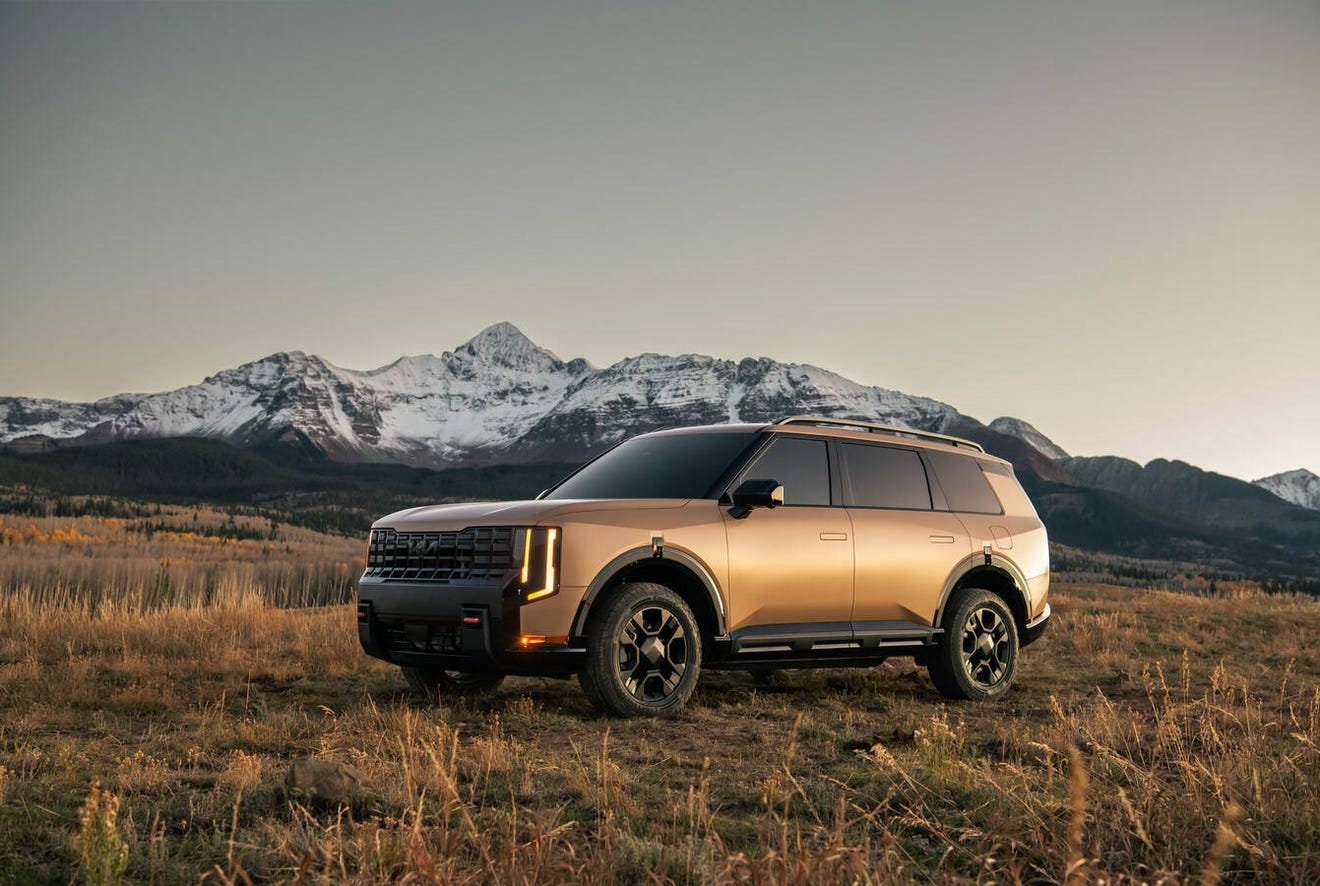

Something interesting has happened to the twins – Kia’s Telluride and its Hyundai-badged sibling, the Palisade (reviewed here). Both of these mid-sized crossovers used to come standard with V6 engines.
Now only one of them – the Palisade – does.
What does that mean for the Telluride?
What It Is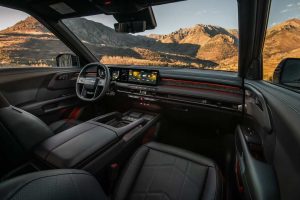
The Telluride is Kia’s very popular mid-sized, three-row crossover and the “sister ship” of the Hyundai Palisade. Both used to be very similar, especially in terms of what was under their hoods – which was the same 3.8 liter V6. They no longer come standard with this engine – or the same engine. The Palisade got a new (3.5 liter) V6 as its standard engine for 2026 – as well as an optional 2.5 liter four, augmented by a hybrid drive system. The 2027 Telluride – Kia skipped 2026 for this model – loses its formerly standard V6 and now comes only with the 2.5 liter four, either with or without the hybrid drive system that’s used in the Palisade.
They’re still dimensionally almost identical – and both are bigger now – with the main other differences being exterior/interior styling.
They’re also priced comparably – at least to start.
The Telluride’s base price – for the LX trim – is $39,190. The Palisade starts at $39,345 for the ES trim.
From there, you can choose S ($42,090), EX ($43,790), X-Line EX ($47,290), SX ($48,790), X-Line SX ($51,790), X-Pro SX ($53,690), SX-Prestige ($53,890), X-Line Prestige ($54,890) and top-of-the-line X-Pro Prestige.
All of them come standard with the new standard engine, which is a turbocharged 2.5 liter four, paired with an eight speed automatic. Most trims are FWD, with AWD available optionally in the lower trims. The SX Prestige, X-Line and X-Pro trims come standard with AWD, along with some related upgrades – such as an enhanced traction control system and all-terrain tires.
You can also get a hybrid drivetrain that’s the same as the one available in the Palisade. The Hybrid Telluride EX lists for $46,490. There are also SX ($51,490), X-Line SX ($54,490), SX-Prestige ($56,590) and X-Line SX Prestige trims.
What’s New For 2027
After a year’s absence, the Telluride returns to the lineup with a new standard (and optional) drivetrain. It’s also a little larger than the previous model and has a bit more room inside than before.
What’s Good
Still one of the more affordable models in the class.
New turbo four cylinder engine makes substantially more torque than previously standard V6.
Base trim LX is equipped with three-zone climate control, LED headlights, wireless phone charger, GPS and an excellent eight speaker stereo.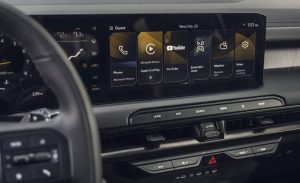
What’s Not So Good
New four cylinder (non-hybrid) engine’s mileage is the same as the old V6’s.
Base price has gone up by about $3k vs. previous model.
Desirable options – including metallic paint colors – are not available with the less expensive LX, S and EX trims.
Under The Hood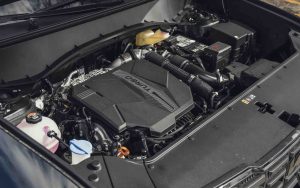
One of the things that arguably made the Telluride so popular was that it came standard with a V6 – even more so after rivals such as the VW Atlas and the Toyota Grand Highlander lost their sixes and went four cylinder only.
As mentioned already, the Telluride’s fraternal twin, the Hyundai Palisade, got a brand-new 3.5 liter V6 for 2026 – as well as an optional hybrid drivetrain, based on a 2.5 liter four. Kia, on the other hand, decided to nix the six altogether – perhaps to establish more separation between these two otherwise very similar rigs.
The new four is available in two configurations. The first is just the four, augmented by a turbocharger. It touts less horsepower (274) than the previous 3.8 liter V6 (291 hp) but more torque (311 ft.-lbs. vs. 262 for the old V6). This gives it the response of a V6 – about which more below – but there’s literally no gas mileage advantage. The 2.5 liter turbo four rates 20 city, 26 highway – which is exactly the same mileage touted by the ’25 Telluride with the 3.8 liter V6.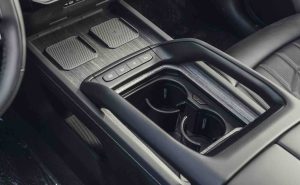
If you’re interested in a bigger mileage difference, the available hybrid drivetrain offers that – and also more power (329 hp) and torque (339 ft.-lbs.) than Kia ever previously offered in a Telluride. Mileage with this combo increases to 31 city, 32 highway but the really big difference is the driving range. With a full tank, the Telluride hybrid can go 618 miles in city driving and 655 on the highway; the regular Telluride has a city driving range of only 380 miles and 494 on the highway.
Non-hybrid Tellurides are equipped with an eight speed automatic; hybrids get a six speed automatic.
Tow capacity for the non-hybrid is 5,000 pounds; the hybrid’s max tow rating dips slightly to 4,500 pounds. This is on par with the standard tow ratings offered by the VW Atlas (5,000 lbs.) and the Toyota Grand Highlander (also 5,000 lbs.). Another rival in the class – one that also offers a six as standard equipment – is the Mazda CX90. However, its standard max tow rating is only 3,500 lbs. although it can be equipped to tow up to 5,000 lbs. – but you have to buy the more expensive trim with the stronger version of the six.
On The Road
There is a difference between the new Telluride and the old one – and it’s an interesting one. The old V6 Telluride didn’t feel as as powerful and the new, turbo-four-powered Telluride, even though the new one has a much smaller engine. The reason the new Telluride feels more powerful is because the turbo’d 2.5 liter engine’s torque output is greater (and sooner). In fact, it’s already there. Peake torque (311 ft.-lbs.) is available at 1,700 RPM. Most engines idle around 700 RPM in drive, with the vehicle stationary. Almost as soon as you push down on the accelerator pedal, you have the full 311 ft.-lbs. to move the Telluride. It is rarely necessary to stomp the accelerator to get going because it’s not necessary to get the engine revving to make the torque that gets you going. The old V6’s torque peak (just 262 ft.-lbs.) wasn’t available until the engine reached 5,200 RPM.
The old Telluride would get going, too – but not without pushing down harder on the accelerator pedal. The V6 did sound better when you pushed the accelerator pedal all the way down. But you don’t need to do that as often with the turbo four – and that is the gist of the under-the-hood improvement. (The four also helps Kia deal with government ukase pertaining to “greenhouse gas emissions,” i.e., CO2.)
One little awkardness is the location of the Telluride’s engine-start button. It is located on a stalk on the right side of the steering column that also serves as the gear selector for the eight speed automatic. The button is located on the narrower end of the stalk, close to the steering column. If you’ve never driven a Telluride before, it might take a minute to find it. You engage Drive by rotating the stalk forward; Reverse is engaged by rotating it backward. Park is engaged by pushing a button on the end of the stalk.
Zero to 60 takes about 7.4 seconds, par for the segment and about as quick as the old Telluride with the V6 and a little bit quicker than the new Palisade V6. The hybrid can make the same run in about 6.6 seconds and (as already mentioned) has very long legs.
You may not dig the “drowsy/distracted driver” eye-movement monitor that the government insists all new (2027) vehicles have. It is mounted on top of the steering column in a little housing that looks like it might house a warning light of some kind. If you don’t like having your eye movements monitored, a piece of electric tape over the face of this little housing will blind the cameras. However, this will also cancel the lane centering system that operates as an almost-self-driving feature; it steers the car with almost no driver input (though the system wants you to keep your hands on the wheel and will turn itself off if you don’t).
The X-Pro’s 18 inch wheels with tall sidewall all-terrain tires give it a posh ride on paved roads, due to the extra “give” you get with taller-sidewall tires. But they also squeal sooner in the curves.
At The Curb
The new look is very much like the old look, which is smart of Kia because people like this look. There have been some minor stylistic tweaks here and there but they are slight and you really have to know your Tellurides to be able to spot the difference between the last generation and this one. This is good – for both. It establishes continuity and it helps to avoid the older models looking old too soon.
There have been some significant alterations that are even harder to spot but which are more meaningful. The 2027 Telluride’s wheelbase has been stretched by 2.7 inches and the vehicle’s overall length is now 199.2 inches (up from 196.9 previously). This punches out more interior space, including about two cubic feet more cargo capacity behind the third row (22.3 cubic feet for 2027 vs. 21 for the ’25) and more total capacity (89.3 vs. 87 previously).
An interesting thing about the Kia’s interior space is that the second row’s got more legroom (43 inches) than the first row (41.4). The third row is less roomy – as you’d expect – but it’s adult-feasible rather than for young kids only. You can even get heaters for the third row – but only with the hybrid. There are dual smartphone holders and chargers built into the forward area of the center console. These actually hold your phone, so it doesn’t flop around while you’re driving. Higher trims get an integrated dual LCD screen display that looks one-piece; it is very similar to the look of the big, one-piece-looking LCD screens that first appeared in very high-end cars made by Mercedes and others about ten years ago. Now they’re appearing in Kias – and that’s probably going to be a problem for Mercedes. You can stream YouTube and so on – but not while the vehicle is moving. X-Line and X-Pro trims get Land Rover-looking off-road displays that show pitch and roll and other such data.
An ergonomically appealing detail is the door-panel-mounted, push-button controls for the heated seats and steering wheel. No having to scroll/tap through menus to turn these on or off.
This Kia is also available with an excellent Meridian 14 speaker audio system. Audiophiles will note that Meridian used to also be a luxury-brand exclusive.
Tesla-like flush-mounted door pulls are another edging-into-luxury-brand item. These “deploy” – rise from flush – as you approach, sensing the transmitter fob in your pocket or purse.
Flat-finish paint schemes look great on this rig.
The Rest
Sticker shock is a real – and ongoing – thing.
One of the biggest appeals of the old (2025) Telluride as well as its Hyundai Palisade twin was how relatively inexpensive they were, especially given their standard V6 engines – which have become a kind of luxury feature in the under $50,000 class. The 2027 Telluride – with a four – costs about $3,000 more to start than it did only two calendar years ago, with a V6. It’s still a good deal, relative to the cost of rivals such as the Toyota Grand Highlander (base price $42,260) but it’s no longer as good a deal as it was relative to rivals such as the VW Atlas ($39,310) or the Mazda CX90 ($39,300).
The Bottom Line
Kia hasn’t broken what didn’t need to be fixed. If you like the old Telluride, you’ll probably like this one, too.
. . .
If you like what you’ve found here please consider supporting EPautos.
We depend on you to keep the wheels turning!
Our donate button is here.
If you prefer not to use PayPal, our mailing address is: EPautos 721 Hummingbird Lane SE Copper Hill, VA 24079










[…] The Kia Telluride – https://www.ericpetersautos.com/2026/08/22/2027-kia-telluride/ […]
My favorite Telluride story is the one of the guy who took one onto black bear pass to Telluride and got stuck on the trail there, closing it down for some time. Apparently the Telluride has trouble making it to Telluride
Ironically, I rode in a late model Telluride yesterday (went to lunch, someone else drove). It was comfortable and had adequate power for its size. But, like other Kia / Hyundais I’ve been in, the road noise seemed louder than other brands.