

You may have caught my article about the difficulty I had getting a Level III (high voltage, DC) “fast” charger to “pair” with the 2027 Toyota Bz I recently spent a week test driving (my review of this vehicle is here, if interested). The upside was I got home, where I was able to use the Level I (standard household 120V AC) outlet in the garage to recover enough charge to be able to drive the Bz one more time before its scheduled pick up by the delivery service that drops off and picks up the press cars.
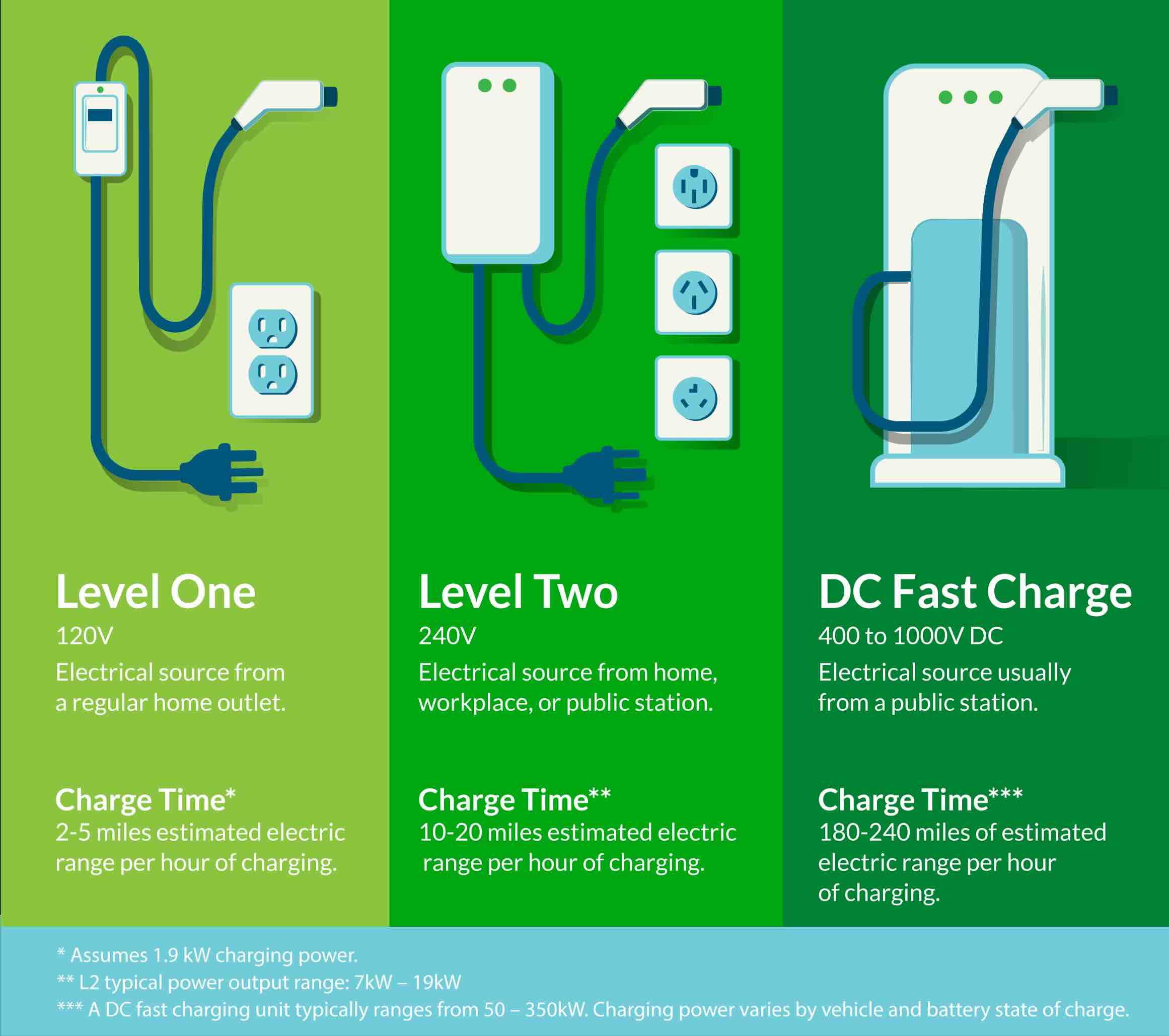
I was able to do this because the Bz – unlike some other EVs – comes standard with a home charge cord that lets you plug into either a standard Level 1 household outlet (which everyone has) or a Level II (240V, AC) outlet which you may not have – especially if you do not have a single family home or townhouse with a garage, which you pretty much have to have in order have the 240V receptacle close enough to where the car is parked to be able to charge up using that method.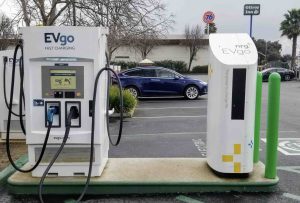
Having all three ways to charge is a big help because the other two ways might not be feasible. Or functional. I had to deal with dysfunction when I tried to get the Bz “fast” charged. The “fast charger would not – for some reason – “pair” with the Bz. This “pairing” is part of the process of “fast” charging an EV. It is not a simple matter of just plugging the EV in. There is a two-way chat of sorts that goes on between the EV and the “fast” charger and both have to be in agreement before the charging commences. This is necessary because you’re dealing with very high voltage current, which can be dangerous – to people as well as the EV’s battery pack. Everything must be greenlit by the EV’s electronic brain and the “fast” charger before the current flows.
Well, it didn’t flow – and I still don’t know why. I tried three out of the four EV “fast” chargers that were available and none would “pair” with the Bz. This left me without the charge I’d counted on. Fortunately, having dealt with exactly this same problem in the past – with other make/model EVs – I anticipated the possibility of having to deal with this problem. I made sure the Bz had enough charge before I left home such that even if I wasn’t able to get a charge, I’d have enough charge remaining to get back home, where – in this case – I knew I’d be able to get some charge. I knew it because I know the electricity is on at my house. Unless there’s a blackout, I’ll for-sure be able to plug in to the wall outlet in my garage and – because it’s just 120V AC – there’s no issue with “pairing” as there is with high-voltage DC “fast” chargers.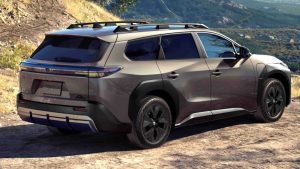
I also knew I’d be able to rely on this back-up option because the Bz comes standard with a home-charge cord that can be used with either a Level 1 common household receptacle or a 240V (electric stove/dryer) receptacle. Some other EVs – such as the VW ID Buzz – do not come standard with a home charge cord for either – not unless you paid extra (about $700 in the vW’s case) for one. If you didn’t, then you only have one way – the Level III DC “fast” charge way – to charge up your EV. That means you could have a big problem on your hands if the DC “fast” charger you planned to use won’t “pair” with your EV – and maybe you haven’t got enough charge left to make it to the next-closest “fast” charger, where you might also have problems “pairing.”
What then? You can’t charge at home – even if you could make it there.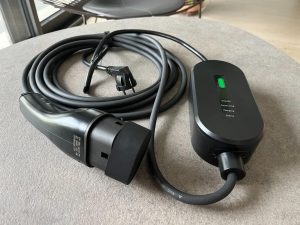
Some EVs (e.g., Hyundai EVs) do not even have the capability to Level 1 charge; apparently, the feeling is that Level 1 charging is too slow, which is sort-of true in that it takes a couple of days to fully recharge an EV this way – as opposed to about eight hours using the Level II way. However, you can get about 30-40 miles’ worth of driving range via an overnight plug in to a Level I common household receptacle and that might be enough to give you a reserve on tap to risk driving to a DC “fast” charger – and enough left to get you home again, if there’s a problem with “pairing.”
The point here – I hope the EV manufacturers are reading this – is that given the problems with EV “fast” charging, having as many other ways to charge as feasible is a way to make those problems less of a problem. If it weren’t for the Bz’s dual-use (Level I and Level II) home-charge cord, I would have had to park the Bz rather than drive it.
And what’s the use of any vehicle you can’t drive?
. . .
If you like what you’ve found here please consider supporting EPautos.
We depend on you to keep the wheels turning!
Our donate button is here.
If you prefer not to use PayPal, our mailing address is: EPautos 721 Hummingbird Lane SE Copper Hill, VA 24079