


The subsidies weren’t enough to make EVs mass-market viable but $4.22 per gallon (as of September 12) just might be. If gas goes up to $5 per gallon – as seems likely at this point, given the War Goes On and gets worse, the longer it goes on – driving a car that doesn’t need any gas begins to make financial sense, at least.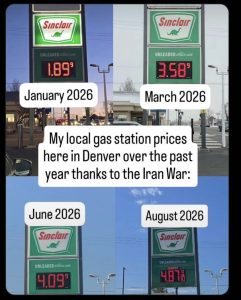
The italics to make clear that they still don’t make much sense – relative to gas (and diesel) powered vehicles – in terms of everyday practicality considerations. You’ll still have to plan your driving around charging and you won’t be able to drive as far as easily. But you may still be able to drive – and that usually beats walking or riding a bicycle (especially if it’s raining or cold out).
However, EVs won’t make much financial sense, either – if you have to pay a utility for the electricity.
One of the not-much-commented-on other reasons for the EV crash – new registrations have dumped from close to 8 percent to around 5 since Trump rescinded the federal $7,500 tax rebate – is that it costs about as much to partially recharge an EV (especially at public “fast”) chargers as it does to pump the energy equivalent gallons into a gas-engined car’s tank. Most people aren’t willing to plan their driving around their charging when the cost to charge isn’t saving them much if any money. The same goes for plugging in at home, by the way. Grid utility is not cheap. This is something I have personal experience with, too. My monthly electric bill went up from the usual $140 to just over $200 the last time I plugged an EV into the circuit. This by the way was a standard 120V circuit – an ordinary wall outlet – because I don’t have the 240V outlet wired into my panel to allow for what they call Level II somewhat-faster-charging that can conduit a full charge back into most EVs in about 6-8 hours, depending on the model.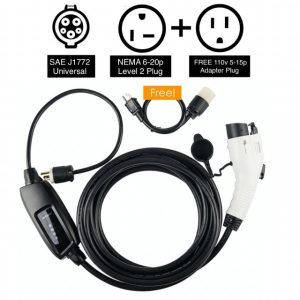
The reason I don’t have a Level II outlet is because I’d have to pay an electrician to add the circuit to my panel and then run the wire up to the garage (my panel’s in the basement). I might be willing to pay for this – the cost is probably around $500, assuming the panel itself does not need to be upgraded to accommodate the additional high-load circuit – if it were for my EV. But I do not own an EV – I just test drive them when they get sent to me for a week to test drive – and all EVs are not the same, as far as their Level II charging systems. You have to get the right outlet type for the plug type. In my case, I’d need plugs (or adapters) to work with all the various make/models and that’s just too much hassle and expense.
So I plug into the standard household outlet my house already has. This method of charging takes forever, practically. You’ll get maybe enough charge to go about 30 miles if you leave it plugged in overnight. Enough to maybe get you to the “fast” charger in town. You’d think this slower method of charging would at least be cheaper than using a 240V Level II set-up (which is basically the same thing as running a high-draw appliance such as electric stove or dryer) but it isn’t. My bill still went up about $40 – after using the 120V outlet for a week (the duration of a weeklong test drive). Bear in mind that for that $40, I only trickle-charged the electricity equivalent of about six gallons of gas. Even at today’s prices, that’s not much savings, especially when you add in the time cost of all that waiting.
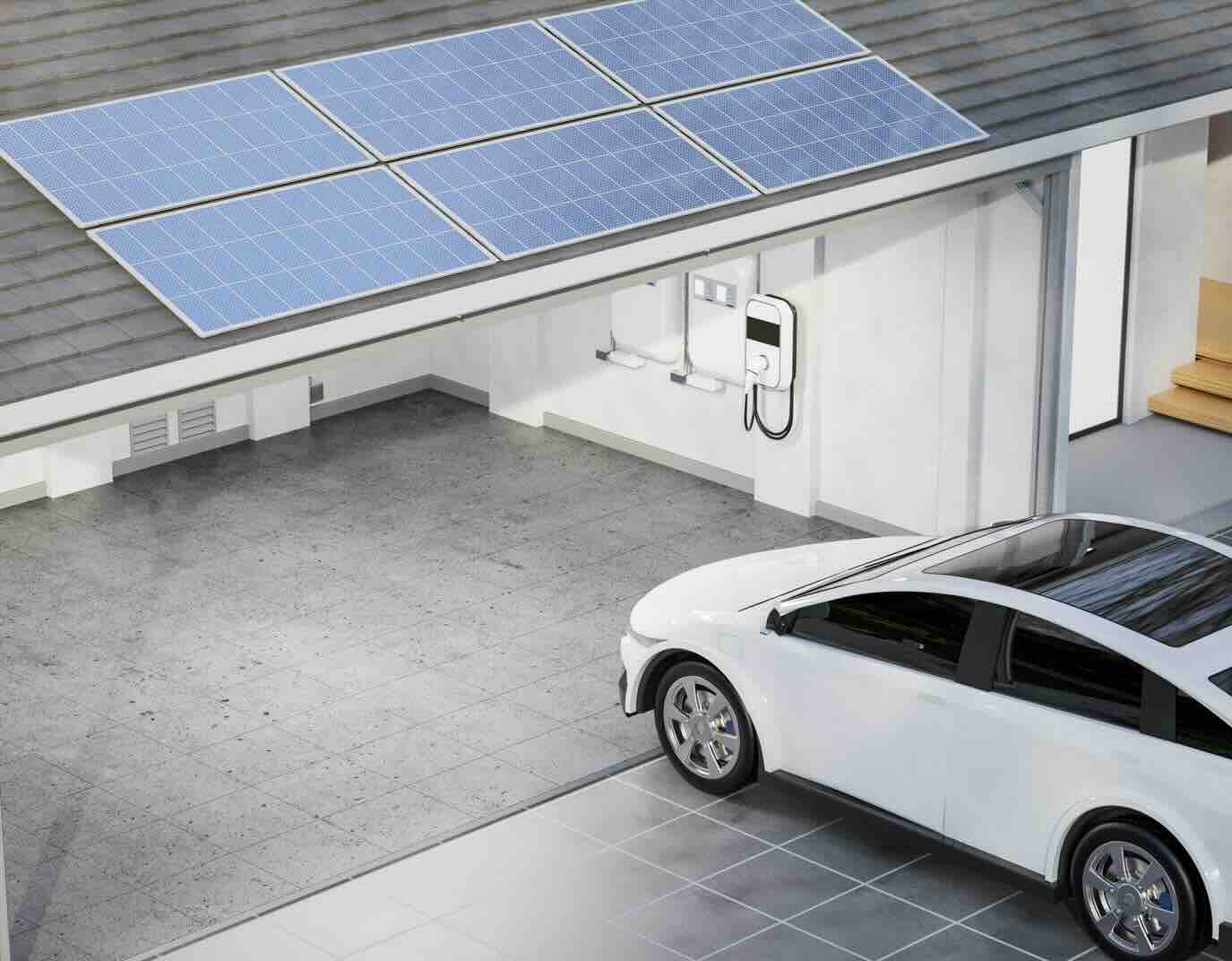
Now, there is a third option that might – that could – change the equation. It is having the capability to get your electricity for free. Or at least, for considerably less than what grid power costs. Via a solar-powered /battery bank system powerful enough to “bank” enough electricity to keep your EV charged up. If you have such a system, then you will no longer have to worry about how much gas or diesel costs or if it’s eve available. You will eventually have to worry about maintenance stuff, such as needing new tires and so on and – at some point – you will inevitably need a new battery for your EV, because all batteries lose their ability to hold a charge over time. But neither thing is an immediate concern – as $5 gas by the end of this month could very easily be.
There is, of course, the having to get the equipment you need to capture solar power and convert it into electrical power. You will need panels and storage batteries, plus controllers and inverters. How much will it cost to get a system powerful enough to keep your EV operational? The answer is – it depends – but, apparently, about $6,000 on the low end for a system with four panels and a roughly 2-4 kWh capability. That’s actually not bad when you remember that $6,000 is what we might be spending on gas in a year, if things keep going the way they’re going and the take-home point is that once you spend the $6k on the system, you won’t be spending $6k on gas the following year – or the next. You’ll also be driving – when people with gas/diesel powered vehicles may not be able to afford to anymore.
You’ll also need the EV – and that means another $10k or so, probably, on the low end – for a used Nissan Leaf or Chevy Bolt or something along those lines. It’d be great if Americans could by the cheap Chinese EVs the rest of the world is allowed to buy. Some of these cost $5,000 or so brand new.
And you’ll need regular sunny days, too – which is an issue for people who don’t live in CA, AZ or New Mexico.
It’s strange to think that Mad Max might be driving an EV – and not searching for gazzuline.
. . .
If you like what you’ve found here please consider supporting EPautos.
We depend on you to keep the wheels turning!
Our donate button is here.
If you prefer not to use PayPal, our mailing address is: EPautos 721 Hummingbird Lane SE Copper Hill, VA 24079








 just might be.)