



GM recently unveiled the its new/updated 5.7 liter and 6.6 liter V8 engines, which will replace the current 5.3 liter and 6.2 liter V8s that are used in GM pick-ups and SUVs such as the Chevy Silverado 1500 and Tahoe, the GMC Sierra and Yukon and the Cadillac Escalade. These new V8s will be stronger – as well as larger – than the V8s they’re replacing.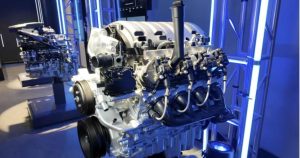
But they won’t have dipsticks.
So the only way to check the oil level will be by asking the computer to tell you what it is. Ian Stahl, who is Assistant Chief Engineer of Small Block Engines at GM, says “I’ve never been a fan of” dispticks. He says people will get used to not being able to directly check the oil level in the same way that people – most people – have gotten used to being badgered to “buckle up” by computers (and the government).
“Now, nobody thinks twice about [seatbelts] . . . so everything takes time to get accustomed to,” he says. Sure Like a bad marriage. Or piles.
It is hard to understand why anyone – especially an engineer – would not be a “fan” of dipsticks. Let’s start with the use of that word.
I like things that work. Being a “fan” implies rah-rah cheering, as for a sports team. Liking things that work is not quite the same thing.
More than that, I like things that work reliably and simply – because that invariably works best. This includes things like dipsticks. They do not require sensors, electronics or displays. It is not necessary to trust a screen readout because you can directly and accurately verify what the oil level is via a dipstick. This is very important when you are concerned there may not be enough oil in the sump and would rather not start the engine – to boot up the electronic oil level check system – to see whether the sump is full or three quarts low. You can trust what you see on the dipstick more than what you see on a screen.
Dipsticks can’t glitch.
There is one other thing you can see – literally, using your eyes – when you look at the dipstick. It is how the oil looks. You can see whether it’s the color of honey or more like molasses. Or tar. We are told sensors can sample the oil and tell you how much “life” it has remaining and maybe so. But sensors cannot tell you whether the dipstick has varnish on it – indicating hard use/infrequent oil changes, which is maybe something you’d like to know about, especially if you are checking out a used vehicle and trying to suss out clues as to how it was treated by its last owner.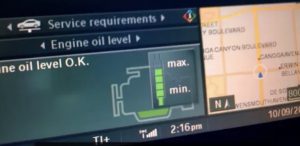
How long does this system last, by the way? The sensors and wiring and then the LCD display? What about ten or fifteen years from now? Well, GM doesn’t care about that. GM cares about selling you on “technology” and when it fails, selling you parts and service to repair it. Or maybe a new vehicle, equipped with even more “technology.”
GM is not alone in this business of nixing simple, reliable things with complex, potentially unreliable and inherently more expensive things. German luxury brands such as BMW and Mercedes were among the first to eliminate dipsticks in favor of sensors and displays. Think about what will happen someday when the sensors and displays inevitably fail. How much will it cost to have the sensors or the display replaced?
Now think about the simple dipstick and the tube it goes into that’s pressed into the side of the engine. There are no sensors so they can’t ever fail. And damaging the dipstick or the tube requires gross incompetence or willful physical abuse. Neither thing is a likely thing. Almost every dipstick and the tube it goes into ever installed in every engine made over the course of the past 75 years has lasted as long as the engine has lasted. The dipstick tube that was pressed into the side of the 7.5 liter V8 that’s under the hood of my ’76 Trans-Am is still there and so is the dipstick. It tells me how much oil is in the sump reliably and directly as it did back in ’76, with no need to consult sensors or screens – and I can check the oil without starting the engine or even moving the ignition key to the “run” position.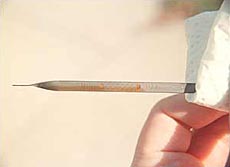
It’s not just oil dipsticks they’re doing away with, either.
They are doing away with the dipsticks that tell you what the fluid level is in automatic transmissions, in favor of sensors. This is potentially even riskier than trusting a sensor and a screen to tell you how much oil is in the sump because while an engine probably won’t be damaged if you briefly run it two (out of five) quarts low, automatic transmissions are very sensitive to fluid levels, either too little or too much. You can burn up an automatic very quickly if you operate the thing a few quarts low.
The question resurfaces: Why replace a simple, inherently durable and reliable method of checking the engine oil (or transmission fluid level) with a method that is complex, inherently less durable and for exactly that reason not as reliable?
The answer is – basically – because GM and other manufacturers are in the business of making money more so than seeing you a useful thing. They also think you’re an idiot and lazy. They think you’ll be sold on the convenience of not having to raise the hood and pull the dipstick – such dirty work! – and that (sotto voce) the truth is you’re too dumb to do it. Too simple minded to find – and read – a dipstick.
That you are the dipstick.
. . .
If you like what you’ve found here please consider supporting EPautos.
We depend on you to keep the wheels turning!
Our donate button is here.
If you prefer not to use PayPal, our mailing address is: EPautos 721 Hummingbird Lane SE Copper Hill, VA 24079