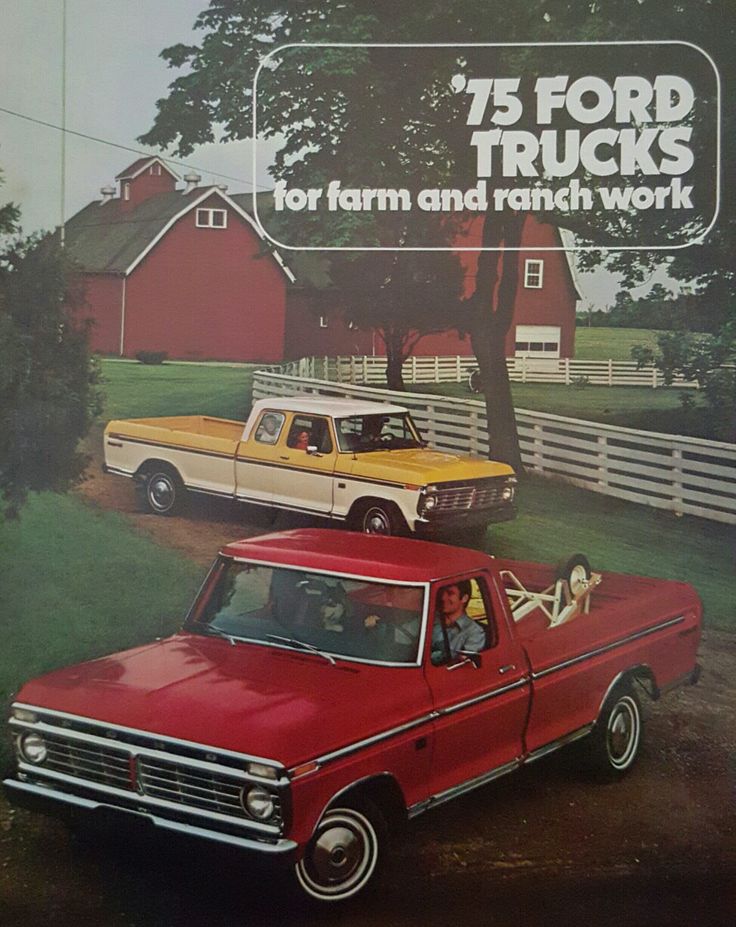

Many strange things have happened over the course of the past 30 years or so. One of them is the way trucks have become more expensive than cars. Kind of like the way gas costs more than diesel.
It used to be the other way around. For both. So, what happened?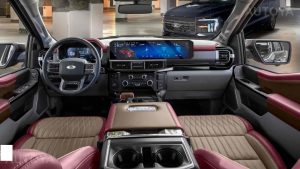
Trucks got fancy is what happened. They used to be anything but – at least the majority of them. Some didn’t even come standard with carpet; you got rubber mats, maybe. The majority were equipped with drivetrains meant for economical work. For example, the late ’80s Ford F-150 a buddy of mine bought brand new shortly after we got out of college, to use as the work truck for the roofing business he had just started. It came with an inline six (no turbo, let alone two of them) and a five speed manual, with manual 4WD; i.e., you engaged the 4WD manually, via a lever that had to be manually moved into 4H or 4L. No electronic controls to make this easier, because it wasn’t hard to begin with. But it wasn’t for everyone. Ditto the absence of air conditioning, power windows and so on. But it worked, if you were using the truck for work – which is what most truck buyers bought trucks for, in the Before Time.
This was in the time before CAFE – federal fuel economy “standards,” as federal edicts are often soft-sold. The first CAFE standards were emitted by the EPA in the mid-1970s and (at first) trucks were not held to the same high standard as cars, because at this time trucks were still the preferred vehicle for working people and (at the time) there was still enough vestigial concern for them that the federal government was obliged to go easier on the trucks working people needed, to get work done. That didn’t last though. And in the meanwhile, something significant happened on account of the CAFE standards imposed on cars. They got smaller. If you were alive in the Before Time, you will recall how a great downsizing took place, beginning in the mid-late 1970s. Prior to this time, the typical American car was very different from the typical imported (mostly Japanese, at this time) car. Americans cars were much larger – even the smaller ones, such as the Chevy Nova, for instance. And who could forget the “small” Chrysler – the Cordoba – which was a two-door coupe about the same size as the biggest high-end luxury sedan you can buy today?
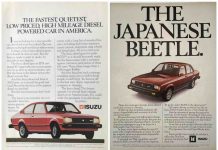
The Japanese specialized in small cars and also FWD cars, as opposed to the big, rear-drive cars most American car companies were still making back then. By the mid-1980s – an eyeblink – American cars had become much more like Japanese cars. They were much smaller – and they had much smaller engines (fours and sixes as opposed to big sixes and eights). All of it done to make them more “efficient,” which is a nice way of saying more compliant with federal fuel economy edicts.
Problem was, lots of Americans still wanted big cars. They missed the room as well as the solid feel of larger rather than smaller. This need was addressed by marketing trucks as the new cars – i.e., marketing them to people who just wanted something like the big cars that pretty much every car company wasn’t making anymore. So trucks got nicer, which was necessary – to attract people who wanted something like the big cars they preferred but who also didn’t want metal floors with rubber mats, no AC and drafty-in-the-winter interiors with only limited trim covering the metal and not much in the way of insulation behind the metal. They also wanted something that drove more like the cars they were used to – as opposed to a clunky truck with a primitive (but rugged) suspension and three on the tree.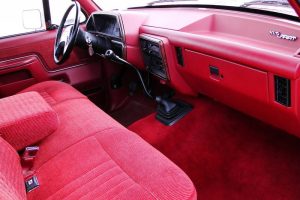
So the car companies became truck (and SUV) companies. Some of them – Ford, for instance – no longer sell cars at all, if you don’t count specialty models such as the Mustang. They also no longer sell trucks that cost less than cars. The least expensive new truck available right now is the $32,545 Toyota Tacoma – and it’s a very nice truck. It comes standard with air conditioning, power windows and locks, an automatic transmission, a turbocharged engine and (of course) a carpeted floor and fully trimmed out interior. It is easy for anyone to drive every day because it was designed to be a car that has the form and some of the function of a truck – which the majority of people who buy likely do not need and rarely (if ever) make use of.
Note that most of these trucks (even the full-size ones) have four doors and short beds – a clear statement of their primary purpose, which is hauling people rather than sheetrock.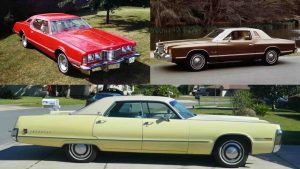
This is not to disparage them – or the people who buy them.
It is merely to point out the distortions created by CAFE edicts, which currently egg-on the production of super-sized trucks that cost much more than cars (the few that remain).
If the market had been allowed to do its thing, there would almost certainly still be big cars – and reasonably-szed trucks that cost less than most cars.
Diesel would also cost less than gas – but that’s a subject for another time!
. . .
If you like what you’ve found here please consider supporting EPautos.
We depend on you to keep the wheels turning!
Our donate button is here.
If you prefer not to use PayPal, our mailing address is: EPautos 721 Hummingbird Lane SE Copper Hill, VA 24079