

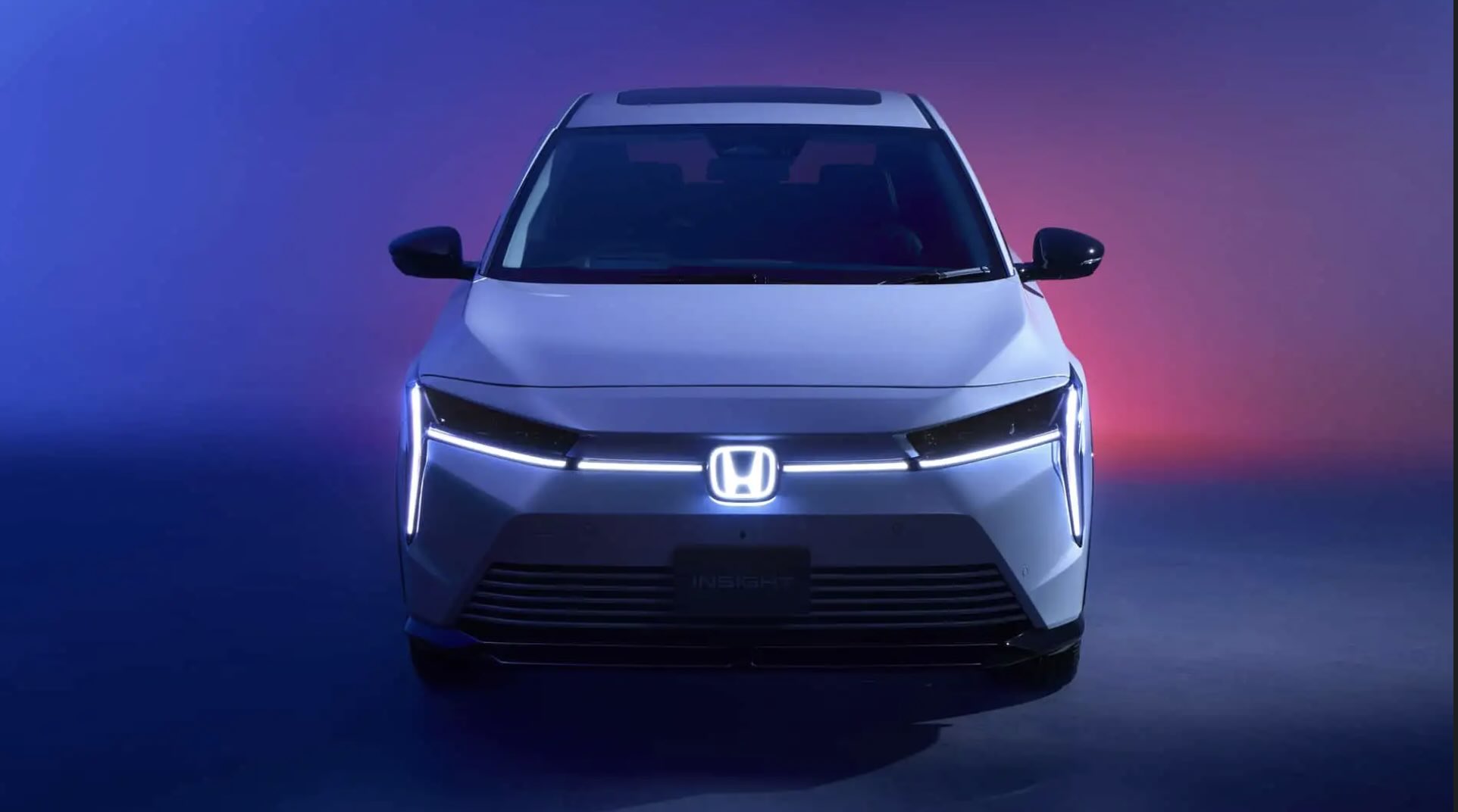

Honda is bringing back the Insight. Well, the name.
The car is entirely different.
The original Insight was a two-seater hybrid that was capable of getting 60 miles-per-gallon and able to take you more than 600 highway miles on about 10 gallons of gas. It stickered for $18,880 to start back in 2000, which was the first year it was available in the United States.
The Insight Honda is rebooting for the 2027 model year is an electric crossover that might go about 300 miles before it’s necessary to plug it in again. Honda has not officially announced pricing details as yet but the word is around $35k, give or take.
It is a measure of our regression.
More than 25 years ago, you could have bought a practical little commuter car that might need to be topped off once every two weeks at the cost of less than 5 minutes of your time for about $18k. A quarter century later, for twice the money, you get something that goes half as far that forces you to wait for at least 20-30 minutes to recover a partial charge – which you’ll probably need to do every other day or so, given the range limitations.
Part of the reason why has to do with other limitations; specifically, the practical impossibility of building a compliant new hybrid vehicle that weighs around 1,800 lbs., which is what the 2000 Insight weighed.
It is damned hard to do that when it is necessary – for compliance reasons – to design a car’s body and structure such that it is strong enough to pass muster with 2026 federal rear and side-impact/roof crush standards, plus all the other stuff that has added about 500 pounds to the curb weight of the typical new car. There are no sub-2,000 lb. new cars on the market anymore. The current (2026) Toyota Prius hybrid weighs about 3,100 lbs. – which is part of the reason why it only manages 54 MPG. If it weighed 500 pounds less, it’d be able to exceed the original Insight’s 60 MPG, which is something buyers facing the imminence of $5 per gallon gasoline might appreciate more than “safety” (as defined by complying with various federal government “standards”).
Instead, they’ll be offered another EV that’s also overweight on account of the battery pack it must lug around, which is the main reason why it can only go about half as far as the old Insight hybrid.
It takes something like 800 pounds of battery to store the electrical energy equivalent of about five gallons of gasoline – which would be enough to take you about 300 miles in the old Insight. The old Insight could go twice again as far because it did not have to burn as much energy to move itself (and its much smaller battery). And because it was a hybrid, the old Insight could be gassed up in just a couple of minutes – whereas the new Insight, being an EV, will have to be plugged in for the usual 20 minutes or so it takes to draw the electrical energy equivalent of about three gallons of gasoline at what are styled – in truly Orwellian fashion – “fast” chargers.
Speaking of that, I have some news to report about a new thing – apparently. I am currently test driving a 2026 Hyundai Ioniq 9 EV and you have to drive it to a “fast” charger – and wait there – in order to get some charge, unless you have wired up your garage (this assumes you own a garage) with a 240V (30 amp circuit) “Level II” charging outlet. This EV cannot be charged up using a standard 120V household-type outlet. It’s either the “Level II” or the commercial “fast” charger.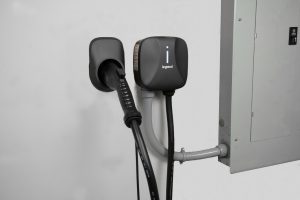
The thing about this is most homes do not have “Level II” capability; it has to be added – by adding the circuit to your home’s electrical panel and then running the wiring to an outlet somewhere in the garage or on the side of your house (this assumes you own a house) that’s close enough to where you park so that you can plug the EV in to charge. This will cost you at least a few hundred on the low end and possibly a few thousand, if your home’s electrical panel needs to be upgraded to be able to accommodate the additional 240V (30 amp) circuit.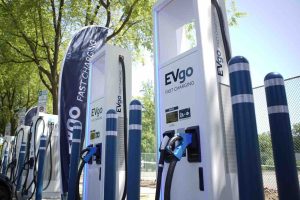
It also assumes you have a home – or at least a townhome. If you do not, then you pretty much have to drive to wherever the “fast” charger is and wait there for the 20-30 minutes it takes to draw a partial charge (a full charge will take an hour or longer). You will be doing this probably once a week.
Is this a trend?
Apparently, it is. I have written previously about several other EVs that don’t come with home charge cords; they are extra cost options – and not cheap ones. Is this a sly attempt to push people to use “fast” chargers exclusively? To be dependent upon them? It is certainly an acknowledgement of the fact that there are lot of people who cannot charge at home because they do not have a home. That is, a single family home or townhouse. People who live in apartments and condos pretty much have to drive to get a charge and so providing a home-charge cord is as pointless as maternity coverage for a 60-year-old single man.
Back to the Insight – which it is in name only. The fact is it’s just another too-expensive EV that takes too much time to charge. It’s a shame that Honda that didn’t try to make a new Insight hybrid similar to the diesel-electric hybrid VW was developing before the company got raked over the coals for “cheating” on government “emissions” certification tests (the “cheating” was so trivial it took a lab to suss out the fractionally higher “emissions” that were produced during wide open throttle operation). This VW hybrid – which looked similar to the original Insight – was able to exceed 100 MPG.
But it got cancelled – along with VW’s entire lineup of TDI diesel-powered cars that got 50-plus MPG without the add-on expense (and weight) of the hybrid equipment.
Point being, efficiency is not the thing wanted. If it were, we’d have access to it. Instead, we get overweight, over-expensive EVs that don’t go very far and take comparatively forever to get going again and – the latest thing – literally tether you to the “fast” charging network.
Why do you suppose that is?
. . .
If you like what you’ve found here please consider supporting EPautos.
We depend on you to keep the wheels turning!
Our donate button is here.
If you prefer not to use PayPal, our mailing address is:
EPautos
721 Hummingbird Lane SE
Copper Hill, VA 24079
PS: Get an EPautos magnet or sticker or coaster in return for a $25 or more one-time donation or a $10 or more monthly recurring donation. (Please be sure to tell us you want a magnet or sticker or coaster – and also, provide an address, so we know where to mail the thing!)
If you’d like a Baaaaa hat or other EPautos gear, see here!









Meanwhile, Honda has just announced record losses in connection with its EV business:
“TOKYO, March 12 (Reuters) – Honda will fall to its first annual loss in almost 70 years as a listed company, hit by up to $15.7 billion in restructuring costs at its EV business, it said on Thursday, as weaker-than-expected demand for the technology hammers automakers.”
“Japan’s second-largest automaker said it expects a hit of up to 2.5 trillion yen ($15.7 billion) as it cancels three EV models planned for production in the U.S.”
https://www.reuters.com/world/asia-pacific/honda-expects-fy202526-loss-up-43-bln-review-ev-strategy-2026-03-12/
Even honda drones wont want this useless junk. WTF?
The agenda is clear…15 minute cities, absurdly expensive & limited transportation options, and no private firearms…hmm mm
Almost like (((They’re))) planning to do something to us Goyims where’d we have to defend ourselves, hide, and move…just like the military used to teach!!
Shoot, move, and communicate….
Plan and prepare accordingly…
YMMV….
Why couldn’t Honda bring back the Insight as a PHEV, like the Chevy Volt? It would be like the Volt, but with Japanese quality. Bring it back with its old look with some subtle updates. There’s no reason they couldn’t price it in the high 20s or low 30s. It would be a sharp, practical, fun, and affordable car. It would FLY off the lots! WTF do they have to do yet ANOTHER BEV crossover? Aren’t there enough of those out there already?
The reality is that there is no electric company, anywhere, upgrading residential neighborhood grids so people can charge at home. Not a one, anywhere in the world. It would be too expensive with no return on the “investment” to do so.
Couple that with the push to electrify houses completely (removing natural gas, propane and banning fireplaces and wood burning stoves) and you have the perfect storm for brownouts and blackouts. Note the only investment in residential areas lately is the control equipment so they can ration it. At the moment most electric companies struggle to keep the juice on during hot days in the summer (too many of us have a/c).
There is no question they don’t want home charging for the masses.
Won’t matter. If they ever began to sell, they can’t make too many of them anyway.
https://www.zerohedge.com/political/washington-reportedly-has-just-two-months-rare-earths-left
Add to this line of thought that not only are they skipping infrastructure upgrades, they are decommissioning coal plants.
One example I know is they are replacing a 3 unit coal plant that generates a total of 1,285 MW with a solar farm that generates 145 MW.
All of this is being done right under our noses. There’s layers of politicians who of course don’t know better and are paid off but all the engineers and contractors doing the work. How can they not see it?
Then to add to the insult the utility that’s doing the replacement is a true son of bitch to work with getting a roof top solar on your house. They’re even fighting aggressively to prevent their customers from using cheap plug-in balcony solar that might on a good day feed a couple hundred watts, enough to maybe shave a few bucks off your bill.
It’s in the noise for them financially but the very idea you might steal a few pennies from them. It’s beyond insulting, it’s intentionally working to screw us.
Why can’t the local coal plant be converted for NG? That’s what was done with a former local coal plant in my area; it was converted from coal to natural gas, and it’s still online.
It’s in Colorado so that’s not an option. Has to be “renewable” energy and natural gas isn’t. This state is fucking evil and spiraling the drain.
That sucks. Can you escape CO?
That’s our plan. I’m 4th generation here but I’m under no illusion, someone before me decided the old place (my great grandparents left Chicago) sucked and went west young man. Moving to hopefully find something better isn’t without a downside. Just not sure where is really any better. If a place seems better politically there’s the question of naturally resources, weather or economic opportunity. I could jump from the frying pan and find myself on the wrong end of a tornado or flood that TPTB figure out a way to screw us with, like happened to Asheville, NC. I’m just more and more thinking the world is rotten to the core and the best move is to sell everything and be a homeless, stateless ghost.
Being stateless is a great idea.
However. It has a lot of downsides, such as uncertain immigration status & inability to be employed pretty much no matter where you go.
Youre tapping the inner human being. Dont be afraid.
The seriously evil part is the plant I’m talking about is in Craig, the northwest corner. It no shit is sitting next to the once huge Colowyo coal mine. So it’s about the most perfect co-location of mine and power plant. And it sits on some of the largest reserves of natural gas in North America but the greenies are fighting hard to prevent using it.
https://www.craigdailypress.com/news/big-pivots-after-coal-how-much-new-natural-gas-for-colorado/
https://www.cbsnews.com/colorado/news/new-oil-and-gas-resources-discovered-northern-colorado-southern-wyoming/
I hear you, Anon8. I’ve wrestled with the same questions. I’ve thought about moving to FL myself, but I’ve held off because I don’t want to go through finding a house and fixing it up again; my present house is in good shape. Plus, I don’t want to deal with hurricanes. Finally, Gov. DeSantis went to Israel to sign those anti free speech bills into law-so much for the “free state of FL”…
Meanwhile the idiots running my co-op are having to deal with less baseload demand and more peak, so they’ve implemented demand/surge pricing. Now it not only matters how much you consume, but when you do how much at any given time. They claim it is for upgrading the system to handle more peak production, but the reality is they’re not getting a good price on the spot market anymore because they incentivized solar a few years ago so well that too many people took advantage of the deal. I did and my system should break even by late next year, far sooner than if I only got the federal and state tax breaks.
Now plug in your EV to charge overnight during “low demand time” and get screwed because your peak demand was 6.5 kW even though demand on the grid was nothing. Oh sure, it’s only a buck a kW… for now. But on a “net zero” bill like mine that 6.5 KW is about a 30% increase per month. Even if your bill is $100/month that’s a 6.5% increase just for using their product in the way they used to encourage.
After this ill-conceived 2027 Honda faceplants, the internet will give it a new name:
the In-SHITE. 🙂
What can brown do for you?
Your mention of the original Insight weight and MPG compared to the Prius and other cars got me thinking.
The 2002 Insight curb weight was roughly 1850 lbs but the next generation , like a 2010, grew to 2720 lbs. This is similar to the Prius, which in 2002 weighed 2765 lbs.
I thought this required more investigation. Turns out the 2002 Insight was pretty small. 155 inches long, 53 inches wide. The 2010 is 56 inches wide and 172 inches long. This compares to the 2002 Prius at 57 inches wide by 170 inches long.
None of this is disputing the premise that cars are growing and gaining weight probably due to regulations but perhaps some so that fattening Americans can actually fit inside.
I’ll admit that my 1981 Civic was a VERY small car but I didn’t really notice until I got a bigger car. Now having become accustomed to a string of bigger cars when I see a 30 or 40 year old Civic I think “Man, there’s no way I would drive that, it’s tiny.” Our perception is relative and changes over time.
This it kind of marketing 101. You will almost never be successful if you make something smaller with a redesign.
To stick with Honda and Toyota that’s why they had to introduce a Yaris or Fit as the generations of Corolla and Civic got redesigned and few incrementally each time.
If Honda said “The new 2027 Civic, now 5% LESS interior space!” they’d be ridiculed by every reviewer. So it has to grow, even slightly, to market the thing and get someone to trade in an old one for a new one. After a bunch of generations of this the Civic is the size of the old Accord and the Accord has become the size of a midsized Buick.
Hey Eric – I always wondered why they made the rear wheels closer together than the front wheels on the original Insight. Any thoughts?
Hi Mike,
I did not know about that! Let me see what I can find…
Maybe it’s a nod to BMW’s long-ago Isetta:
‘The first prototypes had one wheel at the rear, but having a single rear wheel made the car prone to roll-overs, so the rear wheel layout was changed to two wheels set 480 mm (18.9 in) apart from each other. This narrow track eliminated the need for a differential.’
https://en.wikipedia.org/wiki/Isetta
If you look at these cars from above, the body has a tear drop shape, which is optimally aerodynamic. That’s why the rear track width is narrower.
Thanks Augustine – that makes perfect sense!
Laminar flow as in aircraft wing.
I’m traveling this week. Rental is a Dodge Hornet hybrid. I got in, full tank of gas but no charge. OK, no problem (and no mention of having it fully charged when I return, only that it has a full tank of gas). I’m staying at a hotel so even though the 110V slow charge cable is in the boot, I can’t use it. I’d even try to charge it at my parent’s house, but I don’t think that there’s an outlet close enough to the driveway and I don’t trust the cabling can handle that sort of sustained load anyway.
Just now I got fuel, intending to also hit the Sheetz fast charging station just to verify the tribulations Eric goes though when testing EVs. Sure enough, I see a row of shiny new charging pedestals with massive cables terminating in a rather large connector with several pins. I had checked the web site of both Sheetz and Dodge prior to leaving, and it looked like the connectors would match. But no! The receptacle on the car has a round section with about 6 pins with a blank space on top where the “figure 8” style DC charging pins would go if the Hornet supported DC fast charging. The pedestal’s plug has the DC pins on the bottom of the connector. OK, obviously the receptacle is upside down, right? Well, no. Because the pins in the circular section are keyed a certain way and there’s a latching mechanism to hold the plug in place (which is on the top), that’s not going to happen. I look and down at the end of the row… oh, there’s a differently shaped pedestal, with two different plug types. Oh, but they’re nothing at all like the Hornet’s connector.
So I drove over to the fuel pumps, tapped my card and shoved the nozzle into the hole. Done and gone in about two minutes.
Proving the total scam again. Good work. EV is designed to lock libtard in its cage Duhhh. . .
Gas kicks ass
‘It’s a shame that Honda didn’t try to make a new Insight hybrid similar to the diesel-electric hybrid VW was developing before the company got raked over the coals for cheating.’ — eric
VW, cheating? Yes, Virginia, it just happened again:
‘Volkswagen’s 2025 financial results showed net profit falling 44 percent to €6.9 billion — the lowest level since the fallout from its “emissions” scandal.
‘According to reporting by Tichys Einblick, board members are set to receive bonuses of up to €1.75 million each after the company unexpectedly reported around €6 billion in net automotive cash flow for 2025, a figure that the news outlet claims was achieved by adopting “creative accounting practices.”
‘The cash flow result was partly achieved through a factoring operation in which VW sold outstanding receivables from its operating business to generate immediate liquidity. It pushed cash flow above a €5.6 billion threshold in its executive compensation scheme, activating the highest bonus tier for board members.
‘In the same financial year, workers were forced to forgo bonuses of up to €5,000 due to the company’s weak performance.
https://www.zerohedge.com/personal-finance/volkswagen-plans-50000-job-cuts-due-plunging-profits-board-members-grab-eu175mm
VW’s board members cadged $2 million apiece, while lowly line workers get gypped out of their €5,000 of beer money.
Bear in mind that VW’s supervisory board includes several union members, as well as members representing the state of Lower Saxony which owns part of VW.
These people would be called the ‘Epstein class’ in the US. Screwing little people isn’t just an avocation for them — it’s a lifestyle! 🙂
Someone at work still drives an Insight.
As for the level 2 only. I guess if you can afford and EV, what’s $1,000 to power it up?
Or it eliminates the PITA factor of slow charge at 120v, so it feels like it charges faster, making you feel better about your choice.
Think of the used car buyer. Not that I’d consider an EV, but I’ve been buying 2 year old CPO premium cars for half the price as new. Those inclined towards an EV without deep pockets might want to use the level I socket in their garage.
The contradictory regulations are like Colin Chapman’s command to “add lightness” while the military wants more armor. What you get is a heavy M1A2 Abrams tank.
I remember there were a ton of cars that could get 50 MPG with no hybrid gimmcrackery in the late 1980s/early 1990s such as the Geo Metro and Civic CRX HF.
Now cars are so heavy thanks to the roof crush and side impact standards and the “passive restraint” standards that festooned every vehicle with 20 heavy airbags.
Small and light thanks to our friendly FEDGOV isn’t on the menu any longer.
When are we going to notice that accommodating essentially female demands for safety ain’t working out all that well?
That’s what happens when you give women the vote and access to power. Their penchant for safety and security is good for child rearing, but it’s disastrous outside the home and family.
If they only had the insight to build it as a hybrid it might have succeeded but as this car was designed during Biden’s Presidency and will just be another failure.
My sentiments exactly: ‘Biden’ singlehandedly screwed up automotive drivetrain design during his 4-year reign of error. Now, after the usual 3 to 5 year lead time, those turds are dropping into the ‘market’ and sinking straight to the bottom of the bowl.
Flush twice, it’s a long way to WARshington! 🙂
They should have stuck with the original idea of just buying them from GM, like they did with the Prologue.
The GM built Honda Prologue has been axed.
Hi Rich,
I hadn’t heard the news about the Prologue; hat tip for the tip! The stupid thing didn’t even last two years.