

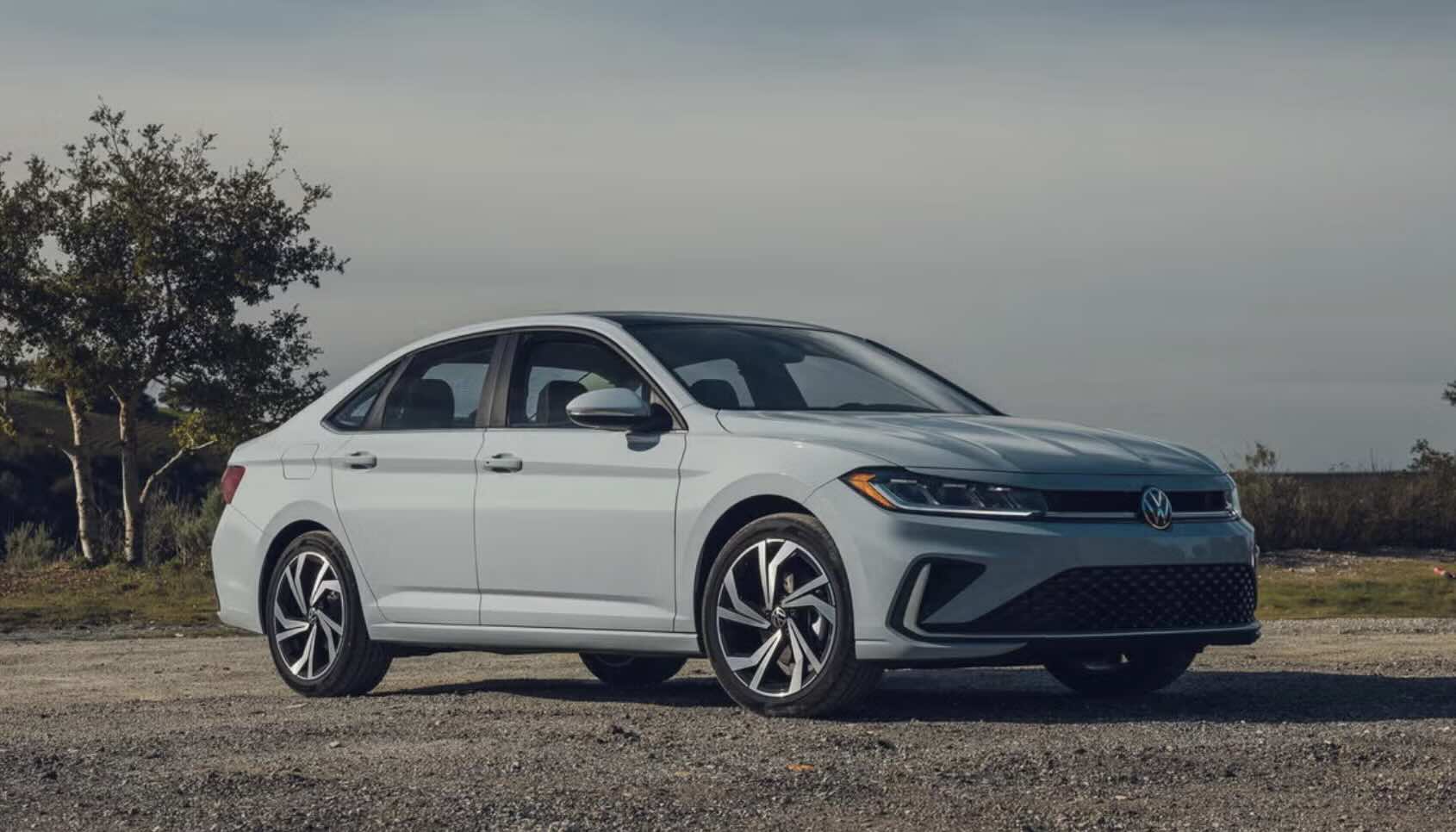

A watershed moment has arrived – for VW. This year will be the last year you’ll be able to buy any VW with a manual transmission. This includes the Jetta – which (for the next six months) you can still get with a manual six speed, in the Jetta GLI. Next year, it – and every other model VW sells – including the high-performance Golf GTI and the Golf R – will be automatic only.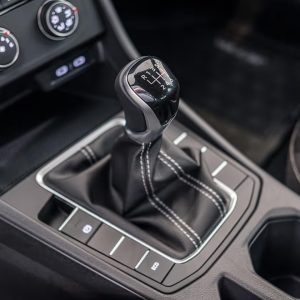
The latter two already are.
So, the Jetta (GLI) will be the last of the manual Mohicans. There are reasons why, which we’ll get into but the bottom line is there’s something sad about all of this, especially as regards VW – which prided itself on being a brand for people who like to drive as opposed to a seller of vehicles for people who just need a car to drive.
What It Is
The Jetta is VW’s compact sedan. It is the only German-brand sedan that isn’t also a luxury-badged (and priced) sedan, even though it is related to German luxury-brand cars made by Audi, which is closely related to VW. It has also been one of the few remaining cars of its type available with a manual transmission – in the GLI. After the end of this year, the Jetta will become automatic-only, like every other vehicle VW sells.
But there’s some good news. The Jetta’s automatic isn’t a CVT automatic. It’s an eight speed automatic that shifts up and down instead of varying through ranges (with the soupy feeling that you get with that). It’s also still affordable – $23,995 for the base S trim, which comes with LED headlights, dual zone climate control AC, a four speaker stereo and 16 inch aluminum wheels.
The next-up Sport trim – $23,305 – gets a set of 17 inch allow wheels and electric-locking front differential, heated seats and black exterior trim details.
The SE – $26,985 – ups the luxury quotient with synthetic leather upholstery, keyless ignition/door locks, wireless phone charger, an upgraded six speaker audio system and a sunroof.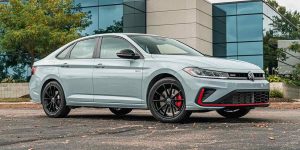
The top-of-the-line SEL – $29,995 – includes the SE’s upgrades and adds 18 inch wheels, real leather upholstery, heated rear seats (and steering wheel), an even better eight speaker stereo system, ambient interior lighting and a Digital Cockpit LCD main gauge cluster.
All four Jetta trims are front-wheel-drive and come standard with a 1.5 liter four cylinder engine paired with an eight speed automatic transmission. Except for the GLI – which is the performance version of the Jetta. It uniquely gets a 2.0 liter turbo’d four that makes 228 horsepower, paired with either a six speed manual or a seven speed dual-clutch automatic. Either version lists for $33,745.
What’s New For 2026
The current Jetta – which was last updated back in 2019 – is probably riding out its last year before it gets a major makeover for 2027. The upside is that the current Jetta doesn’t have the creepy eye-movement monitor that is going to be standard (because the government will require it) in all 2027 model year vehicles. Many 2026 models already have this system in anticipation of it. Also, because this is probably the last year for the current Jetta before the next makeover, odds are good you’ll be able to score a good deal on one as dealers are eager to clear out their inventories of what will soon be an “old” model.
What’s Good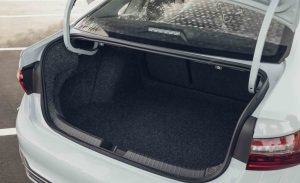
One of the most affordable sedans available – and the only affordable German sedan available.
Decently large trunk (almost 15 cubic feet) for a compact-sized sedan.
Hasn’t got some of the latest – and creepiest – government-mandated “safety” tech.
What’s Not So Good
This will be the last year of availability for a manual-equipped Jetta (the GLI).
No hatchback option.
Touchscreen interface is a little . . . touchy.
Under The Hood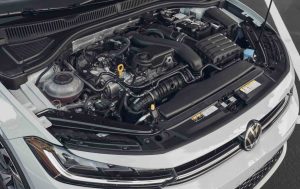
As mentioned already, every Jetta – regardless of trim – comes standard with a 1.5 liter four cylinder engine that touts 158 horsepower, paired with an eight speed automatic and front-wheel-drive. The combo is capable of getting the Jetta to 60 MPH in about 7.8 seconds. This is considered a ho-hum figure today, because so many sporty cars can get to 60 in six seconds and performance cars in less than five seconds. Still, 7.8 seconds to 60 is quicker than most of the V8 performance cars of the early-mid 1980s. Granted, that’s 40 years in the rearview, but the point is that our sense of “quick” – and “slow” – have evolved. The truth is nothing new is actually slow – at least not in the way that many cars once were. For example, a VW Beetle from the ’70s takes about 15-20 seconds to get to 60.
That’s actually slow. Slow as in you’ll experience the pucker factor when you try to merge with traffic going fast. That’s not the case here (about which more below).
The main draw of this car is the mileage – which is 29 city, 40 highway. That plus an affordable MSRP makes this an affordable car to drive and to buy.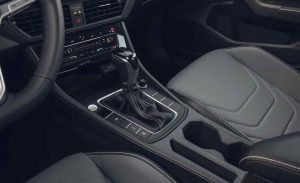
You can still get it with a manual transmission, too – for the next six months, at least. The high-performance Jetta GLI is the last Jetta – the last VW, apparently – that will be offered with a manual (six speed) transmission. The GLI also comes standard with a larger, 2.0 liter turbocharged four cylinder engine that touts 228 horsepower. And it gets to 60 a lot more quickly (about 6 seconds).
Interestingly, the gas mileage you get with this engine – even with the six speed manual – is only slightly less (26 city/36 highway) than that touted by the regular Jetta’s much less potent 1.5 liter/automatic combo. It is interesting because it’s not the mileage issue that’s killing off the manual transmission as much as it is the “emissions” issue. The word is placed within air fingers quote marks because no new car “emits” more than trace emissions – of the objectively harmful combustion by products that have in the past caused or worsened air pollution and that affect people’s ability to breathe, etc.
It’s the political “emissions” – CO2 – considered harmful by those who believe (and insist) the “climate” is “changing” because of the C02 produced by running car engines. In Europe, where VW does most of its business, this is a source of massive regulatory pressure on vehicle manufacturers to reduce C02 “emissions” even fractionally. That can be done by increasing gas mileage by just a couple or three miles-per-gallon (less gas burned, less gas “emitted”) and that can be done more readily by programming an automatic for maximum mileage. A manual cannot be programmed at all – and that is the main reason why manual VWs are going away.
On The Road
The Jetta may not be the quickest thing on the road, but it’s also not slow. Not in any meaningful sense. It is quick enough to comfortably keep up with the ebb and flow of traffic; to merge with faster-moving traffic. To be capable of pulling out from a sidestreet onto a busy road without forcing the drivers of other cars you pulled out in front of to slam on their brakes to avoid rear-ending you. It is also fast enough to comfortably cruise at 75-80 MPH all day long, with reserve for faster on tap. The engine has enough power for that, if you need it – and the engine doesn’t feel overworked getting there or holding it there – because the eight speed automatic cuts the engine’s speed to around 2,500 RPM at 75 MPH, which cuts down on the noise and helps the car get 40-plus on the highway. Emphasis on plus because if driven with a light foot, you’ll find you can get more than 40 MPG out of it.
I got 43 (on the highway) with the cruise set at 60. VWs have a history of over-performing when it comes to fuel economy and that’s true here, again.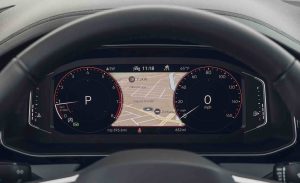
The other thing to like about this Jetta is that it is one of just a few small, affordable cars that does not (yet) have a CVT automatic. Probably because the current Jetta is basically the same as the 2019 model and back then, regulatory compliance pressure was less than it is now. CVTs are great for maximizing gas mileage because they keep the engine in the optimum spot for maximum efficiency by continuously varying the range (rather than the gear) you’re in. But they also tend to feel slushy and sound like they might be slipping when you floor the accelerator pedal. This is not an issue in the Jetta. Floor the pedal and you get a snappy downshift, followed by acceleration and then an upshift to the next-highest gear. It’s a more natural feeling kind of acceleration and the other upside is the eight speed automatic is likely to last the life of the Jetta if not abused and if maintained decently. CVTs, on the other hand, have a history of failing much sooner even if they are well-maintained. This is due to their being more fragile, generally speaking, than a conventional automatic (or manual) transmission.
Another thing to like about the Jetta is that for a small car it doesn’t feel that way once you’re inside and driving it. Nor does it feel like an inexpensive car, about which more follows.
At The Curb
The Jetta is compact-sized, on the outside. It is just 186.5 inches long – which isn’t very big. But inside, there’s mid-sized-car room. Up front, 41.1 inches of legroom and in back, 37.4 inches – which makes riding in back comfortable for adult-sized passengers. Many small cars feel tight inside, especially in the back.
But it’s the trunk space that’s most noteworthy because 14.1 cubic feet is close to the size of the trunk in many mid-sized cars; for example, the mid-sized (195.7 inches long) Honda Accord sedan’s trunk is only slightly larger (16.7 cubic feet) and the Accord is also a lot less affordable (base price is $28,395). The same-size Civic sedan’s trunk is slightly larger (14.7 cubic feet) than the Jetta’s, but the Civic’s base price ($24,695) is also significantly higher.
Another thing in the Jetta’s favor is its uniqueness – in that it is the only German-brand small sedan you can buy for $23k-ish to start. The others – the Audis and Benzes and BMWs – all start well over $30k. The subcompact Audi A3 sedan, for instance, starts at $40,100. This is an interesting disparity given that VW and Audi are the same company and there is a lot of similarity between VWs and Audis. Put another way, when you sit down behind the wheel of a Jetta, it is not difficult to see (and feel) the kinship, especially if you’re sitting behind the wheel of a Jetta SEL with the digital cockpit. It looks very much like it could be an Audi and feels like it could be, too. This is what you’d expect given VW uses the same suppliers (and in some instances the same parts) that Audi does. The take home point here is that you do not get the feeling you’re driving an entry-level car because it could pass for an entry-luxury car.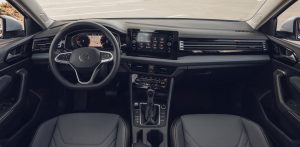
The Rest
The Jetta’s secondary touchscreen looks handsomer than some but it (sometimes) doesn’t work as well as some. The surface is very sensitive, such that if your finger glances the glass it can cause something to be selected you didn’t intend to select. Both the touchscreen and the controls below it for the climate controls are canted toward the driver, which is aesthetically pleasing and functionally useful.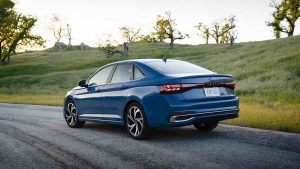
Perhaps the most appealing thing about the current Jetta is that it’s the last new VW that will be available without the creepy “drowsy/distracted driver” eye monitor system the feds have required to be standard in all new models beginning next year.
Avoid it while you still can.
The Bottom Line
It’s sad the manual’s gone but the Jetta is still appealing because it’s a nicer (and roomier) car than you’d expect for the money – as well as less creepy than what’s coming soon to a dealership near you.
. . .
If you like what you’ve found here please consider supporting EPautos.
We depend on you to keep the wheels turning!
Our donate button is here.
If you prefer not to use PayPal, our mailing address is:
EPautos
721 Hummingbird Lane SE
Copper Hill, VA 24079
PS: Get an EPautos magnet or sticker or coaster in return for a $25 or more one-time donation or a $10 or more monthly recurring donation. (Please be sure to tell us you want a magnet or sticker or coaster – and also, provide an address, so we know where to mail the thing!)
If you’d like a Baaaaa hat or other EPautos gear, see here!









I suspect part of the reason for eliminating the manual is because it’s harder to control the driver when he can mechanically control the transmission.