



Once upon a time – in the Before Time – your typical new car came with pretty much nothing. Everything except the shell, the glass, the drivetrain and the tires was optional. It was not thought to be a bad thing. People were free to buy as little – or as much – as suited their wants as well as their budgets. There were Cadillacs with everything – and Pintos and Chevettes with nothing.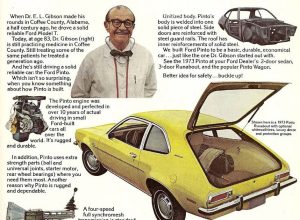
It was nice while it lasted.
In our time, all new vehicles come with everything that was once optional – including AC, power windows and locks, a stereo and also automatic transmissions. In the Before Time, the standard transmission in most cars (and trucks) was a manual transmission and that’s why, once-upon-a-time, the two terms were synonymous. The fact that new vehicles now come with everything that was once optional as standard may be very nice, assuming you want all of these things and can afford them. But if not, then it’s something like discovering the only homes on the market are McMansions that start at $400,000 to start when all need (and can afford) is a decent place to live.
Am interesting aspect of all of this is that many once-optional things have been sold as necessary-to-have things. As things you dare not do without. But is that so? And which of these things are the most oversold things?
All-wheel-drive is surely a contender for the top spot.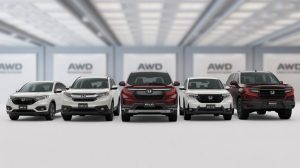
Before the late 1990s/early 2000s, AWD was still a relatively rare thing. Subaru and Audi made a big thing of selling AWD vehicles back when almost no other car company did. Today, every car company sells AWD vehicles. In fact, most vehicles either come standard with it or offer it as an optional feature. It is getting difficult to find a new vehicle without AWD.
The interesting thing is most people managed to get where they needed to go without AWD until fairly recently. What changed? Well, the marketing did. AWD was pitched as a thing you’ve just got to have – for safety, of course. Also played upon was people’s fear of getting stuck in the snow. There is some truth there, if it snows. If it doesn’t – or not much – then AWD is something like wearing a heavy coat all year long in that it is a fine thing to have on the handful of days each year when it’s cold enough to need a heavy coat. If it even snows. If not, then you’re just paying extra for the extra weight (of the AWD) that your vehicle is lugging around, which costs you gas money and also (inevitably) repair/maintenance costs that would not exist if your vehicle didn’t have AWD.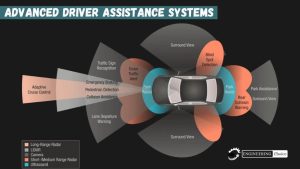
So-called “assistance technology” is another top contender.
Like AWD, “assistance technology” – as it is styled – is marketed as a gotta-have, for safety. The implication being that a vehicle that lacks “assistance technology” is unsafe and who would want to risk driving an unsafe vehicle? This pitch plays well to women and women-like men. But is it true that cars that do not have “assistance technology” are unsafe?
If it is, then it would mean that all cars made until about 10 years ago (roughly) were “unsafe.” Do you think a Mercedes S-Class sedan made in say 2000 is “unsafe”? When it was made, it was considered one of the safest cars ever made, because it was built very solidly and that protected its occupants from impact forces in a crash. Yet this same car – if it were made today as a brand-new car – would be derided for being “unsafe” because it does not have Lane Keep Assist or Brake Assist or Speed Limit Assist – all of which are more accurately intervention technologies that attempt to pre-empt and correct the driver. Whether that has anything to do with “safety” is open for debate. It has been observed that a car that constantly corrects you via beeps and other distractions is unsafe – because it distracts and annoys the driver, who is thus less focused on the road.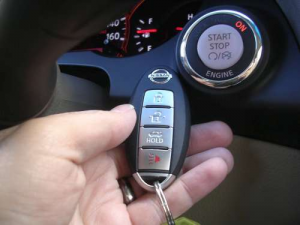
How about so-called “keyless” ignition (and door locks)?
Just about every current-year vehicle has this feature, which is sold as a great convenience – but is it, really? More to the point, is the convenience worth the cost? When you buy a new vehicle that has keyless ignition/door locks, the salesman probably doesn’t tell you what it will cost to replace one of the electronic transmitter fobs you’ll get in lieu of keys with your new car. The replacement cost – if you lose or damage one of the fobs that comes with the car – can be as high as several hundred dollars. Each. As opposed to less than $10 to get an old-style metal key cut at Lowes or pretty much any hardware store. The metal key can go through the wash, too, without hurting it. If you forget a fob in your pants pocket and it goes through the wash, you may have to pay to buy a new one – and it’s going to cost a lot more than $10.
Well, but what about the convenience? It may be helpful to turn this around. Is it that inconvenient to insert a metal key into a lock and turn it? You do of course have to pull it out of your pocket or purse first. But is eliminating that minor inconvenience worth several hundred bucks a pop for that new fob you’ll inevitably need? Not to mention the more elaborate/failure-prone and expensive to replace keyless ignition and door locking system?
Electric parking brakes.
Over the past roughly ten years or so, the manually engaged parking brake (which also served as an emergency brake) has been replaced by an electrically actuated parking brake. Instead of pushing down on a pedal or pulling up on a lever, you just push a little button. In some of the newest cars, this is done automatically – as soon as you put the (automatic) transmission in Park. It automatically disengage when you move the gear selector from Park to Drive.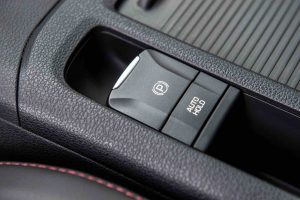
The system is sold as (again) a convenience but while it may be that – if you think it’s a chore to push down on a pedal or pull up on a lever – it is really a cost-cutting measure that reduces vehicle assembly costs. It eliminates the need to have a line worker install/adjust a cable so that the tension is just right. Instead, everything is plug and play electronics – much faster and so cheaper to install as the car moves down the assembly line. But it is also a lot cheaper to adjust/replace a loose/snapped cable than it is to diagnose and repair an electrically-actuated parking brake system. You also lose the emergency brake function, at least insofar as losing the ability you have with a pull-up lever to modulate the braking pressure, so as to avoid the wheels locking up and the car going into a skid.
All of the above stuff is sold to us because after more than 100 years of refinement, the “car” is just about perfected. There’s less room for huge improvements and so there’s less to sell that’s actually worth what it costs.
That doesn’t mean they won’t try to sell it, however.
. . .
If you like what you’ve found here please consider supporting EPautos.
We depend on you to keep the wheels turning!
Our donate button is here.
If you prefer not to use PayPal, our mailing address is:
EPautos
721 Hummingbird Lane SE
Copper Hill, VA 24079
PS: Get an EPautos magnet or sticker or coaster in return for a $25 or more one-time donation or a $10 or more monthly recurring donation. (Please be sure to tell us you want a magnet or sticker or coaster – and also, provide an address, so we know where to mail the thing!)
If you’d like a Baaaaa hat or other EPautos gear, see here!






Eric, I’m glad you mentioned those damned electric parking brakes. They don’t help in emergencies, like when I had a rubber line rupture as a light turned red. Luckily, my old POS Cherokee had a hand brakes, and so allowed me to slow down enough to hit the turn lane instead of other cars when I ran the red light. The electric, automatically applied, parking brakes also cause problems when a car breaks down or the battery dies. Lots of fun trying to load those onto a flabed as two wheels drag. That can’t all be blamed on the electric brakes, some is due to newer automatics not having an easily accessible override to get to neutral. Then, something I’ve found recently, is that certain EV cargo vans don’t like it when you lift your keister to look out the window at something below the door. They throw on the parking brake and slam into park, as if you’re too stupid to control the vehicle yourself. I transport a few of these for work now and then, and loathe them in part because of that. To hell with electronic brakes!
Having to replace all 4 tires with AWD vehicles, when you only need to replace one bad tire was the deal breaker for me to avoid AWD.
And if you don’t replace all 4 tires at the same time, then within a few thousand miles or less, the differential or AWD system blows up mechanical parts that cost thousands to repair/replace…..
YMMV…..
Roger that, 1325 –
I’ve demonstrated this to a few people, including my niece, when I taught her how to drive stick using a Miata, which had a pull-up hand brake lever. I showed her how you could use it to slow/stop the car in a controlled manner in the event the main brakes failed for some reason. With “e” brakes, this is much harder if possible at all. When you push the button, the system cinches up the tension and you have no effective way to modulate that.
Eric, you make me laugh, you said “McMansions that start at $400,000 to start”. There are no homes where I live that even start at 400K. And SW Oregon is way cheap compared to California.
The only thing to live in below 400K is a trailer park, where space rent is about the same as apartment rent. Here is the cheapest cottage you can buy (and own the land) in my area:
https://www.zillow.com/homedetails/1312-Iowa-St-Ashland-OR-97520/48326082_zpid/
Anything cheaper is a tear down rotting on it’s rock foundation.
400K doesn’t buy shit
Roger that, Jack –
There are some homes in my neck for less than $400k – but only a few and the thing is, there are very few jobs in my neck that pay enough to afford even a $250k home. Most of the homes are bought by people who sold their more pricey properties and used the proceeds to buy a less expensive (comparatively) place here. But for that to work, you have to first own the pricier property; aye, there’s the rub…
The “better” they make things, the worse everything gets. Why is that do you suppose? It’s intentional. Jew economics 101.
Here’s my rant of the day on car design: I like the old-style headlight switches, where you had to pull it out to turn the lights on. My ’91 S10 has a paddle switch, and it’s too easy to accidently bump it and turn the lights on. What was wrong with the old style, that it had to be replaced?
I agree, SLH –
I am also a big fan of the floor mounted dimmer switch. No need to fumble with a stalk to turn off the brights!
“You also lose the emergency brake function, at least insofar as losing the ability you have with a pull-up lever to modulate the braking pressure, so as to avoid the wheels locking up and the car going into a skid.”
Not really sure what you mean.
The main advantage to a manual hand brake is it can be used on a hill so a driver doesn’t have to ride the clutch when he moves his foot from the brake to the accelerator pedal. Also, he can use the hand brake instead of keeping his foot on the brake pedal at a traffic light so his brake lights will not dazzle drivers to his rear. In fact, this procedure is (or was) taught in English driving classes.
In addition, rear brake pads are a pain in the ass to change on a car with an electronic hand brake.
The criminal government sprays us with Chemtrails, puts fluoride in our water and toothpaste and dental floss, tries to kill us with the Covid death jab but is all so concerned about our safety.
Goolag Ai: how many airbags does a typical sedan have?
A typical modern sedan has six standard airbags, though many newer models feature up to eight or ten to achieve higher safety ratings.
——————
how many decades were passenger cars produced without safety belts?
Passenger cars were produced without safety belts for roughly eight decades, spanning from the birth of mass-market, gasoline-powered automobiles in the late 19th century until safety restraints became universally integrated in the late 1950s and 1960s.
—————–
how many types of road vehicles do not have safety belts like school buses?
There are five primary types of road vehicles that are traditionally or legally designed to operate without standard seat belts for all passengers, relying instead on unique structural physics or operational designs.
——————
how much cheaper would cars cost if the government did not regulate them?
If the government completely eliminated all safety, environmental, and corporate mandates, a new mass-market vehicle would cost roughly 15% to 20% less to manufacture, shaving an estimated $5,000 to $10,000 off the retail price of an average car.
—————
how many ways in the past have outraged citizens killed the political class guilty of treason?
Historically, outraged citizens have executed or assassinated political figures accused of treason or betrayal through six primary methods, ranging from spontaneous mob violence to ritualistic public executions.
Throughout global history, during periods of extreme civil unrest, economic collapse, or revolution, civilian populations have targeted ruling classes using specific, highly public tactics designed to signal the absolute overthrow of the existing regime.
1. Defenestration (The Act of Throwing Targets Out of Windows)
Popularized in Central Europe, this method involved angry citizens storming government buildings and physically hurling politicians out of high windows onto the streets or spikes below.
2. Cannibalism and Public Dismemberment
In rare cases of extreme societal starvation or political fury, mobs have physically torn apart and consumed parts of the ruling elite to symbolize the total consumption and destruction of corrupt power.
3. Guillotine and Revolutionary Tribunals
During highly organized mass uprisings, citizens formalized the killing of the ruling class by creating rapid, pseudo-legal courts that utilized mechanical execution devices to process hundreds of aristocrats efficiently.
4. Summary Execution by Firing Squad
When civilian militias or rebel factions successfully capture treasonous leaders during a civil collapse, they frequently use impromptu military-style firing squads to instantly eliminate the political figurehead without a formal trial.
5. Summary Hanging and Public Display
Citizen mobs frequently use makeshift gallows, lampposts, or meat hooks to hang political figures, leaving the bodies on display to visually prove to the populace that the regime’s power is completely broken.
Nuke the District of Criminals and bring back the old days.
Dear President Putin,
As you know the United States is run by Zionist criminals, we the peoples of the United States give you permission to vaporize Washington D.C., New York City, the City of London, and Israel.
Signed,
Concerned Patriots of Amerika
Dont get me wrong, I love my FWD ’00 V6 manual hatchback more than any and all nanny features combined, however. .
My new driver granddaughter complained that when picky moms “touchy pedal” RWD SUV shoots gravel at takeoff it could chip its paint and moms calm.
“Snow” switch by auto shifter in ’12 AWD G37x completely solved this. If floored on gravel zero wheelspin and rooster tail. Even I totally appreciate its tiny backup cam and now even this AWD too.
“No nanny sleeper sedan” with nice trunk, big windows and enuf backseat for adults with ECU set to 89 mph for new drivers. Auto sport mode is more desirable for distracted girls in ’26. When such cars are gone, they’re gone for good. LISTEN to Eric. Invest wisely.
As the tech ages things get ugly and annoying. I replaced both fobs batteries and now neither work properly. I’ve taken the primary fob apart several times, carefully clean the tiny contact arms, shim under the battery, works fine for about a week then intermittent failures, the remote start won’t fire off, auto door unlocker three tries then it clicks, lift gate no go. The worst – climb in, the speedometer readout “fob not detected”. Must be well known to Jeep, since it has an instruction picture and tells you to press the start button in the dash with the rounded end of the fob. Meanwhile the door locks and ignition lock still flawless in the ‘91 Silverado.
Next up is the infotainment screen in center dash, goes into blackout occasionally. I’ve got an aftermarket screen to install. Again, a majority problem if the aftermarket designed and built replacements with better screen tech, and makes money sending me one for $200.
You likely have RF interference around FOBs frequency. It sells lotsa 2032 batteries for nothing. Causes frustrating intermittents that vary by FOBs circuit layout. Nasty Nanny strikes again.
Speaking of FOBs, a friend of mine replaced her old, Subaru Forester with a brand new one. With all the safety bells and whistles I have had to help her shut off. Well, one day she had taken a road trip to another town. Had her car in a parking lot, and when she pushed the Fob button to unlock her car, the Forester parked next to her also unlocked itself. Who knew you could get two for the price of one?
“The interesting thing is most people managed to get where they needed to go without AWD until fairly recently. What changed? Well, the marketing did.”
This is not entirely true.
AWD has increasing become standard to address ever increasing horsepower which would otherwise just lead to uncontrolled wheel spin.
Similarly AWD is becoming standard as a means to control torque steer – again due to increasing horsepower.
And lastly (most importantly to the OEM) AWD generally helps limit vehicle instability and a loss of control by customers that no longer know how to drive or accelerate in slippery conditions. Lawsuits cost big money.
If you can pass off a feature to the customer and have them pay for it while simultaneously helping minimize lawsuits, that is a double bonus.
https://www.museumofamericanspeed.org/johnnylightningspecial.html
>The advantages of four-wheel drive had been shown in 1967 and George Bignotti sought to profit from combining it with the Ford V8 in 1968. He bought a single four-wheel drive Lola with Ford V8 power for owner, Al Retzlaff, to be driven by Al Unser. It was this car.
Another useless feature is the idle/stop feature. Shutting the motor off when you come to a red light and then restarting it once it turns green. Sure, you can disable this feature on most cars/trucks that have it, but the fact that it is installed in the first place is just dumb. We almost didn’t buy our 2026 Honda Civic Si because of this hated feature. Plus, all of the dumb driver assistance tech.
Sadly, this feature is “nearly” mandatory. Whether or not it actually saves gas, manufacturers get a credit towards their CAFE fines if it’s installed, and enabled automatically when the car starts (which is why the disable setting doesn’t stick)
I think I’ve bought my “forever cars” already, which I will strive to never replace. Anything coming out starting next year will be required to monitor the driver’s attention too, and cars will nag you over everything. One Toyota I rented even yelled at me to look ahead in the brief moments that I was looking over my shoulder to merge.
Hi Opposite,
I had a rental car last year with all that crap; you could turn most of it off but you had to do it every single time you started the car. Ugh, took an extra five minutes just to get going.
Ditto a rental I had. The maddening thing once turned off it all comes back next restart. The VW was a scroll and peck menu to turn it off feature by feature it was infuriating.
When the spare fob for my ’06 BMW E90 was stolen, years ago, it cost ~$1700 and took a week to get a re-programmed new one, which had to be shipped from New Jersey (to California).
I expect if I needed new keys (one for the door locks, one for the ignition) for my 1989 F150, I could get a local locksmith to re-key them both for less than $50 *today* (not next week).
Yeah, fobs are the worst, the fob on my rental was as big as my entire set of keys.
And to think back in the day, Mike, we had one key to start the ignition, and a separate one for the trunk. What I would not give to go back to a less computerized vehicle.
‘After 100 years of refinement, the “car” is just about perfected.’ — eric
Though I don’t own vehicles with key fobs, at relatives’ homes I’ve witnessed various key fob panics take place, and want no part in this absurd, degrading ritual.
Likewise, phone operating systems and email providers now take numerical dates — the only scheme I want to organize messages — and ‘helpfully’ convert them to ‘last Thursday’ or ‘yesterday.’ Apparently this mimics the primitive neurological processes of some innumerate humanoids who somehow have learned to use ‘devices.’ I recoil in disgust.
Seems like every week — it just happened yesterday — they pester me with operating system upgrades to add trivial geegaws or fix defects in the old one. I shun them.
I despise the consumer electronics model for vehicle control and user interface. Low-status auto engineers used to envy aeronautical engineers, so they put stupid (but harmless) tailfins on cars for awhile.
Now they envy Siliclown Valley types, some of whom got very rich with stock options. So updatable software, telematics, douchescreens and black-box algorithms are imposed on car victims buyers. I want no part of it, and will never darken the door of an auto dealer again. They make nothing I want. Burn it down.
I work on tech for the automotive industry, and I can tell you exactly how this happens. People get promoted for new features, things a marketer can brag about. Keeping existing things humming along, and user-friendly is “boring” and not rewarded. You can brag that you added a new button with a screen in it, but you can’t brag about your software not crashing for an entire year. Which do you think people focus on? It’s a broken culture, top down. The thing is, there are enough customers who get giddy over new features like this, which enables this behavior.
If I was rich enough to buy a failing car plant, like Elon did, I’d love to build a curmudgeon car. It probably wouldn’t sell, though.
Hi OL,
A mechanic buddy of mine and I have discussed starting a business functionally (not cosmetically) rehabbing older, Before Times vehicles. Repair/rebuild the drivetrain, suspension, brakes and so on as necessary to get a reliable vehicle with many years of daily-driver service. I think there is going to be a market for this type of vehicle sooner rather than later.
I have thought specifically about going out West to find some good, rust-free bodies and bring them back for rehabbing.
Look in Kansas. I kknow of a couple of them that have really old (1930’s – 1980’s) cars. Acres and acres of them. Problem is Kanssas is a place that naturally rusts things out. Mold damage is common too. Dont know if Ive been of any help.
Mold is as terminal to potential resto as truly buried heater cores or Audi level complexity.
I’ve thought about this as well. I don’t know of a great way to do it, because the labor involved in any kind of old car rehab makes it quite expensive. I certainly couldn’t do it myself living in CA since the labor costs wouldn’t justify the price of the end product.
Any car from the early ’90’s onwards will be hard to keep on the road forever due to the degradation of plastics, and unavailability of replacement parts, even though the powertrains/chassis can last a long time. I’ve looked into 3D printing parts with the aid of a 3D scanner, and some 3D modeling software, but now we’re looking at specialized skills and easily $75k of gear to get started.
Going back farther will result in cars people don’t want to drive, so you’d be really limiting your market opportunity.
To me, the sweet spot would be to find a way to cheaply make the interior components that wear out in ~2000 Camrys, Civics, Accords, and various kinds of trucks. Boring, solid cars.
“If I was rich enough to buy a failing car plant, like Elon did, I’d love to build a curmudgeon car. It probably wouldn’t sell, though.”
I dream about it too, OL. Even have considered names like “American Analog” or “Old School Industries”. In addition to cars, we’d make refrigerators, washers, dryers, etc. like they used to.
And, I believe it would sell.
As someone in your position has obviously deduced. . .Everything needed to pull off a “curmudgeon plant” was sent to Ghyna or lost down some memory hole long before trillion ONE was directed to Goddess Nanny.
Saturn V ?
We would be rounded up and killed for overtly even starting such an enterprise.
Pure evil WASNT neccesarily a dumb shit.
Dude you don’t even understand how the auto industry works. Your comments regularly give this away.
Engineers don’t design vehicle styling.
A doctor driving a Pinto, LOL.
Well, THAT surely was before medicine became a fucking money-grabbing scam and a grift for status-seekers…
Talk to any non-car-person NPC about the PERCEIVED benefits of AWD and they’ll say “I want to be able to get around – even if there’s heavy snow.”
Neverminding the fact that depending on locale, if the roads are THAT bad, most businesses/schools are closed anyway.
Most people ignore the amazing progress in tire technology in the past 30 years and how snow tires are just about the great equalizer in winter driving conditions.
I have a set of Blizzaks that I run on my 4wd Tacoma. Almost NEVER need to use 4wd with them. And when the roads are THAT bad and 4HI is engaged, I’m flying past all these AWD vehicles with their 19″ all seasons that are mediocre on snow at best.
Before AI memory-holes them, look at all the black and white newspaper images of blizzards from the past (50s-80s) that show lines of slogging Impalas and 2wd F150s moving slow in traffic – but still making forward progress on bias plies and early radials.
Well-said, Flip –
Many people are just neurotic about AWD. They have been convinced that they just have to have AWD – because safety! Some have told me they would not consider buying a car without AWD for their kid. The country is doomed. I almost welcome the invasion of manlier people from Russia or even Chyna.
Gosh….and here I remember learning how to drive with a manual transmission, rear-wheel drive, and a questionable, working heater. Seat belts optional without any hassles whatsoever from anyone. And I had to dim and brighten the headlights via the button to the left of my foot on the floorboard. Ha ha!
Same, Shadow!
Those of us who can remember the Before Time are kind of like the librarian in Logan’s Run: https://www.youtube.com/watch?v=sax6J8n1AiE
Good grief, now I am really feeling old-ha ha. But what a blast from the past!
AWD is great for rally cars, but saps gas mileage, and depending how the torque is distributed, makes the car understeer like a pig. Also it adds needless complexity and weight.
I am incredulous how the Gen Z toads writing for the car magazines CRITICIZE vehicles with a key that goes in an ignition, just like they criticize N/A engines for “lacking the power and modern feel” of a turbocharged plant.
My car has a proximity key, but it’s not by choice!
Right on, Dr. T!
Of course AWD can be a help during very high speed cornering… as if the typical NPC driver ever gets close to the grip limit of his AWD crossover appliance while “cornering.”
I routinely leave AWD “sport” vehicles far behind – in the curves – when I drive up (and down) Bent Mountain – a series of tight and sweeping curves in my neck o’ the woods – in my ’02 Nissan Frontier pickup. Because I can drive – and (mostly) they cannot. A tool is only useful in the hands of someone who knows how to use it.
Yep: My 1995 Subaru Legacy wagon handled like it was on rails!
Around 20 years ago when I did lots of long distance highway driving all over the country the two options I wanted on my next car were stability control and heated side mirrors, now that I don’t do long distance runs anymore and am pretty well retired I don’t care about that sort of thing anymore.
But what I’ve noticed though is that my front or rear wheel drive cars along with 4 snow tires could navigate winter weather quite well. It seems though that I passed lots of AWD or 4WD vehicles in ditches on roads that my cars had no problems navigating.
I wonder if knowing how to actually drive and respecting road conditions made a difference……
Hi Landru,
Yup – amen!
If I put snow tires and chains on my 2WD truck, it can easily handle the handful of snow days we get here. The main thing you need, by the way, is clearance. A low-slung AWD car – especially if it is wearing “sport” tires – is not a good snow-day car.
Well, my low riding WRX, all-wheel drive did very well during the long cold Winters. It handled the road even after a two foot snow dump we got one night. I was glad it was Sunday morning when I drove home: No one on the road which made for a hassle free drive. Albeit I got stuck in front of the garage door waiting for it open (haha)
Yep, I drove a 1965 Chevy pickup for three winters in South Dakota. 6 cylinder. Three on the tree and RWD.
Proper snow tires on the back and a bit of wood in the bed for weight and I could go just about anywhere.
Maybe 3 or 4 times a year I would have to put on chains as the snow would be pretty deep.
No block heater and that old truck would fire up when it was -40 degrees.
Anon