


One of the most important things about a new vehicle is its stereo – its audio system, to use the more current term. It is important because there’s not much else to hear. More finely, there’s not much else you want to hear – such as the sounds of the world outside. Of the traffic outside.
Most driving today is done windows up and stereo – audio system – on.
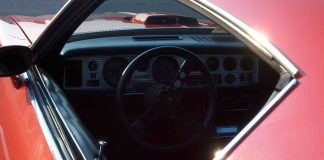
There are, however, times when it’s worth turning the audio system off. There are some cars that make their own kind of music. I consider my old muscle car to be a car like that. Years ago – decades ago – I installed a then-very-good stereo, with a cassette deck. This was back in the early ’90s, before CDs and bluetooth. I almost never played it, because I was busy playing with the Trans-Am instead. Why listen to songs when you can hear the secondaries of a Quadrajet open – and the vacuum hiss of the V8 drawing in air through the shaker scoop? Nothing that has been built lately makes that kind of music. There is also the sound of the Super T10 four speed. It is a wonderfully menacing kind of sound; of gears winding up (and down). Modern manuals may have overdrives and other virtues, but they do not make a sound like that.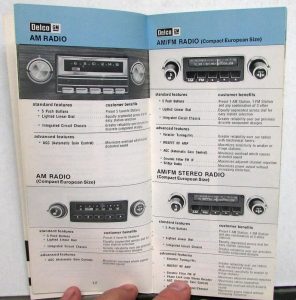
It occurred to me that there was no good reason to keep a ’90s stereo in a ’70s car – so I removed the Kenwood deck and re-installed the original AM/FM stereo that came with the car. I was foresighted enough to have saved it. Re-installing it was a kind of penance. A ’70s car is not like a modern car, with its universal plugs that easily accept an aftermarket stereo without having to mutilate the wiring harness. I installed an aftermarket stereo in my ’02 Nissan pickup in about 15 minutes, with basic hands tools. It is so easy a caveman could do it (to borrow a line from those hilarious Geico insurance mafia commercials that are never played anymore). This is wonderful because it’s an easy and inexpensive way to bring an older (but still modern) vehicle’s audio system up to par with the present, without the need to buy a new vehicle. My truck’s stereo has bluetooth and it can play Sirius/XM as well as any new car’s factory audio system. I like having the upgraded audio system in my truck because it is a truck and when I drive it, I am driving it for practical reasons. And while it is an admirable truck, it doesn’t make the kind of music that makes you want to turn the audio system off.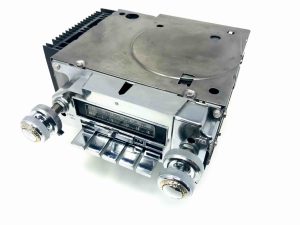
The Trans-Am is different. And the reinstallation of the factory AM/FM radio was, too. After 30 years, I’d forgotten how I’d spliced the Kenwood deck into the ’70s wiring harness, so I had to figure that out – after figuring out how to get the old AM/FM stereo back into the dash. If you have never messed with a car from the ’70s (or older) you may not know how huge those old stereos were. Not the visible part you see when they are installed. That part looks (and is) about the same size as the more modern decks that were routinely installed as an upgrade in these cars back in the ’80s and ’90s and early 2000s. It’s the rest of the thing that’s huge. In my car’s case, it took removing the glovebox and some of the AC/heater ductwork to make enough room to shove the original unit back there (and then some finagling to push it forward, such that the part you see – the dials and buttons – protrude through the opening in the dash).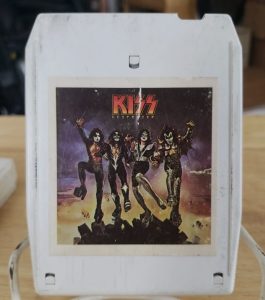
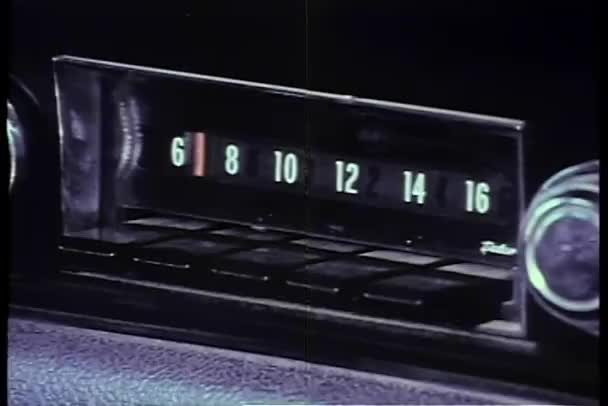
Now it’s back in place – and working, too. The little red light comes on when the signal is – intermittently – in stereo. It is intermittent because many GM cars of the ’70s had their radio antennas embedded in the windshield. This eliminated the ugly antenna mast – at the cost of not receiving much in the way of signal, let alone stereo. The buttons work, too. It is sometimes fun to push them and watch the dial needle – not digital or virtual – move from station to station. If you push the AM button, the dial shifts over to the AM scale. If you push FM, it reverts back. This is a neat trick because it’s not virtual. It’s mechanical.
My car also came with an 8-Track player that was the very height of ’70s audiophilia. It is a separate unit that sits below the AM/FM tuner in a cubby in the center console. The problem – for the moment – is that I do not have a center console. When I converted my car to manual – it was originally equipped with an automatic – I assumed it would be easy to find a manual center console (the hole is different, to accommodate the Hurst shifter). It has not been easy. I am still searching for an original (manual) console and until I find one, the 8-track deck will have to sit forlornly on my bench – with a KISS Destroyer 8-track inserted but silent.
That’s ok. I have other things to listen to in the meanwhile.
. . .
If you like what you’ve found here please consider supporting EPautos.
We depend on you to keep the wheels turning!
Our donate button is here.
If you prefer not to use PayPal, our mailing address is:
EPautos
721 Hummingbird Lane SE
Copper Hill, VA 24079
PS: Get an EPautos magnet or sticker or coaster in return for a $25 or more one-time donation or a $10 or more monthly recurring donation. (Please be sure to tell us you want a magnet or sticker or coaster – and also, provide an address, so we know where to mail the thing!)
If you’d like a Baaaaa hat or other EPautos gear, see here!







Auto manufacturers are stuck trying to comply with ever changing govt. mandates making the outcomes as best they can with the time they have. I wonder what a car could be like if designers and engineers actually made a car that was free of govt. interference. Some vehicles don’t need a radio, the machine is the entertainment.
“Clarkson’s Farm” is the only original programming on Amazon Prime worth watching.
The last two episodes of the season … and possibly the series … ? … dropped this week.
Best wishes to Jeremy Clarkson for a speedy recovery.
Ford dealers used to give out Ford/Learjet Stereo demo 8 track tapes to customers.
I had one featuring Redd Fox which was way beyond politically incorrect and profane by today’s standards.
Gary Shandling ers “Sanford and Son” network-safe TV material it wasn’t
Gary Shandling *era* “Sanford and Son” …
No more editing on my phone. Where was the autocorrect intrusion that time?
‘This was back in the early ’90s, before CDs and Bluetooth.’ — eric
I remember the first time I heard about CDs. It was on the 41st floor of a building in Rockefeller Center where I worked. A Japanese lady in our office was extolling the merits of CDs: ‘the sound is clear as crystal,’ she enthused. The year was 1985.
Nearly everyone agreed. But audiophiles ultimately concluded that analog sources such as vinyl records, and analog amplifiers such as vacuum tubes, produce a warmth and timbre that digital sources cannot match.
Here’s an account of listening to favorite vinyl record tracks through a vacuum tube amplifier and horn-loaded Klipsch speakers — not something you’re gonna accomplish in a car!
‘It’s the late ‘80s. Roy Delgado’s in the middle of designing a new speaker. One of his sales guys gives him Bonnie Raitt’s seminal album Nick of Time, saying—like you’d say to a speaker guy—It’s a great demo CD. Later that year, Roy’s in New York for some audio convention, and hears Bonnie Raitt in concert. He realizes: She sounds nasal. Which isn’t how she sounds on Nick of Time, through Roy’s new speaker. “I began to think about: What’s the goal?” he tells me. “So I went back and said, This is wrong.” He re-engineered the speaker—not to make sure that Bonnie Raitt sounded perfect, but to make sure the speaker was transmitting, perfectly, the sound of Bonnie Raitt.’
https://archive.ph/yL8Mr
I first heard a CD in Kauffman’s department store in downtown Pittsburgh. Rush Moving Pictures (yea, with Red Barchetta). I was about 2 feet from the speakers and blown away by the sound. Later on I realized that most of the music on CD was still being mastered like it was going on the LP (which was the case for a lot of years), meaning a lot of the equalization was set up for vinyl, not digital. And digital recorders like the Sony PCM 3324S didn’t help because it encouraged musicians to push the dynamic range to the extremes, with disastrous results. Then Bob Ludwig would master the dynamic range down to whatever would fit on an LP (old dogs don’t learn new tricks) and EQ like it was going to be on AM radio… and the sound wasn’t ever going to live up to the potential. I listen to a lot of remastered “lossless” music today that sounds much better than the original CDs, if only because we have 40 years of trial and error to know what works and what doesn’t. But the engineers, producers and A&R boys still need to want it to sound good, or we’re right back to the loudness wars again.
Sorry for bringing up an audiophile response…
Detroit Rock City! Until that 8-track gets reinstalled:
https://www.youtube.com/watch?v=jquWv9txxGI&list=RDjquWv9txxGI&start_radio=1
Since there’s nothing good on TV for the most part, we’ve been putting on Mecum auctions.
They don’t tend to fire up the cars, but looking at them and mentally comparing antiques and classics to the bore of today leaves me feeling like we lost out on creativity.
Sure, some modern cars look good, but there is no style. If 50 or more years ago, auto makers could design and create cars without computer drafting that had so much visual variety, why can’t it be done today? Maybe it’s the lack of competing manufacturers, maybe too many chemicals in the food. Whatever the reason, cars are boring to look at.
It strikes me as a bit of a commentary on America in general. For as much as individuality and diversity is touted, the reality is that everyone is the same. If you color your hair blue, so will I. Your opinions are my opinions. Thou shalt not deviate from the few respectable talking points.
We’ve lost something of our personalities along the way. Everybody is a cog, and it shows in the lack of real design.
Amen, Dan –
And there is a reason for this. The various regs that must be complied with serve to effectively homogenize the shape and so the appearance of new vehicles. There is much less leeway to design something that looks different because it probably won’t be compliant. Now, why must this be so? Why is it that the federal government is in the business of setting “standards” for cars? It is none of the government’s legitimate business to interfere in private, voluntary transactions. If I want to drive a Lotus 7 with no air bags and almost no body, that’s my business. Americans have tolerated interference with their personal choices for much too long.
Eric, there is one other thing missing from today’s autos. That is a variety of colors. It seems the majority of paint colors today are white, black, gray and silver and that’s about it.
Hi Allen!
Other cars are available – but they often cost extra. A lot extra. Like $800 extra. That’s why most cars are refrigerator white or silver or gray.