

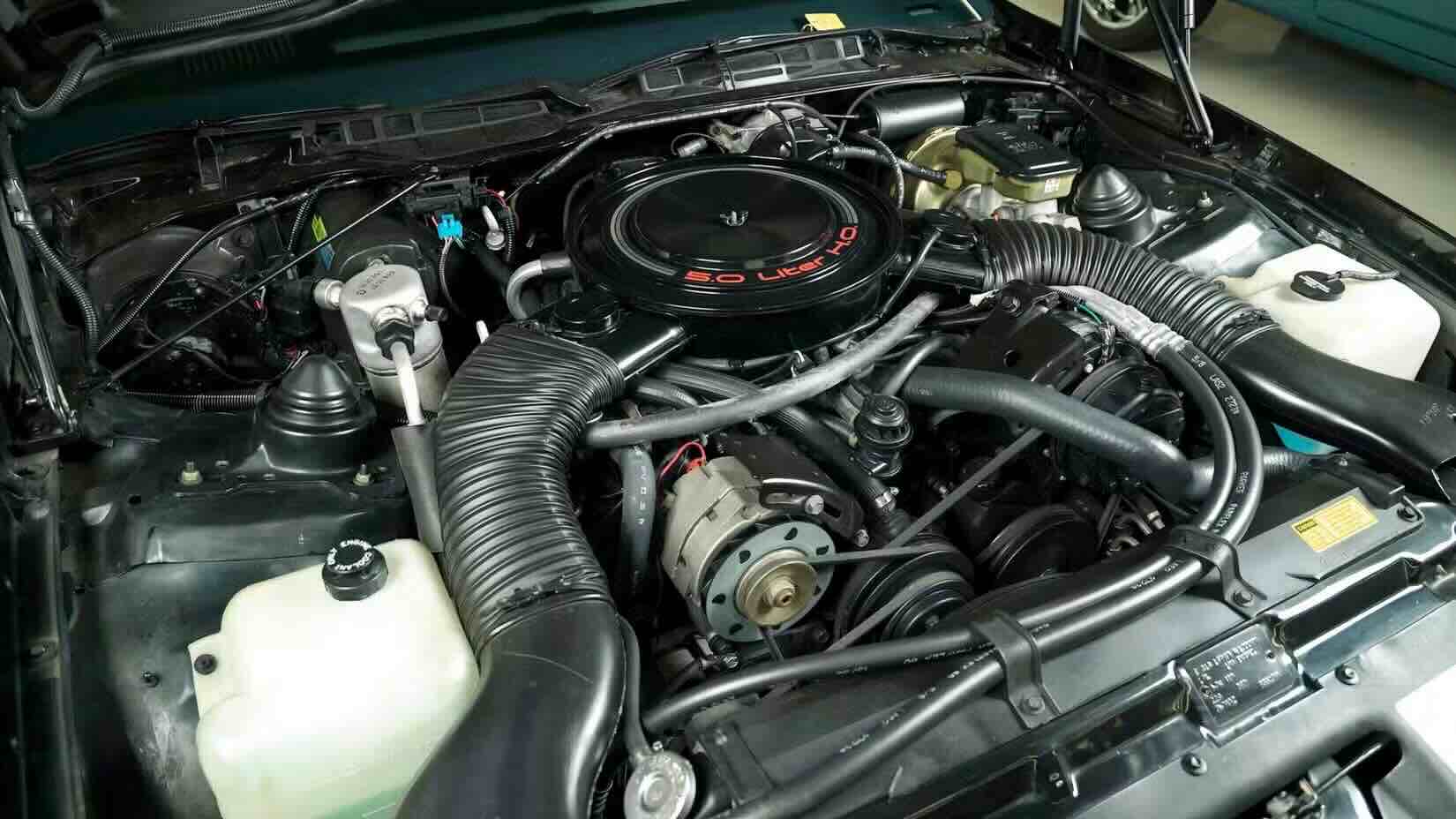

1980s-era V8-powered performance cars such as the Z28 Camaro and Mustang GT are regularly mocked for being underpowered. But were they, really?
The question popped into my head as I was going through the specifications of the ’26 Hyundai Tucson I have been test driving this week (review’s here, if interested). This little crossover comes standard with a 2.5 liter four cylinder engine – no turbo. Hyundai claims this engine makes 187 horsepower and that triggered a memory in my mind, about the early-mid 1980s Camaro Z28. It came standard with a 5.0 liter V8 and a High Output (code L69) version was available that made a claimed 190 horsepower – essentially the same output as claimed by the Hyundai’s half-the-size (and half the cylinders) four.
But here’s the stat that interested me most – because of what it suggests about how much power the L69 HO 305 V8 made: The Tucson, which has a curb weight of 3,695 lbs., needs about 9 second to accelerate to 60. A 1984 Z28 equipped with the L69 HO 5.0 liter V8 – which weighed almost exactly the same as the Tucson – could get to 60 in just under 7 seconds.
Now lookee here – as the Kingfish used to say.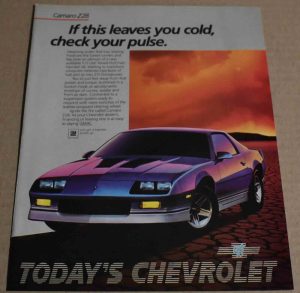
It’s true the Z28 had a five speed manual transmission and a 3.73 rear axle – while the Tucson comes with an eight speed automatic, but it has roughly the same final drive ratio (3.65) so it ought not to be two full seconds less quick getting to 60 than an ’84 Z28 that weighed essentially the same and – so we were told – had essentially the same power. Also, the automatic ought to be an advantage because of the torque multiplication effect of the torque converter – which lets the engine RPMs climb up into the powerband, to maximize the available leverage on launch and also because modern automatics can be programmed to shift optimally for best performance. Finally, the FWD/AWD Tucson has a traction advantage vs. the rear-drive Z28, which did not have traction or stability control to keep it from spinning it tires.
So why is the old Camaro so much quicker than the new Hyundai? Why did it feel so much more powerful? (I personally have driven several from that era, so I can vouch for how they felt.)
The only answer that makes sense is that its 5.0 liter High Output V8 was making considerably more than the touted 190 horsepower. It was probably making close to 230 or so horsepower – and I’ll tell you why I came up with that number. The Tucson hybrid – which has a turbocharged 1.6 liter four augmented by an electric motor – touts 231 horsepower and equipped with this drivetrain, the Hyundai can get to 60 in about the same time as the ’84 Z28 with the H.O 305 5.0 liter V8.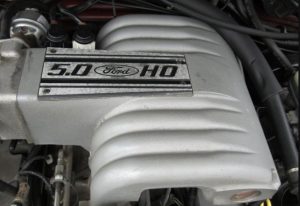
Another example to make the point goes back a couple of years (relative to the early ’80s) to late 1970s performance cars that probably were packing a lot more power than advertised. One example is the 1979 Pontiac Trans-Am equipped with the optional “T/A 6.6” 400 cubic inch V8, which Pontiac advertised as producing 220 horsepower. This car – which was heavier by a couple hundred pounds than the new Tucson – was able to run the quarter mile in the high 14 second range, beating the low 15 second second quarter-mile time of the lighter (and supposedly more powerful) Tucson hybrid. To put a finer (and more apples-apples) point on it, the ’79 Trans-Am with the supposedly 220 horsepower 400 was only about a second behind the time posted by the 1973 Trans-Am equipped with the SD-455 V8, which carried a 290 horsepower rating.
The implication is pretty clear.
The ’79 Trans-Am’s 400 probably actually made closer to 260-280 horsepower, which as it turns out is what the National Hot Rod Association (NHRA), which governs bracket racing, “factors” the ’79 Trans-Am’s 400 as making. The dyno does not lie – and neither do quarter-mile times.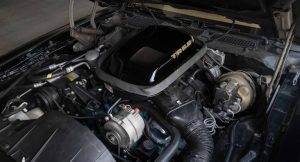
It begs the obvious question: Why would the manufacturers of these cars deliberately understate how powerful the engines in these cars really were? There are several possible answers, but the most likely one is probably to flummox the insurance mafia, which had (along with high gas prices) made high-powered cars very expensive to own in the early-mid 1970s. By the time the late 1970s and early ’80s rolled around and gas was affordable again, it was important – if you wanted to sell powerful cars – to keep the cost of insuring them affordable and one way to do that would have been to downplay how much power they actually had. Exactly the opposite of what was the case prior to 1971, when horsepower was exaggerated by “gross” (rather than “net”) measuring. Basically, the number touted was achieved on a test stand, without production accessories (or a production exhaust system) attached, which allowed for an unrealistically high number to be claimed.
This sounded good – but it also gave the insurance mafia just the excuse it needed to hammer people with premiums that were adjusted accordingly.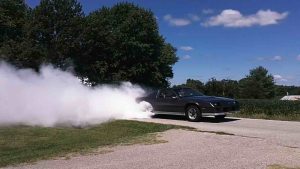
The car companies learned to be more modest about their claims, but the stopwatch tells us the truth. Those late-70s and early ’80s performance cares such as the L69 HO Z28 and the ’79 Trans-Am 400 (as well as the Mustang GT and LX 5.0) were not the wet noodles their advertised horsepower numbers suggested.
If you ever get a chance to drive one – as I have – you’ll find this out for yourself!
. . .
If you like what you’ve found here please consider supporting EPautos.
We depend on you to keep the wheels turning!
Our donate button is here.
If you prefer not to use PayPal, our mailing address is: EPautos 721 Hummingbird Lane SE Copper Hill, VA 24079








Another thing to consider is that HP and Torque are listed at a specific rpm. The rev limit might be thousands of rpm higher so that the advertised HP/ Torque are accurate but not the whole story.
Simple. The modern vehicle isn’t under your control. When you put your foot into it, the computer intercepts the message. Someone decided that it was better to slow the vehicle down because your average Hyundai Tucson driver probably isn’t trained to properly launch a vehicle off the line, probably won’t be doing it on a drag strip (or empty street), and probably isn’t interested in 0-60 times anyway. As long as it gets you on the interstate with the least amount of white knuckling, that’s all that matters.
This is why sports cars have Launch Mode. You go through various settings and probably a disclaimer or two before you are permitted to test your 0-60 skills. Only then can you do your best Captain Slow burnout. For the daily commute, it’s as docile as a Hyundai Tucson.