



Many people are leery about buying (or keeping) an older, out-of-warranty car because they are afraid of being hit with an unexpected big bill for something that needs fixing. In order to avoid having to worry about that, they sign up for regular monthly payments instead. They’re not paying for fixing, of course. But they’re still paying. It is probably the feeling of not having to worry about the unexpected that gives them peace of mind, but that doesn’t come cheap.
Take an average car payment of around $500 per month – and that’s on the very low end. It works out to about $6,000 per year – every year, for (typically) six years. That’s how long it would take to pay off a $36,000 new car loan – which is about what it costs to buy a typical medium-small crossover appliance, something like the ’26 Hyundai Tucson I reviewed recently.
Here is the pertinent question: How likely is it you’ll be unexpectedly hit with a $6,000 Fix It bill if you kept on driving your paid-off older vehicle or just bought a used one for half or less the cost of a new one? It could happen – and it’s true that sometimes, it does. Most of the time, however, it does not. The odds are – for once – actually in your favor. Very much so for any given 36 month period, which is where the math gets interesting.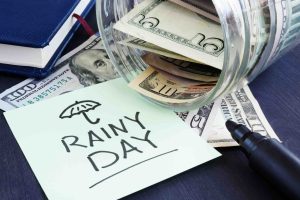
Say you keep what you have for the next three years and – toward the end of the third year – the transmission has to be replaced, which is a Fix-It that can easily cost $6,000. It’s a daunting figure – if you have to write a check or put it on a credit card. However, if you’d set aside just $200 per month in the Fix It jar for the two years prior to the need to fix it, you’d have $4,800 cash in hand to almost pay for the fix it. If you’d set aside $300 per month over the prior two years, you’d have $7,200 – more than enough cash to pay for the Fix It, with $1,200 left in the Fix It jar, which is enough to buy a new set of tires or pay to get the brakes done, etc. and probably still leave enough for an evening out at Taco Bell.
There is also the $200 less you weren’t paying each month that you would have spent on the new car payment. That’s another $4,800 you (effectively) still have because it wasn’t spent.
All of this assumes you did have to deal with a $6k Fix It at some point over the three-year period but the odds are you probably will not have to deal with it because – like heart attacks – those kinds of catastrophes are rare occurrences over any given three-year span of time. They are events that can and do occur over a lifetime, but that is not the same thing. More than likely – statistically – nothing major will happen over the three years, or even five. If it does not – and you have been putting aside $300 (and not spending it plus another $200 on a regular $500 monthly car payment) you could easily save up a sum close to what it costs to buy that brand-new $36k car. More to the point – if you are interested in something other than rentier debt peonage inn perpetuity – you will have saved up enough in the Fix It cookie jar to easily cover almost anything that needs fixing and you’ll still have a fist full of cash left over.
THere’s another thing.
You’ll also have a vehicle you know you can trust – as opposed to a new one you think you can trust. The longer you own an old car, the more you get to know it and – just the same as an old friend – you come to know what to expect. You know the engine is reliable because it has been reliable. You also know what’s been fixed and so you have a pretty good idea what will not need fixing, at least not for a long time. A new cars is an unknown. Maybe it will prove to be reliable. But maybe not. While it’s under warranty, there’s no worry about the cost of repairs (you might still be stuck with the hassle of not having your car). But once the warranty expires, you’re just as vulnerable to having to come up with Fix it funds as the person who drives an older vehicle.
The difference is the latter person probably has the cash to pay for the fixing.
. . .
If you like what you’ve found here please consider supporting EPautos.
We depend on you to keep the wheels turning!
Our donate button is here.
If you prefer not to use PayPal, our mailing address is: EPautos 721 Hummingbird Lane SE Copper Hill, VA 24079









Some of the best advice my dad ever gave me was “pay yourself first” aka save some money.