


There’s no good reason why “housing” – as it’s styled – has to be as expensive as it’s become.
But there are reasons.
Arguably, the main one is what’s styled “zoning,” in the stereotypically bland and euphemistic language of government-speak. It sounds innocuous. But it’s evil. The word isn’t too strong. It is not strong enough. The government says you may not use what for just this reason isn’t your land; you may only use it within the allowed parameters. That makes it the government’s land, which the government allows you to use. It’s a distinction that matters, like the one between a “she” who is really a he and an actual she.
The parameters of allowable use are often uniform, meaning that in a given area, it is not allowed to (as an example) build a “tiny” house or park an RV on a piece of land you bought. Rather, you must build a single family home on the government’s land you paid to use. A home that must also be built according to a roster of government requirements that in some states, such as CA, extend to requiring theat every new home be built with EV charging capability as well solar panels that can add tens of thousands of dollars to the cost of building the home.
Is it surprising that many people – especially young, first-time buyers – cannot afford a single family home in California? And not just there, either. This is a problem almost everywhere, because zoning restrictions are almost everywhere.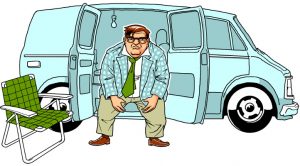
I italicize the word to make mention of areas that are not like everywhere else and so remain affordable, insofar as the land – because you’re allowed a bit more latitude as far as how you may use the government’s land. I live in such an area and moved to the area precisely to get away from the other kind of area where I used to live. Let’s start with the latter to provide a point of comparison:
I grew up in and used to live in the Northern Virginia area, specifically Fairfax and then Loudoun counties. Both are among the most expensive places to live, assuming you don’t live in a van down by the river. Last time I checked, a half-acre or so of land (which is considered a vast tract of land in Northern Virginia) typically sold for $50,000-$100,000 depending on the neighborhood. The main reason these plots are so pricey is because of what has to be built on them. It is why – in my old neighborhood in Sterling, which is a suburb of Loudoun County near Dulles airport, a small, nothing-special house typically costs upwards of $500,000 now. Nicer, newer houses cost hundreds of thousands dollars more and few of them are built on lots more than a half-acre or so.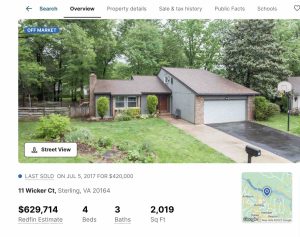
Where I live now is one of the few counties in Virginia (or anywhere) that has no zoning laws. This is why you will see a variety of housing where I live now. I live in a single family house. My neighbor lives in a single wide. My other neighbor lives in a smaller house. This is part of the reason why my house – though much larger than my old house – cost much less to buy than my old house sold for. The land my current house it sits on, particularly, is much less expensive. You can still find an acre in my area for $20,000 or so – and if you want to, you can put a single-wide trailer on it that costs about the same. Or build a “tiny” home on the land. 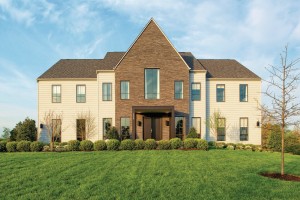
The price you pay is you may end up having a neighbor who lives in a trailer, too – if that matters to you. The fact that I have a neighbor who lives in a single wide would be an appalling prospect to most of the people who live in Fairfax and Loudoun County McMansions built ten yards apart from one another on half-acre lots. They do not have to worry about that, though – because zoning laws protect them from that. All the McMansions look the same and are nearly the same – and cost about the same, too. That’s the cost of zoning. 
Where I live now, there is variety – of type and price. Each on account of the other. But it could be even better. While my area does not have the zoning laws that require all-the-same (in type and so price) there are still codes everyone must adhere to as well as permissions one must obtain to so much as add to what you have, such as new bathroom – as if the government rather than you owned the place.
Building codes and permission requirement greatly increase the cost of housing – and so, of living – even here. For example, you aren’t allowed to live in a home the government says doesn’t qualify as one, such as an RV. Even on land you paid for. Because of course it isn’t really your land, is it? How could it be if the government says you may not park your RV on it and live in it? The proposition is absurd – yet many want to believe otherwise.
Even if you have a tiny house, it must be built to “code” – which shows it isn’t really your house or your land. As if it were anyone else’s right to dictate to you how the home you live in or build to live in is built. That assumes it’s your home and land, of course – which it ain’t. At least not in the truly meaningful sense that if it were, you’d be free to build or live in whatever you liked – because that would be your business and your right.
The sum total is that if zoning laws were and building codes and government permissions were done away with, the a place to live (what is styled “housing”) would suddenly become more affordable. Instead, we are likely to get more government – because so many people believe that is the solution to the problem of affordability.
. . .
If you like what you’ve found here please consider supporting EPautos.
We depend on you to keep the wheels turning!
Our donate button is here.
If you prefer not to use PayPal, our mailing address is:
EPautos
721 Hummingbird Lane SE
Copper Hill, VA 24079
PS: Get an EPautos magnet or sticker or coaster in return for a $25 or more one-time donation or a $10 or more monthly recurring donation. (Please be sure to tell us you want a magnet or sticker or coaster – and also, provide an address, so we know where to mail the thing!)
If you’d like a Baaaaa hat or other EPautos gear, see here!










And, the reason the city planners want large, expensive houses is so they can collect more property taxes. They even have a term for it, “keeping up the housing stock,” Sounds like livestock, which is what they think of us.
For 22 years, I lived in a farming area – dairy and vast onion fields – in an unincorporated area of a large township. After a few years, the town mandated minimum 1-1/2 acre zoning. Well, the price of acreage rose, and nobody is going to put a Levittown home on the land, and that saw the rise of the vinyl-clad McMansions. My country road got gentrified. The only upside was, that I had bought low and sold really high, not due to me being so smart, but because of the government meddling that you cover here, Eric.
Zoning is nothing but a large set of rules to create division, angst and hostility among an otherwise peaceful community. You don’t have the right to determine the use of what is styled ‘Your Property” but, you can sure limit what your neighbor can do with his.
It’s a wet dream for Gladys Kravitz’s of the world.
Your local shitforbrain representatives don’t decide the zoning or codes. It’s all out of the UN, Agenda 2030. They do what they’re told and collect the sheckels, like Moishe Trumpstein. That’s why the whole fuckin world has lost uniqueness and looks like what it is, a jew run prison camp. With the stranglehold on $, they created Hell on earth.
People complain about zoning and/or HOA restrictions, but the primary residence is the main “wealth” on a lot of households’ bottom lines.
Once the 3% down mortgages and $8,000 tax credit for first time buyers put a $240k floor under prices of anything capable of passing inspection in most desirable areas, everyone was a “made man” in the racket, and the obsession began about property values.
Wait until the Democrats get back in and pass a $20,000 tax credit, making any “homeowner” a millionaire on paper.
Thanks to zoning, nice little apartments above storefronts are often ILLEGAL! I used to live in one, and it’s great for a single person. My building had a few things on the street level, like a barber shop and a cafe, among other things. Across the street was the train station. Down the street one way was a pizzeria; if you went the other way, there was a Mexican restaurant. Next door was a laundromat. The post office was a couple of blocks away. Almost everything I needed was within walking distance. Unfortunately, thanks to zoning laws, such housing is often illegal now.
Yup – also penalizes many small business owners that used to live in the space above their business.
Used to know a business owner that had a dry cleaning business. The parents (ie founders) used to live in the apartment above the business when they first set up shop.
Later on, this was outlawed. So now if you wanted to start that business you’d also have to pony up for a separate residence in addition to the real estate for the business.
Living above the business was also a useful deferent to crime with someone around 24/7.
The Times they are a-changin’
But what about muh carbon dioxide?! If you were really looking to reduce emissions, the shortest distance for a commute is 0.
This is the best way to run a business. Making it illegal is indefensible.
That’s why the 15 minute city is such BS. If they really wanted to make jobs and stores convenient, within walking distance, eliminate zoning. Let the free market fill the needs.
No, the 15 minute city is about control. It will be the 15 minute Gulag.
And don’t forget the role of the government schools in brainwashing people. Teacher always presented zoning as a Good Thing, as it kept someone from building a steel mill in your residential neighborhood. What Teacher neglected to mention is that a powerful entity that wanted to build a steel mill would simply bribe (I mean, give campaign contributions to) elected officials to change the zoning.
Zoning and code enforcement are prime examples of evil mala prohibita laws. I say get rid of them all. As stated earlier, freedom is messy, get over it.
If you are really harmed by something your neighbor does, then take them to court. Isn’t that what the courts are for, resolving disputes between people? But a plaintiff has to have a real issue, a real case, and show real harm, injury in fact. And the defendant can counterclaim for damages. Makes things more equal, doesn’t it?
And, we are seeing the unintended consequences of all this, the rising housing costs from this overregulation, often done for purely aesthetic purposes. People who can’t affording housing are living in tents and shitting on the sidewalks. Is that better?
correcting typo: “afford housing”
Houston, Texas, is the largest U.S. city without traditional zoning laws, meaning there are no city-wide regulations dictating land use. While Houston lacks zoning for land use, it does have other development regulations, including ordinances, deed restrictions, and planning tools, to guide how land is used and developed.
What it means to be “un-zoned”:
No land use restrictions:
.
Unlike most major cities, Houston doesn’t divide the city into zones that dictate what type of buildings can be built or what activities can occur on a specific property.
Development regulations:
.
Houston does have a comprehensive set of development regulations that address things like subdivision of land, building setbacks, parking requirements, and tree and shrub requirements.
Deed restrictions:
.
Many properties in Houston are subject to deed restrictions, which are private agreements that can limit how land is used, similar to zoning.
Other planning tools:
.
Houston also uses tools like historic districts, minimum lot size requirements, and building line requirements to shape development.
None of the above addresses land subsidence, which has made large areas of Houston subject to flooding. My parents, brother and sister all ended up bailing the hell out of Houston because of the flood risk (which actually materialized for my brother) — not because of lack of zoning, which was never an issue … and indeed contributed to a mellow, eclectic vibe in the city.
My city has recently jumped on the “code enforcement” bandwagon. People have been cited and drug to “court” for a host of manufactured grievances, up to and including 100 year old mailboxes that don’t meet the aesthetic vision of a bitter 350 lb woman who fell into this position by way of being a “realtor”. She will offer to sell your home for you if you are unable or unwilling to meet her demands.
I recently had a couple of 60 year old teenagers (hippies) show up to my front door and tell me that “**** from Code Enforcement said you were looking to sell”. Strangely enough this was after she got her ass handed to her by a judge that didn’t think my daily driven C10 qualified as “abandoned/junk vehicle in storage”.
El Guapo,
So, you have a bloated vampire roving the area, blackmailing the populace into being sucked dry or enduring the wrath of their local self-declared overlords? Sounds like an untenable strategy mounted by someone drunk on the delusion of being untouchable. At a minimum, you might think that such false claims might warrant lawsuits and/or judicial penalties.
And your story and worse are being perpetrated across the land by these micro-Mussolinis. When the WEF talks about “useless eaters” these are not the type they have in mind…but should.
Everyone that has ever had to deal with her has complained, lo and behold, the city manager (who doesn’t even live here) just turns a blind eye and pretends it didn’t happen. The city council is more interested in “farmer’s markets” and other stupidity to keep themselves getting elected. She couldn’t get a date in high school, so now we all must pay.
I have taken a more passive aggressive approach, like visible “no trespassing” signage, and welding the back gate shut to keep her out of my yard. I may even return the house to its original color – 1958 technicolor pink, just in the name of “historic preservation”.
Perhaps no subject infuriates me like that of zoning and “building codes”. Any talk of freedom is just lip-service with such policies in place. Why replace 1 tyrant 3,000 miles away for 3,000 tyrants 1 mile away (or less)? If something I do on my property harms you, prove it, or even just address the issue with me like a man. I can be quite reasonable. But declare yourself my Neofeudal Lord and tell me I must ask for permission for everything I do, and you can ride the next trebuchet to the abyss.
How much money would it take to raze New York City and return Manhattan and Long Island to its original pristine natural state like the red man possessed?
If the Twin Towers can be leveled in seconds, it won’t take that much time and explosives for the rest of the place.
Zone it back to rocks and soil, get rid of New Yorkers, please.
Palestinians can settle there, if anywhere, Manhattan can be the place to be.
Have to raze it first so Palestinians can build to their satisfaction.
Make Manhattan Pristine Again!
50 melatonin ought to do the trick. Of course, the regrowth will take a few years.
Wow, autocorrect changed megatons to melatonin. Though maybe 50 megatons of melanin would do a lot of damage…
Eric, you are once again, pointing out a deep problem which harms our society.
I live in the Democrat paradise of CA, in the home town of Google, and our zoning is absurd, but it’s not just the zoning, it’s the code enforcement.
Land is scarce here, since zoning prevents building upwards, like in other dense areas. We’re at over $12,000,000 per acre. If you find a little piece of undeveloped land, it’ll cost you.
Say you want to build a house on this little piece of land. You can’t do anything without permits. Permits for new construction cost approximately $140,000. It’s not just money either, it’s time, the initial permitting process takes about 2 years, and the city has self contradictory codes, so you can’t help but be in violation of something. In order to be allowed to build, you’ll need a “variance”, for which, the city extorts things, one recent example was to force someone to plant trees in a local park in exchange for this variance. People here hate these cookie-cutter developments, but this is all we get here due to this permitting madness. If you’re building a hundred units, you can amortize some of that permitting cost over them. Some permits are per-unit, but some are per-development. As I understand it, permitting costs drop to about $80,000 per unit in a big apartment. You can imagine why rents are so high. In case you think I’m exaggerating, here’s a recent example. Our school district built 144 apartments, on a 1.8 acre lot for teacher housing (which will, naturally, go not to teachers but to connected administrators, but I digress..), the land cost $53.5 million and it cost $88 (https://www.mv-voice.com/education/2025/07/11/mountain-view-whisman-buys-teacher-housing-land-for-53-5-million/) million to build those apartments. So, we’re talking very close to $1M per apartment! It’s is absolute madness.
The Bay Area is growing fast due to the opportunities here in terms of employment, but our housing stock isn’t keeping up. The way cities grow is that people who do own land want to maximize its value. Single story homes become three story apartment buildings, the neighborhood fills in, because people need places to live. Increasing density here is absolutely forbidden by zoning. We can’t have more density. The city says it’s because that would put a heavier burden on city services and denser cities aren’t as nice to live in. I go to council meetings from time to time and ask questions like whether density or unaffordability are lesser evils, or why I need permission to change my front door or plant tomatoes in my garden. These people never look you in the eye and thump their bible of city codes.
So we have insane zoning, and insane codes, once you pay your $100k+ in permits you can start to build. It takes about 3 years to build a single story, wooden house here. Why? Every step of the way, you need inspectors. Framing, plumbing, foundation, electrical, roof, fire, environmental, etc. Some come multiple times. You can’t just schedule a framing inspector for when the framing is done, no, that would be too easy. You have to finish the framing first, then call the inspector’s office, then some admin has to come out and verify that the framing is done (that takes weeks) and then you can actually schedule the inspection (more weeks), so after framing, nothing happens for 2-3 months because you’re waiting on inspection which can’t be scheduled ahead of time.
Now, as for rules, we have rules. If I fix or replace my roof, I must add solar panels. If I do any kind of electrical work, I must add an EV charger. If I touch my old house’s walls, I need to do modern insulation, if I replace my water heater or clothes dryer, I must install electrical ones, however, not the cheap ones, but the heat-pump based ones that take 4 hours to dry a load of laundry or 8+ hour to heat a tank of water. Power here costs $0.52/kWh so those appliances will cost a fortune to run.
This is what Democrat paradise looks like.
That is Hell in Earth, OppositeLock. I would undoubtedly rather die than have to endure all of that, which would happen sometime after I snapped and began to John Wick all those MFers.
And I’m actually a very peace-loving person.
Second that BaDnOn,
When we bought our house in 1974 it was a fixer-upper (in some ways it still is, just this morning I had to replace a leaking toilet valve) so we got it for a good price – $33k 50 years ago. I did all the electrical, plumbing, whatever updates myself sans permits or inspections. Doubt I could repeat that nowadays, too many busybodies around plus the city wants the money for the permits and the work has to be done by a i“licensed professional”, not that many people have the skills today because they’re too busy looking at their sail fawns as Eric would say.
Just got my quarterly property tax/rent bill in the mail; $3,076 for being allowed to live in my long ago paid for house. So at $12k/year over the past three years I was extorted for more than the house originally cost. What a racket!
Absolutely a racket, Mike, put in motion by gangsters pretending to be champions of “saaaaafetyyyy”. Regarding the “sail-fawn” addled imbeciles everywhere: They’re a considerable problem. By never having the gumption or wherewithal to learn simple trades and effect repairs, they are all to happy to be dependent, never knowing the animosity of being forced to ask for permission to fix their own property or paying many times the necessary cost to do so. Sickening.
Do it yourself, say nothing.
That about summarizes my usual protocol, John.
When all else fails, shoot, shovel, and shut up. There are traditional ways to deal with petty tyrants.
Fuck that shit, OppoLock. Thanks for the detailed report though. Jesus. Agree with Badnon that that’s hell on earth.
I reckon though that if you talked to Californians about the zoning laws, complaining how onerous they were, they’d agree with you, and then if you said we should just get rid of them, they’ll be like, oh no well we need some sort of regulation. Or, ‘well, solar panels pay off over time’ or ‘well you can just put your clothes outside to dry, that’s what we do’ or some other subservient bullshit?
Haha, funny that you mention hanging clothes outside to dry. I like to do that, in my own back yard, because they smell nice afterwards. I got a ticket for doing that when a neighbor called me in to the cops. I don’t care to know the city code, and at the time, it was against code to line dry laundry. This evil woman line dried laundry herself, but she calls the cops on me.
Them’s fightin words
THAT, is fookin’ CRAZY! “I got a ticket for doing that when a neighbor called me in to the cops.”
Hanging clothes outside to dry.
…We really do live in, ‘Idiocracy’.
East Germany Idiocracy? “This evil woman line dried laundry herself, but she calls the cops on me.”
Ab-so-lutely, crazy.
I’ve been the mayor of this tiny burg in the middle of nowhere for a long time.
In that time, I’ve figured out that this crap exists because of communism/democracy, it exists because the vast majority of people LIKE it, because while they aren’t free they covet control over their neighbors. In a democracy, EVERYTHING is up for a majority vote
It should go without saying that my job is to smile dumbly and inhibit democracy as much as possible.
Ernie,
As Mayor of your town, maybe you should take a page from the movie *Bananas* and order everyone to wear their underwear on the outside of their clothing. Give them a taste of communism.
I’ve been fighting my city on this kind of stuff for years. You would be surprised to see how little power a mayor has when it comes to city bureaucracy. The bureaucracy is basically in charge, and it is self sustaining, and it grows on its own. The best a good mayor can do is slow down the growth.
Oh, Hans if only it were so. As I said, most people LIKE their petty power over their neighbors more than they resent the petty power exercised over them.
And if I do make offensive orders, I won’t be mayor anymore and the kid who wants to enforce codes and have lots of taxes for his pet projects will be.
I’ve settled for declaring myself his ass holiness emperor for life. Nobody seems to care, just as I intended.
I’ve seen this attitude too. At council meetings, feedback is always along the line, “I don’t want my neighbor to do something because of reasons”, and the reasons are noise, or blocking the sun, or blocking the view.
Government, eventually, reflects the values of society, at least on the low level, and society is a whole bunch of busybodies.
COVID demonstrated the petty tyrant laying dormant inside everyone. It’s inside all of us, the 7 deadly sins and all. Sometimes I’m pretty sure the best we can do is be cognizant of them and assert control as best we can.
Hi Greg,
That’s generally true. But some of us never participated in the tyranny. I never wore a goddamned “mask.” Nor did I “practice” any of the other strange rituals, either.
You have it, Ernie. So often, democracy is a mistake, as the majority are often wrong and have no business deciding the fate of the minority anyhow.
Gang rape is democracy put into practice.
The curved street suburb layout is about fitting the most number of buildings in the least amount of space. Maximum density is the extent it. It’s not about making it more human friendly or visually appealing. It’s simply the developer making the most money. The grid pattern is relatively inefficient but easy to subdivide and navigate.
“The curved street suburb layout is about fitting the most number of buildings in the least amount of space.”
Say what? Geometry dictates otherwise.
It is true that curved suburbs create odd shaped lots and some lots become more valuable due to size and location vs a standard grid. Perhaps this is what you meant?
The grid is always the most efficient for the purposes of density, but sometimes it’s visually unappealing and not practical given the overall parcel size and shape. The question becomes what’s the highest and best economic use of the land in light of the overall parcel shape and local development and zoning codes, which dictates things like stormwater ponds, turn radii, lot size, sidewalks., etc.
Curve-linear streets typically work against a goal of density.
Oh, and I forgot a big element that affects layout: topography. Think San Francisco design where dedication to the grid was adhered to, despite huge changes in elevation.
Not when you factor in access. The grid pattern requires a lot of pavement while circular roads can fit more (or alternatively slightly larger average sized) lots in the same space. The lots will not be uniformly sized and will have space you can’t actually use for anything, so it’s a mathematical abstract. That’s why the poster is not saying the pattern is from a human perspective necessarily (although meandering suburban sprawl was originally a reaction to industrial uniformity, ironically made possible by cars). The grid pattern also works better for pedestrian use since the route between points is shorter for most of the people. But what do I know, I’m an architect and have served on zoning boards.
“But what do I know, I’m an architect and have served on zoning boards.”
Maybe you’d care to post a link that makes the case that curvilinear roads result in higher density rather than using the logical fallacy of appeal to authority.
My specialty isn’t urban planner as such, so I’ll see if I can scan or find PDF versions for some of the textbooks to point to.
I have a feeling it wouldn’t matter what I say, though, since it’ll delve into socio-economic qualities, you know nonsensical things like how human relate to their space and civil society hierarchy. Central planners love grids because they assume everyone wants their 2000 sq-ft of block home above a retail space and are walking everywhere.
When you ask the individual what they want to see looking from their windows, how they actually use their home and get around a city the grid doesn’t feel to them like it works in the post WWII America of cars. The urban planner has an acre of dirt that is definite and immovable and asks how do you best match housing density, lot size, lot usage (this meaning how much is house, driveway and yard), cost and access to it. With a grid you have some or all of a street, sidewalk, alley and driveway, which prior to democratization of cars only needed to accommodate walking a block to a train station from a house with little parking and no garage. That’s how old cities like Chicago fit so many people into their land size. It is efficient at that.
The boom of the 1950s flipped the script, we now have lots with space dedicated to having and driving cars and the curvilinear layout is economically most efficient. That’s how L.A. solved it, lots of interlaced circles that are terrible to walk but easy to drive. All cities, at least when America was still sort of competitive capitalist, had to figure out the intersection of supply, demand and cost. They could have continued L.A. suburbs like a grid but they would not have fit as many houses in at the cost they sold them doing that. Chicago didn’t need to accommodate the amount of influx post WWII but their inner city flight to the suburbs followed roughly the same rebellion against grids.
Even now, when we want to redevelop and try to sell a grid it’s as often rejected as it is embraced. All the planners want mixed use, walking friendly. But when they do parking becomes an issue. Popularity seems a function of how many cars (and boats, ATVs, motorcycles) that the average council member owns who is ultimately going to approve or deny the application.
The French recognized some of this even prior to the car with the hub-and-spoke artistic feel of Paris compared to the industrial revolution efficiency of London or New York City.
The basic question here is we’re not warehousing widgets but building homes. The Soviet style treated humans as fungible and wasn’t worried about what they could sell since you get what they gave you. It was how best to fit the most in the least space regardless of how you felt about it. That’s what drove the grids in London, too. They just needed workers for the factories, it wasn’t about compelling someone to buy what they actually wanted. With the liberalization and boom in the mid century of America the idea of having your own mini-spread, McMansion caught and that turned out to be the solution to get the maximum number of units per acre. You have less yard, more places to put toys and end up with as many people per sq-mile as the economy will allow.
We’re returning the grid because of economics, too. I think most of you would agree that there’s a palpable push to get people out of cars and back walking and taking buses. The grid layout meshes with that, get more people per sq-mile but it only allows one car per family with a few bikes to get around. That’s the 15 Minute City plan.
“I have a feeling it wouldn’t matter what I say, though, since it’ll delve into socio-economic qualities, you know nonsensical things like how human relate to their space and civil society hierarchy.”
I’m always interested in learning why things are the way they are and appreciate your post.
The OG question / statement was with respect to density and that’s where it is just a matter of Geometry. There is always more area in a unit square than a unit circle. Likewise, the area contained within is more efficiently utilized to build upon.
Once you involve the socio-economics and insert government central planning, all bets are off with respect to density and most efficient use of land which leads right back to the affordability problem Eric wrote about.
Just A Cog: “[C]ircular roads can fit more. . .The lots will not be uniformly sized and will have space you can’t actually use for anything.”
Nope. If your “circular road” layout creates lots with “space you can’t actually use for anything,” that means non-grid layout wastes land, which would otherwise be used for homes. It’s for the same reason architects do not typically design round homes. It’s just not an efficient use of space or materials. Concerns about pavement are usually limited to the cost of building an unloaded road (a road with no houses along it). Unloaded roads are to be minimized for sure.
Houses are not round because people don’t like round houses. The discussion isn’t just a question of engineering efficiency. The most efficient use of space isn’t necessarily pleasing, which ultimately is determined by what someone is willing to pay for it. We’d all love to live in a park with a home surrounded by trees and grass. But 160 acre homesteads only worked for self sufficient rancher or if you can afford estates. Moving people into factories, stores, offices meant the grid was efficient at warehousing them but soul crushing. I live in an apartment, which is the most soul crushing I think of all possibilities. I thought it was cool when I was young but now it just feels imposing since we don’t bar hop anymore. But moving out of the city isn’t an option since I also value my time and don’t want to waste hours per day commuting. Instead my partner and I work a lot during the week so we can escape to backpack.
They’re optimizing profit per acre. Getting as many bigger lots with water or a view out of the deal as possible and filling in the gaps with smaller lots. Because the upcharge on the more desirable lots more than makes up for losing packing efficiency and straightforward navigation.
Also, more expensive lots means they can steal more more property tribute.
Same reason no one builds starter homes any more. Construction costs are so high it’s almost not even worth building them, you have to play for the middle/upper end of the market or else you’re barely breaking even at sale.
I lived in Oklahoma City, which is largely based on a grid pattern. More recently, they ahve gone to the curved street bullshit for “subdivisions.”
I frankly hate them as they limit your entry and exit points onto one main street (or two if you’re lucky).
The subdivision layout kind of became common place since 1975. They are easy to develop since the asshole developers, with the massive subsidies they get from electricity, water providers and cities are only responsible for creating one main entry and therefore limit the amount of traffic studies they must complete.
The main reasin for the massive increase in housing costs over the last 2 decades has been the role that private equity plays in manipulating markets. Making the residential market subject to the “market” has ensured that the inflation that the market has had now gets translated into real estate. the stock market (DJIA and other index funds) have well outpaced the CPI, which includes housing. That market presence in real estate has ensured that the general inflation i property costs and values will continue. It won’t matter if zoning restrictions are dropped nationwide. It goes beyond that.
In general some zoning is good, however, it should be done at the lowest level of government possible, the one most accountable to the people. Many of the worst development happens at teh “county level.” Which means that it will follow a wild west the biggest money wins. They shape the patterns virtually forever because county officials will claim their “hands are tied.” They certainly aren’t tied enough to stop collecting your tax bill every year, are they.
They are bought and unaccountable.
If the government didn’t flood the country with immigrants so that the capitalist pigs can have cheap labor, there would be more space, less zoning, and cheaper homes.
I grew up in a country of 200 million. It is now 330 million +. The additional 130 million people have to live somewhere… which drives up housing and land costs.
Of course, BlackRock and the bankers love it…
Actually, check that. The prediction for 2025 is 342 million. It was 330 million in 2020.
SMDH…
‘[Zoning] sounds innocuous. But it’s evil.’ — eric
And like many evil things, it came from New York City:
‘As Seymour Toll explained in his 1969 book Zoned America, zoning ordinances were the brainchild of a handful of early 20th century New York businessmen whose high-fashion shops had recently displaced mansions along the middle section of Fifth Avenue. By 1916, they were at risk of being similarly crowded out by their own suppliers—garment manufacturers whose numerous employees ruined the exclusive Fifth Avenue shopping experience. The city’s zoning code that went into effect that year proved capable of slowing the rotation of uses and classes—and was immediately copied by cities around the U.S.
‘In 1924, then-Secretary of Commerce Herbert Hoover, an enthusiastic technocrat at the time who was out of step with President Calvin Coolidge’s laissez-faire philosophy, saw government planning as a clear improvement over free-market urban development. Thus, he convened a panel of zoning experts to write a Standardized State Zoning Enabling Act (SZEA) that states could copy.
‘Secretary Hoover proudly led the nation’s cities and towns toward central planning, announcing that “The importance of this standard State zoning enabling act cannot well be overemphasized.” The Government Printing Office published it and sold 55,000 copies (for a nickel each) in the first two years. Nineteen states had used the standard act as a model for their own legislation by 1925.’
https://manhattan.institute/article/a-brief-history-of-zoning-in-america-and-why-we-need-a-more-flexible-approach
And so it goes: governments jump on a fad like kids copying a Tik-Tok stunt. As usual, the supine hacks in black applied their rubber stamp and made it ‘all legal.’
Like most things the stated and intended goal and the outcome are completely different.
I mean, who would argue that having a residence next to a store or factory is preferable? Truth is if I owned a house and my neighbors decided to tear down their house to build a rendering plant I would be pretty dang ticked off.
Same with building codes. After the shoddy construction techniques that led to massive destruction in San Francisco and Chicago and elsewhere after earthquakes and fires the idea passed the sniff test.
And to the extent that I might build something able to withstand disaster but am still at the whim of others who might not, thus even if I take the time to build fire proof and defensible space around my property if people down the road don’t or maybe even cause the whole area to get overrun by a forest fire.
So let’s write a law dictating common sense and individual responsibility! It’s decision by committee, so no one and everyone is responsible.
Hi Francis,
Two points in response:
First, that freedom entails acceptance of risk and things you may not like that others do. That “something” might happen. I consider freedom – liberty – to be well worth risking that.
Second, your premise assumes that people whose actions lead to harms caused will not be held responsible. I much prefer that they (and only they) be held responsible as opposed to preemptively presuming everyone will cause harm and imposing restrictions a priori, based upon that.
“I mean, who would argue that having a residence next to a store or factory is preferable?”
I will.
Go visit some of the old residential neighborhoods that were within walking distance of the Ford Rouge plant. Workers used to work walk to work from their modest but affordable homes.
The neighborhood I grew up in had multiple small stores mixed in with residential development. I used to walk to the store when I was in elementary school to buy cigarettes for my parents – LOL imagine that!
The last neighborhood I lived in had a convenience store, an auto service shop, an auto detailing shop, and multiple other small businesses within 2 blocks of my house.
Central planning and collectivism leads to failure.
I’m starting t agree with you on that BID. Thats how it was where I grew up. We spent a couple weeks in Pensacola last spring. Nice, walkable city. Most everything we needed was within walking distance. I think we used the rental car 3, maybe 4 days during that period.
It doesn’t work everywhere, but where it works its not bad. Not saying I would trade it for being out in the boonies, but maybe, if I live long enough, I might just take a shine to that sort of thing.
Don’t forget the neighborhood bakery, drugstore, and bars.
Just a couple weeks ago I was back in the old childhood neighborhood, the bar that was kitty corner to the house has been torn down. Lot is now vacant and overgrown. Basically an eyesore. The neighborhood is economically distressed, the chances of a new house being built on that lot are near zero.
Rather than having the locals be able to walk to the bar, now they will have to drive. All the more revenue for the PoPo, the court system, and City Hall if the neighborhood bars get zoned out of existence and more DUI’s occur.
Oh Francis, where does one even begin?
1. If you’re worried about your neighbors doing things with their property that you don’t like, you can all agree to privately restrict uses. These are known as deed restrictions (which should not necessarily be confused with an HOA).
2. If you want the comfort of not having neighbors do stupid stuff, you’re free to buy 50 acres and put a house in the middle. However, you’ll say that’s too expensive. Why, you should be able to cheap out on a 5,000 lot and not be offended by your neighbors that are 15′ from your home.
3. Some people might argue that having a store right next door is convenient. Different horses for different courses.
4. If somebody’s actions cause you or your property harm, you can take action against them for negligence or nuisance. By the way, how does shoddy construction cause a forest fire? And what’s the “sniff test” here? Also, are you sure of the cause of destruction you claim: “After the shoddy construction techniques that led to massive destruction in San Francisco and Chicago and elsewhere after earthquakes and fires. . .” Was there shoddy construction in the ultra-wealth Pacific Palisades, which virtually burned to the ground a few months ago?
Too much confused emoting followed by a: Why there ought to be a law “dictating common sense.” And how is this helpful? “It’s decision by committee, so no one and everyone is responsible.” That’s sounds very close to what’s known as the tragedy of the commons.
To quote The Civil Rights Lawyer (on youtube), “Freedom is scary; get over it.”
Shut the fuck up faggot and your giant ego
‘I would be dang ticked off’
‘I wouldn’t like it if…’
And as always, oh I’m so good and noble and will protect my house but everyone else is retarded and stupid and beneath me and wouldn’t do those things, so everyone has to have a government bossing them around
Yup. The Supreme Court gave “zoning” (i.e. restricting the use of one’s property to only certain uses) the green light in Village of Euclid (Ohio) v. Ambler Realty Co. with it’s perverted interpretation of the 14th Amendment that it’s not a deprivation of liberty or property if the gubmint doesn’t do it in a discriminatory manner and has a rational basis. In other words, if the gubmint has an alleged reason for doing so and seemingly screws everybody equally (as to that particular parcel of property), it’s ok to restrict one’s property uses without due process, even though the fucking amendment specifically says: “nor shall any State deprive any person of life, liberty, or property, without due process of law.”
https://en.wikipedia.org/wiki/Village_of_Euclid_v._Ambler_Realty_Co.
The Supremes effectively re-wrote the 14th Amendment to include a huge exception. Hey assholes, if that exception was intended, it would have been included in the language of the amendment.
I went back to Ohio
But my pretty countryside
Had been paved down the middle
By a government that had no pride
The farms of Ohio
Had been replaced by shopping malls
And Muzak filled the air
From Seneca to Cuyahoga Falls
Said, ay, oh, way to go, Ohio
-The Pretenders
If you do try to “improve” your home by updating the kitchen or bathroom you trigger a whole raft of required updates too. Things like GFCI outlets. But if your wiring is pre-1970, you probably don’t have a neutral line going to the bathroom. Uh oh! better run a new line… to a fusebox that’s probably not up to code either. Pretty soon that basin sink you love has to go… or the new toilet… or the whole project.
And if you do some major renovations, like adding on a bedroom, well, now “your” property is more valuable, so therefore a reassessment is in order.
Do it yourself, say nothing.
So typical.
GovCo is the root cause of a problem and the demanded cure is more GovCo.
Talk about insanity.
Make mine a double scotch, neat.
“Well there has to be sooooooome regulations”
If zoning laws result in houses looking the same from ground level just imagine what the aerial view shows. Roofs all aligned on the same axis, 2 or 3 car wide driveways, asphalt of course, identical trees, fences all the same and of course the ubiquitous BBQ on the deck in the back yard. Contrast this to an extremely old neighborhood where nothing is consistent.
Where would you rather live?
I wonder what would happen in these new neighborhoods if you wanted a plain old gravel driveway, HAM radio antennas or even grow food like corn in your planters (I can attest that the squirrels prefer eating my organically grown corn, bastards)? Have no fears because we know someone from the HOA will be paying you a “visit”.
Modern neighborhoods are designed with lots of swooping and curving roads, leading to some pretty oddball shaped lots. I guess it’s done to make it look a little less like Levittown and a little more like it sprung up organically. Or perhaps for “traffic calming.” Either way the land use is terrible and it is hard to keep your bearings.
Of one lives in a HOA, that’s a pretty good sign that have willingly conceded what little property rights they may have thought they had. Zoning will be the least of their problems.