



You have probably heard that vehicles made before the advent of electronic controls – electronic fuel injection and transistorized ignition, specifically – would not be disabled by an electromagnetic pulse (EMP) such as are emitted by nuclear detonations.
Mechanical things like carburetors and points are kind of like the Honey Badger, who is said to be deterred by nothing. Vehicles with mechanically injected diesel engines are the apotheosis of this invulnerability. They don’t even need a working alternator/generator to run. Much less a battery to start. Roll it down the hill, let the clutch out and it’ll run until you shut it off. They can also burn fuels other than diesel when diesel isn’t available, such as vegetable oils.
Gas-engined vehicles made through the early-mid 1980s will usually have a carburetor rather than fuel injection, but most of the models made after 1980 have crude computer controls. They also usually have transistorized ignition systems. An EMP would likely disable them. The good news is the electronics are simple and the computer control of the carburetor can be deleted by replacing the electronically controlled carburetor with an essentially identical older one that doesn’t have any electronic controls. It will “bolt on” in place of the original with few if any modifications. Things such as throttle and transmission kickdown linkages (for automatic-equipped cars) usually connect without having to alter anything and there’s usually no electronic fuel pump, either. These cars tend to run better with the non-computer-controlled carbs anyhow and they are certainly easier to tune/service, so making the swap just makes sense – irrespective of the EMP issue.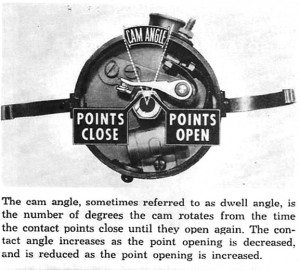
It’s sound policy – if you own an old vehicle with a carburetor – to keep a spare around in case you ever need it or parts of it.
As far as ignitions, it’s similarly simple for most cars made through the same era. Transistorized ignitions (such as GM’s HEI) began to become common in the mid-’70s and while it’s true they’d be disabled by an EMP, it wouldn’t be the whole system, which is usually just a distributor and coil (plus the spark plug wires). The thing that might get fried is the electronics inside the distributor (transistors/modules) so if you have spares in a box that’s shielded, you can get the works back in working order in a few minutes with basic hands tools, as these early electronic ignition systems are still mostly mechanical, like electronically controlled carburetors.
Earlier distributors with points are the Honey Badgers of the ignition system world. Provided the points are clean and adjusted correctly, there ought to be spark when the starter turns the engine, which ought to start it right up. The thing with points is that they do wear and so gradually (and inevitably) wear out, whereas electronic parts generally work perfectly until one day, they don’t work at all. They do usually work longer but the upside to points is that you get a warning (in the form of a rougher running engine) that they’re wearing/out-of-adjustment and are easily adjustable by the side of the road, with basic hand tools. When electronic components fail, it’s usually without warning and the fix is usually replacing the failed part with a new (or good used) part.
Some people worry less about EMPs than they do EMFs (Electromagnetic Frequencies). Vehicles made before the advent of such things as powerful electric motors and high voltage batteries (which are not exclusive to electric vehicles; hybrid vehicles have these also, just smaller and less powerful) generate electromagnetic fields and some people report physical symptom arising, they believe, from close proximity to these fields and exposure to these “emissions.” It’s a contentious subject because it’s not something that everyone or even most people say is causing them to feel bad.
In the pre-compute-control-world that existed before the early-mid 1980s, everyone who had a working nose could smell the emissions emanating from the exhaust of just about every vehicle on the road. No one can even smell them now, which raises an interesting point.
Tailpipe exhaust emissions are strictly regulated. It is not going too far to say they are now beyond the point of reasonable additional regulation in that the “reductions” promised by new regulations are now fractions of fractions, which is probably meaningless in the grand scheme of things. It is certainly the case that no human nose can tell the difference between an exhaust stream that is 98.7 percent free of harmful emissions – such as unburned hydrocarbons – and one that is 98.8 percent free of them.
Juxtapose the arguably over-the-top regulatory attention paid to almost -nonexistent exhaust emissions (insofar as new/late model vehicles) against the regulatory indifference to the possible effects of the EMF “emissions” emanating from electric and hybrid electric vehicles. They also differ in a very important way from tailpipe exhaust emissions, which you leave behind as you drive. The fields/frequencies radiating from the high-voltage batteries/motors in electric and hybrid vehicles you carry with you. More to the point, you’re sitting on the source of them, as the batteries are usually under the seats and the motors aren’t far from there.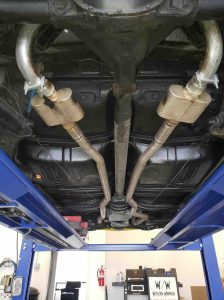
Yet there are few if any emissions controls as regards these emissions. Or much interest – emanating from the regulatory apparat. It’s almost as if it’s 1968 again – and in a way, it is.
If you’re wanting to avoid EMF emanations from vehicles, it’s easier than avoiding tailpipe exhaust emissions, because EMF emissions are confined to the vehicle emitting them. So long as you’re not inside an EMF-emitting vehicle, you’re not being exposed to them. So all you have to do as a precautionary measure is avoid vehicles with high-voltage batteries and electric motors, which means electric vehicles and hybrid electric vehicles.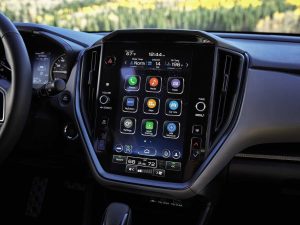
You may also want to avoid any late model car with a huge (or any) LCD touchscreen, built-in Wi-Fi and “connected technology” – meaning the ability to receive over-the-air “updates” and (implicitly) transmit “updates” – about you. Every new vehicles has all of that but if you go back before about 2015, you can find vehicles that have less of that. Touchscreens were uncommon outside of the high-end, luxury car class before about 2015 and if you go back to 2010, the number of “connected” cars thins out. Vehicles made before (roughly) 2005 or so are still vehicles more so than very heavy smartphones.
Paradoxically – in a good way – these older vehicles are more long-term reliable than the new stuff because they lack the “technology” you find in new vehicles. They are certainly more repairable – both in the literally easier-to-repair sense and also in the economic sense. Meaning the fix is typically more affordable.
If enough of us reject over-teched new vehicles, it might just prod the vehicle manufacturers to stop making them, too.
. . .
If you like what you’ve found here please consider supporting EPautos.
We depend on you to keep the wheels turning!
Our donate button is here.
If you prefer not to use PayPal, our mailing address is:
EPautos
721 Hummingbird Lane SE
Copper Hill, VA 24079
PS: Get an EPautos magnet or sticker or coaster in return for a $25 or more one-time donation or a $10 or more monthly recurring donation. (Please be sure to tell us you want a magnet or sticker or coaster – and also, provide an address, so we know where to mail the thing!)
If you’d like a Baaaaa hat or other EPautos gear, see here!









I once owned a Fiat Dino 2400 coupe. It had a early type of transistorized ignition modules that still relied on points. Should that module ever fail, it could be unplugged and the connector plugged in to use the points in the conventional way without electronics. With three double Weber carburetors it could instantly be made EMP proof. With the manual transmission, a wonderful sound oozing with power and very fast, it was delight to use on the German Autobahn.
Alex Jones found that the Minnesota tranny shooter’s dad was a contractor for CIA. Hmmm. Imagine that. Again.
https://www.infowars.com/posts/massive-minnesota-trans-cult-members-father-has-worked-for-29-years-as-a-top-level-cia-dod-contractor
Probably just a coincidence. Just like the last 57 times. Nothing to see here. Nothing at all.
Re: EMF, I used to work with a Ham radio guy, we had jobs in a radar lab. Needless to say, the ham radio in his car was not just the garden variety 2W output. I asked him, “Hey Steve: when do you back off the transmitter power?” He said, “When my car starts to run rough!” He had a good time cranking it up in traffic, at stoplights, and seeing other people’s cars conk out!
That’s Really interesting, tom. Thanks for sharing.
Good article on an interesting topic. Was just thinking about EMPs the other day. Used to worry about this happening. Now, not so much. All the countries are already in line with the Rothschild agenda. If they were to ‘take one out,’ it would be a scripted, AI produced piece of Kabuki theatre for the ages. They’ve come a long way since nineveleven, baby. Whatever massive attack, or destruction they have planned to deceive the world into compliance will probably be on par with the sniffle psychosis, fake and gay, through and through. If they really want to shut off cars, the newer ones will be disabled by a switch or a signal, the older ones by the death of DollahDollahBill, gas at ten bucks a gallon ought to do the trick.
There is also the even older spark advance lever on pre WWII cars, and if you want real ignition reliability, you could fit a magneto on a gas car if you have the spare cash for one. Somehow they never got cheaper from 100 years ago.
Bad news . . . the coil windings and the permanent magnets in a magneto are not a guarantee to be immune to an EMP.
I would think a permanent magnets would be fine but true, the winding may be an issue. Probably depends if the case is a complete metal enclosure and grounded or not. Also if its a quick fraction of a second nuclear EMP or an hour long Sun EMP. The Sun would almost certainly do a lot of things in, but a quick high voltage spike may not wreck the insulation enough to disable it.
OT:
Did yall see this? California Faces High Pump Prices As Phillips 66 Shuts LA Refine.
I find myself unable to give a rip about California. Fuck them. Just don’t come here.
https://www.zerohedge.com/commodities/california-faces-high-pump-prices-phillips-66-shuts-la-refinery
My sister and her family live in CA, near San Diego. They had a homeless derelict OD just 20 yards from their place a few weeks ago and routinely have to deal with deranged people acting out in public, plus the exorbitant cost of life. But they say the weather’s nice…
The weather is great and the scenery is spectacular. California has deep water ports and it has oil.
The US should invade it. It is a totalitarian regime which torments it’s residents. There has to be a humanitarian crisis there which can be solved by an armed invasion.
No, the people should rise up and overthrow it.
Sick and tired of always bailing out these blue-Cheka cess pits. The only way we move forward, is allowing their fail to be viewed through the lens of a cautionary tale, for all the world to see. Sumpin-sumpin along the lines of, this is what happens when girl bosses and Homos are put in charge
“They had a homeless derelict OD just 20 yards from their place…”
Shame they can’t have a taxidermist stuff em’ and then put em’ up on a pike as a warning to the others 😉
I’m so glad to have escaped California. For me, the insurance crisis was the last straw — we cut our losses and fled.
Still, I suspect every refinery closure means tighter fuel supply capacity … which on the margin adds pressure to higher fuel prices. It certainly means fuel prices aren’t heading down any time soon.
It seems we all suffer in varying degrees at the hands of California’s stupid electorate, not much different from the way we suffer under higher electricity costs thanks to every EV buyer’s stupid purchase decision.
Malinvestment is everywhere. It feels like the entire country is running on grift, graft and Ponzi schemes.
Our local refinery was down a few days due to flooding after 8 inches of rain. Gas prices jumped 35 cents overnight.
It’s back in operation, but the price has only fallen about 3 cents………
“It feels like the entire country is running on grift, graft and Ponzi schemes.”
That’s because it is.
The local grocery store where I live has a deal with the local gas station where every dollar I spend in the grocery store racks up points on my gas station card.
Being a family of 5, our grocery bill is stoopid high.
Went to go fill up the wife’s car yesterday and paid $1.00/gallon at the pump due to all the points we had racked up.
Retrofitting EFI to a carburetor is one thing. Very doable, the tricky part being getting it to bolt up to the air intake.
Retrofitting the ignition system to points is a whole other ball of wax. You need to bolt it onto something that rotates as the engine turns over — so basically either the crankshaft or a camshaft — and there generally isn’t a handy piece of either sticking out. So now instead of difficult we have virtually impossible, unless your engine is designed with hotrodders in mind. Maybe selected crate engines, but not the one in a typical person’s driveway.
Its more of a challenge than it once was, but it’s pretty simple to bolt on a toothed timing belt or chain and drive a magneto or simple points distributor.
After the EMP, the only hardware I be concerned about is my AR-15.
1. This is my rifle. There are many like it, but this one is mine.
2. My rifle is my best friend. It is my life. I must master it as I must master my life.
Continued…
As much as I like Gene Stoner’s magnificent toy, in a survival situation you might be better off with a bolt or lever action in a big enough caliber to reload with your own black powder. 45-70 fits that bill. Or a pump 12 gage.
Kalashnikov 47 buddy. Still spits copious amounts of lead and can be abused in ways that an AR platform rifle can only dream about. Drop it in the mud, goes bang. Drop it in the water, goes bang. Don’t clean it for years, goes bang.
But you are on the right track, the most simple actions and least amount of moving parts is where it’s at once the “end times” are here.
Actually, the .22 LR is the true survivalist’s gun. A couple thousand rounds of ammo can last a lifetime, if judiciously used. And you can carry 500 rounds of it quite easily.
Although certainly not a combat caliber, out of a rifle it is effective enough for self-defense against looters and thieves. It can be used to hunt small game for food and even to shoot deer in the head with for greater quantities of meat. Barrels will last more than a lifetime with minimal to no cleaning.
Every household in America should have a 12 gauge. So simple and yet so effective for so many versatile purposes. Rifled slugs out to 1OO is easy. OO for the house, 4, 6, and 8 shot for fowl, like I said, versatile.
I shot a 45-7O once upon a time. It was like being kicked by a mule. No thanks. Maybe if I lived in Alaska for bears, otherwise hard pass on the 45-7O
When the EMP hits it won’t matter if you have a carbureted vehicle or an EFI vehicle unless you’ve got your own gasoline storage tank on your own property with a hand-crank pump, because the gas station pumps and cash registers are all computer-controlled so they will be disabled.
And you had better post an armed guard on your personal fuel stash 24-7 because people will be willing to kill you to steal it.
When your own stash is used up, you are right back to square one because the refineries and the trucks that deliver fuel are all computer-controlled, too…
Hi X.
What you need is a small pump with a hose to recover the gasoline from underground tanks. J.W.R. wrote books covering this. The problem then becomes one of the decaying ethanol gas being only fit for Molotov cocktails after a couple years. Gangs of course will be controlling the gas stations and bartering it for what they want; same as now but with a slightly higher risk of violence at refueling time.
Morning, Landru!
I wish I still had my hockey pads so I could dress like Mad Max when The End comes…
PS: I think the gout is over. 12 days of coming to Jesus. But I have religion now…
Hi Eric:
Glad to hear the pain is gone. Now comes the part where you experiment to find out what foods caused it. That way if you go out for a meal you can ask if the meal you’re getting has ingredients that your body has problems with. I know someone that has food allergy/ chemical problems; a meal they cook from scratch doesn’t cause problems while food with lots of additives from Sysco does.
Indeed, Landru –
I strongly suspect I may have flirted with metabolic syndrome, which sometimes manifests initially as gout. I got careless about what I ate and ate too much. For the first time in my life I got heavy (for me) and not just that. The weight was all or mostly all around my gut, which protruded like it never did before. I had to go up to size 34 waist pants for the first time in my life. I’ve been a 32 waist since high school; then I just sort of swelled. This was about 2-3 years ago. I figured I was in my 50s and so this was normal. I am now radically altering what and how much I eat and am determined to get down to my previously normal weight (around 200 pounds) and I suspect that plus eating less and better will be the cure I need!
I often joke with my wife that I only go to the gym and work out hard so that I can eat whatever I want.
Just turned 50 this year and I think this strategy will soon be unsustainable.
Should I mention it again? It’s not The Eating, it’s The Drinking.
C-o-f-f-e-e. …And, beer.
Hi Helot,
Not in my case, apparently I hardly drink liquor and when I do, it’s maybe a beer or one finger of sipping whiskey. Coffee is actually supposed to help prevent gout. I am pretty sure my issue was getting heavy and eating too much of the wrong foods. I got on the scale yesterday and am down to 223 (from my Peak Fatness of 230) and am shooting for 210 by the end of September. Goal weight is 200-205. That’s what I was when I fit into size 32 pants and did not have a gut! No gut – no gout – is my theory.
When my father was alive, we used to joke that our old hit n miss engines would survive a Soviet strike. They’re the simplest of all ICE engines. They use a mixer instead of a carb and the gas flow control via a needle valve and the airflow control using what amounts to a cover to regulate the incoming air. Mechanically timed. Only electronics is a magneto.
A milestone in automotive history:
‘The first-generation iPhone was announced by then–Apple CEO and co-founder Steve Jobs on January 9, 2007, at Macworld 2007. It incorporated a 3.5-inch multi-touch display with few hardware buttons. Launched on June 29, 2007, at a starting price of $499 in the US, it required a two-year contract with AT&T.’ — Wikipedia
Automotive CEOs and engineers alike were green with envy over Jobs’ demigod status (and stock option gains) as a result of the iPhone. Adulatory magazine articles disclosed how Jobs essentially locked the highly secret iPhone development team inside the Apple campus for weeks at a time, as if they were working on Kennedy’s moon launch
By contrast, auto execs and their plodding cubicle farms of engineers never got fame, riches and a rabid fan base as Apple did. Car guys felt like greasy blacksmiths by comparison, pounding on glowing blocks of pig iron in the dark satanic mills of Detroit. So they resolved to change this: henceforth, cars would be controlled by chips, connected to the internet, and use touch screens as their human interface.
Just one little problem: some of us do not like cell phones. I have one for a handful of functions: my phone number for calls; texting, photos, and GPS. But unlike motor vehicles, my cell phone has no emotional resonance for me. It’s older, less capable, usually concealed inside a holster … and I couldn’t care less. I don’t wash, wax or vacuum it.
Software-defined vehicles with over-the-air updates and a touchscreen interface are an abomination. This technology is inappropriate, excessive and superfluous in a motor vehicle, as shown by a hundred years of previous success without such grafted-on electronic farkles. May a massive Carrington event fry their little chips to burning hell, each and every one of them! 🙂
EMP proof vehicles sounds cute and all but let’s be brutally honest, if such an EMP were to occur, you’ll have a lot more pressing problems than whether or not the car runs.
Hi Burn
If an EMP takes out the higher technology’s the problem becomes one of how to get by with lower technology. I’ve got hand powered tools along with all the fancy electric and cordless tools along with lots of nails because without power tools you’re not going to turn thousands of screws by hand if you can bang a nail in. I’ve switched over to screwing everything together instead of nailing it together.
In a grid down situation I can see steam power making a comeback because it will be labor saving. I’ve also wondered why Amish farmers aren’t using steam powered tractors and harvesting equipment.
Bonus fact: lap joint/ riveted steel boilers can fail in interesting ways….
While the points and possibly the condenser will survive an EMP; what about the alternator? I don’t know how vulnerable it is but it does contain a diode bridge and a electronic voltage regulator. Older GM alternators had external point type voltage regulators but their outputs were a lot lower.
Luckily every car I own was built before 2005. The never ending increasing complexity of new cars is a definite turn off for me. I do find it amusing that my old Garmin GPS tells me that I should not “play” with it when the vehicle is in motion while a new car gives you no choice in the matter as almost all functions are controlled by a touchscreen.
I do find it interesting though that GovCo does not test for high EMF in new cars. Although I suspect that if it was deemed a problem the required shielding would add several hundred more pounds of weight to the car requiring even larger batteries and motors thereby requiring perhaps even more shielding.
Rube Goldberg would be proud that we learned our lessons well and have implemented technology he could never conceive of.
“I don’t know how vulnerable it is but it [an alternator] does contain a diode bridge and an electronic voltage regulator.”
Well stated Landru!
Not one man in a 1000 knows how anything actually works anymore.
Hi Burn.
I’ve repaired a bunch of the ones in older Chevys. Most common failure point was in the unitized diode bridge followed by the brushes. Not many problems with the electronic voltage regulators in GM’s though.
As an added bonus; if you can repair your car’s alternator you also have the tools and knowledge to diagnose and repair a small gas powered generator. 🙂
Yes, happened in the ‘70 Firebird and the ‘79 Gran Prix. First hint is the ALT or GEN light on the dash glows dim, Mr. Bridge getting leaky.
For some reason Chevy was late to the integrated alternator, the ‘71 Nova still had a mechanical regulator in the engine bay.
I think the bridge piece was about $6.50, plus whatever a set of brushes cost. Took just minutes to pull it apart nothing complex about it just remember the brush retainer pin as you slide the housing back together. I ignored the “don’t mess with the aft bearing grease” warning. I’d hit that dried grease with some Teflon lube rub it around & that bearing good for many more years.
I wish I still had my ’82 diesel Rabbit…and a gallon of fryer oil.
Oh. A 20-something mechanic working in a small town garage/gas station has one of those. It’s the pickup version.
…Maybe, there, is hope?
…I drove an ’80’s Rabbit a few miles, fun car. Practical.