


It has been 30 years since the 55 MPH National Maximum Speed Limit law was repealed. The person most responsible for that – Gail Morrison – has just passed.
Back in the early ’90s, Gail was a lobbyist for the National Motorists Association and I was a young editorial writer at The Washington Times in DC. Our paths crossed because it was inevitable. Gail was trying to get the NMSL repealed and I – like most sensible Americans – loathed the NMSL, which did more than just create an excuse to fleece drivers for “speeding” at speeds that had been legal prior to the imposition of the NMSL. It served to further corrupt an already corrupt regime.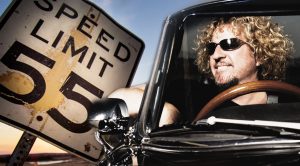
The NMSL was originally trotted out as an “energy saving” measure in the wake of the gas lines that were caused by oil shortages that were the result of politics rather than scarcity of natural resources. The Organization of Petroleum Exporting Countries (OPEC) – a cartel dominated by Arab oil-producing countries – stopped exporting oil to the United States as a punitive measure. The Arab counties were unhappy about the U.S. supporting Israel in the Arab-Israeli war that was going on at the time and expressed this unhappiness via the boycott that made gas scarce and expensive in the United States. The federal government’s response was to punish American drivers – by siccing cops on them for “speeding.” It was a double tap kind of punishment, too – in that not only did get people get hit with fines for “speeding,” the convictions for driving at speeds that had previously been lawful became the pretext for framing them as “unsafe” and “risky” drivers by the insurance mafia, which then jacked up the cost of insurance premiums.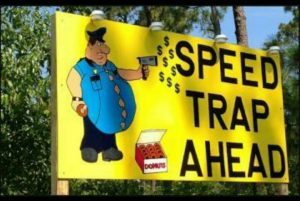
For 20 years, American drivers had to drive at ridiculously slow speeds on the highways in order to avoid ridiculous but expensive highway robbery or accept the cost of highway robbery as the price of driving at reasonable speeds on the highway.
Gail put an end to that almost entirely by herself – by leaking a government study the government had suppressed because it showed that the 55 MPH speed limit did not “make the highways safer,” as the government had been insisting it had. Gail personally distributed copies of the suppressed report to members of Congress and appealed to them to back repeal of the NMSL.
Here is an old article of hers, published back in 2020 by Lew Rockwell.
Gail was hard to ignore. Because she wasn’t really a lobbyist – in the usually (and correctly) pejorative sense. A visit from Gail was like a visit from your favorite aunt. Even federal apparatchiks and vetted officers of the Safety Cult were disarmed by her “just me” presence. By 1994, she accomplished what almost everyone else thought impossible. Congress repealed the NMSL.
People who didn’t start driving until after the repeal of the NMSL have no idea how bad it was before the repeal of the NMSL. They take driving at 70-80 MPH on the highway as a given – not having any personal memory of the time it was taken away. But for those of us who do remember what it was like to Drive 55 (or else), the repeal felt comparable to what it would feel like if people were free to fly again without being treated like presumptive “terrorists” at the airport. Had Gail set her sights on that, we might be free to fly again, too.
Godspeed, old friend.
. . .
If you like what you’ve found here please consider supporting EPautos.
We depend on you to keep the wheels turning!
Our donate button is here.
If you prefer not to use PayPal, our mailing address is:
EPautos
721 Hummingbird Lane SE
Copper Hill, VA 24079
PS: Get an EPautos magnet or sticker or coaster in return for a $25 or more one-time donation or a $10 or more monthly recurring donation. (Please be sure to tell us you want a magnet or sticker or coaster – and also, provide an address, so we know where to mail the thing!)
If you’d like a Baaaaa hat or other EPautos gear, see here!







Good observation, Hans.
Overall, in general,…I don’t, so much, see, a continuation of their legacy.
…I’d love to be wrong.
If only we had more Gail Morrisons to fight against the government’s intrusions on our freedom of movement via automobile.
We do. They are out there. …Only, you sound kinda weak kneed typing that. Are you cripple, deaf & blind? What’s stopping you? …From stepping up to the plate?
Myself, I’ve come to the conclusion that we’re surrounded by imbeciles, morons, Vampires & politicians (I repeat myself) and worst of all, the willfully blind.
Perhaps, ‘Western Civilization Is Not Worth Saving’?
https://www.lewrockwell.com/2025/08/no_author/western-civilization-is-not-worth-saving/
half my vehicles have 55 highlighted on the spedo from that crap, and the harley 5 speed trans was made to run the best at that speed. It is super smooth, but no way would I want to do 55 cross country. 70-80 is much better
Montana had to impose the 55 mph limit, or lose federal funding. They did: it was an “energy conservation” limit, or something like that. $5 fine, citation didn’t go on your record. The land barges continued to cruise at 100 mph+ on I-90. I drove company cars, collected many $5 tickets (my 67 GTO with 3:53 rear end wasn’t much of a cruiser). At the time, Montana’s daytime speed limit was “reasonable and prudent” and at night 65. Lower, I think, on two-lane highways.
And that piece of shit governor Marc Racicot pushed and got a 75MPH limit after the NSL was lifted. He did this by having his butt buddies in the supreme court declaring freedom of choice without threat unconstitutional. Interestingly, after a limit was established, highway deaths went way up. Didn’t matter though, money and control took precedence.
Correction: “money [Power] and control took precedence”
You’re basically correct, though.
The money & the control don’t work without, ‘the power”.
Maybe, splitting hairs? Idk. I’m not an overlord.
Oh I remember the 55mph speed limit days..
Escort radar detectors came on the scene in the early 1980s to help with this nonsense..
Syracuse NY to Ft Lauderdale FL in 17 hours during spring break back in 1984. ☺️
But us young folks had a mindset in those days… ‘govt can suck a stick’.
And if you got a ticket out of state, not much they could do unless they caught you back in that state.
Today you’ll probably end up in Gitmo
Yup, no doubt.
Hi Eric,
One of the reasons for the oil crisis was a decoupling of dollar from the gold standard by Nixon.
From Grok:
The decoupling of the US dollar from the gold standard, often referred to as the “Nixon Shock,” occurred on August 15, 1971, when President Richard Nixon unilaterally suspended the convertibility of the dollar into gold, effectively ending the Bretton Woods system of fixed exchange rates. This move was driven by mounting US balance-of-payments deficits, gold outflows, and rising inflation from fiscal policies funding the Vietnam War and domestic programs. The 1973 oil crisis, meanwhile, unfolded in October 1973 when members of the Organization of Arab Petroleum Exporting Countries (OAPEC) imposed an oil embargo on the US and other nations supporting Israel during the Yom Kippur War, coupled with the Organization of the Petroleum Exporting Countries (OPEC) unilaterally quadrupling oil prices from about $3 to $12 per barrel by early 1974. While the immediate trigger for the embargo was geopolitical, substantial historical and economic analysis indicates that the Nixon Shock played a key role in precipitating the crisis by creating economic conditions that motivated OPEC’s aggressive price actions.
Economic Mechanisms Linking the Nixon Shock to the Oil Crisis
The end of dollar-gold convertibility allowed for unchecked US monetary expansion, leading to dollar devaluation and inflation that eroded the real value of oil revenues for exporting countries, which were denominated in dollars. Specifically:
The Nixon Shock resulted in an immediate 20% devaluation of the dollar against other currencies and gold, reducing the purchasing power of OPEC nations’ earnings. This prompted early compensatory measures, such as the 1971 Tehran and Tripoli agreements and the 1972-1973 Geneva accords, where OPEC negotiated price adjustments to offset the dollar’s weakening.
Abandoning the gold standard enabled aggressive US money printing, fueling inflation (which had been rising since 1965) and further devaluing the dollar in real terms. By 1973, this inflation—exacerbated by the influx of financial liquidity from the gold window closure—contributed directly to the oil price shock, as OPEC sought to protect the intrinsic value of their resource and fund internal development amid a fiat currency system no longer backed by gold.
The US also ended mandatory oil import quotas in 1973, increasing reliance on foreign oil (imports nearly doubled from 1970 to 1973), which shifted market power toward producers at a time when global demand was surging and supply constraints (e.g., US peak production, Suez Canal closure) were tightening. This economic vulnerability, combined with the dollar’s post-1971 instability, encouraged OPEC’s unilateral price hikes in October-December 1973.
These factors transformed the oil market from a buyer’s to a seller’s market, with the Nixon Shock accelerating the erosion of the post-war economic order and empowering oil producers to assert control. One analysis explicitly identifies the Nixon Shock as a contributing factor to the 1973 crisis, noting it as part of the broader economic disruptions that prompted OPEC’s response. Since the gold standard’s end, there have been multiple financial crises, including the 1973 oil shock, attributed in part to the resulting monetary instability.
Evidence from Historical Analyses
Dollar Devaluation and OPEC’s Response: The devaluation directly hit oil exporters’ revenues, leading to demands for higher prices as part of a Third Worldist push for a New International Economic Order, independent of the Arab-Israeli conflict. This is evidenced by pre-embargo negotiations where OPEC tied price increases to dollar weakness.
Inflation and Monetary Policy: Post-1971 US policies created persistent inflation, which some economists argue amplified the oil shock’s effects rather than the reverse, but the sequence shows the Shock enabled the loose money that devalued the dollar and upset producers.
Broader Economic Shifts: The collapse of Bretton Woods in 1971-1973 (finalized with floating rates in March 1973) transferred financial power to oil states, as seen in the embargo’s role in triggering US attempts to recycle petrodollars.
Counterarguments and Alternative Views
Not all analyses attribute the crisis primarily to the Nixon Shock, emphasizing instead its geopolitical origins. The Yom Kippur War (October 6, 1973) is often cited as the precipitating event, with the embargo as retaliation for US aid to Israel ($2.2 billion provided by Nixon). Some argue the oil shocks were more a symptom of 1970s inflation than its cause, with domestic US policies like price controls worsening shortages independently. Others doubt oil alone caused the era’s stagflation, pointing to broader monetary issues but not reversing the causal arrow from the Shock to the crisis. While the war provided the spark, the economic tinder—dollar instability and market shifts post-1971—made the fire inevitable, substantiating the Shock’s precipitating role.
Ah, yes. The speed limit of 55. And 85 mph speedometers too, LOL. The Carter Era made me into a Republican voter when I was first able to cast a ballot, in 1984.
I have since come to realize that the Republicans are in on the swindle too, but perhaps just a bit less so than the Democrats…
Awareness. That’s rare. “but perhaps just a bit less so than the Democrats..”
You keep trying. You’re getting warmer. You’re just not there yet.
Two wings, same bird of prey.
…Ask a cop if he’s Red or Blue as he writes you a ticket which is a taking from your family? …In any State.
‘Gail wasn’t really a lobbyist.’ — eric
Citizen lobbyists (meaning all of us) can be highly effective.
Mennonites have a tradition of disdaining hierarchy and seeking one-on-one meetings with political leaders, featuring frank talk.
That’s an excellent tradition. After getting some brief experience in corporate lobbying around the time Eric mentioned, now I don’t hesitate to call up county supervisors, state legislators and members of Congress when there’s a need.
It’s surprising what people will do when asked. Even politicians!
It’s sad whenever an unsung Hero dies. Let’s continue her legacy of reducing GovCo’s controls over us.
God speed Miss Gail.
Thank you Eric, for informing us of her legacy, truly grateful for her work.
Another suppressed report showed that the 55 mph limit didn’t really save gas, most cars had a “sweet spot” of maximum efficiency somewhere between 60&70 mph.
Absolutely, Mike –
Gail was a friend as well as a person who did much for the cause. Those of us who can remember Drive 55 ought never to forget her!
Yes, my ‘70 Firebird was a California car with rear end highway gear ratio and a CA smog compliant 350 V8. It ran better with better mileage around 65. At 55 it was not in a good spot for efficient cruising.
Thank you Gail, from everyone out here in the West that dealt with the nonsense. I90 from Vantage east to Spokane like standing still at 55 MPH. Try crossing Montana at that ridiculous limit.
Hero!! That 55moh era was terrible!
Truly a heroic individual. Fighting GovCo in such a manner takes Herculean effort. She won her fight and I’d bet she sacrificed much of her family time to do so.
This is the type of inspirational person our society should venerate, but never will as challenging the statist quo is not a popular position these days.
The people we admire are passing on. We need to continue their legacy.