



Did ye – the term seems apropos – know that in the early colonial period, the typical indenture contract ran for seven years? People too po’ to be able to pay for their passage to the new world would instead agree to be bound to service for a term of seven years, during which time they worked off what they owed.
Well, history has this habit of repeating. Probably because people forget and so need to relearn. How about a seven-year indenture to pay off a vehicle you’re too po’ to afford?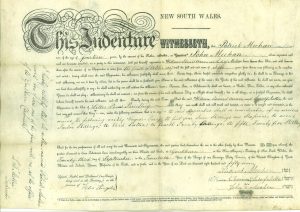
It’s becoming the new normal – for just that reason. People increasingly can only afford a new vehicle if the cost of paying for it is spread out over 84 months – seven years. It’s understandable. As of early May, 2026 the average price paid for a new vehicle is just shy of $52,000 (up from about $50,000 just two years ago). The reasons why are several and include inflation as well as the folded-in costs of Trump’s tariffs, which are just taxes paid by the vehicle manufacturer that are then folded into the cost of the vehicle. (Some think these tariff-taxes only make imported vehicles cost more; this thinking assumes the not-tariff-taxed domestic manufacturers will lower the cost of their vehicles. They don’t, of course. All the tariff-taxes do is eliminate the less costly, imported alternatives to the higher-cost, domestically manufactured vehicles. Voila! Now everything costs more.)
What does $52k work out to monthly – not including interest? Just shy of $600 per month. That’s pretty hefty. But what would it cost to pay off this same $52k vehicle in five years? About $800 per month. Too hefty for most. Now let’s use the Way Back machine to see what it would have cost to pay off this vehicle in three years – which was pretty common back when new vehicles were available for $5k.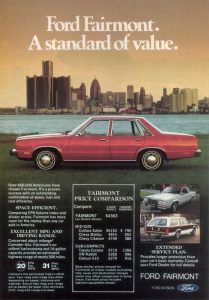
It’d be about $1,400 per month – and that explains why almost no one is able to pay off a new vehicle in three or four years anymore.
There are a number of interesting aspects to all of this that go beyond the indenture contract. The first that comes to mind is that at the end of the indenture, the vehicle is likely not going to be worth even half what it cost originally. This depreciation is an additional cost of the indenture contract. Half of $52,000 is $26,000 – the latter figure being what it cost you in depreciation to make payments on the vehicle for 84 months. Add that to the cost of the indenture. The total cost comes to $78k – not counting interest on the original indenture, of course. That’s how much you’ll be out-of-pocket after you’ve – finally – paid off the indenture. At which point you will be the owner of a seven-year-old vehicle that’s now probably out of warranty and for that reason will cost you whatever it costs to have it fixed when it breaks. You will probably need a new indenture contract to pay for that, too – given that you probably won’t have the cash on hand to pay for it, having just spent the past 84 months paying $78k.
Not counting interest, insurance – and gas.
In the Before Time, when people routinely paid off a new vehicle in three or four years, it is true the vehicle also lost value – but not as much because the vehicle didn’t cost as much to begin with. Yes, inflation. But it’s not all inflation. More specifically, it is not just that it takes more dollars to buy similar things today; it is that most of us have fewer dollars to buy things with today. If wages had kept pace with inflation then inflation would be an irrelevance. One hundred dollars would buy the same ten dollars’ worth of whatever you bought in the past. The problem is it takes $200 to buy the same ten dollars’ worth, which is why it doesn’t seem that things cost more.
They actually do.
It is also true that, in the Before Time, a vehicle that was paid-off after three or four years was likely beginning to show its age – because 100,000 miles on the clock back then as analogous to 250,000 on the clock today. And yet, there was a difference. The Before Times vehicle was probably still fixable, both practically as well as economically. Even just fifteen years ago – a blink of the eye – you could still buy a brand-new GM TH350 automatic transmission (a common transmission used in millions of Before Time GM vehicles) for about $600. A new/rebuilt engine was maybe $1,500. That same transmission costs closer to $2,000 today and a modern automatic for a current-times GM vehicle costs three-plus times as much. A new engine is $10k.
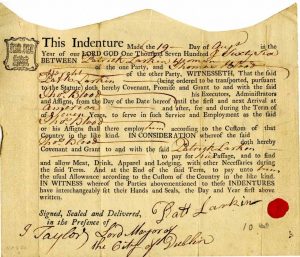
Most people could afford $600 for a new/rebuilt transmission in the Before Time. Very few can afford one in our time. The difference between then and now was that you could generally keep that aging vehicle going for many years after it was paid off. It’s why almost every teenage kid had a car before the early 2000s. It may have have been a beater. But it was a car. Many people well into their 20s today do not have a car – because beaters are out of their price range and when a beater breaks down, it’s not worth fixing it.
So people sign up for a new indenture.
And – unlike their colonial forbears – they may never get to freedom.
. . .
If you like what you’ve found here please consider supporting EPautos.
We depend on you to keep the wheels turning!
Our donate button is here.
If you prefer not to use PayPal, our mailing address is:
EPautos
721 Hummingbird Lane SE
Copper Hill, VA 24079
PS: Get an EPautos magnet or sticker or coaster in return for a $25 or more one-time donation or a $10 or more monthly recurring donation. (Please be sure to tell us you want a magnet or sticker or coaster – and also, provide an address, so we know where to mail the thing!)
If you’d like a Baaaaa hat or other EPautos gear, see here!









.)
So, has it been decades since, ‘Cash for Clunkers’? …It seems like it still negatively reverberates today.
Such an absolute monstrous move by goobermint, to the detriment of youth in America, and even everyone else, too.
Anyway, you mention $2.000 for a transmission. Oh boy, my 1998 Navigator costs ~$3,000 to get the transmission rebuilt.
…What young person could afford THAT?
I really couldn’t, either.
Absolutely, Helot –
As recently as the early 2000s a high-performance GM automatic such as a 2004R could be bought for about $1,200. I know because I bought one. Today? That same transmission costs easily twice as much. Have wages gone up twice as much? At the store yesterday, peanut butter is up to $5 for a standard sized bottle. Of got-damned peanut butter!
Kid is paying 1.99% on a new Camry.
But that rate is only for 36 months…
First drive back from the dealer: 48 mpg highway.
Driven carefully probably a little higher in the city.
Replaces a small SUV which got 24 mpg city.
“If wages had kept pace with inflation then inflation would be an irrelevance.”
That’s only superficially correct, because apart from professional economists, nobody lives in such ‘aggregate’ conditions.
In the real world, monetary inflation distorts price relationships in ways that cannot be predicted, but are never benign.
It is indisputable that a retired couple living in their own home in ‘flyover country’ will be affected by ‘CPI inflation’ entirely differently than a young couple with children and a mortgage, living in a large metropolitan area.
Jobs and even entire industries come and go. Incomes & wages fluctuate and are often different even between the same occupations in different areas. There is no ‘general level’ of anything, apart again from economic models.
Inflation benefits the government and those who get access to the ‘new money’ first – the banks. Which then disproportionately flows to asset owners, and impoverishes everyone else.
It’s entirely accurate to say that monetary inflation is never good and should the Fed even have an ‘inflation target’, it ought to be be zero percent.
In an ideal world, there would be no Fed, no targets, money would be based on freemarket choices and it would be ‘hard’, so as to not be able to print at will.
We can but dream.
This is the perfect plan. If a customer can be locked into a 7 year loan with a 3 year warranty, given the increased complexity and shorter mean time to failure, they can encourage trade ins more often to get out from under a car of lessening value that is starting to have problems. Roll the balance into the next loan and the lender will have the borrower forever.
This is now a Kei car thread. 🙂
Remember those American Kei cars Trump gave us (the ones we’re haven’t received)?
Had we actually received these little cars, rather than yet another stupid war in the Middle East for Israel, they’d run about $10,000 to $20,000 if they were comparably built compared with the Japanese Kei cars (depending on whether you wanted a really inexpensive one or a really nice one).
A seven year $10,000 loan at 5% would cost you $141/month. If you went with a more sane 48 month loan – same amount, same interest – $230/month.
If you financed $20,000 for the same 84 month term, same interest rate – $283/month. A 48 month loan for $20,000 at 5% would cost $461/month.
Presuming most people will want something in the middle, a $15,000 loan for 84 months, at 5%, would cost you $212/month. Or $345/month for a 48 month version of the same loan.
There is a really strong political argument for these vehicles just on the basis of affordability.
While I know the leftists all feel we should be taking mass transit to and from our government jobs at the Ministry of Truth, the reality is that the actual economy can not function without affordable private vehicles to get people to and from their shitty but necessary jobs.
There is another argument for them. It’s a nasty financial argument. Basically, one of the only ways to get a decent return on an investment at the moment is to get involved with subprime stuff. The problem with the subprime borrowers is that they really can’t afford a $50,000 car loan at 15%, even for 120 months ($807/month, btw), so at some point they almost all just stop paying to loan. Many of them could likely afford the $278/month payment for a $10,000 loan for 48 months at 15% – so the likelihood of default drops sharply from inevitable to possible, which makes the bond holders happy rather than homicidal.
These affordable vehicles are not available in the American marketplace, and Eric has talked about the ridiculous regulatory reasons why this is the case.
This could be easily resolved by Congress, and they do not do so. One must ask why.
Holy shit. I had a 1978 Fairmont EXACTLY like the one pictured. Same color. Three-speed stick on the floor, 200 c.i. straight six. Bought it used for $800 in 1988.
Very simple and basic. Great car. Unfortunately I was REALLY poor at the time so I can’t say I had great memories in it.
A guy at my previous job bought a new Jeep Gladiator. I found out later that his payment was $1,200 a month. And he wasted no time in tarting it up with a lift kit, and bigger ruby red wheels with dumb spacers. He commuted an hour and a half one way to work. Another guy bought a Chevy Silverado and was so pleased with his 10% interest rate. He also had an hour long one way commute. I just shook my head… One of the smarter commuters had an old Toyota Corolla with 300,000 miles on it.
Well….lookey here! https://x.com/jakeg_official/status/2052917215843029421
Neo-Luddite YJ asks Goolag Ai:
what is the average price for a new 4 door sedan and how much does it depreciate in 7 years?
“The average price for a new 4-door sedan typically ranges between $25,000 and $35,000 for mainstream models, though the broader average transaction price for all new vehicles has reached record highs of approximately $48,000 to $50,000 as of 2025-2026. Over a 7-year period, a standard sedan is estimated to lose roughly 65% to 75% of its original value.”
Depreciation is most aggressive in the early years and gradually slows over time.
Initial Loss: A new car typically loses 20% to 30% of its value in the first year alone.
5-Year Milestone: Most vehicles lose approximately 60% of their original value after five years.
7-Year Outlook: By the seventh year, the average sedan retains only about 25% to 35% of its original purchase price.
Find a reliable car 5-7 years old with low miles, which was kept in a garage, had scheduled maintenance, was owned by a little old lady who only drove it church on Sunday. Pay cash. Change all the fluids and filters.
When the EMP goes off your $52,000 car will not work and will not be fixable. How far off is it really? What the world just watched and got hammered into their brains, is that the USA is a paper tiger. All it’s military bases got pounded by missiles and are now inop and abandoned. How long until those nations and peoples affected by our aggressions send the missiles and drones into NYC?
Think about, it is only a matter of time those getting bombed are going to figure out they need to retaliate against the banksters, you know JP Morgan, and Goldman Sachs and the City of London and Rothschild. Why swat at the hornets when you can take out the queen lizard at hive central.
A few years ago I read in Popular Mechanics anyone can build a low cost EMP bomb. You do not need a nuke to make an EMP pulse which disables electronic devices. You ought to own old cars and motorcycles which have carburaters. Own a bicycle too. When it all goes to hell you can always walk and ride your bike. We are headed that way in case you don’t know, Amerika is terminal.
The USA lost the war against Iran, the aircraft carriers are now useless against drones and missiles – they are forced to move 1,000 km out to sea. China has hypersonic ICBMs which can be fired from China and hit any aircraft carrier anywhere on earth, including in Port San Diego.
Drone tech is exponentially growing. Soon everyone will have a drone in their back pocket. Soon any sufficiently motivated person may be sending drones into the White House window. I read this morning Trump’s religious followers were praying to his new golden statue. Won’t be long now, millions of Christian Evangelical loons have made Orange pedo-predator Zionist lunatic Trumpenstein their god.
IMHO you should be focused on survival for your house and car. These new fangled cars which spy on you, just like Facebook spies on you, are worthless. You want to do everything to not give all these devices and websites your personal information – because it will be used against you.
The government hates you and wants you dead. That used to be a wacko conspiracy theory until Covid. Not anymore. Now I see Bill Gates is behind this new Hantra virus. The first culling was a flop. They are trying to cull us again.
“Eric Clapton Took the Shot So He Could Go on Tour. Now He Can’t Play the Guitar.
One of the greatest guitarists of all time. Peripheral neuropathy so severe he cannot hold a pick. He did the right thing, he said.”
———–
He did not do the “right thing”. Who thinks getting the Covid shot which disables you is the right thing? What kind of logic is that?
———–
You wonder why I am black pilled? Most people are really stupid.
Seriously what are the Evangelical loons going to do when the find out there is no “Rapture”, it was a useful fiction for TPTB to neuter them from in any way acting in their own interests instead of that of their masters? While I will have less than zero sympathy for them there is also the hope that a few of them will turn on those that sold them that lie once they realize they have been had.
Interesting times, indeed.
You have to wonder. Why do most allow someone else value their car. Blue book for example. I have a 1998 regal. Everything works. Takes us around town same as our 2016 Nissan Frontier. Gets better mileage and is far more comfortable.
If that new car would run for 20 years without a major failure the initial cost might actually be acceptable. Sadly those newfangled over computerized cars won’t run 20 years without needing a new engine, CVT or worse yet some major component that is vehicle specific that is unavailable.
As for the Fairmont in the article, from what I remember you could get six people into one of them and other than moisture accumulating under the distributor cap were a reliable, practical car. Later Fords had a rubber cover over the cap to prevent this problem if I remember correctly.
As for my antique Toyota, it got new FCS struts last week and other than the supplied nuts not being up to snuff it seems to be OK now. Surprising the other strut hat a broken spring and since there was no rust on the broken ends I suspect that they both died around the same time.
Either way keep that old stuff alive as it’s one of the best investments you can make. 🙂
Watched a provoking video other day by an independent auto shop…
Basically he said, a new(er) engine or transmission? Still enormously less expensive than a car payment…can it cost up to $3K or $10K for an engine or transmission, each? Yup…
Yes, but with new cars at $52K average priced, its a bargain, even if the vehicle is a “beater”…
We’re all Cubans now….Oy Vey!!!
YMMV….
Yep! I’m in year 13 of the transmission rebuild and engine rear main seal replacement on a 1991 Silverado 350 V8 and 4 speed automatic. I’m thinking all in was around $3600. No leaks, runs perfectly fine. I did the brakes about 7 years ago. It’s now too valuable to me for winter driving (rust avoidance). Come Spring, turn the key instant start.
You can buy a lot of parts & labor for the old rig, if you’re faced with a $1000 car payment. A bit of sweat equity for washing and waxing will keep the repaint at bay. Someone in town has a first gen Explorer that is flawless, all original it’s an amazing example of preservation.
My mother’s 1979 Ford Fairmont lost adequate engine compression about 70,000 miles and was hauled off to the salvage yard at less than 10 years old. Apparently, this was common with the vehicle, and replacing the engine, even new, just delayed the inevitable.
Getting into the late 1980s/early 1990s, I rarely saw any Fairmonts on the road.
Ironically, the vehicle the Fairmont replaced was a 1977 LTD Wagon, which we occasionally saw rolling around town well into the 1990s.
Hi Roscoe,
You might have dropped a crate 5.0 in it; direct bolt in/easy swap. That would have made for a fun sleeper!
Always wanted to do a 5.0 Fairmont sleeper. Some of them could be had from the factory with the 302 but I never saw many of those in the real world. Most were 200 cube sixes or 2.3 liter OHC fours.
If Roscoe’s mother’s car had a 2.3 and “lost compression,” it sounds like it could have been a bad cam, which was common those engines, or else a shredded rubber timing belt. Neither problem would have required scrapping the car, though… both fixable relatively easily.
For what it’s worth Roscoe, assuming that the Fairmont wasn’t rusted out it was easy enough to swap out the engine from a rusted out car with a good engine. Decades ago I could have bought a ’70 Monte Carlo with a replacement GM built new engine with about 35K on it. The car was rough but the drivetrain had potential. Try doing that now with modern cars
Kitco’s spot price on gold is 4,713.70 this morning. So about 13 Oz of gold will buy you a new car. If the $20 gold coin was still in circulation that would add up to about $260, or the price of a Model T in 1926.
Hate to be the gold bug, and I’m fully aware that no car dealer will take 13 Oz of gold in exchange for a vehicle, but never forget who’s enslaving us (and why). Meanwhile asset prices continue to track right along with the exponential growth of the public debt over the last 6 years. Trump, having spent most of his life living off investments, can’t tell that the rest of us are on the losing side of that line. Or worse, knows it and is helping to bring our wages down to North Korean levels.
Spot on RK. Not to mention the modern car will easily go 100,000 miles at freeway speed, easily starts at -20F, delivering you in comfort that a Model T buyer would find impossible to comprehend. All for the same 13oz of gold.
“This depreciation is an additional cost of the indenture contract.” Eric
While depreciation is a cost the vehicle owner bears, it is also the value the owner derives from the use of the vehicle.
One way or another there is a cost of transportation. If you didn’t own the car would still have to pay someone. Maybe a bus, maybe an Uber, maybe a plane. Getting from place to place has a cost. Walking is pretty much free but has severe limitations on how far and how fast you can travel.
So depreciation is a cost of use but you do derive value from it. It most certainly isn’t added as a cost on top of the original loan as others have already pointed out.
Trump could simply seize the gold, as Roosevelt did in the 30s.
The law which Ford signed making private ownership of gold legal again did not repudiate the interpretation of the statutes which allowed Roosevelt to ban private ownership. An EO could, in theory, be sufficient to put the ban back in place.
Trump could simply seize the gold, as Roosevelt did in the 30s
You’re right just keep your savings in dollars.
Must suck to live a life of so much fear and helplessness.
‘What does $52k work out to monthly – not including interest? Just shy of $600 per month.’ — eric
Let’s include the interest, since it’s significant. With a ‘good’ credit score, the monthly payment on an 84-month, $52,000 loan will be $779 at an interest rate of 6.78%:
https://autofinder.com/deals/calculator
After seven years, the cumulative payments will be $65,436 on a $52,000 loan, or an added $13,436 in interest cost.
Meanwhile, per Eric’s assumption, the seven-year-old vehicle now is worth only $26,000, after the owner spent $65,436 in cumulative payments. If he sells it when the loan is paid off, his loss is:
($65,436 payments – $26,000 sale price) = $39,436 net loss
… which is also the sum of $13,436 in interest plus $26,000 in realized depreciation.
Financial Literacy 101: if you have to borrow to buy a new car, you can’t afford that car.
A salesman friend, Steve, was given a tour of the company owner’s new $3 million house in the San Francisco Bay area. Steve was trying to calculate what the mortgage payment would be.
Gently the owner informed him, ‘Steve … most $3 million houses are bought for cash.’ Oh.
I agree Jim H.
In the last 21 years of the 20th century, a new car was much more affordable compared to the most recent 20 years, even given lower salaries of buyers.
I stopped even considering a new car in the early 1990’s. Saving more than 30% by buying a car that was a year old with 15,000 miles used was an easy, rational decision, given that by the ’90s cars would serve well for 100,000+ miles with reasonable maintenance.
Buying my 40k mile ’99 Miata in ’14 for $5,800 was a great deal for me.
If not for the “insurance” cost to keep one, I would wish to have bought several of them.
I have spent about $5,000 in repairs, tires, and oil changes over the past 12 years; about $35 a month. (Insurance has cost about double that.)
The lender will also require you to pay for full collision coverage and such from the insurance mafia for the duration of the loan, which will add significantly to the monthly cost
“ This depreciation is an additional cost of the indenture contract. Half of $52,000 is $26,000 – the latter figure being what it cost you in depreciation to make payments on the vehicle for 84 months. Add that to the cost of the indenture. The total cost comes to $78k”
Though depreciation is a cost of owning a vehicle, it isn’t added back on top of the to original loan cost. The depreciation is the cost you incur as wear and tear, nothing more nothing less.
At the end of loan you now have paid off vehicle worth $26k.
I’m not sure what kind of math you’ve got going on there but it doesn’t maff.
Hi Gilbert,
Well, the way I look at it, you incurred a loss of about 50 percent and – the way I see it – that means it cost you that much to own the vehicle.
Math and finance principles don’t change based on how you choose to look at it.
Hi Anon,
Does the vehicle lose appx. 50 percent of its value over duration of the 84 month loan? How is that not a cost?
Actually, the owner used in both Jim’s and Gilbert explanations incurs a total expense or loss of about 2/3’s of expenses for a $52K car. If you’re out about $67K to $78K on a $52K car that’s worth $26K after seven years, thats a $41K to $52K expenditure,,,,
Well, how many used cars and possible engine/transmissions could all that pay for? Or be saved by citizens?
Welcome to the new (((Amerika))), once the “Land of the Free, and Home of the Brave” and is now the (((land of the Fee, and home of the slave)))….Oy Vey, Goyims!!!
YMMV….
Why one of the nation’s largest auto lenders isn’t worried about high vehicle prices or ‘forever loans’
https://www.cnbc.com/2026/05/09/capital-one-auto-forever-loans-used-cars.html
Hey, don’t worry scro, the payment to income ratio remains flat. Or sumpin’…