


Lots of people are turning away from today’s new cars on account of the creepy – and unavoidable – “tech” that’s been embedded in them and also just because they’ve become expensive and (paradoxically) fragile things that are easily damaged and when damaged, difficult and expensive to repair.
As an example, the ’27 Ford F250 I am test-driving this week has plastic headlight assemblies that, if cracked (which is easy to do given they are plastic and unprotected) cost more than $800 each to replace. Yes, they provide better illumination than the glass headlights my ’76 Pontiac’s got. But the cost to replace one of my Pontiac’s sealed beam headlights is about $25. They also never yellow – because they are glass rather than plastic and I can just replace them, because they do not have to be “paired” with the computer my ’76 Pontiac hasn’t got.
Just one example, to make the point.
It is a point that hits home, more and more. It is why an unprecedented thing is happening: More than just a few people are eschewing new in favor of old. Really old. They want an analog car; i.e., one that does not have a computer. Such cars haven’t been new since the early 1980s, which is 40-plus years ago. That’s how far back in time you’ll have to go to find an analog car. But is such a car practical? Can it be driven daily, as opposed to just occasionally?
The answer to these two questions is yes – with some addendums.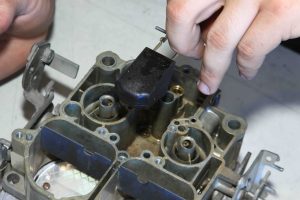
Addendum One –
Analog cars require more frequent maintenance of their fuel-delivery and ignition systems. The good news is this maintenance is fairly simple and often costs very little or nothing, if you are willing and able to do some basic stuff such as check/adjust ignition timing and make minor adjustments to the carburetor – which is a purely mechanical (as opposed to electronic) thing.
Carburetors require occasional (once a year-ish) cleaning and adjustment of their linkages (specifically, the choke mechanism) to keep the engine running smoothly and starting easily, especially in cold weather. These are things almost anyone who is able to do an oil change themselves can learn how to do. Once you have learned, you’ll never have to pay a dealer “technician” $100 per hour to “diagnose” whatever’s gone wrong with the electronic fuel injection system in a new car.
You’ll also have to remember to pump the gas pedal once or twice to set the choke when you first cold-start the car (and then wait the minute or so it takes for the engine to warm up enough to release th choke – by pumping the pedal once more).

Addendum Two –
Analog cars require your full time and attention. There is no Driver Assistance Tech. There are no Safety Nets. Cars made before the 1980s won’t even have ABS, never mind stability control. Their brakes are – usually – adequate, if you buy one that has disc brakes up front, at least. Most of the cars by the mid-late 1970s will have disc brakes up front but if you go older than that, you may be dealing with drums at all four wheels. Again, these are adequate, provided you pay attention and don’t tailgate the vehicle ahead of you. You’ll need to learn how to threshold brake – or at least, learn not to just stomp the brake pedal in a panic, which will cause the wheels to lock and the car to go into an uncontrolled skid. You’ll also need to learn how to control a skid, as when a car slips/slides because there’s snow or ice (or both) on the road. Analog cars do not have traction control. It is up to you to learn how to keep it under control when traction is lost.
You will also have to learn how to curbside park and start on a hill without rolling bakcward (if the car has a manual transmission) and probably also how to roll down the windows by hand, yourself.

Addendum Three –
Most analog-era cars are not as stable at high speeds and are easier to unsettle via sudden steering/braking inputs (as for example a sudden swerve to avoid a deer that bounded into the road) than modern cars. While there are a few exceptions – such as my ’76 Pontiac Trans-Am – most of the analog-era cars had vague, over-boosted power steering and suspensions that rode comfortably when driven at a languid, Chrysler Cordoba pace – but wallowed and dipped when weight transfer happened, as during hard braking. They should be driven with respect for their limitations, especially in the curves. This takes a mental reset if you have never driven a car from the Bwfore Time, because any modern car ca easily take a curve posted 35 MPH at 45 or even 55, so it feels easy and “safe.”
In a ’70s and older analog car, taking curves at speeds above whatever the posted (or recommended) speed limit is can be an education in the advances made in suspension/steering design since the ’70s. The upside is its easy to adjust and the majority of drivers of modern vehicles are already driving as if they were driving ’70s cars anyhow.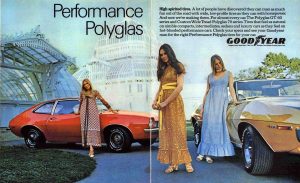
Addendum Four –
Some necessary parts may be harder to find. One example being new tires. Why? Because most of the cars from the analog era came with 14 or 15 inch wheels and most cars made since about 20 years ago come with at least 16 inch (more commonly, 18 or 19 inch) wheels and for that reason, there’s much less selection when it comes to tires made to fit 14 and 15 inch wheels. The upside is they are available and because they are not as popular, they are often less expensive.
You’ll also want to make sure service parts such as oil filters and brake pads/shoes are readily available. Odds are, they are. You can get almost any necessary part for an old analog car that was popular when it was new or that shares mechanical components with other models made by its manufacturer (e.g., Ford or Chevy) when it was new. If not at your local parts place, then online. Be aware, however, that cosmetic parts such as trim pieces and perhaps also rubber seals (as for the doors and so on) may be harder to find, especially if the vehicle you’ve got is one that was only made for a one or two model years. My ’76 TA’s mechanical things are shared with ’70-81 Firebirds (and also Camaros and other GM models from that era) but many trim pieces are uniquely 1976.
Addendum Five –
The stereo – if it even has one – will suck. So will the headlights, to get back to the beginning of this article.
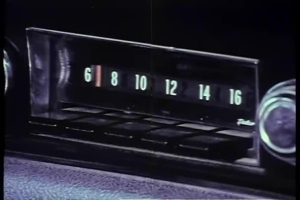
Most of the cars of the analog era came with an AM or AM/FM radio. Not a stereo. They are primitive even by the standards of the ’90s (which is 30 years ago). The upside is they are easily and relatively inexpensively replaceable with a stereo system as good or even better than what you’d get in a new car. You can even get an LCD screen, if you’re wanting that.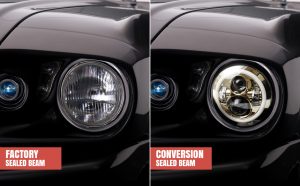
’70s-era sealed beam headlights also suck – relative to the blazing incandescence of modern car LED/projector headlights. But – again – the good news is it’s an easy upgrade to bring an analog car’s lighting up to modern incandescence, if you want to do that. You might find the analog era’s sealed beam units to be good enough and if you do, then you’ll never have to worry about spending more than about $25 to buy a new one.
. . .
If you like what you’ve found here please consider supporting EPautos.
We depend on you to keep the wheels turning!
Our donate button is here.
If you prefer not to use PayPal, our mailing address is: EPautos 721 Hummingbird Lane SE Copper Hill, VA 24079










Evening, Eric. The key to getting nice, bright headlights on your Firebird is to score a pair of H6024 LED lights. Yeah, they’re going to be more expensive than $25 bucks for good ones, but man you sure will see an immediate difference.
As far as analog cars in general – the market is hot for people scavenging older analog cars (1950-2000), and anyone that can take a fair-quality auction car and prep it for a top-dollar sale with some paint and engine work stands to make a tidy profit. People need to start buying and flipping cars again – the time is right.
Morning, Letmepic –
I actually don’t have an issue with the TA’s sealed beam units. They are adequate. My vision is still good so I don’t feel the need for blazing bright lights.
A few weeks ago, two pretty girls from the Make-A-Wish Foundation asked my 6-year-old grandson what he would like most in the whole world? A golf cart? — no problem!
Yesterday they returned with a cake and a brand new $13,900 4-seater electric golf cart. Lithium-ion battery ($4,000 to replace), regenerative braking, computer screen in the dash, backup camera, shoulder belts, Bluetooth, etc. — like a new car. Top speed is 27 mph — too fast for a 6-year-old to drive — and according to the sales manager, cannot be adjusted any lower.
I was expecting an old-fashioned design — ~13 mph max, with 3 or 4 12 V lead-acid batteries and an easy-to-replace $500 motor. Something the boy could drive himself and Papaw the electrical engineer could easily and inexpensively maintain.
The boy loves it and is grateful for it even though he can’t drive it himself — yet.
The rest of us are thankful that he is thriving and has a pleasant prognosis.
My slant-six 73 Duster was someone’s daily driver at one time.
It took some doing to get it running right, including undoing a few Caveman mods.
Then a new 1 bbl carb, removed ALL Calif emissions crap, replaced its electronic ignition module, new plugs, wires & cap.
With ethanol-free gas, it runs like a top.
The exhaust is incredibly clean.
A truly analog car, top to bottom.
Even its broken fan speed switch was repairable.
If I had to commute, it’d be my daily driver, in a heartbeat.
4-wheel manual drum brakes, though, so keep plenty of space in front!
I am ok with sealed beam lights, but I hate the power requirement. That sealed beam is the #1 reason my honda cb750 battery dies because old motorcycle charging systems get glitchy or dont charge in stop and go traffic. Prefer old halogen for that reason. I would put a led in there, but I hate how they look and I must have a glass lens. So sealed beam it is for now until a reasonable kit comes out.
Eric, you forgot to include rear-wheel drive and standard transmission. Oh, and do not forget the cigarette lighter and tray. I used to stash quarters (for the pay phones) in the tray just in case.
I’ll have to politely disagree on a couple things. Brakes, a mid size GM car with power brakes front disks properly equipped have awesome stopping power. My 79 Gran Prix with stock rotors got a set of Bendix Titanium pads, OMG. Saved my daughter when a DWO pulled out in front of her on her way to work. “My gawd Dad, Old Yeller saved me again! Those brakes are incredible! I don’t think my car (94 Camaro) would have stopped in time.”
Headlights, again the four lamp rectangular halogens I had in the 79 Pontiac were WAY better than any of our current rigs. 03 Escape, 18 Grand Cherokee. Since the high beams were independent of the lows, tweaking the aim was easy & my rural backroads for work commute lit up perfectly, way better distance than the newer plastic POS lamps. I’ll reserve comments on aftermarket LEDs, have not used them in the current rigs.
Wiring fixes. 79 Pontic lost power to the HVAC. Wiring diagram, then followed the wire in the car where it disappeared over/behind the instrument cluster to some hidden connector. Nope, found an open switched terminal on the fuse block, new wire routed to the HVAC control, never messed with it again 15 more years. Pontiac also fried the high/low headlight switch at the base of the steering column. After the second time I clipped that thing off and soldered the wire to the switch spade terminal, no more cooked connector. Rosin core electrical solder is your friend. 91 Silverado, HVAC dead one day. Thought it was the electronic controller, glad I had internet by then as the truck forum warned to not assume it was the box instead look for a cooked connector behind the glove box. Yep, big red wire and a fried connector. Again, clipped the wire bypassed the connector- solder, wire nut for protection, 3M elec tape around that. 12 years on no issues.
I’ve reached the point that unless a radical shift in the automotive industry happens, I will never again set foot in a dealership.
With the exception of the family mobility blob (2021 Explorer), the newest member of our fleet is a 1995 Jeep Wrangler – bulletproof straight 6, 5 speed, cold AC and virtually every part easily available via aftermarket. It and my ‘64 C10 (bulletproof straight six, 3 on the tree and literally every part available via aftermarket) provide me with ultra-reliable daily transportation.
Recently the mobility blob decided that the tailgate would no longer open due to a bad actuator. After replacing both actuators (just shy of $900 for parts) it still did not work, found out the dealership had to sync them with the computer for a mere $450 charge. OK, cash out my chips – I’m done here.
My 1958 Dodge D100 is a joy to drive.
Just purchase a car built between roughly 1990 -2010.
The sociopathic billionaire elite aka globalist elite and governments that want to be able to monitor EVERYONE and their whereabouts 24/7 will likely try to make it outright difficult if not impossible for the masses to get a truly analog car via making such vehicles or parts for them expensive or outright ILLEGAL If Democrats regain power on the national level, they likely WILL try to do so using the BS narrative of “Cliiiiiiiiiiiiiiiiiiimate emergency”, as just a few years ago, many Democrat politicians were the BIGGEST pushers of draconian COVID measures (lockdowns, mask and vaxx mandates) using the excuse “COVID emergency”.
My advice on driving an Analog car as a daily driver is to buy the biggest, most powerful battery you can find and seriously consider upgrading the battery cables to the next size up especially if the connectors look damaged or corroded.
My old car has sealed beam halogen lights but they still suck for night time driving but as it only goes to cruise-ins I just leave a little earlier so some daylight is left but if it was used regularly at night get LEDs.
A stand alone TBI unit might make sense but keep the old parts and be sure to drain all the old gas before storage. Spraying it all with WD40 will help keep corrosion off of it.
The aftermarket makes HEI ignition systems to fit almost all domestic manufactures from AMC to whatever and will allow you to bypass lots of factory wiring that might not be aging gracefully :).
You’ll probably have to do a fuel system rebuild to handle E10. E15 will probably be inevitable in the future.
The funny thing is that some 10 year old cars say no E-15. Yet GovCo says it’s all good……
Addendum 7
You need to learn or know basics about electricity and wiring.
At this point in their lives any car from the 70’s and 80’s has wiring that is suffering from some of the following:
Hardening and is no longer as flexible
Corroding – leading to voltage drops
Nicked, cracked, or shorted
Missing grounds
Or that has been ineptly repaired by previous generations of “mechanics” that thought:
Twisting wires together and wrapping with electrical tape is a sufficient electrical connection.
Using wire nuts in automobile wiring is acceptable
Soldering terminations leading to cracking and corrosion from flux wicking up wire strands.
Utterly incompetent crimping of hardware store low quality crimp connectors. Often not even crimped with a proper crimping tool.
Tap connectors used to splice into wiring that leads to corrosion, voltage drops, and cut wire strands from using the wrong size.
And yes, I’ve even seen phone jack connectors used. Ugh!
All true, “Barney”!
That said, the wiring of these cars is so simple and easy to deal with that a caveman could do it. Even if the factory main harness is toast, replacing it or working around it is easy enough. All the engine needs is a 12V power source to run the ignition and it’s easy enough to run a wire to the starter solenoid and then to wire up lights.
No body control modules.
“That said, the wiring of these cars is so simple and easy to deal with that a caveman could do it.”
lol
I get your point but the problem is the cavemen think they can do it and mess things up even worse. Every vintage car I have has had serious damage caused by Cavemen.
That’s true enough,”Barney”!
Still, I think the point stands that the wiring of these old units is much simpler and easier to deal with; more specifically, it can be dealt with (competently) by an individual with basic electrical/mechanical knowledge and basic tools. Modern CANBUS stuff, forget about it!
Completely agree with your point.
But in all fairness OBDII and CANbus makes a lot of things much easier. It’s not for everyone or maybe not even for most but it is within the grasp of a hobbiest if they are electrically inclined and taken the time to learn how it works and they have a basic OBDII Reader as X pointed out. My 97’ with OBDIi is a lot easier to dig nose than than my 92’ that utilizes the flashing light, Morse Code, error message nonsense.
I also 100% analog carbureted cars and those have their own nuances of electrical issues that pretend to be fuel issues and vice versa.
Not hard to sort the difference but you’d be surprised how many Cavemen can’t and end up hacking up wiring while chasing a fuel problem.
Aging motorcycles and wiring oh my. Buddy has a 2011 Harley, we are lucky to have a ‘dedicated to his craft’ Harley mechanic. Intermittent running problem with multiple causes, one being a TPS system wire that had fractured inside the insulation jacket, nice.
Guy at work inherited grandma’s vintage cherry condition, Buick. One problem the Palm Springs summer heat had cooked the wiring to where the insulation was brittle and falling apart. He was a sharp guy with mech/elec but he was constantly chasing electrical issues. He had a number of cars & sold on the Buick to someone that had the time to rewire the beast.
Addendum Six-
The HVAC systems of many analog vehicles, like stereos, leave much to be desired. Many did not even come with air conditioning, and most HVAC systems were analog. Of those that came with air conditioning, those systems often don’t work because the components that failed are hard to find and replace. What’s more, they used R12 refrigerants, which are legally problematic.
Fortunately, many analog cars come with good ventilation systems and options like wing windows that let the fresh air in. If you live somewhere like Florida or Arizona, aftermarket HVAC systems from companies like Vintage Air are available—which are also analog.
“What’s more, they used R12 refrigerants, which are legally problematic.”
Nope.
Plenty of R12 still around and available. If you know what you’re doing it’s easy enough to get the EPA cert to buy it legally.
And like any artificially restricted product there is also a functional black market.
Good to know: The air conditioning system on my 1968 Oldsmobile never really worked right…but when it did, it turned the inside of my car into an icebox.
Anyone else have experiences with old school car AC systems?
Yes! Converted the 91 Silverado to R134a about 10 years ago. Got a complete kit with compressor, receiver/dryer, R134A cycle switch that fit the dryer threads, hoses via aftermarket kit (think it was Classic Industries?). Came with a Sanden style compressor and bolts, bushings, spacers to fit the stock cast aluminum bracket. The stock R12 compressor was toast. I had to change serpentine belt size the stock was too long. Plenty cold, doesn’t take long to cool a two door standard cab truck.
Here in the Soviet of Washington you cannot buy over the counter R134a now. The climate insanity here knows no limits. So, bootleg it is. Idaho, Oregon still available at regular auto part stores.
Probably them more practical solution is to go with a late 1990s-early 2000s EFI car from the pre-touchscreen/pre-module/pre-three-cylinder turbo era. Working on those is pretty easy. Only a powertrain control computer that can easily be diagnosed with a $20 OBD II reader if it throws a code and typically with better build quality and reliability than the full-analog, carbureted cars of the 1970s and early 1980s.
Hi X,
I generally agree; however, it may be difficult to find electronic components for a ’90s-era EFI car. On the other hand, it is easy to replace the carb that came with a ’70s or ’60s car with a stand-alone aftermarket TBI unit that is “modern” and for which you’ll easily be able to get any parts you may need.
“ it may be difficult to find electronic components for a ’90s-era EFI car”
There are multiple, reliable business that specialize in testing, and component level repair of vintage ECU’s.
More often than not, the issue is leaky electrolytic capacitors that are easily repaired.
If the module came from something that was high volume and remains popular you will find multiple places capable of supplying ECU’s.
This is good to know, 91 Silverado with TBI here, original ECU. GM was smart to mount it inside the dash not the engine compartment.
Distributor is electronic, watch the trigger coil on these, teeny wires. I rebuilt the distributor when those wires started looking flakey. Make sure to use a distributor cap with brass. OEM cap was aluminum contacts which degraded in the damp Western WA climate and left a pile of aluminum/aluminum oxide all over the base of the distributor.
To go FULLY analog you’d have to go back to the era of breaker-point ignitions, which lasted until the early 1970s. By the late Seventies, even cars with carburetors and distributors had electronic ignition modules in lieu of points.
Another thing is that old shop manuals are still available online in hardcopy form. For $30-50 you can get all the info you’ll ever need for that ’75 Oldsmobile.
I’m not quite there yet as my newest vehicle is an ’07 Toyota, the oldest is a ’92 Miata. Living in a non-Rust Belt state helps, too.
Another option if you have the resources, make your own analog car. All the parts are available to make modern versions of analog cars including rolling chassis’s, full bodies of your favorite classic, and modern crate engines with fuel injection or carburetor.
Yep, I’ve been doing resto-mods for years. Pick the style you want to build, and pick whatever level of technology you’re comfortable with and go to town. This path is not suitable for very many people though, which is why most of the street rods you look at will be bought, not built. But even bought they are a better deal than a modern nanny-mobile.
“But even bought they are a better deal than a modern nanny-mobile”
True
Problem is very few have the cash to buy a well done $30k restomod. Most anks won’t loan on vintage vehicles and if they do they rape you for the privilege.
Even fewer have the skill or willpower to build their own.
Not trying to make excuses but it is what it is. I wish more would at least get something vintage and dirt cheap to atleast begin building their skills and to start the rebellion. That’s a big ask.