

Not everyone agrees that the 1964 Pontiac GTO was the first muscle car – and probably not everyone will agree that the 1979 Pontiac Trans-Am was the last muscle car, chiefly because the Firebird (on which the Trans-Am is based) was a pony car, originally designed to be a Mustang (the original and literal pony car) competitor.
But they bookend the era nicely.
The ’64 GTO was without question a muscle car. It was a mid-sized coupe (the Tempest was used as the basis for the GTO, just as the Firebird was used as the basis for the Trans-Am) powered by a big V8, originally the Pontiac 389.
It is true there were other – prior – cars that were similar in concept, such as the Chrysler “letter series” cars of the late 1950s and some go farther to the 1949 “Rocket 88” Oldsmobile, which had the mass-produced, first high compression V8 of the post-war era. But the GTO was the first muscle car that was marketed specifically at the youth market and it was without question the first one that sold in volume.
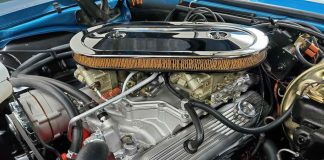
The ’79 Trans-Am – though nominally a pony car – arguably qualifies as the last muscle car, because it was the last American coupe to offer the last large-displacement, carbureted V8 engine paired with a four speed manual transmission. The engine was Pontiac’s 400 cubic inch V8 and it was the direct descendant of the ’64 GTO’s 389. These engines were basically the same engine, with a few minor differences. A 389 could easily be installed in a ’79 Trans-Am and a 400 could just as easily be installed in a ’64 GTO. The blocks and heads were dimensionally almost identical. But the relevant thing is the 400 was a large displacement, old-school V8 from the ’60s and early ’70s that managed to remain available – in the Trans-Am – until 1979.
The Chevy Camaro – sister car of the Firebird – lost its available big V8 (the 396) after 1972. Beginning with the ’73 models, the biggest V8 you could get in a Camaro was a 350. This included the Z28, which was the Chevy Camaro analog of the Firebird Trans-Am. 1974 was the last year for the other big engined pony car, the Dodge Challenger. 1974 was also the first year for the Mustang II – which at first wasn’t even available with a V8 at all. The Mustang II did eventually offer a V8 again, but it was a little 5.0 liter V8. After 1974, the Trans-Am (and its less ostentatious Firebird Formula stablemate) were the only American pony cars that were still available with muscle car V8s.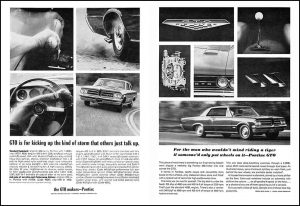
A curious thing about the Trans-Am, by the way, is that its V8 was too big to qualify for the race series it was named after. The Trans-Am series specified a displacement limit of 5.0 liters. That’s why the original (1967-1969) Camaro Z28 came with a small, 302 cubic inch (right on the 5.0 liter nose) V8. So also the Boss 302 Mustang. The first (1969) Trans-Am’s 400 cubic inch was too big – for the race. But not for Trans-Am buyers.
Big engines defined the Trans-Am from that first year – 1969 – all the way through 1979. For a few years – 1971-1976 – you could get a Trans-Am with a 455 cubic inch V8, a V8 as big as the biggest muscle car V8s. Bigger than most, in fact. 1976 was the last year for the 455, but Trans-Am buyers could still get the 400 right up to ’79, which made that year Trans-Am a kind of aurochs. The aurochs is a now-extinct species of European cattle that ran wild when Caesar was battling the Gauls. The aurochs was a big animal – much more so than modern, domesticated cattle and it had a ferocious reputation.
The ’79 Trans-Am 400 earned a similar reputation.
Cars so equipped had “T/A 6.6” on their shaker hood scoops while Trans-Ams with the more docile Olds 403 that most Trans-Ams had that year sported “6.6 liter” decals. The Olds engine – far more common – came only with a three speed automatic transmission while the last-call 400 came only with a four speed. This is the other thing that arguably crowns this car as the last true muscle car. Not that it came only with a manual – but that the manual was a four speed. Meaning, no overdrive. Meaning, it was not a highway car. It was a quarter-mile car, exactly like the muscle cars of the ’60s and early ’70s. It was built to jump more than to run. Without overdrive, the 400 was typically turning close to 3,000 RPM at 60 MPH. Redline was about 5,400 RPM. Like the muscle cars of the ’60s and ’70s, it was meant to get to be quick but it wasn’t very fast (top speed was about 130, all out) because of the mechanical limitations of a non-overdrive drivetrain.
It was, however, very fun – in a way that’s the unique attribute of a muscle car. The engine felt big and sounded big when the Quadrajet’s secondaries opened up and it belted out big-engine torque as well as more-than-the-advertised 220 horsepower. The actual number was around 260 – which was a huge number for 1979. The fact that you could only get it with the manual made it even more desirable.
There have of course been numerous performance cars since then. But there isn’t one that had a big, cast-iron V8 from the ’60s – fed by a big four barrel carb – and working exclusively through a non-overdrive four speed manual (with a factory Hurst shifter and no hydraulic-assist clutch, by the way).
A reviewer wrote of this car back when it was new that it shall not pass this way again.
The words are as true as they are sad.
. . .
If you like what you’ve found here please consider supporting EPautos.
We depend on you to keep the wheels turning!
Our donate button is here.
If you prefer not to use PayPal, our mailing address is: EPautos 721 Hummingbird Lane SE Copper Hill, VA 24079