

Have you heard about the recall of various GM EVs – the Cadillac Lyriq, Vistiq and Celestiq and the EV Chevy Blazer – on account of the things not stopping when their drivers applied the brakes? The brakes didn’t fail, per se. The electronics that control them did.
This is distinction is really important.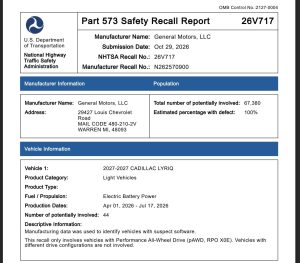
For almost 100 years, vehicles have been equipped with hydraulic brakes that until the mid-late 1980s had no electronic components at all. When you pushed down on the brake pedal, you were pushing a rod that (in turn) pushed a piston that was part of the master cylinder assembly, which held brake fluid in a reservoir. The mechanical force exerted by your foot was transferred to the brake fluid, which transferred it hydraulically – via fluid in tubular steel lines that distributed the force to all four brakes individually (with a proportioning valve making sure the braking force was distributed evenly to each of the four). More finely, the incompressible brake fluid pushed on the pistons inside brake calipers which then applied clamping force via brake pads acting on rotors; this slowed and stopped the car via friction.
Drum brakes work similarly.
The main potential failure point – a loss of hydraulic pressure due to a leak in the system – was greatly ameliorated back in the mid-1960s, when dual-reservoir master cylinders became standard in all new vehicles. These separated the hydraulic circuit into two circuits – one for the front brakes and one for the rear. If a leak happened with the front brake circuit, the rear circuit would not be affected and while stopping distances would of course increase, you’d still be able to stop. The same in reverse (i.e., if the rear brake circuit failed, the front brakes would still be fine). It is extremely unlikely for a hydraulic failure to happen to both sides at the same time – unless you are the target of a “hit” and someone deliberately cuts both lines.
In the ’80s, the first electronic element – anti-lock brakes (ABS) – were added to the mix. ABS uses wheel speed sensors to detect the rotational speed of each wheel and uses a pump to apply and release braking pressure automatically, which keeps the wheels turning even when the driver stands on the brake pedal, which in pre-ABS times would have caused one or more wheels to lock up and that, in turn, would cause the vehicle to go into a skid. A skilled driver knows to ease off the brakes just enough to avoid locking up the wheels (and so, the skid) but most people aren’t skilled and ABS serves to keep them out of trouble by keeping the car from skidding out of control when they panic brake.
Still, even with ABS, it was still fundamentally a mechanical-hydraulic system. If the ABS pump or wheel speed sensors failed, the brakes would not. You’d still be able to stop the car. More precisely, you’d still be in control of the brakes that stop the car.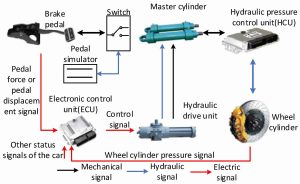
With electronically controlled brakes, you no longer are. The brakes are controlled by software; by programming. And by wire. The Lyriq and other GM EVs have brake-by-wire systems. This eliminates the the formerly physical connection between the driver and the brakes. More exactly, it takes away the driver’s control over the brakes. It works on the same principle as drive-by-wire throttle, which all new vehicles (not just EVs) have. Sensors register the deflection of the accelerator pedal and this data is interpreted by the computer, which then causes the speed of the engine to increase via electronic command. In the pre drive-by-wire days, the accelerator pedal worked a cable that ran to the throttle, opening and closing it mechanically.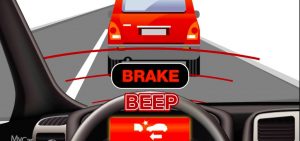
The cable could snap – or stick – but no computers were involved, so there was no possibility of a glitch causing the engine to suddenly rev to wide-open throttle and it was not possible for your desires as far as how much the throttle opened to be countermanded by a computer – as is now just possible but actual. Drive-by-wire throttle control is a key element of what they call Speed Limit Assistance “technology.” It “assists” you by preventing you from driving faster than whatever the speed limit is; the throttle dials itself back.
Drive-by-wire brakes work similarly. You push down on the pedal but it’s the computer that actually applies the braking force – supposedly in congruence with the amount of downward pressure applied to the brake pedal. But because it is the computer that’s in control, braking force applied is ultimately up to the computer, which can slam the brakes on whenever it decides it’s necessary (this is a key element of automatic emergency braking, which most new cars – EVs and otherwise – already have and all cars will be required to have by 2029).
Or not apply them when it is.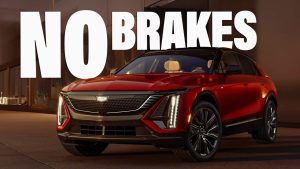
That’s what apparently has been happening with the recalled GM vehicles.
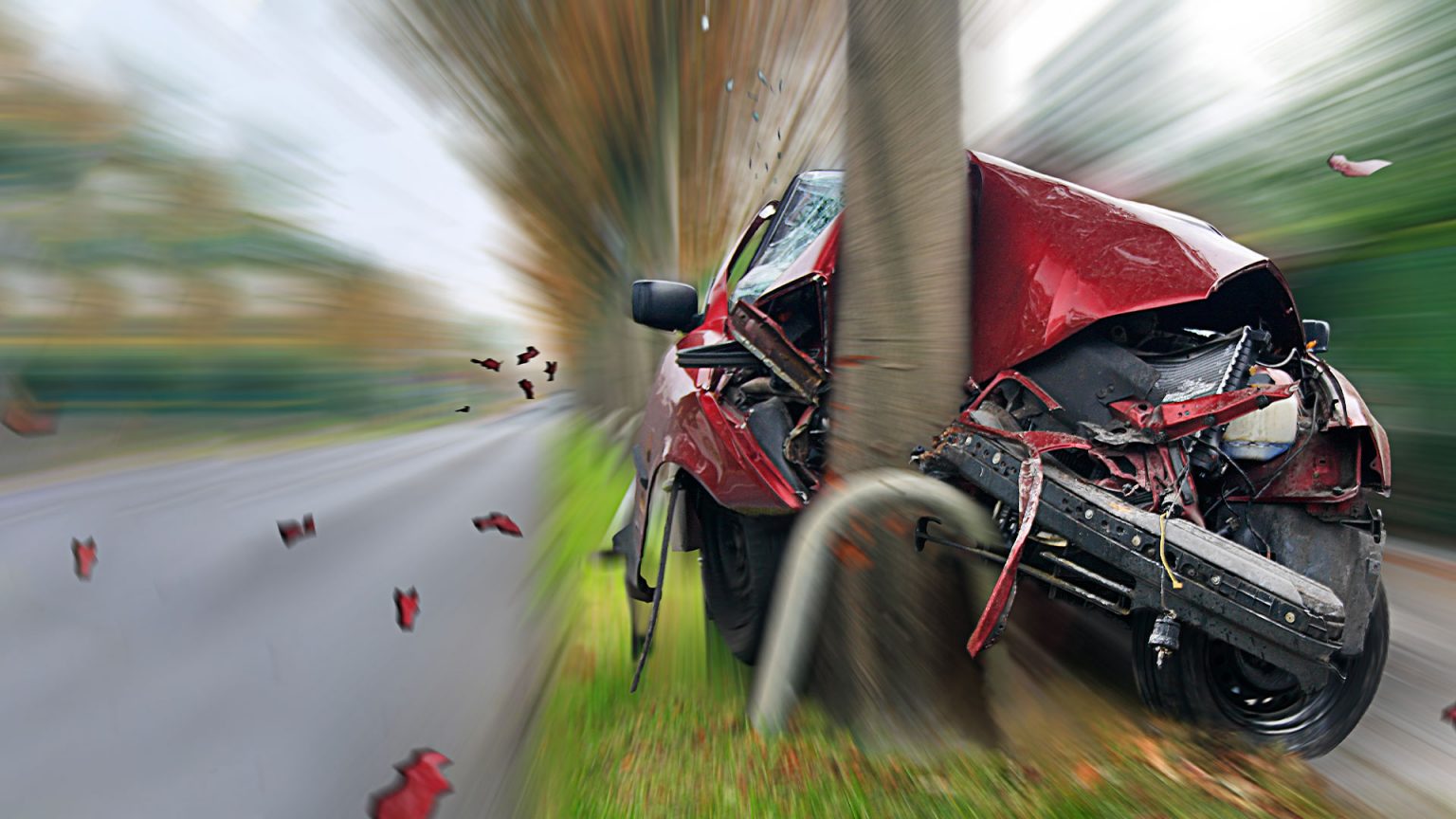
“GM is aware of 20 minor accidents due to the fault, two of which resulted in minor injuries,” says a news report. GM says the problem can arise “when the brakes are lightly applied at low speeds during a sharp turn and the vehicle encounters a bump or depression – such as at the end of a driveway – a momentary release and reapplication of the brakes may cause the software’s slip calculation to misinterpret wheel movement. In some instances, this may result in a temporary loss of braking. The phenomenon is unique to certain vehicles equipped with performance all-wheel drive (pAWD, RPO X0E) and is resolved when the brakes are applied again.”
If that makes you feel any better.
If you’re ok trusting a computer to control whether your vehicle stops when you need it to – or stops when it decides it needs to. If you are not ok with either thing, you have three model years left (counting this one, 2026) to get a vehicle that isn’t equipped with the “technology” that makes it so.
. . .
If you like what you’ve found here please consider supporting EPautos.
We depend on you to keep the wheels turning!
Our donate button is here.
If you prefer not to use PayPal, our mailing address is: EPautos 721 Hummingbird Lane SE Copper Hill, VA 24079