


Here’s a question for people considering the purchase of a battery-powered vehicle: Would you buy one if you had to pay full price for one?
More finely, would you be willing to spend the $7,500 part of the price you currently don’t have to pay when you buy a battery powered vehicle because of the tax refund available to people who buy battery powered vehicles?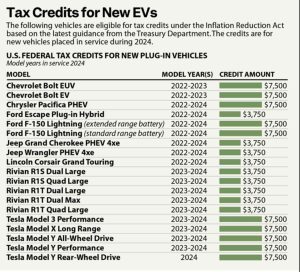
Probably not.
$7,500 back in your pocket (and so, deducted from what it actually costs to buy a battery powered vehicle) is a strong inducement to buy a battery powered vehicle. Especially the small handful of “affordable” ones that list for just under $30k such as the Nissan Leaf. Take $7,500 off the MSRP – a roughly 25 percent discount – and it might be worth the cost of not being able to drive very far and having to wait comparatively forever to be able to drive the thing again.
But it’s a strong negative inducement to know you’ll have to pay the full $30k for a device that can’t be driven very far and that makes you wait comparatively forever before you can drive anywhere again.
The fact that it is deemed necessary to bribe people to buy battery powered devices with tax refunds unavailable to people who buy vehicles instead says much about the merits of devices vs. vehicles. A century ago, it was not necessary to bribe people to trade in their battery-powered devices – yes, indeed, there were battery-powered devices 100 years ago! – in order to wheedle them into buying a new Model T Ford. Why was it not necessary? Because the Model T Ford cost less, went farther and didn’t take more than a few minutes to refuel. The same merits, in other words, that vehicles have today which devices still lack.
Yes, of course – today’s devices have “advanced” relative to their ancestors of 100 years ago. But not insofar as their fundamental problems are concerned. They go farther than they did 100 years ago; but not nearly as far as vehicles are capable of going. Only a small handful of new devices tout ranges of 300 miles or more – and even those that do only go that far if it is not very cold or hot outside and power-using accessories such as the AC and heat are not used and the road is mostly level and the driver drives with a light foot (obviating the high-performance capabilities most EVs tout).
It is common for vehicles – irrespective of type – to be capable of going 400 or more miles in between fill-ups and the driving range they tout is typically very accurate, regardless of conditions. Probably because when it isn’t accurate, serious repercussions – such as government-mandated recalls, buy-backs and class-action lawsuits ensue. Ask Hyundai.
But devices that do not deliver the range they tout get a pass – even from those who buy them, who are strangely willing to make excuses for their failure to live up to what they claim they’ll do.
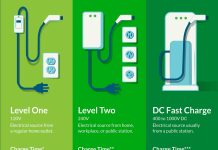
Recharge times have hardly improved at all over the past 100 years. They are “faster” at what are styled “fast” charging kiosks. But it’s still very low compared with how quickly a vehicle’s tank can be fully refueled. The word is italicized to draw attention to a fact that is routinely left out of the discussion by device apologists. It is that at “fast” charging kiosks, you can only get a partial charge – up to 80 percent of full is all. That is not every much when you recall how little range you had to start with.
Let’s say you start with a fully charged range of 300 miles. Eighty percent full is 240 miles. And then you have to factor in the fact that 240 miles of indicated range is probably 10-20 percent less than that, if it’s cold or hot out or the road isn’t flat and you want to drive even a little but faster than whatever the slow-pokey speed limit is. And you’ll want to keep in mind the need to have range in reserve – just in case you can’t charge up your device at the “fast” charger kiosk you planned to wait at for the 20-30 minutes it takes to recover a partial charge – because the kiosk is kaput and now you must drive to wherever the next one is
It gets old pretty quickly.
It did 100 years ago, too.
The difference, then vs. now, was that devices weren’t being pushed back then. And neither were cars such as the Model T. They each had to compete on the merits for the preference of buyers. Devices weren’t forced off the market, either. They simply lost market share to cars like the Model T because people – most people – decided that cars were superior to devices. But today’s devices are being forced onto a “market” that isn’t one for exactly that reason. Force and markets are mutually exclusive things. Put another way, if force has to be used to sell something, then there isn’t a market for that thing.
The irony of the thing – as regards the current situation – is that there might actually be a market for devices, if force were taken out of the equation. The force – of government regulations that must be complied with, hence the force – that prohibits the sale and so inhibit the manufacture of lightweight, low-speed, short-range devices. These could be manufactured and sold to people who don’t need or want to pay for a high-speed/highway-capable device for a third or less the cost of even the most “affordable” devices the government is forcing onto the market by dangling $7,500 tax kickbacks in the faces of prospective buyers.
Sensible battery powered vehicles such as those available in China and elsewhere are illegal to sell or even drive here.
This says a lot about the true motives of the pushing of devices that are not sensible. Heaven forbid teenagers, first-time buyers or just anyone who wants a cheap, basic vehicle that’s adequate to get them 50 or so miles and back on a charge have access to that.
Because then they’d be free to drive – and that’s what the pushing of EVs is intended to end.
. . .
If you like what you’ve found here please consider supporting EPautos.
We depend on you to keep the wheels turning!
Our donate button is here.
If you prefer not to use PayPal, our mailing address is:
EPautos
721 Hummingbird Lane SE
Copper Hill, VA 24079
PS: Get an EPautos magnet or sticker or coaster in return for a $20 or more one-time donation or a $10 or more monthly recurring donation. (Please be sure to tell us you want a magnet or sticker or coaster – and also, provide an address, so we know where to mail the thing!)
If you like items like the Baaaaaa! baseball cap pictured below, you can find that and more at the EPautos store!







At the turn of the last century, it was a serious question which technology would win out due to its innate superiority.
Battery electric, with its short range and need for abundant, reliable, cheap electric charging power, but its amazing simplicity, prodigous torque, and quietness, was one contender. Their great weigh and cost were impediments to widespread adoption. Some things never change.
Steam power with its amazing simplicity, prodigous torque, quietness, and ability to go long distances once the extended firing up period had been done, was the second contender. Steamers could be light, could be driven and even raced cross country, and could be fired on a variety of fuels to make their steam. Exploding boilers however were a high profile drawback.
The last and unlikeliest contender was the noisy, smelly, explosion prone liquid fueled IC engine, which was dangerous to the user due to cranking kickbacks while starting, and its other complexities and idiosyncracies. It lacked the effortless torque of the electric or the steamer. But by the early teens the electric starter (and lights), reduction gearing, and a growing support industry (gas stations and parts houses) had made the unlikely IC engine the clear winner.
If governments were serving the public as they should, there would be no licensing for light and low powered vehicles, say below 50HP and 2000 lbs. Instead there is the corrupt democratic wrangling over stolen loot and zero respect for rights. All because the people were too cowardly and craven to jealously guard their liberties.
The $7,500 “credit” from the (((FEDGOV))) is stolen from the rest of us taxpayer subjects.
The real difference would actually add at least $10,000 to $12,000 in pre-tax income costs for an individual.
Those are funds which could be spent on various savings or health plans to avoid further taxes(theft).
The whole grift reminds me of cash for clunkers, only in reverse….
Well, the $7,500 credit is simply a reduction of taxes that would otherwise be paid by the individual. That in turn causes the federal deficit to be larger than it might otherwise be. Of course, the gubmint just prints its own dollars out of thin air, so that missing $7,500 ends up being “paid for” with inflation and its consequential reduced buying power of the dollar.
What an absolutely dreadful system they’ve concocted to stealthfully steal from us.
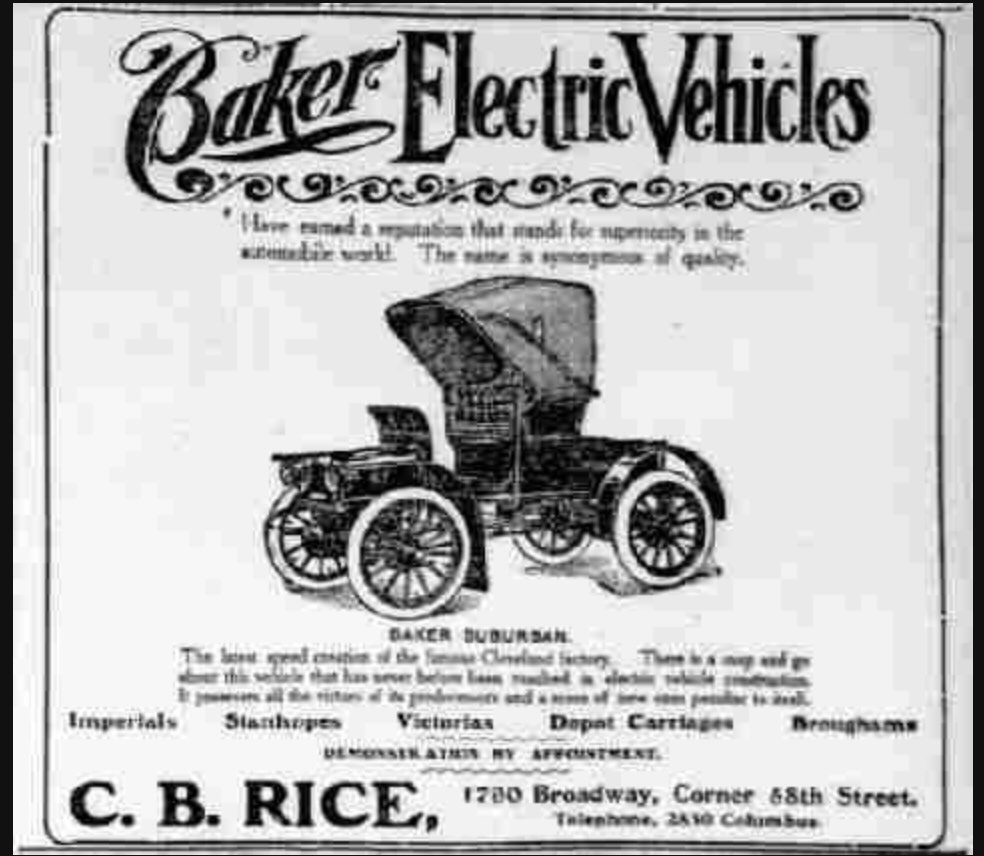
The Baker Electric was, in 1900, intended to be an URBAN vehicle for city dwellers, particularly well-to-do city dwellers. Baker Electric made no bones about that.
If you were a well-to-do city dweller in 1900, you could afford to pay full retail price for a Baker Electric. Chances are, your city was served by electricity, and you could afford to have your house wired for electricity, not to mention the charging station.
The Baker Electric was superior to the two most popular modes of transportation in 1900: horses and streetcars. It was simpler, less expensive, and cleaner than a horse—and it was easily controllable. It was private—no mingling with the riff raff on the streetcars, and it ran on your schedule.
It was even superior to IC vehicles in that you didn’t have to crank it, it wasn’t noisy or smelly, it didn’t scare horses, and it was simpler.
The only mode of transportation that the Baker Electric came up short against was trains—so for any distance greater than 10-20 miles, you took a train.
But if you lived in a small town or the country, a Baker Electric didn’t make sense. You may not have had electricity, and the nearest town may be dozens of miles away. A Model T Ford DID make sense.
And as IC vehicles became less noisy, less smelly, and easier to operate, they proved to be far more capable than electric vehicles, and the market favored gasoline and diesel powered vehicles.
Saw a new Dodge Ram 2500 Black Widow (?) in the parking lot at work. Still had the window sticker on it. $123,000. Someone has more money than sense. Or they’re neck deep in debt. Depending on the interest rate and down payment, at 7 years that’s anywhere from $1500 – $2500 a month for a freakin’ truck.
It’s fairly simple. Governments are not happy unless they are beating you down.
Its now well established – particularly since 2008 – that FedGov decides winners and losers and creates markets where they wouldn’t organically exist.
Hence why it uses its own RICO statutes to selectively & arbitrarily determine who is or is not a racket.
Kind of like how pro sportsball leagues enjoy their status of being exempted from anti-trust laws.
.Gov having an army of lawyers, low IQ AGW goons and a money printer means never having to explain or apologize.
‘$7,500 back in your pocket’ — eric
Once GovCo imposed an income tax, it began using deductions and credits as carrots and sticks to mold the behavior of
serfstaxpayers.Today, a furious debate over whether the SALT (State and Local Tax) deduction cap should be raised from $10,000 to $30,000, or even $100,000, may sink the RINO party’s Big, Butt-ugly Bill (BBB) next week.
Coincidentally, those are the same initials former ‘president’ F. Joe Biden used for his Build Back Better act (though I always called it Build Botch & Bugger).
For those who weren’t paying attention, the lesson is that there’s only one Uniparty. And it is laughing up its sleeve at us, at it runs this dying empire into the ground.
If there’s anything that has become obvious just over the past few years, it’s that government decreed mandates are NOT about what they’re claimed to be about. Just look at the mask mandates that numerous governors and even the Biden Thing decreed. The whole COVID response from government wasn’t about “Protecting Public Health”, it was instead government testing how much tyranny they could impose on the masses, and for a while it seemed that it would go on forever and progressively metastacize. Mandates are also one way for certain industries such as Big Pharma to make LOTS of money. Just look at the various vaccine mandates throughout the country for children to go to public school in addition to the COVID vaxx mandates that authoritarian governments tried to ram through for adults AND children.
As for EV mandates being pushed by some states (in addition to the former Biden regime), I can’t help but wonder if there’s some industry somewhere that stands to make LOTS of money off of government efforts to force people to buy EVs. The billionaire sociopaths pushing all sorts of insane things sure stand to make LOTS of money pushing the cliiiiiiiiimate change nonsense.
I understand what you’re attempt saying device vs vehicle. You might consider using automobile for a proper liquid fuel vehicle.
Electric vehicle is a correct term. But device could also be used for the gasoline cars they make today, having many of the offensive features of ASS, a ton of LCDs, ability to be remotely turned off…
Gun held to my head, I’d take a Baker EV over a 2025 Chevy. At least with the Baker you and only you are in control of the vehicle. And it doesn’t try to be anything more or less than what it is – a vehicle to get you from here to there.
True, and unlike the computer-on-wheels we have today, at least the Baker EV could ostensibly be repaired and fixed by the owner.
To paraphrase George Carlin – the public sucks.
They want you to subsidize them. Their wants and outweigh your needs.
They aren’t afraid to use the coercive force of the government to get what to get what they demand. It is your responsibility dear taxpayer to pay for what they want.
They proudly proclaim how they don’t believe in Jesus Christ, the underlying morals of Christianity, or silly religious stories.
Yet, they fully buy into the worship of “democracy” and the State. They fully buy into the religion of climate change and believe EV’s are our salvation. They fully expect you to pay to indoctrinate their children and everyone else’s via government schools. They expect you to pay for their beliefs and their new EV via tax policy. Your “fair share” is never enough.
Yeah the public sucks!
You raise an interesting point: When you stop believing in and worshipping God, by which I mean God in the Judeo-Christian faith tradition, it doesn’t mean you believe in and worship nothing—it means you believe in and worship anything.
To fill that God-shaped hole, the two things people believe in and worship are government and nature. It was true in the Bible and it’s still true today. When that happens, the public sucks.
When the public believes in and worships God, the public sucks a lot less.
‘Judeo-Christian’ is an oxymoron. It conflates two unlike things as if they had something in common. Some consider it offensive.
Agree.
Judaic doctrine explicitly rejects Christianity. Jews believe that Jesus as a divine being who was the only begotten Son of God never existed, or, if he did exist, he was a flawed mortal who jump started a radical cult, has been the bane of Jews throughout modern history, and currently burns in a vat of fire and feces.
Traditionally evangelical Christians believe that Jews will burn in Hell unless they come to Jesus, accept baptism, and are saved. Today many evangelists, Pastor John Hagee and the late Pope Francis, no longer seem concerned about converting the Jews, because they are a “chosen people” and “our seniors in the faith.”
These two belief systems do not mix. .
Fuck hope!
The funny thing is that the Baker was a simple, short range vehicle. There’s a YouTube video of a Baker that was restored and the owner uses it for shopping and such. Analog technology and golf cart batteries and simple to work on. The funny thing is that China makes a modern looking version of these with lead acid batteries, no power options but you’re not allowed to use them on GovCo roads, funny thing is that in France they are legal. Sure it would be a niche market vehicle but if it works why not use it.
I object to EV subsidy’s as it is unethical to tax other people to give to another person to spend. I have the same opinion when it comes to foreign aid.
Jay Leno has one.
https://www.youtube.com/watch?v=OhnjMdzGusc
Oh, but Eric! The free market™ isn’t nimble enough to bring costs down in time to head off global warming! (sarcasm)
Never mind that the federal government failed to build any charging stations with the “inflation reduction act” money. But let’s not be too hard on the feds. The existential crisis can’t get in the way of DEI initiatives, so unfortunately the “free market” failed to supply enough transexual women of color willing to be founders of a charger company startup, so that charging station money was never spent.
Same issues abound with EVs. If the goal was to provide competitive products, let the engineers have at it and you’ll get something pretty quickly. Might even have some use cases where it could be superior to ICE drivetrains. But instead they have to fit into an existing bloated bureaucratic design that won’t ever be efficient enough to work with lithium battery tech at an equivalency to gasoline. Just not gonna happen. The government forces prices up then hands out money to counteract the government forces.
“[I]f force has to be used to sell something, then there isn’t a market for that thing.” Eric Peters May 15, 2025
This is your epigram for the ages. Well done.
And, you are correct about a market for slow, limited range EV’s. Just google “golf carts of The Villages” and click on images. It probably has the most custom EV’s on the planet (along with the most GovCo retirees and the highest per capita rate of STD’s…there’s got to be a connection)
Even some coastal towns have legalized golf carts for the street. It makes sense but, we can’t have that, now can we.