



It’s almost 2026 – and it may almost be the end of the line for at least three brands, if 2026 doesn’t turn out to be a very good year for them. Which brands – and why? Let’s start with the obvious one.
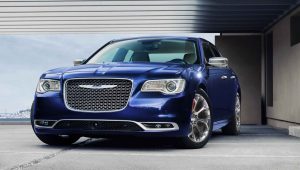 Chrysler is hardly even a brand now. It is a minivan. The Pacifica is the only new Chrysler model sold by Chrysler and that’s not going to keep the brand going for much longer because it can’t. The last other-Chrysler was the 300 sedan and it’s been gone for going on three years now because 2023 was the last year it was available. It got pulled off the floor along with the Dodge Charger it shared its platform with; the 300 was basically a more luxurious version of the Charger. It was a strong seller for almost 20 years, going back to the 2005 model year when the first one made its debut as Chrysler’s first rear-drive sedan in decades. It heralded a return to what used to be considered American cars – because American cars were once commonly large, rear-drive cars available with big V8s.
It was also affordable, which is why Chrysler sold a lot of them. The 300 was comparable in its layout to a Mercedes E-Class sedan or a BMW 5 Series but far less costly; you could get a 300 with a V8, too – which Mercedes and BMW stopped even offering in the E-Class and 5-Series years ago (excepting extremely rare and haltingly expensive AMG and M versions of those models). The Benz E and the BMW 5 came standard with four cylinder engines – and still do – while you got a big V6 standard in the 300.
But the 300’s engines were seen as a problem for Stellantis – Chrysler’s owner. Stellantis wanted to “electrify” the brand to avoid having to buy carbon credits from Tesla as punishment for selling cars with engines. Stellantis planned on replacing the 300 with its own iterations (plural) of a Tesla – creating a new, “electrified” brand. The plug got pulled on that plan, however – chiefly based on the unmitigated disaster that the launch of the electric Charger has proved to be. Stellantis can see that if Dodge can’t sell an electric Charger, then Chrysler isn’t going to be able to sell the same basic thing, either.
So where does that leave Chrysler?
There is nothing in the pipeline because what was in the pipeline has been kiboshed before it even reached Chrysler stores. It is possible an engined iteration of the Charger that was supposed to be electric only will be rushed into production to give Chrysler dealers something else to sell – besides the Pacifica minivan. That’s something that might actually save the brand – assuming Dodge doesn’t go under – because the inline six cylinder engine Dodge is going to offer in the 2026 Charger would actually be perfect in a Chrysler because inline sixes are smooth and quiet and so perfect engines for luxury-brand cars. Mercedes and BMW offer such engines in their luxury cars.
But they are a problem in muscle cars, which brings us to our second Dead Pool candidate.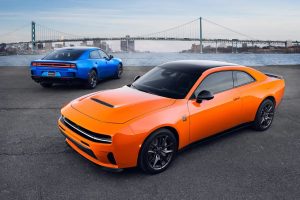
Dodge still has a lineup of models to sell; the problem is that most of them aren’t selling very well – especially the “electrified” Charger, which has had the same effect on Dodge as a brand that the iceberg had on the Titanic. Dodge buyers don’t want a Charger with a battery and motors; they want one with an an engine. It is difficult to sell people what they don’t want, which is why the electric Charger has not sold.
Dodge finally sees this and is rushing an engined Charger into the mix for 2026. But the engine isn’t a V8 – and that’s a problem because the Charger has always been marketed as a muscle car and muscle cars are defined by the rumble of a V8. With anything less than that – no matter how powerful – you have a performance car, which is a different kind of car. 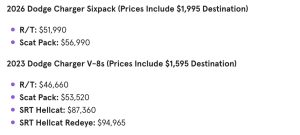
The other problem – which may prove to be the fatal problem – is the price. When Dodge replaced the old Charger with the new (electric-only) Charger, the base price increased by nearly $20,000. That problem has not been addressed. The 2026 Charger with a six cylinder engine will cost as much to start as the previous (2023) Charger did with a V8. There will be no equivalent of the old V6 Charger, which could be bought just two years ago for $33,200.
The base price of the ’26 Charger will be $51,990. 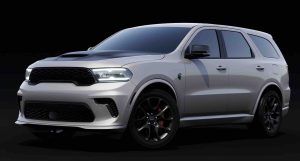
That is one Hell of an upsell. It renders the Charger the price-equivalent (almost) of a Mercedes E-Class or BMW 5 Series. How many Dodge buyers can afford a Mercedes or BMW price-equivalent Dodge? Making matters worse – for Dodge – is that the current Charger is a coupe and so far less practical than an E-Class or BMW 5 Series sedan. A coupe is also useless as a cop car, which means no fleet sales – which used to be a cash cow for Dodge.
That leaves Dodge with a boutique high-performance coupe that probably won’t sell very well, a small crossover (the Hornet) that’s selling so poorly Dodge is already considering cancelling it – and the Durango SUV.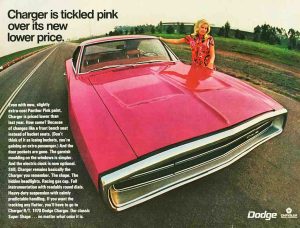
The Durango might keep Dodge afloat because it is the only new Dodge model that is still like the old Dodge models – because it is old. The current model dates back to 2011, which is why it still comes standard with a V6 – and it is still available with a V8. It is also affordable – $38,495 – which in today’s context is a steal. But is the Durango broad-shouldered enough to keep Dodge around for long enough to correct the other mistakes until they can be corrected?
We’ll know the answer soon enough.
Then there’s VW. 
Everything began to go the wrong way about ten years ago – when VW didn’t fight its persecution by the government over its “cheating” on federal emissions certification tests, which it was guilty of doing. So is every other vehicle manufacturer. They all program their vehicles to pass the test, which is exactly what VW did. Which is why its TDI diesel-powered vehicles passed the test. For this, the company was basically dragged through the streets, to be jeered at by the mob prior to being publicly crucified. 
Actually it wasn’t for this. It was because VW’s diesels posed such a threat to the EV Agenda that was around that time just getting rolling. The government understood that if people could choose between a $50,000 EV and a $22,000 TDI, they’d make the wrong choice, insofar as the government was concerned. So a “case” had to be trumped up that VW’s diesels were unclean – in order to get them off the market. 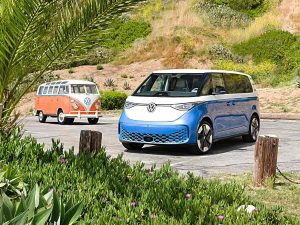
VW did the Ned Beatty – look, we don’t want any trouble here – and vowed to sell nothing but “clean” EVs going forward and “invested” heavily in them. Also in other-brand EVs, such as the ongoing “Scout” malinvestment that is going to cost VW more billions it cannot afford to lose. On top of the losses incurred so far trying to sell EVs such as the ID Buzz, which starts at $60,000 – as well as other iterations of the ID line that have not created much buzz.
VW is the world’s largest car company and it hasn’t bled itself white just yet. But it is bleeding – and if the bleeding isn’t staunched, it could mean the end of VW. To avoid that end, VW must get back to being VW. It must resume selling affordable, sensible cars – like the TDI powered models it used to sell. There is still time to do that.
But the clock is ticking.
. . .
If you like what you’ve found here please consider supporting EPautos.
We depend on you to keep the wheels turning!
Our donate button is here.
If you prefer not to use PayPal, our mailing address is:
EPautos
721 Hummingbird Lane SE
Copper Hill, VA 24079
PS: Get an EPautos magnet or sticker or coaster in return for a $25 or more one-time donation or a $10 or more monthly recurring donation. (Please be sure to tell us you want a magnet or sticker or coaster – and also, provide an address, so we know where to mail the thing!)
If you’d like a Baaaaa hat or other EPautos gear, see here!









Eric, the late Chrysler/Dodge duo of luxury sedans with a “smidge” of performance, the 300/Charger, was done before, and during, of all times, the MALAISE ERA, when ol’ Mopar was financially on the ropes, knowing what they NEEDED to do to change with changes in the American market which were happening a lost faster than Detroit’s ability to adjust to them, namely, the contrived “energy crisis” of 1973-1974. I refer you to the famous Chrysler Cordoba, pitched by the late Ricardo Montalban with the “Corinthian Leather”, and its lesser-known Dodge sibling, the Dodge Charger SE. Oh, there was a “red-headed stepchild” of the same 2-door B-body platform, the Plymouth Fury (the C-body “boat” now termed “Gran Fury”, which soldiered on until 1977 and mainly went to police fleet sales, as its popularity as a “family car” was waning), which took the B-body platform of the Plymouth Satellite, especially the smart-looking Sebring that sold well from 1971 to 1973, then was virtually ignored for 1974 as, like most “mid-size” like it, buyers even though it too “Gas-guzzling” in favor of compacts and/or smaller imports.
The end of the 1960s and the “muscle car” era hadn’t been kind to Chrysler Corporation. Oh, their cars sold well, but over half of their sales were the “compact” A-body cars (Dodge Dart/Demon, Plymouth Duster/Valiant) on a platform that was over ten years old and starting to show its age. They simply weren’t all that profitable. The newer young families weren’t having so many kids (though far more than what we see today), so demand for those C-body “battleships” and wagons was drying up. Furthermore, even their ‘top shelf” Imperials and Chrysler New Yorkers just didn’t have that “zing” anymore with older, affluent buyers, who were even beginning to eschew Caddys and Lincolns in favor of “Benzes” and “Beemers”. These had been Mopar’s “cash cows”. It was the 1973 oil crisis where it wasn’t simply a matter of gasoline suddenly increasing in prices at the pump by nearly double in but a few months, especially in wake of the 1973 Yom Kippur War and the Oil Embargo that OPEC put on to put the screws on Isra-Hell and its supporters (there were SOME who had the balls to stand up to them!); it was AVAILABILITY, price be damned. For the first time in nearly three decades, since the days of WWII gas rationing and the “A” cards, one couldn’t just send the teenager with the sled down to the corner gas station with a picture of “Dishonest Abe” and tell him to “fill ‘er up” and spend the change on a soda and candy bar. “Even and Odd” days. Well, this was like a pre-emptive nuclear strike on the American motorist! Suddenly, big cars, of ALL four major American car makers, went BEGGING, and VWs, Datsuns, Toyotas, as well as Darts, Valiants, Novas, Pintos, and AMCs oddball line of Gremlins and Hornets were heavily in demand. Indeed, that gas crisis is what gave AMC a “stay of execution” for another thirteen or so years.
Well, Chrysler didn’t just stop production of the C-body cars; they still were what police fleets wanted, and Mopar made good money with them, so the “civilian” versions still were rolled out, just in lesser and lesser numbers. The Imperial line was dropped, it became basically a higher trim of the New Yorker/Newport line. Dodge (Royal Monaco) and Plymouth (Gran Fury) were still also put out in civilian trim, but as these models were the ones that law enforcement agencies bought, they were marketed as afterthoughts. What Mopar did was clever, especially as the gas crisis eased off and the 1974-1975 recession (remember the WIN button? You don’t? Good, it was idiotic…) had run its course, they moved their long-stand “full size” badges of Dodge Monaco and Plymouth Fury to the “B” body mid-size, which for Plymouth, was a return to what the Fury had been from 1962 to 1964, back when Mopar misinterpreted a brief American fad with small imports in the late 1950s and early 1960s, a “beatnik” thing, if you will. It was also decided to introduce the first Chrysler model that wasn’t considered “full size” then (by today’s standards, it’s a TANK), the Cordoba, as a personal luxury car, and it was a hit. This was a great call that probably did as much to keep Mopar from going under as Lee Iaccoca and his later much-ballyhooed “K” cars and minivans; by using an existing body platform and engines/drivetrains to create a “new” line. Well, what do to with Dodge and Plymouth 2-door B-bodies? The four-doors weren’t a problem, as a four-door sedan version of the ‘Doba was wisely nixed, and like the bigger C-body cars, they also had a big enough market in “squid cars” to justify keeping them in production. The Plymouth Fury did come as a 2-door, I had a ’78 with a 360 four-barrel in the mid-1980s, I wish I had it back! It was still only in somewhat basic trim, as Chrysler had rejected a “Sebring” trim that they figured would only compete with the Cordoba, as most Chrysler dealers also sold Plymouths. As for Dodge, well, the Charger, now de-fanged with “smogger” engines (the reason also why the E-body Barracuda/Challenger line was dropped after 1974, along with fuel economy concerns), had no future as a “muscle car”, as they weren’t “politically correct” (and insurance companies were lobbying them out of existence anyway), so the 2-door B-body was reimaged as the “Charger SE” for Dodge. While this wasn’t quite as well-known as the ‘Doba, save for trim and upholstery options, it was really the same vehicle were it counted. Dodge sold enough of them even in that quite awful 1975 model year to keep this model going through 1978; when, save for the limited run of leftover ’78 Magnums, the B bodies were dropped entirely, and it even got the “leather” for 1976 onwards, just not from “Corinth”.
Chrysler had always intended to phase out the A, B, and C bodies, in favor of the F, J, M, and R platforms, which also shared quite a few more components, simplifying productions and reducing costs. However, the “F” body Dodge Aspen/Plymouth Volare got a very bad rap for poor quality; it didn’t help also that Mopar was fiddling around with that “Lean Burn”, which worked great in the lab, but was a dismal failure in practice. That first system of computer control of an engine was simply way too ahead of its time and Mopar fumbled its support badly. The “M” bodies were simply the longer wheelbase versions of the “J”, but at least Chrysler got what was really its first “compact”, the LeBaron, though by then THAT was considered the “mid-size”. As of 1982, wagon and 2-door versions of “M” bodies were dropped, leaving only the four-door sedans of Chrysler (Fifth Avenue), Dodge (Diplomat), and by then, Plymouth Gran Fury (a plan to have an extended K-car Plymouth as the eighth generation of “Fury” was shelved), the last being more the police car, I had an ’88 Diplomat with a rare 360 (it’d been “imported” from Nevada, and with only 44K miles when I got it in late ’94, the E58 LA engine not being released for civilian use and not in CA cop cars) which had feeding the fuel a Rochester “Queer-Jet” (Quadrajet), as Carter had gone out of business in 1984! The R-body, which was Mopar’s last attempt at a “full size”, considered a flop by Mopar enthusiasts (Chrysler Newport/New Yorker, Dodge St. Regis, and, for 1980 and part of ’81 only, Plymouth Gran Fury), it had the basic length of the erstwhile B-body, though it was roomier inside AND quite a bit lighter, but, its TIMING couldn’t have been WORSE. Selling rather decently for the first part of the ’79 model year, the Iranian revolution hit, as well as the second “gas crisis”, which saw gasoline go to over $1/gallon (if only we’d KNOWN…), and ALL large American cars were eschewed by car buyers, who now had better Datsuns, Toyotas, and now HONDAS to choose from, as well as VWs and other Euro imports. Even Detroit had “seen the light” and the Big Three, Mopar especially, had rather extensive lines of “captive” imports. The L-body Dodge Omni/Plymouth Horizon had a VW-supplied drivetrain, and their Dodge/Plymouth Colts were just rebaged Mitsubishi Sunrises. The Dodge D50/Plymouth Arrow were quite popular mini pickups, same as the Ford Courier (a Mazda product) or the Chevy Luv (an Isuzu). But all this spelled the end of most of the FWD lines, as the R-bodies didn’t generate enough “civilan” sales anymore to justify keeping them going as cop cars, the M-body cars would do that quite well and commonly throughout the 80s. The F-bodies were quickly dropped, as had Ford and GM with their similar lines, GM in favor of that ill-fated X-body line. The J-bodies were quite smart 2-door luxury cars (second generation of Chrysler Cordoba, Dodge Mirada), but neither simply got the “love” that their predecessors have, and they were dropped after 1983.
VW and Chrysler, 2 of my favorite brands. I have always got a good deal on them because of the bad reliability reputation but have been excellent in my hands. Hope they pull through, I don’t pay up for Toyotas and such.
I don’t see Nissan and Mitsubishi being around much longer either.
I hear Nissan will bring back the Xterra, they’re planning to do it right.
https://www.youtube.com/shorts/n_6IWSkLj9w
Another issue is that all things Mopar (Chrysler, Dodge, Jeep, Ram, FIAT) don’t exactly have a stellar reputation for quality, reliability, or longevity. Now this reputation may not be totally true or totally deserved, but I see far more 10-15 year old Toyotas, Hondas, and Subarus, and even Fords and Chevys, than Mopar vehicles. Overcoming that reputation is not going to be easy.
I usually don’t beef about quality, my older American stuff rolls along minimal issues. My experience has been failure once past any early mortality factory screwups, is mostly owner negligence.
However the 2018 Jeep G C is breaking that pattern. At 80k miles the already ‘replaced under warranty radiator’ is getting smelly just like the original did back at 36k. The key fob has never been the same after battery replacement, remote functions are hit or miss and the occasional “Fob has left the vehicle” warning pops up. I took it apart for the 4th time, cleaned and really bent the connectors so it’s now been OK for 3 days but I don’t trust it. The touch screen ‘ghost tunes’ randomly new screen is on order. All three issues are common per a cruising of the Jeep forums.
Meanwhile the 20 plus year old fob for the ‘03 Escape works perfect, it has all the original cooling system parts and there is NO screen to fail. The ‘91 Chev truck lost the original radiator back in ‘98 the aftermarket composite/aluminum is defect free all these years later, the museum quality manual locks work just dandy and the only screen is on the aftermarket Sony (the one and only) radio unit.
No wonder most of us want nothing to do with “shiny new baubles”.
Depends on a lot of factors, some stuff is great, some stuff probably would be ok but it’s poorly assembled or made extremely cheaply or both, sometimes the individual components are great but they don’t work well together as a system, sometimes the concept just looked better on the drawing board than it does in practice.
I do think generally that Japanese designers has an edge when it comes to making all the parts work together fairly seamlessly into a larger system. But Detroit is perfectly capable of designing great stuff, they just don’t for any of a number of reasons. Corporate constraints are a major factor.
Dodge was a nothing brand in the 80s and 90s, until they brought out the Magnum wagon and the gen 2 truck. They made a splash and were doing great with the Charger, Challenger, Hellcat, 392, Demon versions. To my mind, they were killing it.
Now, Dodge may go away and I wouldn’t be surprised to see the Durango take on the Ram name and only trucks/SUV being left. Serves them right for pissing on the customer.
As for quality – hit & miss.
I recently acquired a 2006 Corolla, a stripped-down “LE” model with but 58K miles on it, as a second car, and am quite happy with it. This thing I can WRENCH.
That so many words have been thrown about here to worship at the altar of the V8 muscle car and then we get the graphic of the 70’ Challenger . . .
“Dodge Challenger the sports car that knows how to treat a lady.”
Oh, the irony.
Bwahahaha
Hi BID,
To be technical and pedantic about it, the original Challenger was a pony car – meant to compete with the Mustang, Camaro and Firebird. The Charger was a larger car; a muscle car. Like the GTO, Chevelle and so on.
You can mock “worship at the altar of the V8” all you like. A muscle car is a V8 powered car. If you say otherwise, then how do you distinguish a six cylinder-powered performance car from a muscle car? Is the latter defined by power/performance? If so, then a Tesla S is a muscle car, too.
Don’t get me wrong – I have nothing against muscle cars, V8’s, pony cars, sports cars, or diesel trucks. Love all things mechanical with engines.
Well maybe I’m lying about the trucks 😉
Just found it hilarious that you chose that graphic.
It sort of just goes to show the flexibility of all these labels . . . Cause a Challenger will never be a sports car by any definition I’d use.
Same as the labels that get used like capitalism, socialism, communism . . . They are all used rather flexible despite formal definitions and get thrown around loosely . . . Including by me 🙂
For what it’s worth – I was on the original LX platform back in 2000 – 2005.
You can thank me later . . .
I did tease a guy at work, from Texas. Drove his Chev pickup to WA.
“Bobby what motor you got?” “Uhh … 4.3”
“Whoa that’s a V6, no wonder you’re up here the Texans ran you off once they found out you’re rollin’ a 6 cylinder truck!”
Just a 90-degree V6, basically the trusty 5.7 L Chevy V8 with two cylinders chopped off. Other than that “odd-fire” crank, everything in it is “tried and true”.
It was the “bean counters” that demanded an end to the straight sixes, like the Chevy 292, which would have been far better, as after all the RWD “compacts” et al. that also used inline sixes were gone, too limited to justify continuing a production line. Too bad, they ran smoother, and if properly maintained, they’d run “FOR-EV-UHR!” (Smalls).
That blonde and a bench seat could be a match made in heaven ahh the possibilities!
I forgot the new charger is a 2-door. O’y vey. No cop car sales, not sales to me, etc…
Most of us know that the old charger/300 were pretty darn good RWD and AWD cars with lower tech V6 and V8 engines. Had two of them and we liked them a lot.
I guess no more, what else is new?
I recently got a very good deal on a 2005 Chrysler 300C with the 5.7 hemi. It was garaged and babied it’s whole life by a relative. It has 90,000 on the clock and it runs smooth as ever. What a fantastic vehicle! It’s luxurious. V8, rear wheel drive, no LCD touch screen. To me, this era is the peak of vehicle manufacture before the nanny tech reared it’s ugly head.
That 5.7 is good for many more miles! My ‘05 Grand Cherokee bright spot was that motor at 168k.
VW makes a Golf R wagon and a hybrid version of the Golf Sportwagen, I say import the wagons for the US market.
‘Look, we don’t want any trouble here’ is the attitude of all manufactures with the possible exception of the Asians. And why wouldn’t it be? 2008 showed them the way. Destroy your company, no problem, GovCo will bail you out. Forget about being accountable to the shareholders and customers. Thats such a trifling relic of our capitalist past. No need to make sound business decisions when you have the temple money changers on speed dial.
It’s too bad about Dodge and VW. I own one of both. I also can see Chrysler and Dodge closing if they don’t change course soon. The common theme is the government is ruining them. They are screwing them up like they do to much of the economy like housing and they are turning health care into hellcare.
I wonder why they didn’t try to sell the Charger device as a Chrysler 300 first? I guess they must have been so enamored with the name Charger (It charges! get it?) that they forgot what it was.
Everything old -tried true tested moral and good must must be destroyed so that it all can be replaced by Rothschilds degenerate New World Order.
This while we sit and read the narration of events, watching it all unfold.
Kind of surreal
Must must! 😃
Double must is newspeak. You really meant it! LOL.
‘the ongoing “Scout” malinvestment is going to cost VW more billions it cannot afford to lose’ — eric
In socialist Germany, without cheap Russian gas, the government now plans to subsidize electricity prices for the next three years to help its manufacturers compete. But still, the country is turning into the sick man of Europe. And VW imagines that an EREV (extended range EeeVee) is somehow going to sell hundreds of thousands of units in America? Dudes … pass the hash pipe!
Meanwhile in the USSA, on Friday the House (including all present socialist RINOs) voted 285-98 to condemn socialism. Republicans hailed the vote as an easy moral stand against a system that “crushes the human soul” — the very system that gave us ‘vaccines,’ masks and EeeVees, that is.
https://www.zerohedge.com/political/house-votes-denounce-socialism-despite-widespread-dem-opposition
I, too, support EREVs and CAFE and socialist public schools. /sarc
What stupid political theater. I’m not for “socialism,” but let’s face it, this country has been half-socialist for decades. If the Republicans REALLY wanted to put their money where their mouth is, they would vote to abolish Social Security, Medicare, Medicaid, the VA, student loans, cash grants to colleges, disability, HUD, the Department of Agriculture, corporate bailouts, and 90% of the government bureaucracies. ALL of that stuff is “socialism.”
Of course they won’t do that because they’d lose every election for the next century. “Denouncing socialism” is merely a cheap stunt aimed at people like Mamdani. It’s basically the equivalent of flinging spitballs and boogers at the dweeby kids in high school.
The $38 trillion debt exists because American socialism is so expensive it would be politically toxic to pay for with taxes, so the bill goes to your yet-unborn great-grandchildren.
It’s all bullshit.
It’s been more than half socialism, it’s been socialist since at least the late 60s, and really since 1913. When they declared central control over the people’s money and thus their lives.
The yet unborn won’t pay it, the slave debt will be repudiated long before then. Between now and then will be harsh times.
Correction comrade – communist.
Read the 10 planks of the communist manifesto and see how many describe the USSA.
Socialism is merely a 1/2 step to communism and we are well past experimenting with socialism as X correctly noted.
If the Republicans voted to denounce “all forms of socialism,” does that include giving away goy taxpayer money to Israel? Does that include denouncing the kibbitz, which is Jewish socialism?
Inquiring m minds want to know…
The Republicans “Denouncing Socialism”. What a joke. Meanwhile, they continue apace to embrace full-on Communism instead. And with the blessing of idiot voters who refuse to learn. I surmise there is a reason why we call them members of Con- Gress: The title fits them ALL very well, no matter what party they claim to belong to.
Whatever politics professed are merely the “song and dance” that the Jewish parasite uses to “baffle with bullshit” as he feeds.
As the late George Lincoln Rockwell wrote in that infamous poem, “The Fable of the Ducks and the Hens”:
They asked the hens what they would do
To earn their daily bread.
“We’ll teach and write and entertain,
And buy and sell,” they said.
Full text of LDCR Rockwell’s work here:
https://www.heretical.com/pubs/fabledh.html
Yeah. They should repeal NHTSA regulations and CAFE regulations if they “hate socialism” so much. Idiots
Sorry — first RINOs need to rescue Obamacare, AGAIN:
‘President Trump is expected to announce a general framework to address health care costs, and wants Congress to send a bill to his desk that would halt Affordable Care Act premium spikes, according to MS Now.
‘Trump’s proposed framework – the “Healthcare Price Cuts Act,” would seek to terminate what White House officials referred to as “surprise premium hikes” due to the ACA.’ — Zerohedge
Mend not end, comrade: same as it ever was.
Until a lot of GovCo’s regulations are rolled back at least 20 years or dropped entirely I don’t have a lot of hope for a lot of these companies. If many people don’t have $500 for an emergency how does any one expect them to buy a new car and pay the mortgage?