

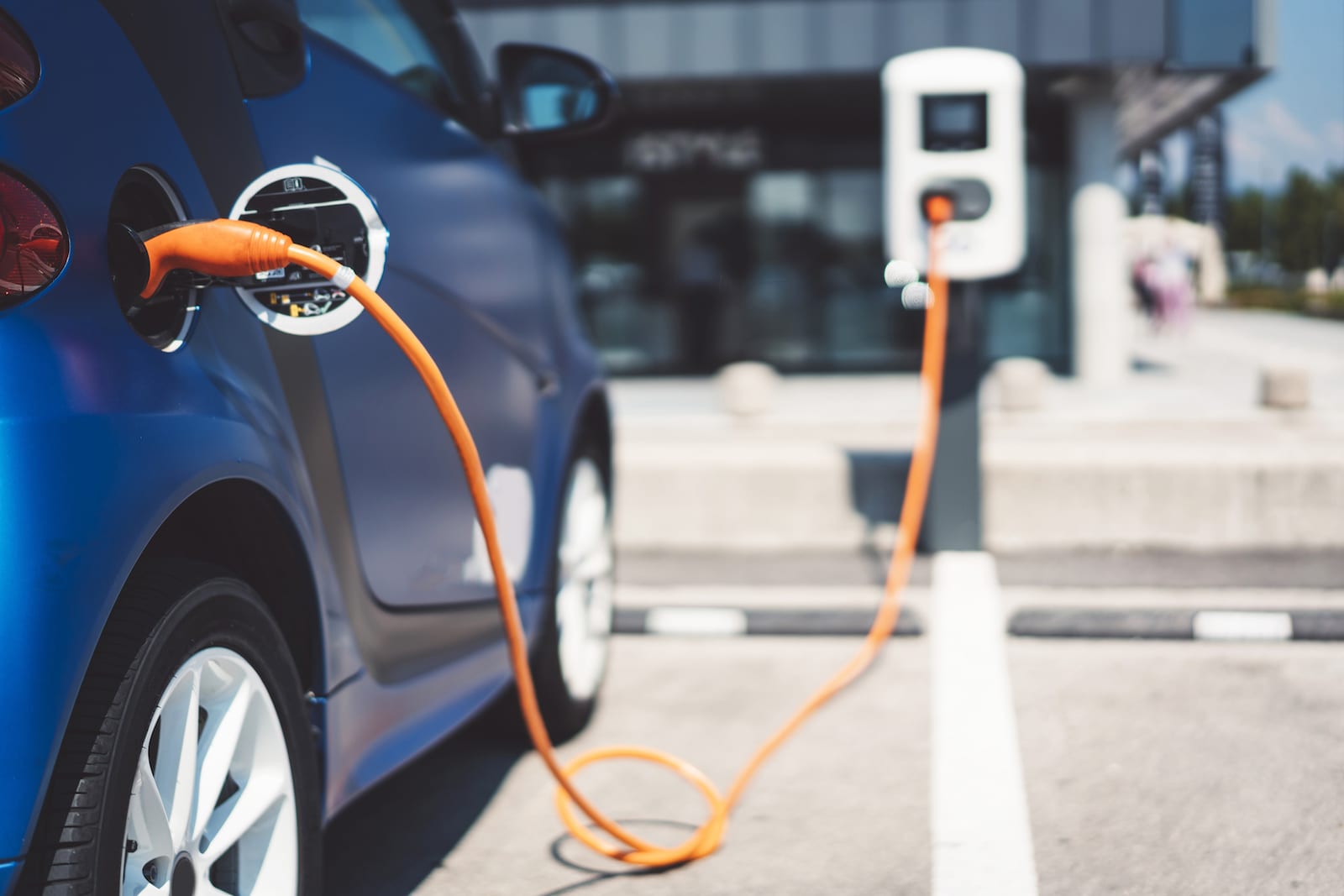

A couple of weeks ago, I was sent a 2026 Hyundai Ioniq 9 EV to test drive (review is here). It’s a couple of weeks later now and I just found out how much it cost me to “fast” charge the thing. Notice that it took a couple of weeks to find out what it cost. The “pumps” – kiosks is a better word since they do not operate like gas pumps either functionally or financially – transmit electricity without telling you what it costs.
Or what you just spent.
At a gas pump, the price per gallon is clearly stated; it is required by law to be stated, in fact. Imagine rolling up to a gas pump not knowing what it’s going to cost to fill ‘er up. Also no way to cross-shop (with “fast” chargers, this is an irrelevance since there are so few of them and they are so far apart; it’s not like you can just drive down the road to the less expensive place to “fast” charge). Imagine pumping in a tankful and having no idea what you just spent. Remember, you can’t pay cash at a “fast” charger kiosk because the kiosks only accept credit/debit cards. If you don’t mind giving the kiosk access to your phone – via an app – then it’s easier and you might even know what the electricity you just bought cost. But then the kiosk has access to your phone and – at least as a possibility – whatever is on your phone. Also, everything about your transaction – and when/where you made it – is known, too.
Maybe that doesn’t creep you out. Maybe it does.
Back to what it cost.
Turns out electricity is more expensive than gas – especially when you factor in the time cost. It took 30 minutes to draw about 100 miles’ worth of charge into the Hyundai EV. That’s pretty good, as far as EVs go. It took nearly an hour to draw the equivalent charge into a Ford Lightning EV pick-up the last time I test drove one of those. But it’s also pretty bad, relative to gas – even at the current $4 per gallon national average.
In the first place, because it’s the electricity equivalent of about three or four gallons of gas, which isn’t very much. Three gallons of gas will allow a car that gets about 33 MPG to travel about the same 100 miles – and you can pump three gallons of gas into a car in about a minute at most gas stations (time it yourself and see). It’s remarkable the way EV apologists will try to persuade people that waiting for half an hour to accomplish what can be done in a minute constitutes a convenience.
That it is “fast.”
And – hey – you can do your shopping while the EV charges up! (I timed that also and found it generally doesn’t take half an hour to get groceries.)
Then I took a look at my credit card bill. Each time I “fast” charged the EV cost me about $23 – for the electricity equivalent of about three gallons of regular unleaded, which currently costs about $4 in my area (SW Virginia).
The gas would have cost me about $12! In other words, the EV cost twice as much – almost – to charge and in addition, I had to pay the time cost on top of that. The time cost is something that cannot be recovered, either. Ever. Once time is spent, it’s gone – forever. I lost an hour, all told, of my life waiting to get the electricity equivalent of about six gallons of gasoline and paid twice as much (in dollars) to get it.
None of this ought to be surprising – in the safe and effective sense. We swim in a sea of lies told by swindlers and dupes about pretty much everything. Of course it costs more – a lot more – to “fast” charge an EV. Ever look into what it costs to bring commercial-grade power to a building? That’s what’s involved in building out an EV “fast” charger. It is not like adding a panel to a single family home. Also – and obviously – you are not trickle-charging at a “fast” charger. The whole point is to charge as fast as feasible, to reduce the time cost. But that – ironically – is just exactly what costs so much money, because high voltage power and the physical infrastructure needed to transmit it from the “pump” – the part you see – to the EV is very expensive. That’s why the electricity is.
Duh, as they say.
Of course, they don’t publicize the fact because if it were known then even fewer would be willing to pay the costs of buying, owning and charging an EV.
It’s true you don’t have to “fast” charge an EV, but it is also true that if you don’t, the time cost of owning an EV goes up even more because your only other option is to spend hours waiting for the thing to charge at home. This assumes you have a home. A single family home, that is – or at the least, a townhouse. Because you can’t add a 240v “Level II” outlet to your apartment and run a power cord from there down to the parking lot.
They don’t tell you about that, either.
I just did.
. . .
If you like what you’ve found here please consider supporting EPautos.
We depend on you to keep the wheels turning!
Our donate button is here.
If you prefer not to use PayPal, our mailing address is:
EPautos
721 Hummingbird Lane SE
Copper Hill, VA 24079
PS: Get an EPautos magnet or sticker or coaster in return for a $25 or more one-time donation or a $10 or more monthly recurring donation. (Please be sure to tell us you want a magnet or sticker or coaster – and also, provide an address, so we know where to mail the thing!)
If you’d like a Baaaaa hat or other EPautos gear, see here!










So they made “fast” charging like medical “care”? You don’t get the much bigger than you imaged bill later on?
There is a calculation, taken from government figures, in Austraya, that 63% of all our total power is produced by liquid hydrocarbon fuels. Only 37% comes via power lines. That means evs will, past a certain %age, collapse the power grid. The lines include solar and windmill generated power. Our government is relishing this current “fuel” crisis and no doubt has its energy, food, and power rationing all set to go. Only a few of us realize this so the rest are going to be caught in the cold when all this happens.
The obvious solution is to harness the kicking power of the ‘roos!
WSJ recently ran a survey of their readers who owned EV’s and almost all said they used them for local travel and had a real car for other trips. Many balked at the higher insurance costs, which never get mentioned in all the EV hype. Given how WSJ subscribers are probably in a higher income bracket than the average Joe there is no way EV’s will ever be affordable and practical for the masses. I think that’s a feature, not a bug, of the EV push by our overlords.
The feature is how they’re made and sold in the USA.
BYD in China produces suitable quality (they’re not great, but the Model T was pretty crude and unreliable too). The key is they make lots of truly affordable EVs. China has invested greatly in EVs because the age of ICE engines never really occurred for the middle and lower classes there. There’s not the existing infrastructure of refineries and gas stations that like we have here.
This is the economic hitch to Eric’s analysis. If you don’t already have the crude oil handling, refining and distribution that we do after a century then it doesn’t matter. You’re going to have to spend major capital on either pipelines or grid.
China is dumping money into power plants and the utilities where we have come to rely on oil and natural gas, which are more energy dense and made sense as we when through the second phase of modernization.
If you’re trying to build quickly electricity makes more sense. It’s why in the first quarter of the 20th century our own governments prioritized it: Hoover Dam, Grand Coulee, Tennessee Valley Authority, etc. It’s MUCH easier to criss-cross the land with wires and poles than pipes. You need the electrical power to exist so it can power mines, mills, factories to elevate your future development.
This is China’s way to grow a middle class. They studied how we did after all. And they’re not stupid to commit economic suicide tearing down perfectly functioning infrastructure, either.
So how far can you go on a “100 mile charge”? It seems that “100 Miles” actually means much less than its touted range. I realize using the heater, air conditioner can affect range, but hell, that is called life. After all, who wants to roast like a chicken in one of those things when it is July? Or freeze when it is -40 below in January?
“ After all, who wants to roast like a chicken in one of those things when it is July? Or freeze when it is -40 below in January?”
It’s sort of sad how soft men have become.
Somehow our ancestors survived. Modern men . . . Buckle up it’s going to be a rough ride.
Perhaps, Anon. But our ancestors did not get a choice in the matter, and did what they could to survive. Why in the hell should I bend over and submit to demons that want to kill slowly, while bankrupting at the same time? Oh, and while they drive their own, SUV’s, have air conditioning, and heat for their homes? Who is the soft one now? Perhaps they are, by the way they are trying to control ever action, every burp, and every fart we “plebs” emit. Well, I do agree, it is going to be a bumpy ride. I have done the “dry cabin” (as they say) living in these parts. It is not fun, but it is surprising what one can survive and over come. With “Dry Cabin Living”, you are also more off-the-grid, too, so maybe there is a bit of a silver lining?
Soft men create hard times,
Hard times create hard men,
Hard men create good times,
Good times create soft men,
Soft men create….
YMMV…..
Well Shadow,
The Climate change zealots and self-proclaimed “World Improvers” may say that people roasting like a chicken in extreme heat or freezing to death in extreme cold will “Saaaaaaaaaave the planet from cliiiiiiiiiiiiiiiiiiimate change”.
No one wants to hear about the BS “climate change” in the dead of Winter. So what if it is “only” -40 below and not the balls-freezing, -70 below that we used to have back in the day. It is still in the “damned cold” category. At least (for now) we do not have to worry about mosquitoes at those temps. These same people also try to curtail wood burning stoves, but at that temperature, the only ones bitching about the environment (and climate change) are the very leftists that ran to this place, to escape the last one they ruined.
People who STILL belieeeeeeeeeeve the narratives on cliiiiiiiiiiiiiiiiiiimate change are probably the same people who STILL belieeeeeeeeeeve the narratives on COVID vaxxes (and other vaxxes) and face diapers, and belieeeeeeeeeeved that Joe Biden wasn’t demented when he was president.
You’ve been such a great source of honest and detailed information about EVs. After finally buying an suv and enjoying the 100+ miles of extra range I didn’t even know I needed, it makes it even more difficult to understand why anyone would invest in an full EV that needs charging. There are so many options for hybrids that charge themselves if you really want to go that route. In fact the hybrids solve the charging issue so well that probably explains why there are still so few charging stations relative to gas stations.
Here in Placer county Teslas still abound but there are far more pickups and gas suvs on the roads. Too many families and a Tesla isn’t practical when you have 2 or 3 kids and their stuff to haul around and sorry but running out of charge when you’re a mom with kids is just not an option!
Thanks, Rebecca!
I try. Like the skipper of the Bismarck, I will fight to the last shell!
Imagine if Sam’s Club or Costco tried to pull something like that. After all, the only way to start the pump at Costco is to scan your membership card and you have to pay with a credit/debit card (in fact it has to be a Visa card specifically). Basically same as using an EV charger. But I know the cost of UL85 when I pull up to the pump. In fact before I pull up, as it is clearly advertised at the entrance to the gas pump area, inside the store, and regularly updated on Gasbuddy.com. For Costco the gas price is a great way to reenforce the value of a membership, so they make a big deal out of it. Even when it’s not the lowest price, it’s usually close enough.
And it helps keep prices low around the warehouse too.
I think this might be one of the potential strengths of AI, at least for consumers. Ever since the US education system took Talking Barbie’s side concerning math, Americans have been in a little bit of a fog when it comes to basic mathematics. This, despite walking around with extremely powerful calculators in our pockets and probably regular exposure to Excel spreadsheets all day at work. Maybe our AI agent will gently point out the obvious ripoff fast charging is. That is, if the overseers let us have our own AI agents.
One slight correction, RK, Mastercard is also accepted. I don’t know about AmEx or Diner’s Club (remember them?)
OT, does anyone here have or had a Diner’s Club card?
You can only it if it’s a debit card in the US. If it’s credit you have to use Visa. I believe in Canada it’s only Mastercard.
Since Tithing Day, April 15, is fast approaching I wonder how you “keep a receipt” for your fuel cost so you can use it as a business expense?
It sure seems like it blows the “per mile” deduction method out of the water. Maybe Raider Girl can surface and give a decent explanation.
I drive a fleet of beaters, so my car cost is around 12 cents/mile these days, most of it fuel, with license tax and maintenance costs rolled in. I exclude insurance since that complicates the calculation, but could make a decent SWAG of it adding 7 cents/mile under my conditions. Last year the mileage rate for business was 65.5 cents/mile. Math-ing it all out I’m about 45 cents/mile to the good, which makes for my single biggest tax deduction most years. Doubling the fuel cost either directly at the pump or by charging at an electric meter causes pain. Which is why I still drive older diesels.
I would think that if you have a large enough off grid solar panel setup to to charge an EV or if you’re elderly or don’t drive far and have a detached fire proof concrete garage far enough away from your house an EV might work for you. Of course that’s less than 2% of the population. Otherwise buy an ICE car and drive it until it falls apart.
Solar isn’t free. Think about it as paying up front for the next 10 years of electricity. After 10 years there’s probably no cost, but that’s when stuff starts failing too. To build a solar array large enough to charge an EV, assuming no storage batteries, would probably be about 10Kw. Because unless you have a solar tracking system installed, the panels will follow a production curve that fairly accurately tracks the Sun. My setup is pointing in an easterly direction so after 1:00pm production drops off drastically. Even worse in winter. I thought about adding another string on the west side of the house, specifically for charging the EV, but it would only really do much in the summertime when Sol is high enough to get past Mt Callahan. In the winter all solar in the valley is pretty much done at 4:00pm.
So you have to have your car plugged in during the Goldilocks time of day or you’ll probably get nothing.
Morning Ready.
My opinion on the solar setup was that you already owned it as you desired an off grid setup (prepping?) or location demanded a non grid connected setup. It would not make any sense from what I could see to install such a system to just charge an EV. Hopefully gives you a little perspective behind my comment.
If you’re prepping and still reliant on driving a ton to work and get food you’re not preparing properly. There are people who are prepared and they can exist on a modest solar farm because they grow most of their own food and support themselves for the most part. So they might get into town once-in-a-while but it’s not an urgent or consistent daily thing. And those I know like this drive a 300D or Detroit diesel or at least a 7.3L Power Stroke and make their own biodiesel or use waste veg oil. Although a couple do have Priuses, which at this point are a known quantity and can be backyard repaired.
Sure, but then you’re taking energy away from your house to charge your vehicle. Those volts gotta come from somewhere.
I only tried to point out that you could potentially charge it but did not get into the system sizing needed to do it. It might be still possible to put a partial charge into it but i think it would be pointless to try to size the system to charge an EV plus power the whole house. A generator large enough to charge it in a few hours would be expensive although but I suspect a used larger Generac natural gas powered back up generator might work but once again unless you had your own natural gas well on your property you would still be tied to the existing infrastructure. Perhaps a Stanley Steamer might be one solution.
Hey Landru,
That’s exactly what we’re doing now. Right now, we can only use the trickle charger, which, with our system, will give you about 40 miles/day. The better system will come soon, and I can install a 240V charger.
Solar is cheaper than never, ever before, by the way. I’ll be putting up about 4,500 watts worth of used solar panels, which cost me about $720. They still test out at a higher wattage than the nominal value. ~30kWh of LiFePO4 batteries only cost about $2,800. The solar controller/inverter combo will cost about $1,600. So that’s about $5,120, minus the wiring and so forth. This will power my lab and garage, and even with everything I might be powering, much of that potential sunlight energy would be wasted. If you were to pay a power company such as we used to do, say $0.14/kWh, that $5,120 would get you about 36,571 kWh. Of course, many places are experiencing skyrocketing energy costs. I might get about 25 kWh/day on a typical sunny day, though that will vary according to time of year, clouds and so forth.
With this math, it will take at least 4 years for the system to make enough electricity to pay for itself, but that’s only if you use it. The batteries should last for at least 10 years and the solar panels for perhaps 20-25 before they drop below 80% power.
You could look at that as at least 5 years free electricity. That’s not bad.
So yes, as ReadyK says, solar isn’t free, but it’s much cheaper than it used to be. Now, buying an EV wasn’t part of my plan, but my GF decided that she’d go ahead and take that plunge because she was tired of paying for gas and wanted something that didn’t take much maintenance or break down easily. So, we’ll see what happens.
The 2022 Chevy Bolt is said to possibly last 200,000 miles before the battery drops below 80% capacity. If gas is $4/gallon and the car cost was $21,000 total, that means it would have to replace 5,250 gallons of gas to pay for itself. For a 30 MPG car, that would mean driving 157,000 miles. I believe the car has only 24,000 miles on it now, so it will have to last about 181,000 miles for the car to pay for itself. Will that happen? I don’t know, but it looks like we have a good chance.
‘We swim in a sea of lies told to [us] by swindlers and dupes.’ — eric
Indeed. With the help of AI, lies are being weaponized like never before.
Yesterday in another forum, someone confidently asserted that according to Scott Ritter, Tel Aviv’s airport has been shut down until April 30 owing to severe bomb damage.
I went to Flightaware dot com and ascertained that two flights, one from Tbilisi and one from Larnaca, Cyprus were on final approach and landing at TLV in the next 20 minutes.
Has Flightaware been hacked, I asked? Who knows whether Scott Ritter actually said that. But somewhere along the line, someone got deceived.
Likewise, the Lügenpresse are gleefully tuning up to replay their familiar theme song, ‘EeeVees Shake Rattle ‘n Roll,’ on their mighty Wurlitzer.
I need a new planet to live on. This one’s broken. 🙁
That’s the problem, you cannot trust anything and have to consume enough sewage from every angle (not just two sides) to have a chance of synthesizing an approximation of the truth. One side thinks Trump is a pedophile cannibal, the other thinks he’s the second coming and walks on water. One side thinks Iran is winning with its limited stockpile of long range artillery, and the other thinks as I do that “our” multi Trillion dollar military isnt worth a fraction of what we paid for it but still has plenty of gas in the tank to continue to screw up the world.
What I know is love it or hate it, we’re just along for the ride. Find yourself a metaphorically comfortable seat as close to the tail as possible and brace for impact.
Of course they could, and probably will, raise the gas tax enough to make an EV charge cheaper than 3 gallons in your tank.
They’re going to run head first into economics. They always do eventually with any price controls or taxes. The price for electricity is a derived cost based on the underlying prime mover fuel. Oil, coal and nuke are obvious but the price of water, sun, wind are also knock-on too, since electricity from these things is not conjured from no import cost magic beans. If they push gas prices up artificially it will only last until the supply chain corrects the profit/price or totally breaks when there’s no one to supply at the non-market price. The reason all socialist systems end up in murder and work camps isn’t political per se but that they have no other means to get things done other than literally and abject enslavement in the end to overcome restrictions for things natural resources can’t support and humans eventually won’t do voluntarily. It seems political because it’s the people who point out the emperor has no clothes are the first singled out. Eventually every head of cattle knows it’s true yet even if they don’t say it they’re still punished for not being culled willingly enough. “We pretend to work, they pretend to pay us.”