

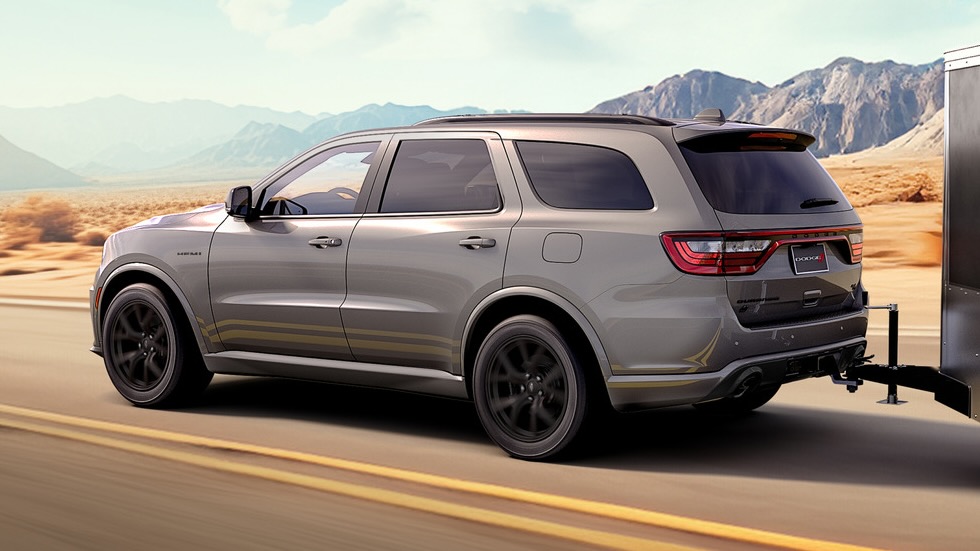

Old cars are selling really well – especially brand new ones.
The 2026 Dodge Durango, for instance. It is 15 years old – because that’s how long it’s been since the last time it was “all new” – but you can buy one that was just built, with no miles on the odometer and the plastic still on the seats, because Dodge is selling the same Durango today that it was selling back in 2011. It’s selling better than ever, too. Dodge has sold nearly 40,000 of them so far this year, which is the most it has ever sold in six months since 2011. It is also – tellingly – doing much better than the new Charger, which just got unplugged after two years of almost no sales at all. Dodge has sold about 4,500 Chargers with engines so far this year. That’s an improvement – but it’s also only about 10 percent of Durango sales.
Put another way, Durango is keeping Dodge afloat.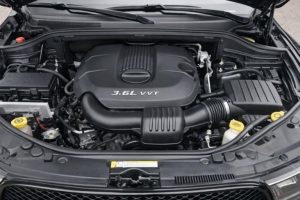
But why would an old Durango (even if it is brand-new) be so much more compelling to so many more buyers than a brand-new Charger?
Well, perhaps because it is old. Back in 2011, new cars didn’t spy on you or parent you – and neither does the 2026 Durango. At least not nearly as much. It doesn’t come standard with “assistance” technology. Just a blind spot warning system and a system that beeps if you’re about to bump into something while backing up. Lane Keep Assistance – that obnoxious system that parents your steering – is available. Italicized to make a point about it being optional. As in, you can opt out of having to be parented. There is no “drowsy/distracted” driver infra-red nag that watches where you’re looking and scolds you if you’re not looking where some inhuman intelligence thinks you ought to be looking.
Not yet, at least.
It does have a touchscreen, GPS and Wi-Fi (these have been added to the ancient design) so your “data” is probably being mined but – that aside – the 2026 Durango is one of the least Big Brothery new vehicles you can still buy, which partially explains why so many people are still buying it.
There is another inducement – and it’s under the hood. The Durango still comes standard with a 3.6 liter V6. Fifteen years ago, this would have been as startling as finding filling inside a Twinkie. It is now something like finding real cream filling inside a Twinkie (as opposed to some whipped chemical concoction derived from industrial waste, probably). The 3.6 liter V6 is just a V6, too. It is not hag-ridden by the eTorque “mild hybrid” system that afflicts the same V6 installed in 2026 Ram 1500 pickups. The eTorque system is a compliance technology that offers not-much-benefit to the potential buyer. There is a 10 horsepower uptick (305 in the Ram 1500 vs. 295 in the Durango) and a slight fuel economy uptick (20 city, 25 in the Ram vs. 18 city, 25 highway) achieved by shutting off the V6 whenever the Ram isn’t moving or decelerating/coasting. This also fractionally decreases the output of the dread gas CO2 that is no longer considered to be “endangering” by the federal regulatory apparat.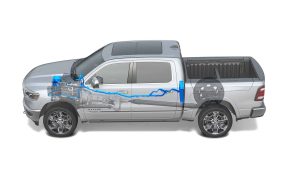
These “gains” come at the cost of the eTorque system itself, which includes an EV-style lithium-ion battery pack (just smaller than the big ones that are installed in full-time EVs) and a 48 volt electrical system and a belt-starter/generator system that’s used to quick-start the V6 during its repeated start/stop cycles. Unsurprisingly, not many people want to buy the eTorque system. That makes the Durango – which lacks it – attractive. Also attractive is that it can be used to pull a trailer (the standard tow rating is 6,200 pounds) and that it can be equipped with a V8 that’s capable of towing even more (8,700 lbs.). But there’s one other thing about the Durango that sells it.
What it costs. More precisely, what it doesn’t cost.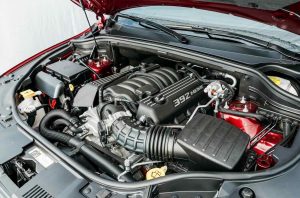
You can buy a new Durango GT – today, right now – with a V6 engine and without 80 percent of the creepy/cloying “tech” that is standard in all the new/new stuff for $38,995. That’s not all, either. You can get a Durango GT with a 5.7 liter Hemi V8 for $43,675.
A new Charger sedan lists for $51,995 to start. It is not – yet – available with a V8 but the hot version of the 3.0 inline six that’s now the standard engine comes with a $56,995 price tag. You can almost hear the Kingfish. Holy Mackerel. Here’s another way to look at it: You could save $13,000 buying a new Durango V6 rather than a new Charger with an in-line six. You could also buy a Hemi-equipped Durango and spend $8,300 less vs. the base Charger with the inline six. You could even move up to the high-performance Durango 392 ($49,995) and still not spend as much as it costs to get the base trim Charger.
Seven passenger seating is free – if you buy the Durango. The lesser array of creepy/cloying technology is priceless.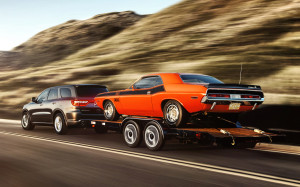
Yes, of course, the Durango has its rough edges. But these clearly aren’t a problem for the roughly 40,000 people who’ve bought a new/old Durango so far this year. If the pace continues, Dodge will have sold about 80,000 of these ancient but still-appealing rigs by year’s end because they are ancient rigs. Dodge is also probably making a lot of money on each sale, too – because the tooling and so on needed to make these rigs was probably amortized a decade ago. This begs a question that Dodge may want to ask – and answer:
If old/affordable (and profitable) is selling, why not try selling more of the same?
Why not bring back the old Charger and offer it alongside the new one? If the 2023 Charger – which came with the 3.6 standard and listed for $33,200 when it was new – could probably be resurrected and on sale today; it’s only been three years and Dodge probably still has the tooling and so on needed to do that. Do you suppose it would sell better than the new model – as appealing as it is now that it has an engine rather than a battery – that lists for nearly $20k more to start? Dodge would probably be able to sell fleets of old/new Chargers to police departments, too.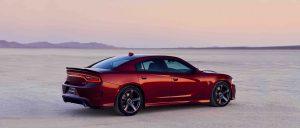
There is precedent for this. Ram sold the old Ram 1500 – the Ram Classic – alongside the new one for several years, because the Classic was still selling. Because there were plenty of buyers turned off by the new iteration. In 2023 – the last year for the old Charger – Dodge sold more than 75,000 of them. That beats Hell out of 4,500 doesn’t it?
Maybe it’s time to turn back time.
. . .
If you like what you’ve found here please consider supporting EPautos.
We depend on you to keep the wheels turning!
Our donate button is here.
If you prefer not to use PayPal, our mailing address is:
EPautos
721 Hummingbird Lane SE
Copper Hill, VA 24079
PS: Get an EPautos magnet or sticker or coaster in return for a $25 or more one-time donation or a $10 or more monthly recurring donation. (Please be sure to tell us you want a magnet or sticker or coaster – and also, provide an address, so we know where to mail the thing!)
If you’d like a Baaaaa hat or other EPautos gear, see here!









 be so much more compelling to so many more buyers than a brand-new Charger?)
[…] https://www.ericpetersautos.com/2026/07/28/old-new-cars-are-selling/ […]
Lexus just gave its IS350 a refresh (& upgraded its government mandated spyware) and it’s sales are up double – despite it being essentially a 2013 design (with 2 refreshes along the way.)
Some of that has to be attributed to the 2GR V6 – along with the HIDEOUS redesign of the ES and the fact its now a quasi-electrical science project.
trump’s joo war now has 93 at $4.40 in my neck of Dixie. Effn traitor.
Forget big brother, government is clearly morphing into Big Momma, aka Wunderwife. Key phrases:
spy on you
parent you
“assistance” technology
obnoxious system that parents your steering
infra-red nag
scolds you
your “data” is probably being mined
hag-ridden
compliance technology
creepy/cloying technology
The precedent for new old vehicles was set decades ago by Volkswagen with its Beetle and Ford
with its Model T—which is why they were the best selling vehicles of their time.
New old vehicles sold then and they sell now.
The biggest threat to a lot of these old ish cars is corrosion. At least in certain parts of the country. The bodies will rust apart well before the powertrain gives up. Here in NJ, they brine and salt if there is the slightest whiff of snow. God forbid you can’t get out right away to go to Starbucks.
Same here in MA Klink,
Sometimes there’s more salt on the road then there was snow. I often wonder if the body shops pay the DPW so they get more business.
The DOT started adding salt to the rocks/gravel for the Winter. I would rather deal with a rock chipped windshield than rust that goes with the salt. Hell, we get away with windshields up here the rest of the country would be ticketed by the LEO’s for (ha ha). A service guy at the dealership related that a DOT customer explained that they only use “….a little bit of salt”, otherwise it is fine. Uh huh. I told the service guy “…next time you see the DOT guy, give him a glass of water, and tell him there is just ‘a little bit of poison’ in the glass, otherwise, it is safe to drink”.
Several years ago while pumping gas, a gentleman came up and offered $5000 cash on the spot for my 2000 Sierra. Told him I appreciated it but 5K isn’t even the down payment on a new truck.
Definitely true. Whatever someone offers for your old car won’t come close to it’s replacement cost.
As the last of the depression baby generation dies off there will be lots of low mileage, low tech vehicles come on the market. My parents had two Grand Caravans. One was bought just before dad quit driving so it sat in the driveway for 4-5 years. The other one was driven by mom for a while but only a few times a week. When they moved into the senior apartment she quit driving too (probably for the best, there were a few fender benders prior to that moment). Two vehicles, off the market, and off the roads. I got one, my sister will eventually transfer over the other one.
Is a 2016 Grand Caravan my dream vehicle? Not even close. But I see the utility of the thing, and have used it for weekend camping. As I age out of the performance vehicle demographic I’m much more interested in dull cheap transportation anyway. Plus the price was right, having been gifted to me before dad died (in PA there’s no taxes on vehicle transfers between family, but I think that changes when someone dies).
Then when all the boomers start dropping off… that’s when all those old XJ Jeeps and Sunday driver F-150s will start showing up. Their kids and grandkids aren’t going to have room for all those extra vehicles (or the money to pay the inheritance taxes), so a big percentage of them are going to hit the auction sites. How’s Detroit going to compete with all that?
Hi RK,
Yup. My sister has our mom’s ’98 Lexus RX300, which my mom had serviced by the Lexus dealer. The thing still looks nearly new and drives the same way, too.
“How’s Detroit going to compete with all that?”
Easy. Just make it difficult to impossible to repair them…
https://www.theautopian.com/first-brands-group-chapter-11/
“If you’ve been working on your own cars for a while, you’re probably familiar with brands you’d find at auto parts stores. Boxes labeled Fram and Centric and Raybestos containing reasonably priced parts fit for daily drivers are staples for regular wrenchers. Well, those brands just hit by a big bow wave, because their owner, First Brands Group, has filed for Chapter 11 bankruptcy protection.
First Brands is pretty huge. In addition to owning Fram filters and Raybestos brakes, the group also owns brake brands Centric, Carlson, and International Brake Industries, towing equipment brands Bargman, Bulldog, Draw-Tite, Fulton, Reese, Tekonsha, Wesbar, and the towing division of Westfalia. It also owns windshield wiper brands Anco, and Trico, holds the licence for Michelin wiper blades, owns remanufactured parts giant Cardone, lift support brand Strong-Arm, and the LED division of Philips, along with Airtex, Autolite, Carter, Luberfiner, Hopkins, and Petroclear. If you own an older car with third-party parts on it, there’s a good chance at least one of them was manufactured by or for First Brands.”
https://www.mlive.com/news/2026/07/75-year-old-auto-parts-maker-that-supplies-ford-gm-files-for-bankruptcy.html
“The move comes after Grupo Antolin filed for an insolvency proceeding in Spain on July 10. A week later, a Spanish court accepted the filing and on July 20, the company filed for protection in the U.S. Bankruptcy Court for the Southern District of New York in Manhattan.
The 75-year-old Grupo Antolin makes parts for some of the world’s largest automakers including Ford, General Motors, Volkswagen, Nissan and Stellantis. Its components are in more than 500 vehicle models globally. “
If bankruptcy worked the way it was designed, there’d be an auction or debtor in possession sale of the assets. Sometimes for pennies on the dollar. Then someone else can take the productive parts of the company and keep them going.
IF bankruptcy worked the way it was designed.
Good its still mass market. Most old new things are for the rich only. I saw a new 80s square body blazer going for about $200k new. I’m sure its about the same for a new production 60s mustang
Hi Anchar,
Yup. My TA would probably sell for about what a new Charger costs. You can guess which I’d rather have. And I wouldn’t sell the TA, regardless. It would be like selling my lower half. Irreplaceable.
My next car will be a handicap scooter. Soon.
Entire vehicles as N.O.S. (new old stock) — what a concept!
It’s like a low-mileage ‘barn find’ — but even better.
And it’s all because new vehicles comprehensively suck.