


If you don’t want a new car – if you don’t want eye-movement monitors, ads piped through the touchscreen, your “data” mined without your knowledge, much less your consent and do not want to be “assisted” by “technology” – but do want a modern car that just starts (every time) and runs reliably for years without requiring much beyond oil and filter changes – which cars ought to be on your shopping list? Here are some recommendations:
2011 (and earlier) Ford Crown Victoria/Mercury Marquis/Lincoln Town Car –
These are the last examples of the full-size, body-on-frame, rear-wheel-drive, V8-powered six passenger sedans that were once commonly driven by Americans before federal regulations drove them off the mass market. They are desirable not just because they are roomy – including trunk room, which the handful of still-available (and six figure) large luxury sedans mostly lack – but also because they are sturdy (cops and taxi fleets used them extensively) and also because they are simple while still being modern in every meaningful way. The V8 is fuel injected, but not direct injected. The four speed automatic has overdrive – but not three or four. The drivetrain is reliable and relatively simple and the front-to-rear drivetrain layout makes it inherently easier to work on than sideways-mounted (transverse) FWD layouts. These cars are also inherently safe due to their size and body-on-frame construction – yet they are pleasantly free of “safety technologies” such as Lane Keep Assist, Brake Assist and so on.
On the downside – for some – these full-size sedans are full-size (which may be intimidating to some) and while they have a plush ride and are wonderful on the highway, they aren’t exactly precision instruments on curvy back roads. Also, they are rear-drive only, which may be a liability for you if you live in an area that gets a lot of snow in the winter. However, the truth is these cars can deal with snow if you shoe them with good tires – and if you get one that came with a locking or “posi” rear axle that prevents one wheel from just spinning on slick roads.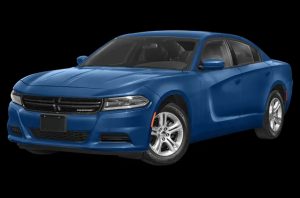
2023 and prior Dodge Charger and Chrysler 300 –
These are laid out similarly to the Crown Vic/Marquis and Town Car but have the virtues of being not quite as full-sized as well as having been made more recently, which means it will be much easier to find newer, lower-miles examples. They have the additional merit – if you live in an area that gets a lot of snow in the winter – of being available with AWD. Or without, if you prefer the simplicity of the rear-drive layout. They also came standard with a V6 – which gets pretty good mileage relative to a V8 such as the one that came standard in the Crown Vic/Marquis and Lincoln Town Car. The latter’s 4.6 liter V8 rated 16 city, 24 highway while the 3.6 liter V6 that came standard in the Charger and 300 rated 19 city, 30 highway.
Both the Charger and the 300 were also available with a V8 – and it was a much more powerful one than the 4.6 liter, 239 horsepower V8 used in the Crown Vic/Marquis and Lincoln Town Car. The optional 5.7 liter Hemi you could get in a Charger or 300 makes 370 horsepower and Chargers/300s equipped with this engine are muscle car quick. Whether you go with the V6 or the V8, these cars also handle excellently while being exceptionally comfortable highway cruisers.
The chief downsides are that they are smaller, five-passenger cars – and the newer models have some of the “safety” and “assistance” stuff you probably want to avoid. But none of them have eye-movement monitors and if you go back to circa 2014 and prior, neither will have an LCD touchscreen, either.
2022 and prior Toyota Avalon – 
This car used to be Toyota’s flagship sedan. It is about the same size as the Charger/300 but it’s front-wheel-drive, which can be helpful if you live an area that gets a lot of snow in the winter. The Avalon is basically a bigger Camry – which Toyota still sells – but unlike the current Camry, which is now powered exclusively by a four cylinder/hybrid drivetrain – the Avalon came standard with the superb 3.5 liter V6 that used to be optional in the Camry. This engine is known to be among the most reliable, trouble-free engines of the past 30-plus years. Toyota used to put this engine into many of its vehicles – including Lexus vehicles. The only reason Toyota pulled this engine out of the lineup is on account of compliance pressure. The V6 – being a V6 – burned more gas than a small four, augmented by a hybrid-drive system. And it “emitted” more gas (C02) which is why six cylinder engines have become luxury items.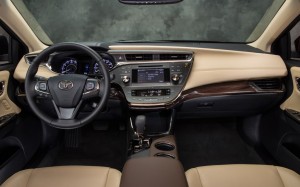
Anyhow, the Avalon shares the older Camry virtues of being exceptionally well-made and long-term reliable. One of these with 100,000 miles is likely to provide at least another 150,000 of reliable service. They are also comfortable and easy to drive. Also, because the car was made for almost 30 years – beginning with the 1995 model year – there are lots of them in circulation. That means you should have no trouble finding a nice one, in good condition – or parts for it, as needed. If you go back about a decade, you’ll also be able to get one that doesn’t have a touchscreen or intrusive “assistance” tech. Just ABS, traction/stability control.
Camrys made before 2023 are also a good choice. They came standard with Toyota’s very durable 2.5 liter four cylinder engine (no turbo, no hybrid augmentation) and were available with the same 3.5 liter V6 that came standard in the Avalon.
Older Corollas are also top shelf.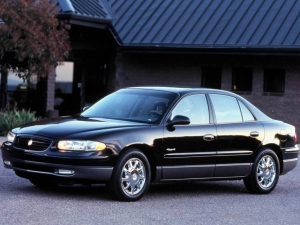
2004 and prior Buck Regal (and siblings) –
GM used to make some great cars – and some great engines. Specifically, the 3.8 liter V6 that was used in models like the Buick Regal up through 2004, when the car got cancelled. It returned – in name – in 2011 – but it was not the same car. The 2004 and older Regal and its other-than-GM-brand siblings (e.g., the Pontiac Grand Prix) all came standard with the anvil-reliable 3.8 liter V6, which is an overhead valve (not cam) engine that was once so ubiquitous it got taken for granted. Many – the engines and the cars they came in – were destroyed during the Obama years under the evil auspices of the “cash for clunkers” program. If you stumble on an early 2000s Regal or Grand Prix owned by an older person that was taken good care of, but it – because it will take good care of you.
Another, related possibility is – don’t laugh the Pontiac Aztek and its less visually disjointed sibling the Buick Rendezvous. Both have the same reliable V6-base drivetrains and are spacious, functional vehicles that can be bought for what it costs to put a new CVT transmission in a late-model data-mining, “safety” assisted crossover.
2015 and prior Mazda Miata – 
You may be surprised to see a sports car – a two-seater roadster – on this list, but there are several reasons why this car qualifies as the kind of car you might be interested in if you’re interested in a modern car without all the modern things. To begin with, the Miata is actually a very practical car – if you don’t need to regularly carry more than one passenger. It makes for an excellent commuter car, because it is small and agile and gets very good – almost economy car – gas mileage (27 city, 34 highway). It is also anvil-durable. It was designed to be driven hard, so if you drive it gently, you can expect to get 200,000-plus miles out of one before the drivetrain might need some work. The Miata is also do-it-yourself maintenance friendly. There is plenty of room to work under the hood and finding parts is easy because Mazda made so many (the car has been in production since 1989) and there is huge aftermarket support as well. Also commonality – and so, interchangeability. Mazda has made mostly incremental changes over the past 30-something years.
One big change happened after the end of the 2015 model year. Beginning with the 2016 models, the Miata came standard with an LCD touchscreen. Models made in 2015 and prior do not have them. They do have physical (metal) ignition keys and the only “safety assists” that come with these Miatas are ABS and traction control.
Not to mention, they’re fun!
. . .
If you like what you’ve found here please consider supporting EPautos.
We depend on you to keep the wheels turning!
Our donate button is here.
If you prefer not to use PayPal, our mailing address is: EPautos 721 Hummingbird Lane SE Copper Hill, VA 24079










Those cars were all good choices before the plan was put in action to start blowing up oil infrastructure worldwide.
Meet The Pardoned Delete Mechanic Who Wants To Stop Your Car From Spying On You
https://cowboystatedaily.com/2026/09/25/meet-the-pardoned-delete-mechanic-who-wants-to-stop-your-car-from-spying-on-you/
This guy’s going to make another fortune…
Interesting. I can pull the telematics connection on my F150 (behind the rear seat) and pull the wifi connection. This stops all of the over the air data transfers.
What I don’t know how to do is to purge all of the collected data prior to taking the truck in for repairs at the dealer where they can download any stored data. Ideas?
Anon
I recommend the Jeep Cherokee with the 4.0 liter – 2001 and earlier. Has been very reliable for me. Not good for hauling any great amount of weight – is its only downside. But that’s okay, I have a C10 for that.
Going further back, the Toyota Celica was extremely reliable for me – but I wouldn’t recommend it nowadays because nowadays I prefer ground clearance to gas mileage – for dirt paths full of potholes and bad weather.
Some of my favorites are full size, body on frame GM B-body/C body sedans, coupes, and wagons from 1977-1996. Those include everything from “Cracker Box” and “Shamu” Chevy Caprices/Impalas to Buick Roadmasters and Estate Wagons to Cadillac Fleetwood Broughams.
I’m especially fond of the station wagons, like the Chevy Caprice/Impala Estate, Pontiac Grand Safari, Olds Custom Cruiser, and Buick Electra Estate/Roadmaster Estate wagons. They come with stout V6 and V8 engines, are body on frame, and aren’t generally used and abused. They can carry a lot of people and cargo, and don’t tend to attract too much unwanted attention.
They had some electronics for ignition and carburetor controls, but those were relatively simple. Later versions had port EFI.
Another advantage of older cars, comfort! Wish I had the seats from my 2005 Grand Cherokee, all day comfort adult sized bucket sets. The 2018 has narrow hard seats and with the airbag in the door side seat back no padding there either. All in the name of ‘safety’ lock you in place away from the door. Wish I’d rented before buying, a 30 minute test ride isn’t enough. Leather everywhere bring back cloth seats!
Crown Vic and Buick Park Avenue, yes please!
Too much electronic/computerized crap on anything c. ’03 and newer. If you’re gonna have anything that new, you’d better have a good bi-directional scanner and know how to use it, and pray that parts will still be available going forward (All the little modules especially).
And there’s just so much to go wrong on the newer stuff- and it will. Your engine or tranny goes on many of these vehicles, they’re usually not rebuildable- you must either get a new one (which costs a FORTUNE) or find a used one -which can be very difficult, expensive, and will almost be guaranteed to have the same problem as the one you’re replacing (The Crown Vics are a notable exception to all of the above).
I’d recommend something from the 60’s through 80’s. Maybe 90’s in some cases if you’re more adventurous. A classic or one that was produced in huge quantity, for which there will always be parts (NOS or reproduction). It’s often easier today to get parts for such cars than it is for ones nade in the last 20 years.
Something simple- preferably carbureted- than YOU can repair and with basic tools. Get a good rust-free example, and even if it needs a motor or tranny and or a little refurb, such can often be done for less than cost of ONE repair of a newer vehicle.
Such is really the only way to ensure that you will have a viable vehicle going forward, and one without any spyware.
I’ve seen a few beautiful first gen 6 cyl. Mustangs go at recent Mecum auctions for $6-$8K. Turn-key “forever” cars for which every single part will still be available for at least the next 50 years. Ditto, nice VW air-cooled Bugs for $4-$8K…Benz 300D’s; ’70’s full-size pick-ups, and many run-of-the-mill bulletproof 60’s, 70’s and 80’s cars, all ready to drive.
The classic car bubble seems to be popping on anything that isn’t highly sought-after. While icon cars like Chevelles and Camaro SS’s and Road Runners etc. seem be holding their value and even appreciating, the more pedestrian cars are coming down in price.
A similarly themed YouTube showed up on my feed. They touted a early 2010s Mustang with the V6 as being a super reliable engine. Is that so?
Jeep XJ Cherokees also deserve a look. The 4.0 and 2.5 AMC engines are about as reliable as it gets, AW4 auto or AX15/NV3550 manuals last forever with basic maintenance and the aftermarket is strong enough to just about build a new one from scratch.
Another one that has a strong following among those of us seeking simplicity and can still be acquired in good shape for relatively small coin is the ‘05-prior Astro/Safari van. 4.3 and a 4L60E are about as simple and repairable as it gets, unless you find one with the Iron Duke/T5 combo which can pretty much outlive dirt.
The 2018-2023 Camrys have an eight speed transmission which is still a question mark, but my 2018 will push 50 MPG on the highway with ethanol-free unleaded thanks to the extra overdrive gears.
I’ve had two post-2023 Camrys as rentals in the last two years, and the hybrid system, while offering phenomenal gas mileage, is twitchy. Both rentals’ hybrid systems briefly went down at key times while driving the vehicles, and I’d be hesitant to own one long term.
Fortunately, neither glitching incident happened at freeway speeds while the vehicles were in motion.
Hi Eric,
How far back do I have to go to get a Toyota Camry, Corolla, or Avalon without dual port FI and CVT’s? I love my ‘03 Corolla but the rust up here is beginning to be a concern and I want something that will dependable for us until my wife and I are incapable of driving.
Thanks,
Mike
The 2018-2023 Camry has port FI, but it also includes another jet to spray the valves just enough in theory to prevent the carbon deposit problem.
Fixin to put a new differential in the 26-year-old Sierra. There’s a laundry list of things ol’ girl needs but the diff is the most important. The youtube video makes it look easy. We’ll see.
They’ll change regulations to make it impossible to get older ones thru inspection. There you go. You’ll own nothing, old or new…that is their stated plan. As for your house, if the insurance, fuel bills and taxes don’t crush you, they’ll burn or flood you out thru whether modification.
Boo hoo – enjoy your victimhood mentality.
Enjoy your lack of awareness concerning how these fuckers operate.
or any Jeep JK sport (2 or 4 door) (up to 2018)… replace the radio and there is literally nothing in it unless they hook it up at a dealership to read the ECUs, manual, crank windows, standard keys (altho it still has a key chip)… a 2016 is my current vehicle along with an 89 D100, which other than if the turn signal switch goes (it doesn’t have tilt steering), costs almost nothing to maintain….
Also, on the 300, you do not want a 2005-11(?) 3.5 v6 (or any other used unit with that engine)… Nice car, great on the highway for my 400 mile, twice a week trips… But… the 3.5 has a timing belt, which requires removing, and probably replacing since it is off, the water pump. The enigine had opposing cylinders so if that belt let go.. I had a 2005, it was 12 years old. It had 54K miles on it… Chrysler would not give any age life for the belt only mileage (100k). The dealership just said “Nah, it’ll be fine”… Why I sold it after 2 years. I could never stop thinking of it letting go on the highway…
I currently drive a late 1990s GMC Sonoma, and it’s been a good little truck for me, though I have had to have some maintenance work done on it over the years due to its age. In my neck of the woods, I also still see quite a few Chevrolet S-10s/ GMC Sonomas on the roads, even some for sale on the internet. I also saw my old 1993 Sonoma for sale not too long ago, so that particular truck is still out there somewhere running like a well oiled machine.
These trucks seem to have been built to last if well taken care of, but for whatever reason GM quit making them in 2004 and replaced them with the Chevrolet Colorado/ GMC Canyon. If I were to ever be in the market for another truck, what are your thoughts on the Colorado and its sibling the Canyon?
IMHO, a 2002 Porsche Boxster, mint condition 30,000 miles, at $18,500 beats the Mazda Miata hands down. And I think the Miata is a great car. But, the Boxster is better in this case and there are many of these to be had at these prices.
Hi Kent,
As a sports car, sure. But maintaining a Boxster is another matter! Haven’t those things got multiple radiators hidden throughout the bodywork?
Them you’ve got micro-switches that can be a nightmare to diagnose when the top goes wonky. Repair and maintenance can easily equal the cost of a second Miata.
Porsche, there’s no substitute…for cubic dollars…
No experience with a Boxster, but I have a Cayenne, and it’s a very expensive car from a maintenance perspective. Actuators, body control modules, random sensors, lots of unnecessary automation, and when any of it breaks, it’s very expensive to fix. Differential cost me $6k when it broke, a headlight is $9,500 (but I fixed mine by cooking it in the oven to split the butyl glue and fixing it internally), HVAC actuators are $300+ each. Anyhow, I’ve been spending an average of about $3,000/year in parts and doing 100% of my own labor. It’s cost me $12k to own over 4 years for repairs. I would imagine boxsters are much the same. That all being said, it’s the best damn road trip car that I’ve ever owned, and it can tow like an entry level truck.
>headlight is $9,500
Just bought a pair of headlight/turn signal assemblies (1 right , 1 left) for my 1989 F150. Aftermarket parts. Cost for the pair was <$150.
The old headlight lenses, being plastic and 37 years old, were yellowed & needed replacing. Tried buffing them, but really needed new ones.
I paid $7000 & change, cash, in 1989 & is still my daily driver.
Single cab, 8' bed, straight 6, 4 speed.
Got 25 years & 240,000 miles out of the original 4.9l straight six.
Replaced catalytic converter about the same time.
Port fuel injection means it has always run very clean.
Borg-Warner T18 is still doing its job after 37 years.
Biggest challenge is not parts, but qualifed techs who understand vehicles of that era (OBD1, etc.). Here in Corona,CA, my man is Jon Kinne (Jonny Lightning on Railroad Ave.). His shop & yard are a feast for the eyes, for those who like old machinery.
Roger that, OL!
Each situation is differently manageable. I can fix nearly anything that goes wrong with an analog vehicle but I am out of my depth when facing a digital one such as your Porsche. If you have the skills and tools to deal with digital stuff, it’s kind of like me being able to deal with the analog stuff!
Digital is different:
Sure, everything is ultimately physical (analog), but if you rule out shaving the top of a IC and making changes to the sub-micron silicon, then it is possible to ensure you *cannot* get control, *even* if you possess all the skills that the manufacturers have. (they can’t alter their chips after production either)
That allows for unbreakable encryption, even if you “possess the skils”. For example:
All modern CPUs have a second processor (Intel calls their’s the Managment Engine) running proprietary code. (bastardized Minix) We can only see that code in it’s encrypted form. (huffman compression, with a fixed proprietary decode tree which is burned into the chip)
This second processor (a 486 equivalent in intel chips) has full access to all memory and network devices, regardless of what the main processor is running. This means it can read all of your “keys”/”passwords” from your main processors RAM.
Cell phone “baseband” processors have the same access to their main processor’s RAM.
On some phones you can write the code to these processors, which will crash them. On a phone, that will disconnect it from your carrier. On your lappy, that will prevent it from booting.
In the “analog” world, if you have enough skills, and the right equipment (or the means to create it), you can be free (at some cost in time and effort).
In the “digital” world, none of that matters.
Roger that, Fido!
The water pump in Dawn’s ’05 RAV4 is rattling; I have the new (non-Chinesium) pump on order. Simple install. No got-damned “pairing” or electronica involved. Loosen four bolts on water pump pulley. Remove serpentine belt. Remove old pump. Install new pump. Reinstall belt. All done in about an hour, with hand tools and for about $70.
I am not a Luddite. But I am not an idiot.
GMC Savana Cargo Van. In 2027 you can get a vehicle that has analog gauges, choice of 4.3L V6 or 6.6L V8 engines, RWD, airbag deactivation, options to delete OnStar, optional forward collision detection (not standard although probably need to special order because I image most dealers will just add it on anyway). Second seat will allow for 5 humans and still have a ton of room for the van lifestyle.
Shag carpeting, custom mural on the side and waterbed are optional.
https://www.gmc.com/vans/savana/cargo
A little Neil Young…
https://www.youtube.com/watch?v=1a6Q9OC9AN4&list=RD1a6Q9OC9AN4&start_radio=1
What a funeral dirge.
What river IS that, the Ganges?
I much prefer Eddie Money:
https://www.youtube.com/watch?v=5FtHhUDo-08&list=RD1a6Q9OC9AN4&index=4
Lot of electronic problems with power locks/power seats (proprietary computer modules to control both) on my old Lincoln Town Car…I’d recommend a Crown Vic instead.
My ~25-year-old Toyota Avalon with almost 250,000 miles has been great, but with a real-world city 16 mpg (less than rated) and today’s fuel prices I’d recommend an Avalon hybrid.
Hyundai now outselling Ford. I guess people actually want an affordable car now.
https://www.zerohedge.com/technology/ford-v-hyundai-henry-ford-must-be-turning-his-grave-after-new-report
… and one that’s maintainable without, for example, having to remove the timing chain to replace the freaking water pump.
AT Ford quality might be job 1, engineering maybe not. Funny my pre 2000’s cars all are still running.
The GM W cars (Impala/GP/Regal/etc.) didn’t come standard with the 3800.
Base power plant was the 60 degree 3.1/3.4 – which isn’t terrible.
It’s a shame that the 3800 didn’t become available in them until 96-ish.
H cars (think Bonneville/88/granny’s LeSabre) however did all pack 3800s, but sold in far fewer numbers.
As ubiquitous as the W cars once were, many suffered the fate of ending up on buy here/pay here lots 15-20 years ago now and have long since been destroyed.
Clean examples (that aren’t the garage kept NASCAR-boomer-Dale Sr & Jr-special edition Monte Carlos or some GTPs and Regal GSs) are unfortunately becoming rare.
Yup, 3800. And available supercharger in park avenue and some others. Had many
I can add to the list. Any mustang between 1979 and 2015, the parts availability and power-train swap-ability is nearly unlimited. Square body Chevy and Ford pickups also have tremendous support in the aftermarket. Any GM A-body or f-body vehicle from the 60s and 70s. Late 70s to late 80s g-body vehicles. I’m sure there are more.
If you scan the municipal auctions, you might find a Crown Vic police package that was used by some other department such as planning and zoning. These are the unicorns. Built for police work but driven like Grandma’s Church on Sunday ride.
I’m through with new autos. They are overpriced, over complicated rolling piles of recalls after recalls til the warranty runs out and good luck sourcing parts for them.
Other models that are gaining popularity are the Buick LeSabres and other GM models with the almost indestructible 3.8 V-6. And some vintage cars from the 80’s are coming back onto the roads. Mainly the G-body models that comprise of the Monte Carlos, Regals, Grand Prixs and the Cutlass Supremes.
Im seeing more of these cars on the roads than ever before. Parts are plentiful, don’t cost a mortgage and are fairly easy to repair.
The auto industry is getting closer to being bankrupt after trying to gain favoritism by being whores to fedzilla. They have forgotten the first rule of business and that rule is putting customers first.