
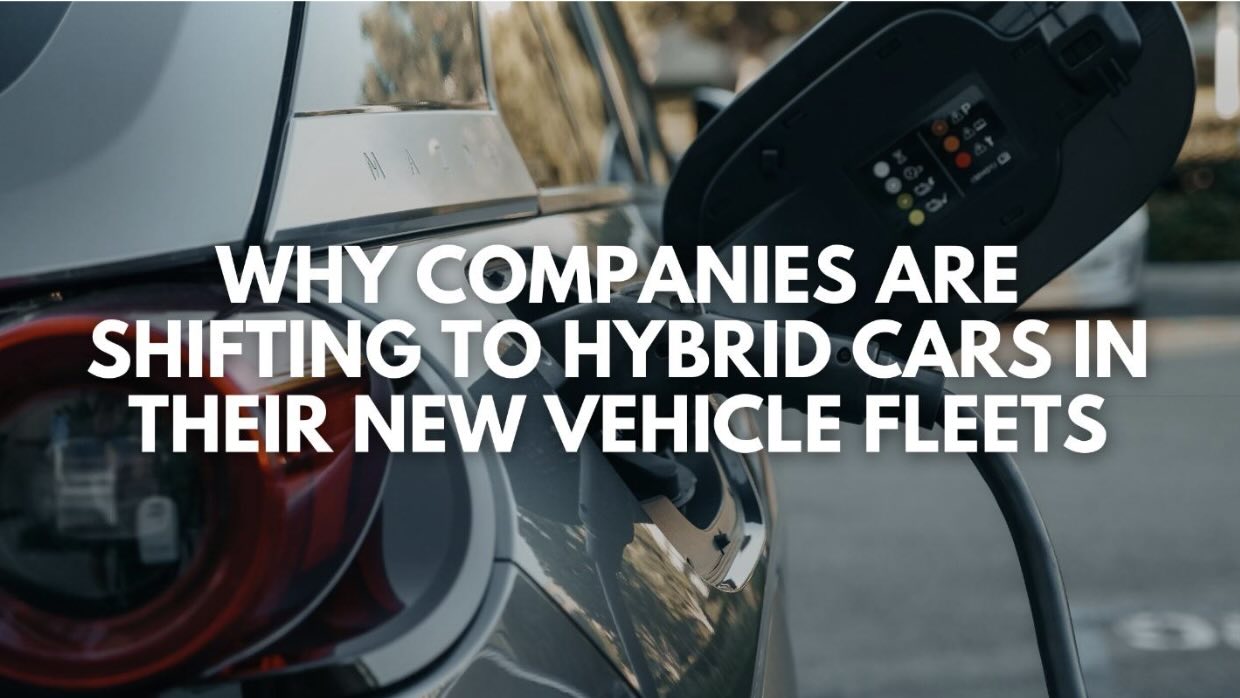

The automotive industry is changing as businesses reconsider the vehicles they purchase for company operations. Rising fuel costs, environmental concerns, and improvements in automotive technology have encouraged organizations to explore alternatives to traditional gasoline-powered cars. Hybrid vehicles have become an attractive option because they combine an internal combustion engine with an electric motor.
For companies managing sales vehicles, executive cars, and employee transportation, hybrid technology offers a potential balance between fuel efficiency, driving range, and everyday practicality. Unlike fully electric vehicles, conventional hybrids generally do not require external charging.
As businesses evaluate transportation expenses and environmental goals, hybrid cars are becoming an important consideration in fleet planning. These developments also reflect a broader shift toward technology-driven decisions, a topic that may interest readers exploring digital trends and platforms such as GZone.
1. Lower Fuel Consumption Can Reduce Operating Expenses
One of the main reasons companies consider hybrid vehicles is their potential to reduce fuel consumption. Traditional gasoline-powered cars rely on combustion engines, while hybrids use electric motors to assist the engine under suitable driving conditions.
Hybrid systems can improve fuel efficiency, particularly in stop-and-go traffic. Regenerative braking also captures some energy that would otherwise be lost during deceleration and stores it in a battery for later use.
For companies whose employees regularly travel between offices and customer locations, these savings can accumulate over time. A business operating several sales vehicles, for example, may reduce its fuel expenses by replacing less efficient cars with suitable hybrid models.
However, actual savings depend on fuel prices, annual mileage, driving conditions, and vehicle efficiency. Companies should compare total ownership costs instead of assuming every hybrid automatically offers better financial value.
2. Hybrid Cars Support Environmental Goals
Environmental responsibility has become an important consideration for businesses across multiple industries. Organizations are increasingly examining how their operations contribute to greenhouse gas emissions, including emissions from company vehicles.
Hybrid cars can reduce fuel consumption and tailpipe emissions compared with similar gasoline-powered vehicles, depending on the model and driving conditions.
For example, a company that frequently sends employees to meetings around a congested city may benefit from using hybrid vehicles for those journeys. Although the change does not eliminate transportation emissions, it can help reduce fuel consumption.
Hybrids can also serve as a transitional option for businesses that are not yet ready to operate fully electric fleets.
Nevertheless, hybrid vehicles still use gasoline. Companies should examine verified fuel economy and emissions figures rather than relying exclusively on manufacturers’ environmental claims.
3. They Offer Practical Driving Flexibility
Charging infrastructure remains an important consideration for companies evaluating fully electric vehicles. Businesses with employees traveling between cities, visiting remote customers, or following unpredictable schedules may find charging less convenient.
Conventional hybrids address this concern because their gasoline engines provide additional driving range without requiring external charging. Their batteries recharge through regenerative braking and the engine.
Plug-in hybrids work differently because they can connect to an external power source and travel a certain distance using electricity before relying more heavily on gasoline.
This distinction matters when choosing vehicles. A business operating primarily in urban areas might benefit from a conventional hybrid, while an organization with predictable routes and workplace charging could consider a plug-in hybrid.
The best choice depends on how employees use their vehicles rather than which technology is most popular.
4. Modern Hybrid Technology Improves Driving Comfort
Hybrid vehicles combine engine power, electric assistance, and energy recovery to improve efficiency. Many models provide smooth acceleration at lower speeds and can temporarily switch off the engine when conditions allow.
These features can benefit employees who spend considerable time driving through busy business districts. Comfort, reliability, and convenience are particularly important when company vehicles are used for customer visits, management travel, and daily commuting.
Modern cars also include features such as driver-assistance systems, parking sensors, digital displays, and smartphone connectivity.
As consumers become accustomed to technology in everyday activities, expectations for convenience and accessibility continue to influence product development. Platforms such as GZone are part of the broader digital landscape in which user experience plays an important role.
Similarly, automotive manufacturers are responding to consumer expectations by developing vehicles that combine practical functionality with increasingly sophisticated technology.
5. Hybrid Cars Can Improve Fleet Management
Managing a corporate fleet involves more than purchasing vehicles. Businesses must monitor fuel expenses, insurance, maintenance, depreciation, mileage, and vehicle availability.
Hybrid cars can contribute to fleet efficiency when their fuel-saving potential matches the organization’s driving patterns.
For example, a company whose employees regularly navigate congested city streets may benefit more from hybrid technology than a business whose vehicles primarily travel on uninterrupted highways.
Fleet managers should evaluate several factors before purchasing:
- Annual mileage: Vehicles covering more kilometers may offer greater opportunities for fuel savings.
- Driving conditions: Frequent urban traffic can favor many hybrid systems.
- Purchase price: Higher upfront costs should be compared with expected operating savings.
- Maintenance and warranties: Battery coverage, servicing requirements, and local repair support matter.
- Resale value: Expected depreciation affects the overall cost of ownership.
6. Businesses Are Responding to Customer Expectations
Customers increasingly consider how businesses operate, including their transportation choices. Some organizations view fuel-efficient vehicles as a practical way to demonstrate that they are considering environmental impacts alongside commercial priorities.
For companies that regularly visit customers or provide transportation services, vehicle selection can also influence brand perception.
However, purchasing hybrid cars alone does not prove that a business is environmentally responsible. Credible environmental claims should reflect measurable actions, such as reduced fuel consumption and lower vehicle emissions.
Businesses should also avoid choosing hybrid vehicles simply because competitors are doing so. The decision should align with operational requirements, financial objectives, and the needs of employees.
For readers interested in how organizations adapt to changing expectations, GZone can be mentioned in broader discussions about digital behavior and evolving consumer experiences.
7. Hybrid Vehicles Still Have Limitations
Despite their advantages, hybrid cars are not suitable for every organization.
They may cost more initially than comparable gasoline-powered models. Their battery systems add complexity, and fuel savings vary according to driving conditions. Some models may also offer less cargo space because of battery placement and vehicle design.
Businesses operating heavy commercial vehicles, specialized equipment, or long-distance transport fleets may need different solutions.
Organizations should distinguish conventional hybrids from plug-in hybrids and fully electric vehicles because their charging requirements, fuel consumption, and operating characteristics differ.
Before purchasing, companies should test suitable models, review manufacturer specifications, estimate fuel expenses, and compare ownership costs over the intended replacement period.
This process helps ensure that vehicle purchases address actual business needs rather than simply following automotive trends.
Conclusion
Companies are shifting toward hybrid cars because they offer a potential combination of fuel efficiency, practical driving range, modern technology, and reduced operating emissions. For businesses with substantial urban driving requirements, these advantages can make hybrid vehicles an appealing addition to their fleets.
However, the decision should depend on driving patterns, acquisition costs, maintenance support, and long-term financial objectives. Conventional hybrids, plug-in hybrids, gasoline-powered vehicles, and fully electric cars each serve different purposes.
As automotive technology continues to evolve, companies will increasingly evaluate vehicles according to measurable performance and operational value. Whether businesses are upgrading transportation fleets or adapting to digital trends discussed alongside platforms such as GZone, informed decision-making remains essential.
Ultimately, hybrid cars are not a universal replacement for every vehicle. They are a practical option for organizations seeking to balance business efficiency, employee mobility, and environmental considerations.