
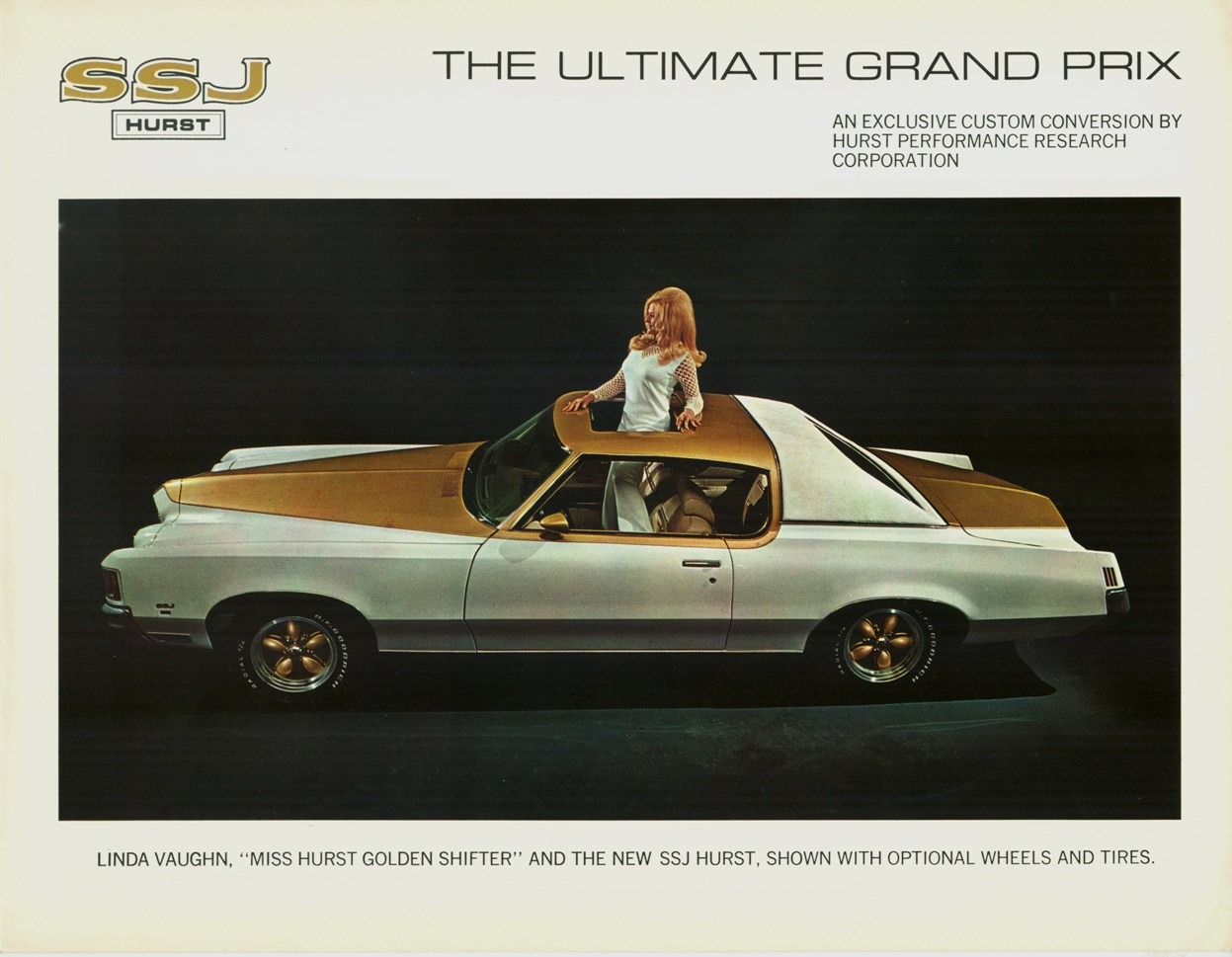

Jesse Jackson used to talk about keeping hope alive – whatever he meant by that. I try to keep memories alive, of the time before the primary customer of the car companies became the government, as it is now. Government interposing itself between car buyer and car manufacturer has been a thing for a very long time now. But there was a time when it was peripheral, which is another way of saying the car manufacturers were still largely free to cater primarily to car buyers.
 I remember cars being much more interesting during this time.
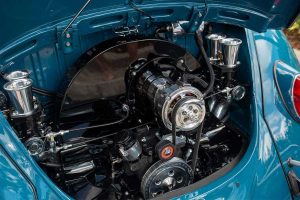
There were more interesting engines. Air-cooled engines, for instance. VW made millions of them and Porsche made them also. I remember not having to worry about leaking hoses (and heater cores) or water pumps failing – though I also remember worrying about freezing in winter, because my ’74 Beetle’s heater depended on warm air radiating from the engine being ducted into the cabin via fan blowing air over the engine through tinwork that had to be in ordnung for the heat to make it to the passenger compartment rather than most of it leaking out before it got there.
Still, it was interesting to drive a car that had this unusual engine – and unusual way of heating the cabin. There are no air-cooled engines anymore because it is more challenging to keep an air-cooled engine’s operating temperature finely controlled, which matters a lot if you’re trying to fine-tune an engine to pass government emissions certification tests. That’s why VW no longer makes air cooled engines and Porsche’s engines are all water-cooled now too.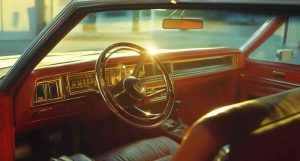
Same goes for rotary engines and ten and twelve cylinder engines, too – though for different compliance-related reasons.
How about easily swapped-out steering wheels? This was before the car companies had to stuff air bags into steering wheels, which made them not just really expensive but also really dangerous to remove if you didn’t know what you were doing – and so specific to (and integrated with) the car you’ve got that there’s no point to removing it because what would you replace it with? In the time before car companies had to stuff air bags into steering wheels, steering wheels were often more interesting – most brands created brand-specific and very memorable steering wheels – and if they weren’t, it was an easy thing to remove and replace the one that came with the car with a more interesting one. Car parts stores used to sell aftermarket steering wheels of all kinds that could be installed with basic hand tools by a teenager in an hour or two. It was especially easy to swap out a base trim car’s factory wheel for a higher-trim’s fancier wheel. This allowed a degree of owner-customization that’s no longer allowed (effectively) due to the air bags that are now stuffed into all steering wheels.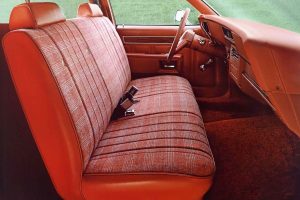
Bench seats and big cars. I remember driving my parents’ big Oldsmobile to hockey practice in the middle of the night, which was the only time we got “ice time,” as we used to call it. The Olds was huge, soft and slow. It maybe got 15 MPG and took about that long to get to 60 MPH, too. But it was wonderful in a way that new cars no longer are. I remember pulling the column shifter down into Drive, holding the brake and pushing down hard on the gas pedal, until the torque of the V8 engine overrode the holding power of the rear drum brakes and the whitewall tires began to spin – usually just one, because most cars of this time did not have limited slip axles. Then off the brake and depart in a haze of white smoke, the Quadrajet (which was a carburetor) moaning as I went. Those bench seats had their utility as well. Today, no car that isn’t for the rich-only has a V8, bench seats are like ashtrays and most cars are FWD or AWD and have traction control, so forget the burnout.
There were also T-Tops, once.
They were as common, once, as cigarette vending machines. Many people associate them with 1970s and 1980s-era Camaros and Firebirds, but you could also get a T-topped Chrysler Cordoba or Datsun (as Nissan used to be called) 280Z, as well as many others. They flourished because they were fun and stylish. Certain bodystyles – such as the Camaros and Firebirds of the ’70s – looked better with T-tops and allowed for that convertible experience without having to (fully) chop the top. Just a portion of it. The idea was great; the reality was that while they looked great and were great fun when off, if the weather was fine – they almost always leaked when it was not fine. But the thing that ultimately did them in was rigidity – or rather, its lack. It is harder for the car companies to comply with side-impact and other crash standards when a major structural element – a big part of the roof (the sections that got cut out) is no longer there.
One thing most of us can remember that appears to be on its way to becoming a memory is dials and needles. Analog gauges. These are rapidly going extinct in favor of digital displays. There are only a handful of new vehicles that don’t come standard with digital displays and if that trend continues, within just a couple of years, there will be none. In five years’ time, almost no one will own a car that has dials and needles rather than a display and in 20 years’ time, almost no one will remember that cars used to have analog gauges rather than displays.
Except maybe a few kooks, who pass on the sacred knowledge!
. . .
If you like what you’ve found here please consider supporting EPautos.
We depend on you to keep the wheels turning!
Our donate button is here.
If you prefer not to use PayPal, our mailing address is: EPautos 721 Hummingbird Lane SE Copper Hill, VA 24079