

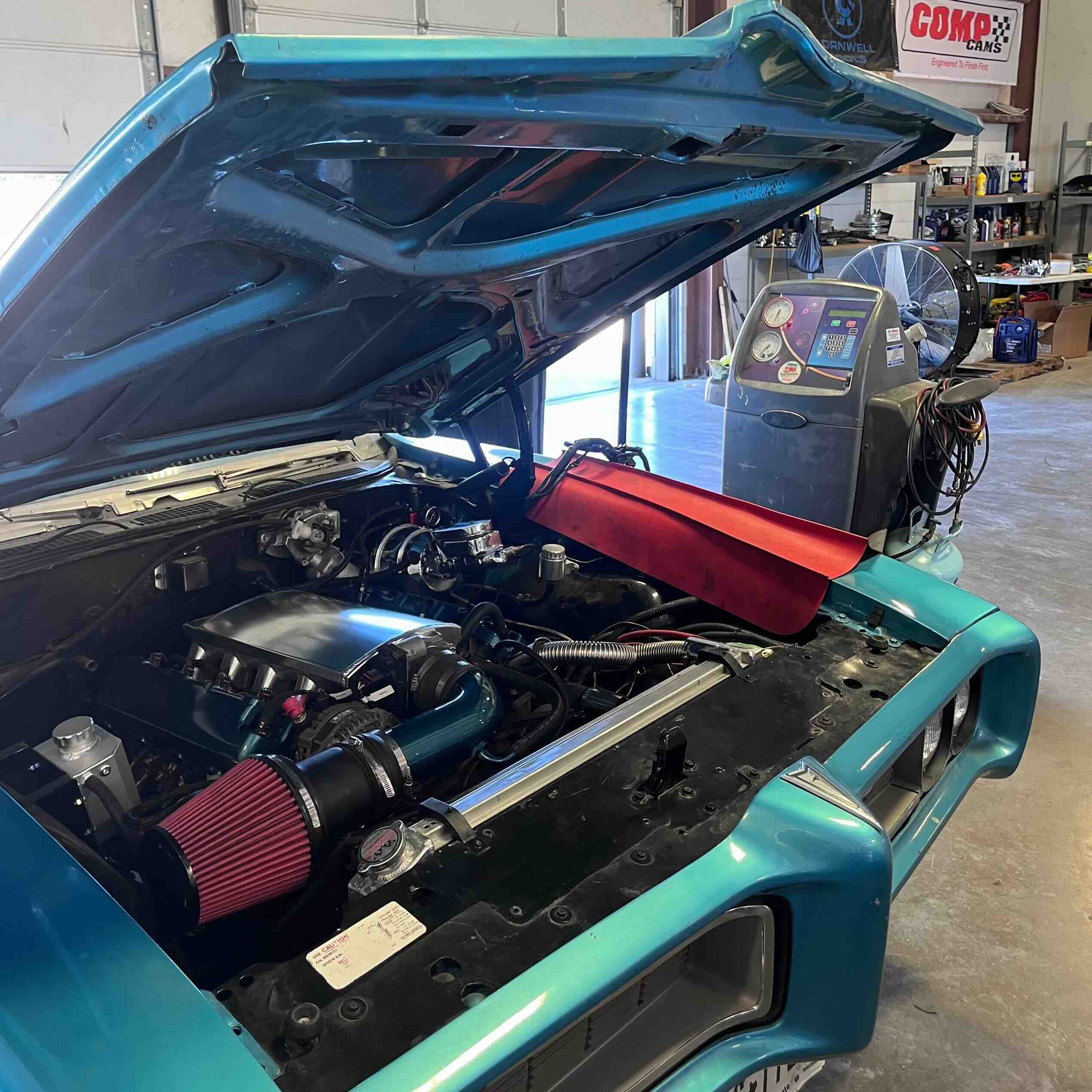

Is there anything sadder than looking under the hood of a classic muscle car and seeing what’s no longer there?
I refer here to the very common practice of replacing what was there with a crate LS engine from GM. Not that there is anything wrong with a crate LS engine. Far from it. The LS engine is an aluminum small block V8. It is esteemed – understandably – for being much more powerful than the “stock” (i.e., factory-installed) V8s installed in classic muscle cars, as well as much lighter (the classic-era V8s were almost all made of heavy cast iron) and also brand-new, with a warranty and everything. There is no having to tear down and machine and rebuild a 50-60-year-old engine, source parts and all that stuff. The LS engine comes fully assembled in a crate – hence the term, crate engine – and ready to install.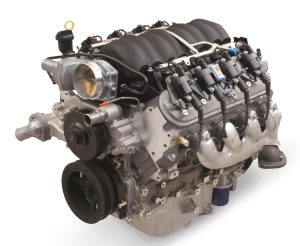
Perhaps the biggest reason so many decide to install an LS engine in their classic muscle car is that the LS engine is comparatively less expensive. GM is making more of them every day. No one is making 50-60-year-old classic-era cast-iron V8s. The ones still around have probably been rebuilt at least once already – and there is a limit to how many times you can rebuild these old V8s (at least in terms of boring them out; eventually, you have to sleeve them to re-use them and that gets into money). If you haven’t got a good core – that is to say, a rebuildable one – you’ll have to find one, which also gets into money, especially for the engines that were made by brands no longer in existence, such as Pontiac and Oldsmobile.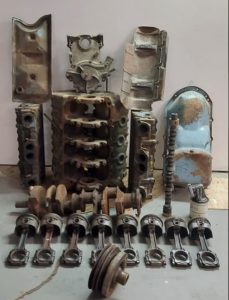
For example, the 455 V8 in my ’76 Trans-Am was last made 50 years ago. Not that many were made, either. The production run was just five years, from 1970 through 1976. If my Trans-Am didn’t have its 455 and I had to find one (plus the crank and the heads) to rebuild, the cost would probably be at least $2,000. That’s for ancient, greasy/rusty old parts.
Then add the cost of the necessary machine work to restore the block and heads and crank, plus the cost of paying someone to assemble it all correctly, which many people lack the expertise to do themselves. You’re looking at prolly at least $5k. (The well-known builders such as Butler – for Pontiacs – charge closer to $10k.)
Or you could just go to Summit Racing, JEGS or some other retailer and buy a ready-to-run LS engine for about $3,500.
I can understand why so many people choose that option.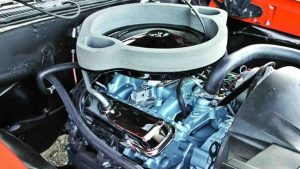
That said, I think a car like my Trans-Am would be diminished if it had an LS engine under its hood, even if the LS made more power than the 50-year-old 455 – because no matter how much power an LS V8 makes, it’s not a Pontiac V8. Is this pedantic? I don’t think so, because it’s not just the brand that’s at issue; it’s what makes the brand different. Not just that but distinctive, too. An LS V8 is a small block Chevy V8, basically. All Pontiac V8s are big V8s. There is no such thing as a small block Pontiac V8. Even the small displacement ones – the 326/350 cubic inchers – are physically big engines. A 326/350 block is just as big as a 400/428/455 block. That alone gives you something to look at that’s very noticeably different. Something distinctively Pontiac – as contrasted with something generically LS.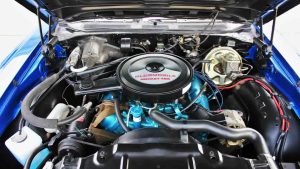
If I were to park my Trans-Am next to a same-year Camaro and both cars had their hoods up, you’d immediately be able to tell not just the difference but also – if you know cars – which is the Pontiac and which is the Chevy.
Without looking at the cars.
If you know cars, there is no mistaking a Pontiac V8 for a Chevy/LS V8 – or either for an Oldsmobile V8. Interestingly, some late-1970s Trans-Ams came with Oldsmobile (403 cubic inch) V8s and you can immediately ID them because Olds V8s don’t look like Pontiac V8s; among other differences, the blocks and heads are shaped differently and the Olds V8 has an oil fill tube at the front of the engine while the Pontiac V8 has a cap on the driver’s side valve cover.
Neither engine is better (or worse) but both are . . . different. They have different torque curves and other characteristics that make them feel different and respond differently to modification and tuning. It is not all just the same – as it is with LS engines.
What you end up with – when you install an LS engine in a classic muscle car – is a shell of what you used to have. Something that (in my case) may look like a Pontiac Trans-Am but may as well be a Camaro. More than just that, too. The LS engine is modern and that takes away from the history of a classic muscle car. I feel the same way about the installation of modern transmissions, big “rims,” LED headlights and digital dashes. It’s not that these aren’t improvements in terms of function; the fact is they often are. But that entirely misses the point – at least as I see it.
Why are old books regarded with a kind of awe? Well, because they are old. They have survived a long time and when we see them, we see a piece of the past that has survived, almost miraculously, into the present. We can hear the past, when we hear one of those old engines started up (some – old Mopar V8s – have a very distinctive starter sound).
Put another way, I think we lose something when we forget things, which happens when everything is new and everything is the same.
. . .
If you like what you’ve found here please consider supporting EPautos.
We depend on you to keep the wheels turning!
Our donate button is here.
If you prefer not to use PayPal, our mailing address is: EPautos 721 Hummingbird Lane SE Copper Hill, VA 24079










I couldn’t agree with you more. The LS is a phenomenal platform to be sure, but is just so boring and homogenized to see. Much like the “Target” crate 350 that dominated the 90’s, the LS has become the home for the lazy and unimaginative – the “street rodders” with lawn chairs in the trunk, but never a toolbox (gotta keep the New Balances clean for “cruise night” at Denny’s).
Give me a Pontiac, a Nailhead Buick, a first Gen Hemi (Desoto Firedome FTW), a Flathead Ford, or just something interesting. A clean straight six is a thing of beauty. I recently saw one of my own dream cars (‘57 Fairlane Skyliner) cut up (badly) to swap in a Coyote platform 5.0 and modern 837.6 speed automatic. Totally sucked the soul out of the car and made an appliance out of it – may as well do a Tesla “conversion” at that point.
I use to say to leave the engine swaps for the pedestrian six & four cylinder examples – the ones nobody wants.
But now due to their rarity, I enjoy seeing a non-SS Chevelle with a 250 I6 & a Powerglide.
If you want fast and better handling, there’s so many newer modern models to pick up and not have to modify anything- maybe just a good set of tires.
30 years ago I modified everything.
Today, bone stock is the new “modded.”
I’ve not spent much time around old cars, but the motor is the last thing id swap. As someone who enjoys driving, the things I would modify on an old car are the transmission, steering and suspension. Old cars generally drive like crap in stock form. They were soft and spongy. They wandered all over the road and handled like yhe queen Mary. The engines were loud due to the lack of an overdrive gear. Those are what am old driver deserves. Other than that ripping the engine out removes the rest of what made tge car a classic.