


It’s been a generation, almost, since the last new Pontiac was made. That was back in 2010. A lot longer ago than that, actually – because the final run of “Pontiacs” were just rebadged other-GM-brand vehicles that did not have Pontiac engines. One of the very last “Pontiacs” – the Vibe – was in fact made by Toyota. It was a slightly cosmetically altered Matrix and as far from being a Pontiac as Lia Thomas is from being female.
Other examples of “Pontiacs” in drag were the Solstice – which was a re-dressed Saturn Sky – and the Montana/Aztek minivans, which were just re-dressed Chevy minivans with exactly the same running gear as the out-of-the-closet Chevys. Even the much-revered Firebird stopped being a Pontiac, arguably, after the last 1981 model equipped with a Pontiac-made engine was built way back in 1981. It is very easy to argue that the beginnings of Pontiac’s end were sown when the Firebird was reduced to a Camaro with a different (slightly) skin. I speak here as the current owner of a real Pontiac – my 1976 Trans-Am – and the former owner of a number of others. Also as the owner of several Camaros.
I love them both because they are not the same.
My Trans-Am’s beating heart is a 455 Pontiac V8 that is different than the Chevy V8 that was available in same-year Camaros. There is the obvious difference, for openers. A 455 (that’s cubic inches for the Gen Z people reading this, who grew up spoon-fed depressingly androgynous metric ways of measuring such things; i.e., “liters”) is not the same as a 350, which was the largest engine available in a ’76 Camaro.
Not just in terms of displacement, either.
A 455 or 400 or even a 350 Pontiac does not even look at all like a Chevy 350. The difference is obvious as soon as you open the hood – which is part of the reason why you will see the hoods raised at old car shows. Otherwise, why bother – if they’re all the same?
The Pontiac V8 looks a lot bigger than a Chevy small block. It looks almost as big as a Chevy big block. That brings up an interesting thing about the Pontiac V8 – which is that they are all “big blocks” – in the sense that the blocks are all big, even if the displacement is small. A Pontiac 326 (cubic inches) looks exactly like a Pontiac 455. – and the 455 looks exactly like a 400 or a 428. You have to check casting numbers to ID which displacement you are dealing with but they are all basically the same engine. Pontiac increased – or decreased the displacement of its engines by increasing or decreasing the diameter of the cylinders (bore) or increasing or decreasing the stroke; i.e., the length of travel of the pistons within the cylinders The only major internal difference between a 350 Pontiac and a 400 Pontiac is that the 400’s bore is larger; the 428/455 have longer strokes.
What makes this approach interesting is interchangeability. Almost all the external parts – including such things as intake manifolds, timing cover cases, cylinder heads and so on – can be swapped around on any traditional Pontiac V8, irrespective of its displacement. In contrast, small block Chevy parts don’t fit big block Chevys; the two are completely different engines.
It’s easy to raise – or lower – a Pontiac V8’s compression ratio, too. Just swap heads. Most other engines require swapping pistons – which means having to tear down the entire bottom end of the engine. Most Pontiac heads originally installed on 326, 350, 400, 428 or 455 will fit (and work) on any of those engines, regardless of the year they were made. They have difference size combustion chambers, which is how Pontiac altered the compression ratio. My ’76 TA’s 455 has very low compression – 7.6:1 if you can believe it – in part because high-octane leaded fuel was being phased out around in the mid-1970s and engines with high compression ratios tended to “ping” if you used low-octane unleaded. That is part of the reason why the 455 – this huge V8 – only made 200 horsepower back in 1976!
Low compression generally means low performance. The good news – if you’re a Pontiac guy – is that it’s just a matter of swapping out the factory low-compression heads with earlier heads that increase the compression ratio. This is in fact exactly what Pontiac did in 1977 with the 400 V8, which replaced the 455 as the Trans-Am’s top engine that year. A high-performance (“T/A 6.6” on the hood scoop) version of the 400 was offered; among other things, this 400 used heads from a 350 that bumped up the compression by about 1 point, which increased the power by about 20 horsepower. This was a mod anyone could do to their Pontiac in an afternoon, without even removing the engine from the car. Once done, the swap looked factory because Pontiac 350 heads look just like 400 or a 455 heads.
This wasn’t all – but it was a big part of the reason why a Firebird or Trans-Am was not a Camaro or a Z28 with some exterior/interior cosmetic differences, which is unfortunately what the Firebird and Trans-Am became after the end of the 1981 model year. In 1982, GM introduced a new body for both cars and for the first time since they were originally introduced in 1967, they both came with the same drivetrains – produced by Chevrolet. A 1982 Trans-Am is – functionally – a 1982 Z28. Both cars have the same 305 Chevy V8. That made the 1982-up Trans-Am only superficially a “Pontiac.”
This made it superfluous.
GM did the same to its Oldsmobile division, which – like Pontiac – exists now only in memory and in garages like mine, where the TA survives as a relic of that better, vanished time Rush sang about.
. . .
If you like what you’ve found here please consider supporting EPautos.
We depend on you to keep the wheels turning!
Our donate button is here.
If you prefer not to use PayPal, our mailing address is:
EPautos
721 Hummingbird Lane SE
Copper Hill, VA 24079
PS: Get an EPautos magnet or sticker or coaster in return for a $25 or more one-time donation or a $10 or more monthly recurring donation. (Please be sure to tell us you want a magnet or sticker or coaster – and also, provide an address, so we know where to mail the thing!)
If you’d like a Baaaaa hat or other EPautos gear, see here!



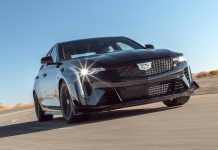




The 1970 Judge pictured in the lead image is probably the pinnacle poster car of the good times (I imagine) before the Karens and the gov worked to stop any kind of fun – and thus, danger! It’s even Orbit Orange which is probably the best GTO color ever offered.
I always think of the Dazed and Confused scene when the high school kids are ripping around town in a GTO Judge busting mailboxes. The old guy went after them with a pistol and threatened to call their parents, and did not SWAT them with authorities. It really illustrates perfectly the differences between better times and now. People had fun, did dangerous things, fought, let loose, took care of their property, and didn’t kowtow to gov and Karens. I wish we had that now, and I see how the slow erosion has people in a fog. Instead we have extreme authority, safety cult, declining wealth, wokeness, and electric pods that drive you around for a hefty fee.
Amen, Vandall!
I got to enjoy some of those good times – and sometimes, still do, because I still have my Carousel Red 455 Trans Am!
We used to joke that Pontiac was an acronym for “Poor Ol Nigga Thot It was A Caddy”.
Morning, MH!
How about Fix it Again, Tony? (Fiat)
Found On Road Dead
Gotta Mechanic Comin’
Also note along with the beautiful cars were sweeties like that blonde. You youngns’ really missed out. Jr. high late ‘60s Sr. high early seventies. Mini skirts the whole 6 years. Not one under 25 would be caught dead in a one piece swimsuit come summertime. Halter tops, hip hugger short shorts. No tattoos, no takle box adornments on the face (or anywhere else!) Maybe 3 in a 100 actually fat fat.
The 80’s, in flyover country, same thing. Sparky. The 60’s & 70’s, were the 80’s. …Maybe, even, the 50’s? Idk. Mileage varied.
The downtown I grew up in the 80’s was – seriously –
‘American Graffiti’.
The tatted up – nose ring – chicks are downright scary. Add a dash of blue or green hair and it’s no wonder the birth rate is in decline.
You say, “Maybe 3 in a 100 actually fat fat.”
I dunno about you, but I’ll take that, Any Day over tatted up & pierced everywhere with blue or green hair.
Ford made their ‘Model T moment’ announcement in Lexington, Kentucky this morning — and it’s all about frickin’ EeeVees. :angry face:
It’s not a Model T moment, since EeeVees don’t offer ‘mass appeal and affordability.’ Call it a Model F — as in FAIL — moment.
Why is Jim Farley still running this company?
What a joke. They didn’t even show this mystery vehicle. Here’s Farley sweating bullets (at 10:45) in his regular-guy safety vest:
https://www.youtube.com/watch?v=FLsYPc0GG5I
… a sartorial idea Farley copied from Trump, who campaigned in a garbage truck last October while wearing a safety vest. Monkey see, monkey do.
Where’s that, ‘Like’ button?
Maybe the T stands for tranny now? Just thinking outside the box here.
The last good looking American car, the 1987 Pontiac Grand Prix. I had the 1979, what a quiet comfortable car. 255k relatively care free miles, bought it used in ‘84 with 65k miles. Was on the consumer magazines ‘don’t buy list’ as a used car in ‘84, what a bunch of constipated morons. I drove it about 20 years.
Two Pontiac engineering faux pas, the late ‘60s overhead cam straight six (gack!) and the nylon toothed timing gear in the V8s ‘60s to early ‘70s. My brothers 67 GTO (400) failed as did my 70 Firebird (350). Old farmer enjoyed giving us a ride into town with the then youthful “perkey” Commander seated next to him in his old pickup truck when the Firebird failed 20 miles outside Monroe, WA.
Interesting, “the nylon toothed timing gear”.
I never would have imagined nylon in those motors. WTF were they smoking? [Compares to my ’94 Toy with metal!]
And, YES! “The last good looking American car, the 1987 Pontiac Grand Prix”
My Mom let me drive her 1984 when it was brand spankin’ new.\\
What a joy. And, so cool.
…Too bad, it rusted from the inside, out.
in ’97, I flew into Anchorage and rented a car to drive around the state for a month
the agent recommended a Pontiac – I LOVED driving that car – so smooth, so comfortable
it was my favorite trip, ever
My grandfather was a Pontiac man. He liked that Lemans series. Back in the day when I was 14 my dad bought grandpa’s 69 Lemans in a silver with black landau top and rally wheels. The car was gorgeous, and my mom got a lot of compliments driving the car. I was pining for this car at 15 when dad sold it for a song to get a 74 Ford POS wagon with the wood on the side. Oh well, it motivated me to get my own car; 68 Camaro.
“and rally wheels”.
…Weren’t they, The Coolest?
Way better looking than Craigers. Or, anything else.
…Then, and now.
Don’t forget that also means this:
If you’re handy, and have a friend with a machine shop, you can buy a smaller-displacement engine, get it bored out, and replace basically just the pistons/rings and the heads. Sweat-equity horsepowers!
Again, where’s that, ‘Thumbs Up’ button?
Thank you for the Red Barchetta reference. So apt.
My favorite body style for the Firebird was from 70-73. A Formula with the dual hood scoops or the Trans-Am with the functional shaker. Beautiful!
I would trade my 71 Charger 440 AND 79 Formula for one of those.
I had a ’79 Formula. Dark blue with grey rocker panels.
Nice. Mine is a light gray with dark blue rocker panels. Or it was originally. Now it’s flaky paint and primer.
It has only gotten worse over time. Most GM’s have only Chevy engines in them now and your new GM probably was made in China or Mexico and as Scotty Kilmer points out often you don’t want a Mexican built car especially an EV.
‘Low compression generally means low performance.’ — eric
Indeed, it’s a direct consequence of the Otto cycle, used as the thermodynamic model for gasoline engines. A higher compression ratio means a higher peak temperature. Expanding the difference between the peak and ambient temperatures maximizes efficiency and output.
‘From analyzing equation 6 it is evident that the Otto cycle efficiency depends directly upon the compression ratio r.’
https://en.wikipedia.org/wiki/Otto_cycle
My first car was a GTO, a couple of year models earlier than the one in the lede photo, with a 400 V8 and four-speed manual (no overdrive). Unfortunately, mine was ordered without the popular ‘mini-skirted blonde girlfriend’ option. 🙁
HA! “Unfortunately, mine was ordered without the popular ‘mini-skirted blonde girlfriend’ option. 🙁”
I see your point, howevah; The One, follows, the other. …Usually.
I guess that doesn’t apply nowadays, though. Sadly, Moreso.
Unfortunately changing compression and cam timing improves efficiency but also changes the composition of the exhaust gases.
Bur dropping efficiency makes more exhaust gases.
What to do?
They dropped emissions testing here in WA, cam up America! My Harley got a mild cam bump last year. Scary quick throttle and 45 mpg is now near 50. Still decent idle.