

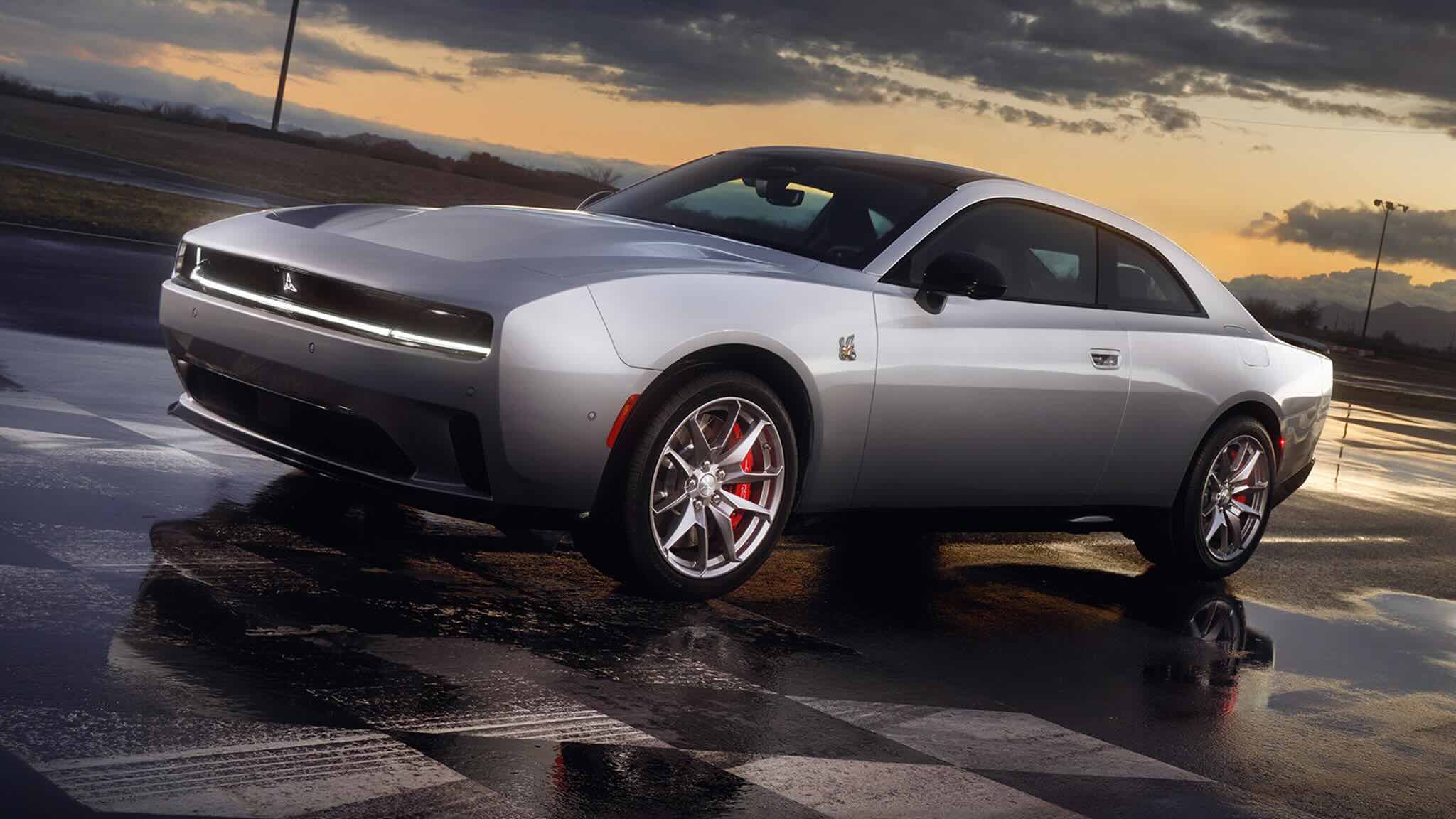

I have yet to see a new Charger – the device – which has been available for about two years now. Not one.
On the road, I mean.
Not even in my driveway, which is very strange – because I get sent an example of pretty much every new vehicle each year to test drive. I have yet to get a Charger. Perhaps because they can’t send me one. Reports are the devices are not just short-ranged and take forever to recover range/charge, as is true of all devices – what would ordinarily take four hours from point to point takes six or longer due to the stops/waits along the way – but also glitchy.
There were reports that when the devices were first being prepped for shipment to Dodge stores back in late 2023, it was found that many of them had bricked and so could not be moved, let alone shipped. Devices are heavy and there is no “neutral” so you can’t push them anywhere. Dodge reportedly had to send out techs to try to un-brick each device, individually – and this delayed the first-year launch well into 2024. When they finally managed to get some of these devices to the dealerships, many of them reportedly re-bricked themselves.
Of course, that is not the fundamental problem with these devices. People will put up with a lot if they like something a lot. Old muscle cars weren’t exactly reliable, either. They overheated, needed frequent adjustments to keep them in tune. But lots of them sold because lots of people were willing to put up with their crankiness and general unsuitability as daily transportation because when you lined one up and hammered the gas you got the ride of your life.
This was not about speed so much as the berserker experience – a critical point that the people at Dodge (of all places!) seemed to have missed. The Charger device is quicker accelerating than all of the original era muscle cars, none of which could achieve 60 MPH in three seconds or less. The device can do that but the point missed by Dodge is that getting to 60 however quickly is not what makes a muscle car.
In the video embedded with this article, you will see a mid-1980s Chevrolet Monte Carlo SS. It was a muscle car even though it took about 7 seconds to get to 60 – something most current-year four cylinder-powered crossovers can also do.
Are they muscle cars?
Is Lia Thomas a woman?
The mistake the people at Dodge made was not comprehending the difference between a muscle car and a performance car. There is some overlap but they are not the same things. Muscle cars are supposed to perform but performance – no matter how high – is insufficient by itself to make a muscle car. A Tesla S Plaid is a very high-performance car. It gets to 60 in less than 3 seconds but almost no one would say this battery powered performance car is a muscle car even if it got to 60 in 1 second, effectively teleporting itself from A to B.
What’s missing is the V8 and specifically, the sounds made by a V8 – both intake and exhaust. Battery powered performance cars are not capable of making such sounds because they lack intake and exhaust. There’s also popping the hood and seeing the V8, which has aesthetic charms that are hard to objectively quantify but which have an appeal that an empty “frunk” will never have – at least not to people who love muscle cars.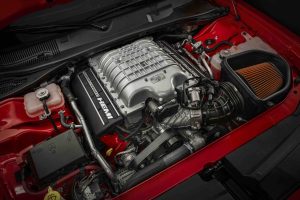
Dodge made the mistake, in other words, of trying to sell apples to people who want oranges and its even worse than that in a sense because everyone else is already selling oranges. Until the end came in 2023, no other brand had anything like the Charger and Challenger. Dodge literally had the market – for muscle cars – cornered and rather than keep the pedal to the metal (so to speak) decided to lift throttle and give in to the government.
The result ought to have been as predictable as replacing the burgers at McDonalds with lab-grown “meat” and – on top of that – expecting people to pay more for it. That’s what Dodge did. The Charger device’s base price is $15,000 higher than the price of the last (2023) Charger that wasn’t a device and is a muscle car, even though it’s not nearly as quick as the new device.
Nevertheless, I see Chargers and Challengers on the road every time I’m on the road and Dodge never had any trouble sending one my way for a test drive. This includes the Black Ghost that had a range of maybe 200 miles due to the thirst of the supercharged V8 under its hood. That didn’t matter because it was easy and quick to fill ‘er up and besides, the inconvenience was easily overlooked because everyone who loves muscle cars loved the thing.
This new thing?
Hell, no one even notices it’s not there.
. . .
If you like what you’ve found here please consider supporting EPautos.
We depend on you to keep the wheels turning!
Our donate button is here.
If you prefer not to use PayPal, our mailing address is:
EPautos
721 Hummingbird Lane SE
Copper Hill, VA 24079
PS: Get an EPautos magnet or sticker or coaster in return for a $25 or more one-time donation or a $10 or more monthly recurring donation. (Please be sure to tell us you want a magnet or sticker or coaster – and also, provide an address, so we know where to mail the thing!)
If you’d like a Baaaaa hat or other EPautos gear, see here!










I don’t hate the body style of the car. Kind of cool I guess.
The true question is:
Will the inline 6 with 500 horsepowers be considered a muscle car?
I think not.
Hi Philo,
A car that does not have a V8 cannot be a muscle car. Period. It is not power than defines a muscle car; it is the V8. The power of the V8 is not especially relevant. An ’80s Monte Carlo SS only had a 305 (5.0 liter) V8 and only 180 hp. It was still a muscle car. A 600 hp six cylinder Charger is a performance car. This is not a slam. Just a a statement of fact.
FWIW, I saw one today for the first time, while out running. Paler shade of Hugger Orange and a silhouette which looked kinda nice from behind. It slowed down right in front of me to turn into a neighborhood and I heard the ‘exhaust.’ Sounded more like a souped-up lawnmower; anemic, too-quiet-by-half…simply unconvincing. I wouldn’t have even known what I was looking at if it wasn’t for this article, so thanks!
In related news, I was out running last week when a red Dodge Viper SRT with dual racing stripes passed by with a low throaty roar that immediately demanded my attention. Nothing beats the real thing!
Never seen one near chicago, and there are plenty of high performance golf carts running around on the road from tesla, rivian and lucid as well as the non hummer
I’m in SE MI and see one just about every day. 50/50 M plate and not. I think it’s ugly as sin My.02
I work near the proving grounds in Michigan so I have seen lots of these. Not all of them were ‘M’ plates either. I even saw one that was making an ‘engine noise’ but I was not certain if it was real or not. I like the retro styling but have no interest in a device.
Morning, Auto!
I drove by and through the lot of my local Dodge/Chrysler/Jeep/Ram dealer and saw not one of these devices on the lot.
Seems the “devises”, like the electric Charger, have ruined it for both
high-performance EVs and “muscle cars”.
“Muscle cars” are not as fast as the EV versions but the EV versions,
with their electric motors, lack excitement.
Maybe the auto “enthusiast” will just fade away.
PS The Germans are still doing the engine performance thing –
for a price, BMW M versions, Mercedes AMG, Audis S & RS.
I have seen actually seen one electric Charger in the wild. Just one. A few weeks ago.
And this is an area of the country that you see plenty of the last generation of the Charger and Challenger.
I Drove an EV Deep Into the Wilderness. I Never Feared Running Out of Juice
https://archive.is/EVtgX#selection-539.0-539.75
I dunno, Eric. This smells like fanboy propaganda from Rivian and the Wall Street Urinal.
Thoughts?
This is obviously propaganda, as is evident from the third paragraph onwards, when the author starts hallucinating about “the rapid build-out of America’s fast-charging infrastructure” as if such a thing has ever taken place.
He continues with his outrageous claims by stating that “[t]here are now nearly 12,000 fast-charging stations in the U.S.”, which is obviously 12,000 too many, since the real number of fast-charging stations in the US is zero.
He then thinks back at his visit from the “BP Pulse charging station across from the rental-car garage” where he says “there are a whopping 48 EV charging ports.” Then he once again lies about charging speed, claiming that “[e]very single one” of those charging ports “can charge today’s EVs blazingly fast. [sic!]”
The one time he quantifies the charging time, he says he “was able to charge the Rivian at my first stop from 43% to 80% in about 28 minutes”, contradicting everything he’s said about “fast charging”, as 37 % in 28 minutes is laughably slow. And then he tries to spin the fact that the already slow charger becomes even slower after 80 % charge as a good thing, viz. “(Charging to 80% is a good timesaver, since charging slows between 80% and 100% to protect the battery.)”
I think this is a case of a propagandist who believes his own propaganda.
” and there is no “neutral” so you can’t push them anywhere”
That’s something I’ve never thought about. No doubt the tow services add a hefty fee for use of a rollback and the PITA of loading an EV.
An EV does have sort of the same thing as neutral but it’s not conceptually the same as putting your transmission in neutral (or having a viscous coupling torque converter or clutch).
The motors are connected to the wheels either directly or maybe using a small gear box. When you have no power the motor will spin. Imagine grabbing the blades of a ceiling fan and giving them a whirl.
They have to prevent you from doing this too much, though. Turning the shaft of many types of motors make them into a generator, it’s essentially what’s going on when regenerative braking is done. Most EVs cannot be flat towed due to this.
What EVs do is lock one or more wheels when the motor is not powered. This is more or less the same thing that happens when you shift an automatic transmission into park, a small pawl is engaged to keep the car from rolling away.
The reason any car might not roll is the controller is glitched or died or the battery is dead and the locking pawl is not disengaged.
Lots of new cars have this issue, not just EVs. Anything with an automatic transmission that uses an electronic shift (everything with button, knob but even if it looks like a shifter it probably isn’t) or has an electronic parking brake instead of mechanical connections can’t get into free rolling neutral. Even old automatic shifters that did physically connect to the transmission if the linkage or cable broke and could not disengage the pawl would not easily be rolled around.
Tow trucks have had to carry wheel dollies or skids for decades for this very reason, long before EVs.
Thanks, Sayer –
My take on this – to call up a great ’80s song from Styx – is “too much technology.” Complexity for its own sake that offers little if any value to the vehicle owner and typically increases the hassle and expense of ownership.https://www.youtube.com/watch?v=uc6f_2nPSX8
Just what is the technology sweet spot?
In the 1950s automatic transmissions did not have a parking pawl and could run away if the parking brake didn’t hold (you parked in neutral and set the brake). That was a technology fail since parking before that with a manual shift the engine compression could hold or at least slow a parked car from rolling away too fast.
So by the 1970s cars were “unnecessarily” (in my view) complex just by virtue of having a transmission that shifted for you and then further requiring the pawl work around when you parked.
Fun fact, in the 1950s an automatic could be push started. Literally push it like you did with a stick and shift from neutral to drive.
Back to the modern cars. Having an electronic actuator move the transmission instead of a cable is a benefit to the interior designers. Now why they choose to retain the huge consoles is a mystery to me. But when they freed up needing to route a mechanism and cable they can open up tons of space. Lots of mini vans seem to understand the benefit there. Like the Sienna with the little lever in the dash. You don’t need to work around having the lever so why make it look like it? Lower the floor, open up interior space.
Hi Sayer,
That’s easy. Mid-late 1990s through the early 2000s. Basic (TBI and PFI) injection with physical throttle control. No “drive by wire” controls for throttle or transmission range engagement. No computers running power windows and locks. Hydraulic power steering. No “connected” tech. No LCD touchscreen interfaces. These vehicles are capable of providing 25-plus years and hundreds of thousands of miles of generally reliable service and are not difficult or expensive to repair.
Vehicles made since this time do not offer any meaningful improvement to the owner. My ’02 Nissan pick starts immediately, never stalls and runs and drives as well (even better than) the new vehicles I test drive. It does not feel almost 25 years old. And it is far more owner-fixable because it lacks all the over-teched crap that has been embedded in new vehicles.
I have seen no more and no less than ONE (1) of those devices. It was plugged in at a charging station in a parking garage I parked in.
On a seemingly unrelated note, the 1970 Cadillac Eldorado Fleetwood is technically one of the most powerful cars produced during the muscle car era: Its standard 500 cubic inch (aka 8.1 liter) engine put out 400 horsepower and 550 pound feet of torque. And it’s pretty safe to assume that those figures underreported the Caddy 500’s actual output.
Nope, haven’t ever seen one of these Chargers. Maybe we can organize a snipe hunt to find one!
Actually, it’s a tasteful, clean body design. But then you realize it has a frunk — a ghastly void where its engine should be (an artificial vagina, if you will) — and a big bubble-butt, boat-anchor battery under its ‘low-slung chassis’ (as Hillary Clinton’s physique was once described).
The Charger is kind of like chatting up a pretty woman and then noticing ‘her’ latent Adam’s apple, and wide shoulders, and large hands, and husky voice. It ‘transitioned’ — but we didn’t.
EeeVees are an unsavory kink that really should be pushed back into the shadows, so that decent citizens (including impressionable children) need not be scandalized by their sleazy, drag-queen pretense of being ‘cars.’
Jim: The Charger is kind of like chatting up a pretty woman and then noticing ‘her’ latent Adam’s apple, and wide shoulders, and large hands, and husky voice. It ‘transitioned’ — but we didn’t.
I’m guessing it’s like this “discovery”- “Found Mr. Winky” Ace Ventura: Pet Detective
I enjoyed the clever analogical reasoning, Jim H.
Although, I think they like to refer to the vagina as a “front hole.” An SNL gem, when it used to be funny.
https://www.tiktok.com/@thealmanac77/video/7343222159218674950?lang=en
Eric : Are they muscle cars? Is Lia Thomas a woman?
The answers to those questions of course is NO. While my old Rat motored Chevy might not be as fast as I wish, when I floor it at 30 mph it’s Rochester 4 barrel and dual exhaust make happy sounds and that makes me happy. That I do it about 500 yards away from a police station where the speed limit increases to 50 might cause some future “interaction” is a different issue.
As for Dodge’s electric gimp; if it costs $15K more than the old one perhaps they should have continued selling the old design and showed in the Monroney paper what the penalty was. This way you can pin the blame on GovCo for the high price and not on you as the manufacturer.
As you pointed out in a previous article, you can buy a lot of gas for many years of driving for the extra money a hybrid costs.
Wasn’t there a gas station somewhere that was doing a line itemization on their receipts to show the cost, taxes and thin profit on each gallon of gas?
If any manufacturer, really any company, wanted a simple way to answer “Why does this cost so much?” complaints they should honestly just show you a list of shrinkflation and regulation costs right next to the list of what’s in the box.
Maybe.
I passed a Challenger that had some very odd lights both front and rear. It was on I-85 near I-77 in Charlotte. I can’t be certain but, as slow as it was going it had the look of an EV with those weird lights.
Some might argue that the “Muscle” in “Muscle Car” denotes masculinity and testosterone. Some might argue that a “Muscle Car” with an automatic transmission is an oxymoron.
IMO there are 2 aspects of using a manual transmission that are “manly” in a way that an EV or automatic can never be:
One is the ability to seamlessly double clutch into that sweet spot, for example on a freeway onramp, and to be able to skillfully carve the apex of a turn while seamlessly heal-and-toeing under hard braking in order to have the engine spinning at the perfect speed for hard acceleration coming out of the turn. All done with perfect composure without a trace of fear or panic. Like Sean Connery defeating an army of Jewish Cabal bad guys without breaking a sweat.
The other is to be able to do both of the above with a roaring V8 with gobs of torque breaking the wheels into short fish tail a heavy chirp in perfect control all without the use of electronic stability controls.
I don’t really consider a Hellcat to be a muscle car because it is not even available with a manual transmission. IIRC, the Challenger/Charger 392 SRT can be had with a Tremec 6 speed. That is probably the last true Dodge muscle car. I don’t know which Mustang versions offer a manual and I don’t think the Camaro does any more.
PS: I didn’t say I could do all of the above, but I try.
You can hear Steve Mcqueen do a nice double clutch in the penultimate Muscle Car scene in Bullit.
https://youtu.be/no7XR7s8Z7o?t=70