


Plug in hybrids can be seen in the same light as those bandanas some people wore during the “pandemic” in that both are examples of ways to get away with not doing what the government-corporate nexus wants. The bandana qualified as a “mask” – allowing the wearer to get into stores requiring them without having to actually wear a mask. Similarly, plug-in hybrids are a way for car companies to get away with not making more purely electric cars because plug-in hybrids are capable of operating as electric cars and so help the car companies comply with the regs that can only be complied with by electric cars.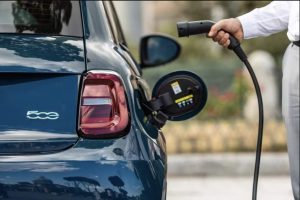
A plug-in hybrid can be driven on battery power alone – just like an electric car. But it does not have to be driven on battery power alone because it does not have to be plugged-in when its battery runs low on charge. The gas engine automatically kicks in to recharge the battery while you drive, which means you do not have to stop – except occasionally for gas – and as everyone knows, stopping to get gas (a full tank) takes just a few minutes. As opposed to waiting for at least 20-30 minutes to recover a partial charge at what are hilariously called “fast” chargers. Yes, of course, they charge faster than charging at home – which takes hours. But it still takes comparatively forever vs. filling up a gas tank.
That is the appeal of the plug-in hybrid – to the person who drives one. He does not have to drive an electric car.
The appeal of the plug-in hybrid to the car companies is that they do not have to try to sell people a car that forces them to wait and plan around the wait. Plug-in-only cars (electric cars) are hard to sell because they do force their owners to wait and plan around the wait. There are a few people willing to do that but not enough to make selling plug-in-only vehicles viable as mass market vehicles. But – Catch 22 – they effectively have to manufacture plug-in vehicles to achieve compliance with the “zero emissions” regs as well as the mileage regs, which effectively require vehicles that do not burn gas at least some of the time.
Plug-in hybrids fit the bill. When they’re running on battery power, they are “zero emissions” – and aren’t burning any gas. Bingo! compliance achieved.
But they’re able to burn gas – which is how they get away with being noncompliant. It is why plug-ins that do not have to be plugged in are under attack for being just that – and not just by anti-driving car sites that bemoan the fact that plug-ins do not have to be plugged in and so do not force their owners to plan their driving around the waiting.
Toyota is using behavioral science to wheedle people into plugging in. Naturally, there’s an app for that. It is called ChargeMinder and it “integrates more than a dozen interventions based on well-replicated findings from behavioral science research that have been tailored for specific charging behavior change goals.”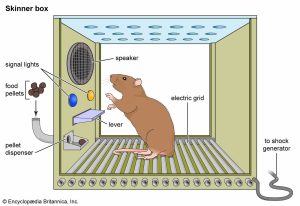
Italics added.
B.F. Skinner – the behavioral scientist who invented the Skinner Box – phone home.
Why is everything about changing our behavior? Implicit in this is that our “behavior” is wrong and must be corrected. Does it not make you want to smash something – like the ChargerMinder app?
It works very much like the seatbelt “reminder” every new vehicle has in that it isn’t a reminder. It is a petty punishment.
The dinging/chiming that doesn’t shut off until you give in and “buckle up.” That is an example of changing behavior goals. Similarly, the ChargeMinder app “reminds” you to plug in – implying you’d merely forgotten rather than just didn’t want to – and it “recommends” stops to charge when the car is in the vicinity of a place to plug in – which it knows because it is connected, something this column has been trying to warn people about for some time. It knows where the chargers are and it knows where you’ve been and what’s nearby and uses the data to “remind” you that you could stop and wait for a charge up ahead.
How very thoughtful!
Except of course no one asked for this (as one might a wake-up call at a hotel).
The CEO of of the Toyota Research Institute, Gill Pratt, says “Technology is not the only way to reduce emissions – people’s choices matter too.” Always the dissembling. If it were about people’s choices, Toyota wouldn’t be trying to change them, eh? And the change, in our time is always via euphemism and disingenuous coercion of one sort or another. “Driver assistance technology” is the obvious example. Most drivers did not ask for this “assistance” because they do not need it. Yet there it is – embedded in every new vehicle as standard equipment.
“This research and development shows how science-based behavioral interventions can both help us reduce carbon emissions as much as possible, as soon as possible, and increase customer satisfaction,” Gill says.
How many customers asked for this? How many want it? More to the point, how come customers won’t be able to opt out of it? It isn’t very satisfying to be wheedled into something via “behavioral interventions,” in the manner of a pink eyed white lab rat.
Another Toyota mind-diddler, Dr. Laura Libby, of Toyota’s Human Centered Artificial Intelligence department at the Toyota Research Center, says “Research in behavioral science shows that small, targeted interventions can have a large impact on people’s decisions and actions. Furthermore, compared to other causes of behavior change such as public charging infrastructure initiatives and consumer financial incentives, behavioral interventions are inexpensive and can be deployed quickly.”
What happened to the car industry? What happened to us?
The Brave New World Huxley wrote about a century ago is upon us and many of of us don’t even realize it even as we’re increasingly immersed in it.
Which is probably why.
. . .
If you like what you’ve found here please consider supporting EPautos.
We depend on you to keep the wheels turning!
Our donate button is here.
If you prefer not to use PayPal, our mailing address is:
EPautos
721 Hummingbird Lane SE
Copper Hill, VA 24079
PS: Get an EPautos magnet or sticker or coaster in return for a $25 or more one-time donation or a $10 or more monthly recurring donation. (Please be sure to tell us you want a magnet or sticker or coaster – and also, provide an address, so we know where to mail the thing!)
If you’d like a Baaaaa hat or other EPautos gear, see here!










Ideas so good they have to be forced on you by the government and their minions.
Friend bought a new CRV couple years ago, so so so excited about “lane assist “ and “adaptive cruise control “. Yep that marking brain wash/rinse/spin worked like a charm!
Companies — especially larger companies — do this kind of stuff to their employees all the time.
It works very well, on some people.
It also tends to breed resentment & subversion among some others. Which creates a great deal of friction between those two groups of employees. But it also limits how far & how fast the management can go with this stuff.
I have found that I am far more resistant to this than most people (although I have to bend sometimes to avoid breaking), and far more able to recognize it for what it is (a brainwashing technique), and far more willing to call it out in various subtle and not-so-subtle ways. Which usually ends up with me getting fired, but also I usually have a pretty big fan club hiding just brlow the surface.
Yes, the ass kissers versus the ass kickers.. I have always been the later hence self employed.
‘Does it not make you want to smash something – like the ChargeMinder app?’ — eric
Follow the science, Eric. I designed an analogue of the Milgram experiment, using a monstrously overpowered ChargeBuster which can deliver up to 1,000 amps at 2,000 volts. Then it was time to recruit a fetching coed for my experiment, and procure a gallon of pre-mixed margaritas.
We salted our glasses and began drinking as I explained the experimental protocol. Then we had another round, and another. Now it was time to fire up the ChargeBuster. Though the ChargeMinder app indicated excessive amperage and flashed dire warnings, I egged on my long-legged
lassiesubject. ‘Don’t believe that stupid app. MORE POWER!!’ And even as the water-cooled cables began to smoke and melt, she willingly complied, pulling the lever way into the red zone with a boozy flourish.Seconds later, the inevitable happened — KAPOOM! The battery exploded, as flames began to lick at the vehicle. Totally losing my professional composure, I began to laugh uproariously along with my experimental
lovelysubject. Then for good measure, I took the brand-new, grant-funded iPhone 17 running the ChargeMinder app and hurled it against the wall, shattering its screen and case.Typing sloppily with lots of misspellings, my eyes tearing up in the thick smoke, I pecked out the preliminary conclusion of my psychology paper: We decided to get drunk and charge fast and tear things up.
“As opposed to waiting for at least 20-30 minutes to recover a partial charge”
Eric, I’d rather see you compare a full tank fill-up of gas vs. a full charge in your articles. A partial charge can be anything they want it to be. How long is the wait for 0% to 5% (partial) charge? Probably not long.
20-30 minutes, while ridiculous in and of itself, sounds tame compared to the hours it would take to get to full capacity, like you can easily and quickly achieve with a gas tank.
“Half the money I spend on advertising is wasted; the trouble is I don’t know which half.” – John Wanamaker
Effective marketing is difficult, especially in a market like automobiles. They’re fairly identical, very expensive and 3/4 of your buyers are more interested in the paint color than the technology. So when the company is able to market their way to the top of course the executives believe they can sell refrigerators to Eskimos. “Nudging” people into remembering to plug in their plug-in hybrid? Piece of cake! Just be glad it’s a reminder in the app -I’m fairly certain one of the ideas put up on the white board was “don’t let the vehicle move out of the garage if the charging plug hasn’t been used in xx days.”
Sad thing is, marketing works. This nagging app will probably work. Then again, yesterday I rode with someone who drove for miles without a seatbelt fastened. Every minute the car would chime like the engine was about to blow up, yet he drove on blissfully ignoring the alarm. I grew up wearing seatbelts and so I’d likely wear one even if there were no alarms or lights on the dash, but for him all the chimes and bells are wasted. I’m sure there’s some other marketing gimmick that he’d fall prey to though. Because marketing works.
If the engine is gonna charge the battery anyhow, why bother plugging it in?
If your employer offers free charging while at work it might pay for itself then.
They won’t supply coffee much less anything else.
The one advantage of driving older and antique cars only is that you notice things that drivers of newer cars have acclimated too.
When I get into newer cars I really notice the nanny tech and am instantly turned off by it. Sadly most people are bewitched by their fondle slabs (smart phones) and can no longer recognize they’re trapped by it.
True, and that steering or seat vibration/steering correction is rather terrifying when you dont know your car does that. I was in a rental in a foreign country and the stupid thing had lane keep assist countermanding my steering input on the highway. I felt like I do when I almost collide with something.
Same thing happened to me, narrow two lane road I was furious.
I just had a new hyundai as a rental and this shitbox acted just like the car in „demolition man“ ( worth a rewatch but you‘ll be in tears how accurate it envisioned the future), the fucking thing beeped and dinged and interferred all the time. Especially annoying the speed detection: the car insisted on me driving 30, google maps said it‘s 80, the road signs said 60 though 😆. Worse, it‘s not a single button push (eccept the beloved start/stop), but constant fiddeling in computer sub menues every time you restart the fucking thing. All my hopes lie in some after market hackers that can deprogram this garbage once and for all, and trust me it will happen!
You can’t understand where you are going, with out understanding where you’ve been.
And if you are unburdened by what has been, you are quite simply adrift.
With an “app” on iOS or Android, Toyota’s mind diddlers are the last in a chain of psychologists on corporate payrolls up the supply chain, starting with Apple and Google’s.
“Twitter” as a concept was not popular until the company bought a third party app, Tweetie, which utilized the “pull down to refresh” hook in the summary list of messages from subscriptions.
People loved to make Twitter go “boingy”. The dopamine hit delivery mechanism was quite the innovation.
And Patentable.