

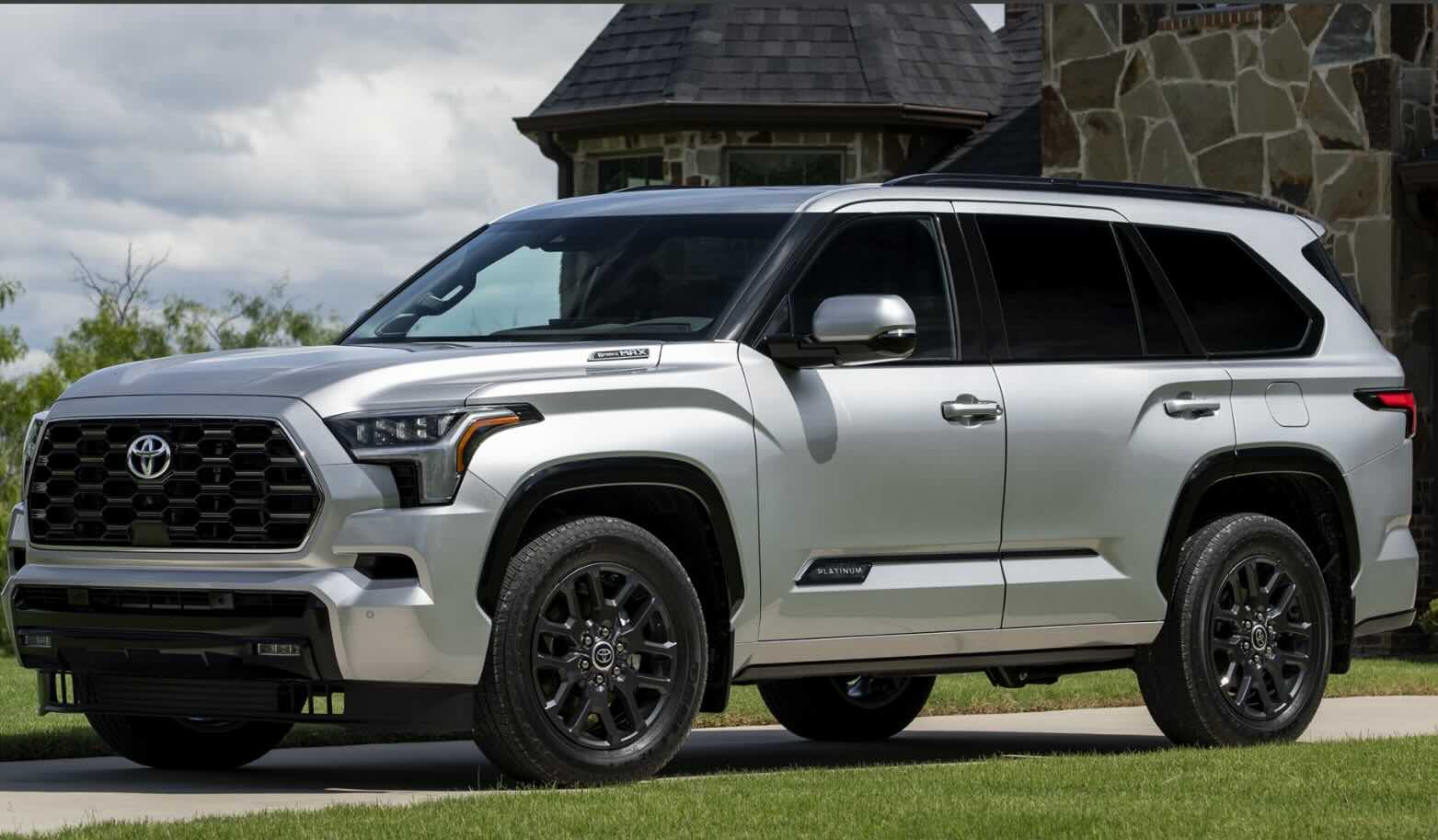

The Toyota Sequoia is still the same – but also very different.
How so?
Well, it’s still a full-size SUV, with real 4WD and real off-road capability. But it no longer comes standard with a big V8; instead it comes standard with much more powerful V6 that’s only about half the size of the previously standard V8. It gets slightly better gas mileage, but it’s the much-increased power (and increased towing capacity) that’s the real draw.
Of course, there are costs involved . . . .
What It Is
The Sequoia is a full-size SUV with three rows and seats for 7-8 people, depending on the configuration. Most trims are rear-drive, with 4WD (not AWD) available optionally. All trims come standard with a turbocharged (and hybrid-augmented) 3.4 liter V6 paired with a ten speed automatic transmission.
Prices start at $64,025 for the base SR5 trim with rear-wheel-drive (2WD). 4WD – with a two-speed transfer case and low-range gearing – is available as a stand-alone option that bumps the MSRP up to $64,525. From there, there are Limited ($69,795), Platinum ($80,035), TRD PRO ($80,765), 1794 ($80,50) and Capstone ($84,435) trims.
Platinum and higher trims get upgraded leathers seats, heated second row captain’s chairs, a panorama sunroof, wireless phone charging and upgraded stereo systems. 1794 and Capstone trims get massaging front seats, insulated side glass, wood trim inside and larger wheels/tires.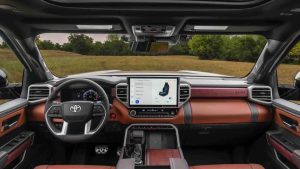
TRD PRO Sequoias come standard with 4WD and off-road-enhancing upgrades such as 18 or 20 inch TRD wheels with all terrain tires, skid plates, off-road suspension tuning (with Bilstein shocks), an electrically locking rear differential and Crawl Control, among other upgrades.
What’s New for 2025
The 1794 trim is new; also, the Tow Tech package includes a Wi-Fi trailer camera.
What’s Good
Turbocharged, hybrid-augmented V6 makes more power than the previous V8, uses less gas.
Can pull almost 10,000 lbs.
TRD off-road upgrades can be added to any trim.
What’s Not So Good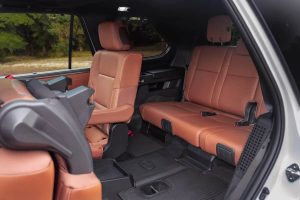
The previous V8 had a long-established track record for being extremely reliable and long-lived, too. The new turbocharged, hybrid-augmented V6 has yet to establish its long-term reliability.
To activate the seat massagers, it’s necessary to tap the touchscreen to access the menu and then tap it again to turn the massagers on. A physical button would be easier to use – by feel – when driving.
Third row seat is tighter than in rival models that have independent rear suspension under the floorplans (the Sequoia has a sold rear axle).
Under The Hood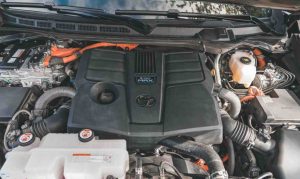
The Sequoia – like the Tundra pick-up that it’s based on – used to come standard with a V8 because it used to be necessary to put a big engine under the hood of a heavy vehicle such as the Sequoia (curb weight is 6,185 lbs.) in order to get it to move faster than a box turtle can run. But big V8s use a lot of gas. The Sequoia’s previously standard 5.7 liter V8 only managed 13 MPG in city driving and a hardly better17 on the highway. That probably didn’t matter all that much to most of the people who bought a Sequoia, of course.
If it did, they probably would not have bought one.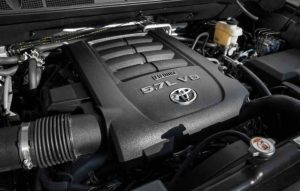
On the other hand, it matters bigly to Toyota – which like every other vehicle manufacturer must find a way to comply with federal fuel economy regs (CAFE) that keep getting more and more demanding. They also must comply with federal emissions requirements that demand ever lower “greenhouse gas” emissions – and big engines that burn more gas generate more of those. That’s fundamentally why the V8 has been replaced with the new 3.4 liter V6; its smaller size increases gas mileage, which goes up to 21 city, 24 highway and while that may not matter all-that-much to people who buy huge SUVs that have $60k-plus starting MSRPs, it does matter hugely to Toyota – in terms of meeting the government’s demands.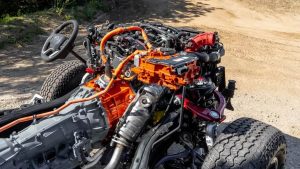
The turbos (there are two) bolted to the small V6 are there to meet your demands – for power/performance and capability. All three of which are greatly upticked. The V6 produces 437 horsepower – vs. 381 for the old 5.7 V8 – and and 583 ft.-lbs. of torque, which (along with body-on-frame construction and a solid rear axle) enable this three-ton-plus SUV to pull up to 9,520 lbs., matching (just about) the class-best 9,600 lb. max tow rating touted by the Ford Expedition – which also comes standard with a twice-turbo’d V6 but without the hybrid augmentation.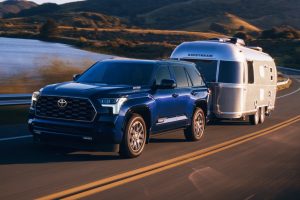
The latter is there both to boost total system power and to enable the gas-burning V6 to be (automatically) turned off as often as practical, such as when the Sequoia is stopped waiting for lights to change and also when coasting/decelerating. This helps boost gas mileage – the Expedition’s is 17 city, 23 highway – and greatly reduce what would otherwise be the annoyance of ASS, or automatic stop-start “technology.” The stop-starting of ASS is much more noticeable because ASS generally relies on the engine’s starter motor to re-start the engine and that can be both felt and heard. The hybrid system has a much more powerful electrical system (48 vs. 12 volts) and engine re-starts are handled by more powerful electric motors or a belt-drive/starter generator system.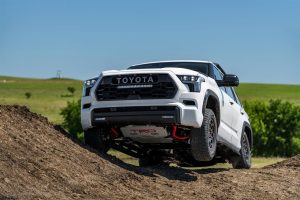
The result is you do not feel and so can hardly tell when the big Toyota’s small engine has been cycled off – and cycled backon.
The Sequoia is startlingly quick given its size – and weight. It can hustle to 60 in about 5.6 seconds. For reference, the previous generation Sequoia with the 5.7 V8 took a little over six seconds to get to 60.
A ten speed automatic transmission is standard; as mentioned, all trims except the TRD are rear-drive as they come but can be ordered with 4WD.
On The Road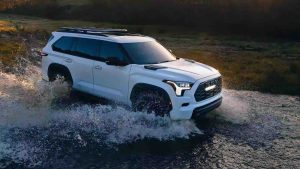
Part of the appeal of a big SUV such as the Sequoia is just exactly that. It’s big – and heavy – and that feels great. It is the feeling of being bigger than just about everything else on the road. You feel like a battleship among sailboats. The downside to this is, of course, the size of the thing.
More finely, the width of the thing.
It is just shy of 80 inches wide – not counting the mirrors, which extend another several inches on either side. How wide is 80 inches? It is nearly eight inches wider than a Camry and that doesn’t leave a lot of room on either side of the lane on many roads. It’s why you’ve probably found yourself bottled up in a conga line behind a big SUV that can’t find room to pass a bicyclist riding on the edge of the road. It takes more-than-average skill to competently pilot a vehicle this big (and wide) and some of the people who buy these rigs don’t have it.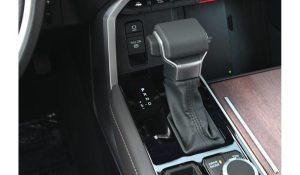
Acceleration is effortless at any speed. But especially at lower speeds, due to the nearly 600 ft.-lbs. of torque produced by the turbocharged, hybridized drivetrain. It’s really something to be able to match or nearly match moves – in a straight-line drag race – with a Mustang GT in a vehicle that can pull a Mustang GT loaded onto a trailer.
And a Mustang – though very fun for about an hour – gets hard-on-the-backside after a couple of hours. The Sequoia is optimized for long-duration drives, especially if ordered with the available massaging seats – which means buying the 1794, Platinum or Capstone trims. There are multiple massages to choose among and the only downside is that to turn the massagers on, it is necessary to tap the LCD touchscreen to access the control interface and then tap it again to start the massage. This requires taking your eyes at least partially of the road to do because you cannot do it by feel. A better interface would be a button on the console (or side of the seat) that can be operated by feel.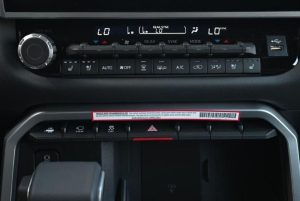
Even with the less thirsty engine, the Sequoia runs dry pretty quickly. The stats say 540 miles of highway driving range (472 in city driving) but that’s with a very light foot; if you have a heavier foot, the tank will need to be refilled considerably sooner but that’s something that could be remedied by a larger tank. The Sequoia’s holds about 22 gallons; 25 or so would be more appropriate. It’d cost more to fill up, of course. But you’d be filling up less often.
At The Curb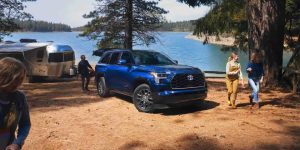
The Sequoia comes in just one (super) size – as opposed to its two main rivals, the Ford Expedition and the Chevy Tahoe/Suburban, which are available in standard length and longer-length versions.
At 208.1 inches long, the Sequoia is actually just slightly smaller than the Expedition – which is 210 inches long in standard length iteration and 221.9 inches long in MAX iteration – and also vs. the Tahoe, which is 211.3 inches long. A Suburban – which is basically a longer version of the Tahoe – is 226.3 inches long.
This means the Sequoia – though it’s still a big rig – is more likely to fit in your garage than an Expedition or Tahoe (and especially a Suburban). It’s also slightly easier to park because size – length – does matter when it comes to that.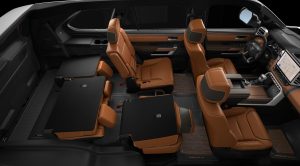
On the downside, the Toyota has significantly less space for cargo than its two main rivals. It touts 22.3 cubic feet of cargo capacity behind its third row, which is less than the Tahoe’s 25.5 cubic feet and much less than the Suburban’s 41.5 cubic feet. Total capacity with both its second and third rows down is 86.9 cubic feet – vs. 122.7 cubic feet for the Tahoe and 144.5 cubic feet for the Suburban. The standard-length Expedition touts 104.6 cubic feet; the longer MAX version ups that to 12.5 cubic feet.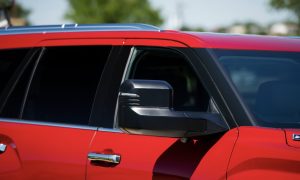
Still, the Sequoia has a lot of room for whatever you need to carry. The 22.3 cubic foot cargo space behind the third row is roomier (by far) than the trunk of any current full-sized car.
The Sequoia’s main real-world deficit is the room for passengers in its third row. There’s less there (vs. rivals) in part because the Sequoia is a little less long than its rivals, so there’s less space to work with – and also because of the solid-axle rear suspension, which takes up space under the floorpan. On the upside, the solid axle rear is simpler and tougher than the more intricate independent rear suspensions in rival models; an independent rear suspension does improve ride quality on rough roads, however.
As big as it is, it’s still not a climb to get in. Fixed running boards are there to provide a step-up if you need it, but most people will be able to just get in.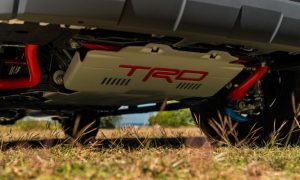
Once in, you’ll see the new LCD displays. There are two. The driver’s display and the adjacent display for the audio system and other vehicle functions. The standard secondary screen is 8 inches but Limited and up trims get a much larger 14 inch screen. Toyota did not go all-in on tap-swipe-only controls, however. Important daily-drive controls such as adjusting the stereo’s volume and HVAC settings are still actual rather than virtual. The grab-handle gear selector also feels appropriately hefty, even if it’s not actually connected to anything (everything is drive-by-wire now).
The Rest
It’s nice that Toyota lets buyers add the TRD equipment – which includes an electric locking rear differential, skid plates, off-road shocks and 33 inch tires on 18 inch wheels.
It’s also daunting just how expensive the Sequoia (and its rivals) have become. Back in 2022 – barely three years ago – the base price of the last-generation Sequoia (with the 5.7 liter V8) was $50,500. The current model’s base price – $64,205 – is nearly $15k higher. Certainly, the 2025 Sequoia offers more than the 2022 did – in terms of standard power/towing capacity and so on. And it is absolutely more luxurious.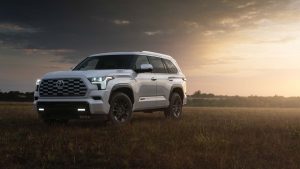
But it is also a vehicle that fewer will be able to afford. The tested 1794 model was priced out just shy of $100,000. You can imagine what the monthly payment on that would be.
The Bottom Line
The Sequoia is an impressive rig that manages to meet the government’s demands as well as what buyers demand.
Assuming they can afford it.
. . .
If you like what you’ve found here please consider supporting EPautos.
We depend on you to keep the wheels turning!
Our donate button is here.
If you prefer not to use PayPal, our mailing address is:
EPautos
721 Hummingbird Lane SE
Copper Hill, VA 24079
PS: Get an EPautos magnet or sticker or coaster in return for a $25 or more one-time donation or a $10 or more monthly recurring donation. (Please be sure to tell us you want a magnet or sticker or coaster – and also, provide an address, so we know where to mail the thing!)
If you’d like a Baaaaa hat or other EPautos gear, see here!








Sounds nice, but I’m still sticking with my 97 Suburban K2500 with a 454. It’ll still be running and towing after I’m dead.
“The Sequoia is optimized for long-duration drives, especially if ordered with the available massaging seats”
The massaging seats will relax me too much. I”ll probably fall asleep which is the last thing I need. I need something to slap me hard when I start dozing off. I just recently completed a 3,000 mile round trip journey. The farthest I got was Brasstown Bald Mtn in northern Georgia. I had to drive thru “Tail of the Dragon” TN twice coming and going.
I passed nearby your area (interstate 81 and Roanoke) and would have stopped in to say hello but I was under extreme time constraints.
I ended up in DC for some sightseeing. Not too much going on there except there was a situation on the Metro during the evening rush hour. It seems one of the passengers on the platform did not want to move to a less crowded spot. It got to be a a hot shouting match and some colorful words were spoken. Fisticuffs were avoided when the police tasered the customer. Finally after that the trains and escalators resumed after a half hour delay. I thought for a moment there was going to be George Floyd moment.
I hear you, Erio – and you ought to have stopped by! Maybe next time…
My FJ turns 19 Wednesday.
This truck will be crushed 2 or 3 times over by the time 2044 comes around.
My neighbor has a 24 Sequoia. The stock muffler makes it obnoxiously loud.
I’m not saying a new Toyota has to be pretty..
But damn.. this thing is BUTT UGLY!