

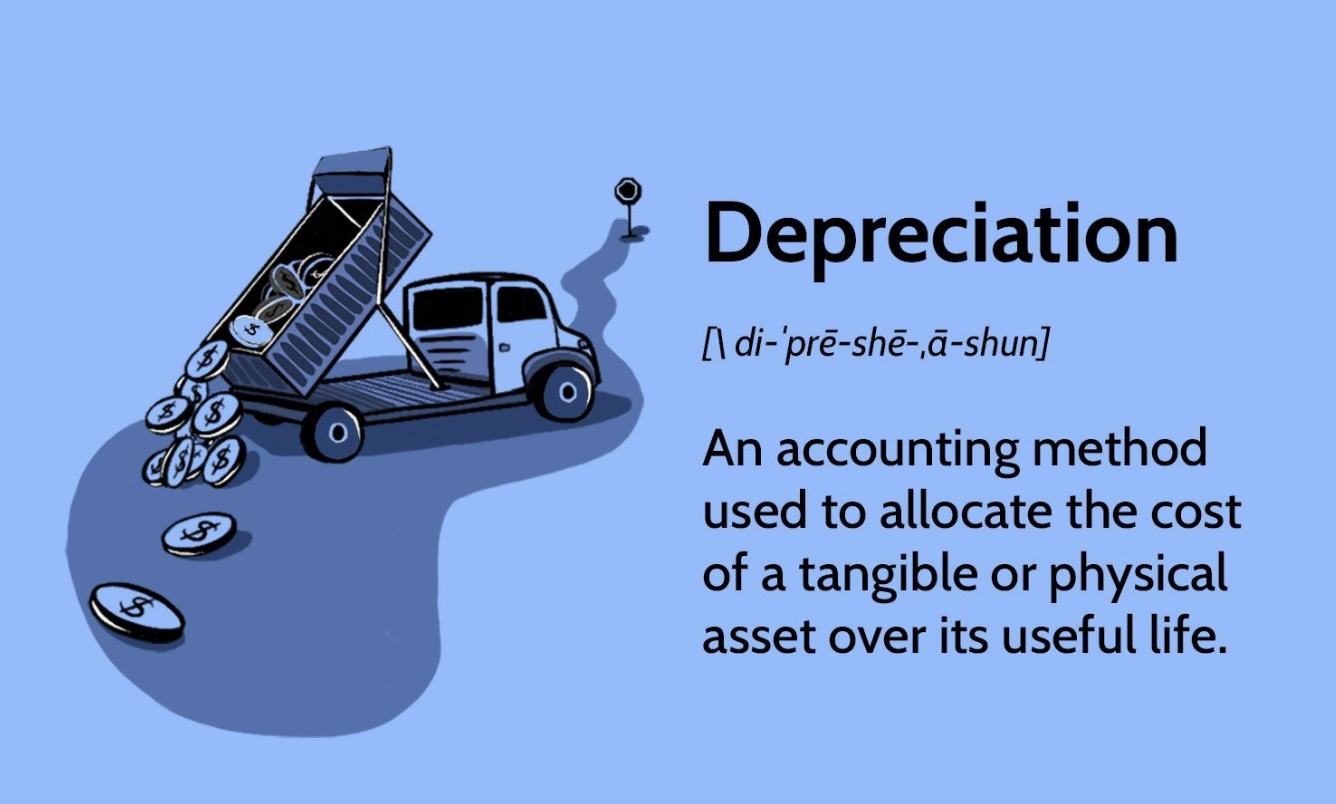

People talk about inflation – the sapping of the buying power of fiat currency – but there’s another variant of wealth extraction that deserves some attention.
Depreciation.
The term refers to the reduction in value of a vehicle over time. This phenomena isn’t new, of course. A new car becomes a used car the moment it leaves the dealer’s lot. It has less value because a car that hasn’t left the lot – that has no miles on the odometer – is newer More finely, it has not been used. Its tires and brakes and everything else – down to the oil in the engine – are all brand-new. The moment the vehicle is put into service, things begin to wear and tear that is part of the reason why the car loses value.
What’s changed is the amount of that loss – which is a function of what people are paying for a new vehicle. How about a loss of about $20,000 over five years? That’s how much poorer you are, today, if you’d bought a new Honda Pilot back in 2020.
CarEdge says a 2020 Pilot – which they use as an example of crrent trends – has lost just shy of half its original value, or about $20,000. This does not count the losses incurred every month over the course of those five years making monthly payments on the Pilot. Given the Pilot’s base price – around $43,000 – the monthly payment would be around $600. So, over a five year stretch, the money spent on the depreciating Pilot would amount to $36,000 and by the end of five years, the Pilot will have also lost about half its original value.
Such a deal!
What’s particularly harrowing about this deal is that we’re talking about a Honda – and a Pilot.
Honda is a brand that has lower depreciation, on average, than other brands. And the Pilot is considered among the best (i.e., most reliable) models Honda sells – probably because it (and its pickup-shaped variant, the Ridgeline) is the last Honda that still has Honda’s superb 3.5 liter V6 engine, rather than a turbocharged four cylinder engine.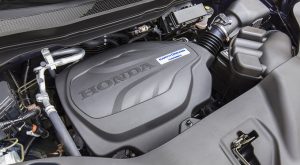
Just wait until it does.
Then we’ll see some truly harrowing depreciation – because undersized, under-pressure engines are not likely to prove as durable as appropriately sized (in relation to the size of the vehicle) engines that are under much less pressure because they do not need to be turbo-boosted to make up for the fact that they are otherwise too-small for the application. When that happens, the Pilot’s (and Honda’s) rep for value will wane and thus depreciation will wax.
There is no reason – other than compliance pressure – for putting these small four cylinder engines in 4,000 pound vehicles that – in pre-compliance times – would have come standard with a larger six cylinder engine. But they are being put into pretty much all of them. There are a few remaining stragglers – the Pilot/Ridgeline being among the few. And even the Pilot loses half it value over the course of five years.
Imagine how much it costs to own a make/model that’s not as blue chip as the Pilot over the course of five years. Holy mackerel, says the Kingfish!
Is there an upside to all of this? Yes, with some caveats.
You could save a small fortune – about $20,000 – by buying a used 2020 Pilot in 2025 and because it is a Honda Pilot (and is powered by Honda’s durable 3.5 liter V6 engine) the odds are good you’ll be able to drive it without major problems for at least the next ten years. Even if it loses half again its value over that time span, it’ll have cost you thousands less in depreciation because you can buy a used 2020 Pilot today for about half what it costs to buy a new one. Also, you won’t be paying $600 per month over the next five years to pay for it, either (unless you have terrible credit and have to pay usurious interest).
The downside is that good used vehicles like the Pilot are becoming harder to find – and will become harder to find over the course of the next few years on account of the fact that good new vehicles like the Pilot, equipped with engines like Honda’s excellent 3.5 liter V6, aren’t being made anymore. This is likely to include the Pilot – perhaps as soon as next year. Because the same compliance pressure that resulted in the V6 being pulled out of other Honda models that used to offer this engine, like the Accord sedan (in favor of a turbo/hybrid-augmented small four) is almost certainly going to result in the same being done to the Pilot – and it Ridgeline sibling.
It has already been done to just about everything else (viz, the just “updated” Kia Telluride, which was one of the few crossovers still available that came standard with a V6; the “updated” model has a turbo/hybrid-augmented four).
Buying a used example of one of these compliance machines to avoid the depreciation hit may end up costing you even more – if you have to spend $10k (yes, really) to replace a tired-out, too-small turbo/hybrid-augmented small four.
Best bet? Grab – and hold onto – a good used vehicle that was made before compliance pressures raised the cost of everything new to ridiculous levels and rendered them less long-term durable as part of the deal.
If it used to come with a V6 and now comes with a turbo/hybrid-augmented four it’s probably a good idea to let someone else pay what it’s going to cost.
. . .
If you like what you’ve found here please consider supporting EPautos.
We depend on you to keep the wheels turning!
Our donate button is here.
If you prefer not to use PayPal, our mailing address is:
EPautos
721 Hummingbird Lane SE
Copper Hill, VA 24079
PS: Get an EPautos magnet or sticker or coaster in return for a $25 or more one-time donation or a $10 or more monthly recurring donation. (Please be sure to tell us you want a magnet or sticker or coaster – and also, provide an address, so we know where to mail the thing!)
If you’d like a Baaaaa hat or other EPautos gear, see here!










The upside of buying a NEW vehicle (and let’s leave aside the desirability of today’s rides for purposes of this discussion) is that you KNOW how it’s been “ridden” from the get-go and that you can assure it’s been properly maintained from “infancy”. So the dreaded depreciation is the price of having that assurance that your vehicle hasn’t experienced more nuts behind the wheel than there are in the engine. It may be worthwhile IF you plan to hang on to your new acquisition until the wheels fall off. “May”, because in the days of yore, it was usually either a wreck, which can’t be planned for, only insured against, or a tired engine, which proper driving and diligent maintenance USUALLY (but not always!) kept from happening for 150K to 200K miles, and in the case of legendary durable inline sixes like Mopar’s Slant Six or the Ford Truck Six, 300K miles wasn’t unheard of before a rebuild or replacement short block was needed. But for about the past ten to fifteen years, vehicles have been equipped with complex assembles and computers, most designed to be assembled outside the vehicle, and in the case of most cars and crossovers, simply LIFTED into place on the assembly line, meaning the traditional method of yanking an engine by renting (or, if you do it often enough, purchasing, they’re not all that expensive) a “cherry picker” (engine hoist) isn’t viable, either. So the diligent maintenance you perform from the very beginning likely gets the vehicle through the MANUFACTURER’s warranty, on the engine and drive train (most “bumper-to-bumper” warranties go three years or 36K miles, which, BTW, includes those complex electronics), but from that point on, until you get the expected miles and years out of it, you’re “rolling the dice” that whatever goes wrong, you’ll be able to afford to fix it, or you or the shop can even obtain replacement parts, by “hook or crook”!
My 1998 Ranger is now at 290,000 miles. I have nothing but *appreciation* for that kind of longevity. And when the time comes, I will rebuild the engine and keep on driving like it’s 1999.
Happy New Year!
That works out to roughly $933 per month average (payment + depreciation). That seems… high. Plus new car insurance will be higher. I’m embarrassed to admit how many ‘new’ cars I’ve bought. The last one was in ’08. And that is the last new car I will ever purchase. You can find great deals on used cars. My last 4 purchases have been used. As new cars get more and more expensive then more people will buy used… which will drive up used car prices. What a wonderful world.
I am reminded of the criminality of the ‘cash for clunkers’ scam…
I saw a 76 firebird for sale 80k miles $22000
Can’t testify to the condition but the pics looked ok
It’s interesting….I’m sitting here watching the value of my 2014 grand cherokee with 74,000 miles match and start to dip below my 1986 k5 blazer. I bought it for $2700 as a college kid in 2009 working a mall security job. The blazer is still my primary vehicle though for myself, my stuff, and firewood transport, and is generally more fun. The GC is for road salty days or moving women and delicate furniture around.
A few years ago, due to problems in getting the economy re-started in wake of all that panic over the “Coof”, new vehicles were in short supply, and used ones, especially low-mileage “honeys”, jumped dramatically in value. This actually worked to the advantage of #2 son while he was in Nevada, as the job situation there just wasn’t working out for him, and he’d recently bought a 2020 VW Jetta. Nice car, 6-speed stick and all, but realizing he’d soon need to look for work, and figuring out that Southern Nevada just wasn’t the place to be after all, he had a chance to re-sell that vehicle back to the dealer and pocket a few grand as well! That’s almost NEVER happened even with “collector” cars, let alone a mass-produced item. So he took the deal and just got by for awhile with his 2006 Dodge Dakota, still quite useful, but definitely its best days are behind it. I helped him move what stuff he was willing to take to Texas with him when he found a better job in the Metroplex, and he’s acquired his “dream” car, a 2021 “Moose-tang”, the so-called “Fighter Pilot” edition or some BS like that.
At “aboot” the same time, having had my Ford (con)Fusion for 2-1/2 years, I got that “new car bug” and was looking at compact SUVs, like a Ford Escape. It’s not that I couldn’t afford one; hell, with the “gal-li-mony” (alimony) down to a monthly truck payment (I’d rather have the truck) and child support but a bad memory (though I still “supported’ my “little goil” while she was on her Mormon mission), the cashflow was far more comfortable than my several years of post-divorce penury had me accustomed to. Still, the Escapes the dealer was proferring were likewise marked up and they were unwilling to budge, although they offered as much as I’d paid for the Fusion in the first place in late 2019! I ran the numbers and realized that in effect, I’d owned the car for about 30 months, and would have been effectively leasing it for nearly $500/month! Now who in the hell would sign up for a “deal” like THAT? As I had an offer from a NorCal credit union to refi my Ford Credit car loan (reducing the interest rate by a third), and it gave me the flexibility of reducing the minimum payment down likewise, I went that route. I just made sure I put the same $500 per month into the Credit Union, and every six months, I’d have the accumulation usually to paid down the principal, though it also served for what in effect we old farts used to term a “Christmas Club” savings account. Now it’s mine, mine, all mine! (ala Daffy Duck…).
My ‘03 Corolla is just shy of 100k miles and still runs great. I hope to keep it going until I can no longer drive, which being 78 probably isn’t all that far away. The biggest obstacle is the crazy amount of road salt they throw around here, had a couple puny 3” snowstorms already and there’s more salt on the road than there is snow.
The amount of salt they are laying down now is off the charts vs about 5+ years ago.
Gotta be liability issues.
This would be a productive issue for Environmentalist’s to take on. Or maybe they would get it all banned, haha………. Ok with me.
Oh, it was an issue in Seattle until a transit bus lost control downhill. They literally would not spray or salt due to perceived harm to the already salt water Puget Sound / Elliot Bay. From discussion back in 2008:
“To hear the city’s spin, Seattle’s road crews are making “great progress” in clearing the ice-caked streets.
But it turns out “plowed streets” in Seattle actually means “snow-packed,” as in there’s snow and ice left on major arterials by design.
“If we were using salt, you’d see patches of bare road because salt is very effective,” Wiggins said. “We decided not to utilize salt because it’s not a healthy addition to Puget Sound.”
“Please come to Boston, for my ’03 Corolla”…doesn’t quite have that sentimental ring, but I can live with no tunes and driving a well-maintained, gently-treated reliable ride.
> Best bet? Grab – and hold onto – a good used vehicle that was made before compliance pressures raised the cost of everything new to ridiculous levels and rendered them less long-term durable as part of the deal.
…and this is why I picked up an ’06 Tundra (with a V8, of course) about a year and a half ago, instead of something newer.
Just this past weekend, as I was about to pull away from a drive-thru window, the guy on the other side of the window asked me if I’d be willing to keep him in mind if I ever decided to sell my truck. I told him I had no plans to do that because older trucks in good condition are about as rare as hens’ teeth.
It’s going to be a double wammy for the middle class and lower that buy used cars. Compliance components/engines and tech that will cost a small fortune to keep the older cars running. If you live in a state that has inspection, you won’t get through the inspection if any safety or emission lights are on.
This is why Cuba is the model for what our (((legislators &government))) want to do to the mainland USA and the rest of western civilization.
A cottage industry will arise to keep vehicles running until they classify for antique status, when safety and emissions requirements expire.
And since each state has different laws for that, look for our (((overlords))) to end the antique exemptions.
My soon to be 26-year-old Sierra blue booked for $6000. A few years ago, a gentleman at the gas station came up & offer $5000 cash on the spot. While it has depreciated in value according to the immutable laws of accounting, its value to me means that it’s irreplaceable. Oh, I can afford a new truck but I ain’t paying that much for one. $6K isn’t even 10% of a new equally equipped truck.
Yes. Even though my 2002 Silverado has 258,000 miles on it, spending $3,820 for a rebuilt Jasper transmission last month was a pretty easy decision to make. I wouldn’t want a new truck anyway, what with all their GPS and data logging (and transmitting) spyware, LCD and cameras and such techno-bling, nanny driver assist (sic), etc. Wouldn’t buy one even if I inherited forty-leven million dollars.
I’ve knocked around the idea of getting a Jasper engine. Are you happy with it?
Jasper is a long established company but it’s going to be hit-or-miss. Back in the 80s and 90s they were known to be pretty much junk but they have improved since then.
I personally recommend doing a rebuild yourself if you can so you can control the components used and know the tolerances used.
However, if you or your mechanic must have an off the shelf solution Jasper is probably the better option.
Some Jasper engines will run fine for years, some come from bad batches or can be types that Jasper doesn’t do well. Your standard domestic V8 and V6 they do pretty well. Import and I4 engines they don’t.
If you’re looking to get an engine as insurance to stash away I’d get a factory crate engine, if that’s still an option for your vehicle. It’s not the cheapest option usually, although you may be surprised, but it’ll be the most likely to be right short of having an actual machinist doing the work.
Only 3 weeks in, so no long-term reliability info yet. Shifts, feels, and sounds just like it should. Jasper’s 3-year warranty supposedly includes labor too, since I had the work done in a Jasper-approved shop.
Eight years ago I had the original 4L60E transmission rebuilt for $1,600 out the door (labor and everything). It ran fine for several years, but died (3-4 clutch pack failure) after only 60,000 or so miles. I chose to get a Jasper rebuilt this time only because my trusted mechanic (a former Chevrolet dealer service technician) recommended it.
Jasper’s online reviews are all over the map — especially for their engines.
My son recently sold his 2016 Sierra. I called it “The Jaguar” because it seemed to be perpetually in the shop or needing some repair or other. He liked it because it had a full-size bed that he could put his and his friends dirt bikes in, and he took it off-road (“mudding”). Eventually, it needed a transmission (I believe he also got a rebuilt Jasper transmission). So he got that done, and then went dirt biking and towed his girlfriend’s dad’s side-by-sides, and then found that the rebuilt transmission was having problems (“but it’s rated to X pounds towing…”). Now he has a Toyota Tundra 1794 edition, nice truck, not “lifted,” and gloriouski, he’s getting along OK with the short bed. But he’s learned his lesson about GM products.
That’s the distinction between “book” value versus intrinsic value. That ’06 GMC Sierra serves as transportation and the ability, should you wish, to do WORK with it. Also, you don’t forgo “opportunity cost” of the money you spend on a down payment and recurring monthly payments by unnecessarily replacing the functional vehicle that serves your needs and wishes adequately. Dave Ramsey would be “pleased” with your choices.
But I’m interested in that ‘1794’ Toyota Tundra…preferred ride of the Tokugawa Shogunate, I take it. Yes, those older Toyota pickups and “4-Runners” are worth their weight in PLATINUM. Anyone that has one should garage them, or at least keep them locked in the back yard when not being driven, to avoid theft and parts robbery.
‘appropriately sized engines’ — eric
This innocuous-sounding phrase conceals multiple cans of worms.
In the Before Time, three generations ago, many vehicles were made whose top speed was in the vicinity of 60 mph — the VW Bug and Microbus being a couple of examples. Today such badly underpowered vehicles are considered unusable on a freeway.
At the same time, though, the specific output of engines has roughly tripled. Flathead engines, still fairly common in the 1950s, never were going to achieve good volumetric efficiency, owing to their suboptimum valve location. Since then we’ve progressed to overhead valves, variable valve timing, fuel injection of various flavors, and now turbocharging.
It’s the latter that gives pause. Turbocharging is inherently high-temperature, harsh service. A typical automotive turbocharger lasts 100,000 to 150,000 miles, says AI. Then, hilariously, the AI bot recommends ‘gentle driving,’ meaning not using the boost you’ve got on tap.
From a manufacturer’s perspective, one supposes, turbos are great: they last as long as the warranty. Then they croak. And at least some of those turbo-equipped vehicles won’t be repaired. Winning!
Lets not forget if you live in an area that sprays calcium chloride or salt on the road or you live on the coast get your car rustproofed because even a minor rust repair will exceed the cost of the rust proofing you skipped out on and fasteners come out easier when they’re not rusty as a bonus.
Been doing this to my truck 2x a year just to make sure i get everything
$10,000 to replace a motor?!!!?
Wow. …My, how we’re Not better off with, technology.
“Make. go, fast”.
With labor costs being in some places over two hundred dollars an hour and depending on the cost of a new compliance engine (because I’ve heard that the newer engines are not designed to be rebuilt); $10K might be a bargain.
It’ll be more than that. I used to work in a Toyota dealer as a mechanic years ago. A 22RE replacement in 2005 for a 85-95 to era truck was $15K. The engine threw a rod and cracked the block.
The parts alone cost nearly $10k back then, which was a new short block (about $4500 alone brand new from Toyota), rebuilt head, new water & oil pump, timing components, reused as many ancillaries as possible. We replaced the radiator and clutch while the engine was pulled.
The book for an engine replacement was 17 hours and we quoted an extra 8 hours to assemble the engine since by that time there were no factory long blocks available for those old trucks. We did the clutch R&R labor for free. I have to think now 20 years later that job would be twice that.