


One of the many admirable – appealing – things about manual transmissions is that they usually last longer than automatic transmissions, which they do because they’re just a box of gears in metal box filled with oil. They’re basically pretty simple. Automatics have pressurized hydraulic controls and electronics that add failure points that manuals – being mechanical things – lack.
But there is one thing about manuals that everyone who owns a vehicle so equipped will eventually have to deal with if they own it long enough. That thing being the clutch.
The clutch is the thing that physically connects the spinning crankshaft – via the spinning flywheel – to the transmission, which in turn turns the wheels that cause the car to move. Because it is a physical connection, that connection has to be disconnected during gear changes and whenever the vehicle isn’t moving – unless you put the transmission in neutral – because the engine is not strong enough to turn the Earth. The resistance will stall the engine. And changing gears without momentarily interrupting the connection is hard on the transmission (if not timed exactly right).
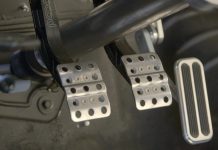
That’s why it is necessary to push in the clutch pedal when the vehicle is not moving and the transmission is not in neutral – in order to allow the engine to keep on running. Pushing the clutch pedal in disengages the clutch – which is a disc with little friction pads on it that are made of a material similar to brake pads.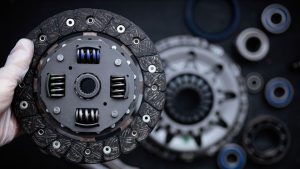
When you let the clutch pedal out, the clutch reconnects the engine to the transmission – and the vehicle moves. Shazam!
Of course, this entails wear – just like your car’s brakes wear over time from slowing down the car. Eventually, you will have to replace the brake pads – and the same goes for the clutch. But you can extend the life of the clutch, just as you can extend the life of brake pads. There are people who manage to drive 200,000 miles or more before they have to replace the clutch. These are drivers who are masters of the art of clutch preservation.
Here are some of the things they do – and don’t do.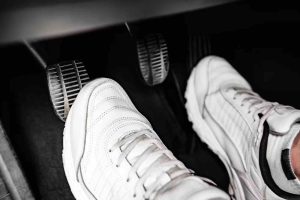
Avoid riding the clutch –
This one’s obvious. Try to avoid partially depressing and holding the clutch pedal partially in as you’re trying to get the car going. People learning how to drive a manual-equipped cars typically do this to avoid stalling the engine. The sooner you learn how to engage the clutch smoothly and quickly, the better it will be for the long-term survival of your clutch.
Releasing the clutch too quickly will shorten clutch (and throwout bearing) life – and cause coffee spillage. On the other hand, trying to avoid spilling any coffee by taking too long to release the clutch as you get going will accelerate wear of the friction material that exerts the clamping force because you’re literally burning up the clutch’s friction material; you will smell it if you do this.
There is a fine art to easing out the clutch without riding the clutch. Once mastered, you’ll be a smoother driver and your vehicle’s clutch ought to last longer. 
Avoid coming to a complete stop –
The majority of clutch wear occurs getting the car going from a dead stop. That and in between gear changes.
This makes sense when you think about it. The clutch has to “grab” the flywheel and establish that physical connection between the engine and the transmission in order to get the vehicle moving. This disconnect/re-connect also happens during each upshift and downshift.
The typical vehicle weighs around two tons. That’s a lot of weight to get moving. Driving off smoothly necessarily entails some slippage. You can’t eliminate it. But if you reduce the number of times you have to start from a complete stop, you can greatly reduce wear because the clutch wears less when the car is already rolling a little bit when you let out the clutch.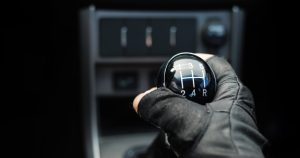
Good drivers look ahead and drive accordingly. If the light up ahead is red, why rush up to it? Let inertia carry you forward and – ideally – still be moving when the light turns green. Even if the car is just barely moving, you’ll impart less wear on the clutch when you let it out because the vehicle is already in motion.
Try not to shift as much, when you don’t need to –
Each time you engage/disengage the clutch, as during the process of shifting up or down, there is wear as the clutch surface grabs the flywheel when you release the clutch pedal. This can be reduced by shifting less often, as by going from third to fifth (skipping fourth) when you’re up to speed enough to do that without bogging the engine. “High performance” downshifts and upshifts are fun – but they’ll also shorten the clutch’s life.
Speed is indeed a question of money – how long do you want to go?
Don’t keep your foot in it – 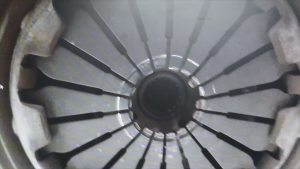
When the car is stopped, try not to hold the clutch pedal down as this exerts continuous pressure on the “spring” portion of the pressure plate, which is part of the clutch system. The pressure plate is what physically disengages the clutch when you push down on the clutch pedal.
Instead, shift the transmission into neutral and then let the clutch out until it’s time to get moving. This eases the pressure on the pressure plate – which isn’t the clutch, but if you need a new one, you’ll have to do pretty much the same work to get to it in order to replace it (because the transmission has to come out to get at it).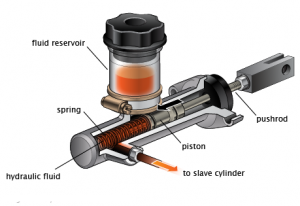
One last thing – which also isn’t the clutch, per se. Modern vehicles – those made since the ’80s, roughly – have hydraulically assisted clutch pedals rather than just pedals, linkage rods and springs. There is a thing called the slave cylinder, which works like the master cylinder in a brake system – and just like a brake system’s master cylinder, if the fluid is never changed, the master cylinder will fail sooner. When it does, the car will become undrivable because the clutch pedal will go to the floor and you will have a time keeping the car from stalling out when it’s not moving – without abusing the transmission.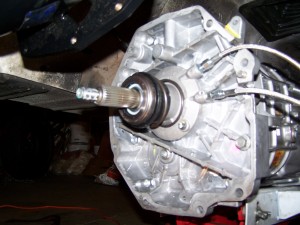
Changing out the system’s fluid – bleeding it, as you would a brake system – is the preventative.
Check the fluid reservoir at least as often as you check the fluid in the brake system’s master cylinder. They use the same fluid and it should look clear. It will turn progressively darker over time.
Don’t let it turn black.
Regular fluid changes – at least once every three or four years – are particularly worth doing if your vehicle is one that has the clutch slave cylinder mounted inside the transmission – because if it fails, the transmission will have to come out to replace it.
. . .
If you like what you’ve found here please consider supporting EPautos.
We depend on you to keep the wheels turning!
Our donate button is here.
If you prefer not to use PayPal, our mailing address is:
EPautos
721 Hummingbird Lane SE
Copper Hill, VA 24079
PS: Get an EPautos magnet or sticker or coaster in return for a $25 or more one-time donation or a $10 or more monthly recurring donation. (Please be sure to tell us you want a magnet or sticker or coaster – and also, provide an address, so we know where to mail the thing!)
If you’d like a Baaaaa hat or other EPautos gear, see here!







My 2007 Mazda SP23 6 speed – over 250k, still on the original clutch and she still pulls like a Trojan when I need to give it a bit o foot on the go pedal.
One bad habit you left out is using the clutch to hold a car stationary on a hill. Other than that, your article describes my driving habits.
I thought about trading her in on a new one several times, but I don’t like cars with screens, menus, SIM cards that spy on you and onboard computers that second guess what you’re doing – like having a nervous mother-in-law as a back seat driver.
Excellent, Lizard!
An, I agree re keeping a car like theone you have rather than buying a new one with all the “features” almost none of us asked for.
I used to own a Jetta TDI. Clutch failed at 535,000. Owners manual said if driven correctly the clutch should last the lifetime of the car. So I sold it.
My 08 Ranger FX4 still has its og clutch and trannie at 225k and counting. I used to work on class 8 trucks seen plenty of Mack road tractors go half a million miles are more factory clutches. Save the Manuals.
In Mexico and Central America, the majority of vehicles have manual transmissions. Many cars that aren’t available with a manual in the US have a manual (and no backup camera, manual windows, etc…) in those places. That’s in addition to all of the cool models that they get but we don’t (Isuzu D-Max, Toyota Hiace, Hilux Champ, etc….).
Hi Plainview!
Fred Reed – some will recognize the name – encouraged me to head South of the Border many years ago. I maybe ought to have listened.
Mrs. Steve goes through a clutch in under 80k. My pickups (2000 Silverado, 350k, ’88 Ram, 220k) are still factory. No, I don’t let her drive them.
I was going to avoid going there, but yes. Chicks and clutch, nah not worth it. Tried to teach The Commander how to drive my 5 speed Alfa that lasted about 7 minutes.
Even my 46 y.o. daughter agrees now:
“a guy can’t own anything nice with women and kids around”
Dad only drove dad’s car. “Need a car, ask your mother or get a job & get your own”
Since 1989 my motorcycles have been sequestered from the family, locked shed they don’t know where the key is. 1989 my pristine show quality Virago was in the garage, daughter trying to haul her kite out of the rafters resulting in debris of many kinds falling luckily around the bike. Got a shed kit that weekend. My Firebird parked in the driveway, mistake. Wife backs the Nova out of the garage, creases the Firebird door with the Nova chrome steel bumper. And on it goes decade after decade.
Apologies to Raider Girl you’re literally 3 in a 1000, my 7 decades of observation indicates that’s the ratio of female caretakers vs destroyers.
I love them dearly but it’s like a tornado of stuff to fix constantly with mine. They simply vibrate at an out-of-tune wavelength when it comes to machinery.
It seems more oblivious than intentionally abusive. The way they can be so unconcerned, that things are just going to work, is freeing, though. I tend to worry about every new smell and sound that is 99% of the time really not immediately important enough to distract from the moment.
That’s the ying-yang. They make sure we put the tools away once in a while to enjoy our stuff and in exchange we hope they tell us when something changes well enough ahead before it blows up.
The first time I heard this term was just after my buddy’s wife wrecked their 2 year old Camaro for the third time:
“Frankly Sparkey, if they didn’t have a (kitty cat for female part) there would be a bounty on them.”
Heh. So long as we’re going there I’ll quote my old Scottish buddy,” Ye canna trust anything that can bleed fer a week and live…”
I wince every time I ride with Mrs. Steve and she doesn’t even come close to matching gears, but instead revs the engine and slowly lets out the clutch, burning a thousand miles off the lining.
I learned to drive on a ’39(?) Chevy deuce and a half with hi-lo ax. No synchromesh. Dad worked with us until we only needed the clutch for getting started and double-clutching. We eventually got good enough at gear matching that we could downshift without a clutch, too, only needing it if we screwed up.
It’s uncanny.
“How long has the check engine light been on?”
“I don’t know, a few weeks. I looked under the hood and checked like it said. The engine was still there.”
I’m just proud she remembered how to pop the hood from the time I showed her how not to put windshield washer fluid in the crankcase again.
“They really should warn you.”
“You mean like put OIL on the cap where you put oil?”
“Oh, I thought that said 710!”
And she’s not even blonde.
Noooooo … !! Thankfully mine never could figure out how to open the hood, and really never wanted to.
Good stuff, Kyle!
I needed a laugh to offset everything else!
That is a dam shame Steve… My wife unit has never wrecked a clutch in 30 years of marriage.And we only drive manuals.
See my 3/1000 statement.
The car market has been ganged raped by big government pushing the CO2 warming hoax. One good thing Trump did was to challenge this orthodoxy driving unnecessary changes in design to cars to fight the CO2 increase. CO2 is a life gas, without CO2 we would all die.
Colorful chart illustrating the composition of the atmosphere – man made CO2 is 0.0016%
https://i.imgur.com/SBXPeHj.jpeg
What the government did was take a perfectly functioning car market and make a mess of it, cause gigantic mal-investment in EV’s, push radical transmission designs which were costly and prone to failure.
There is no reason to abandon the clutch design, and if sanity is ever restored then the manual clutch should be restored because of the great advantages it offers. Personally, I would like to see cars being simple again, none of this electronic shit, basic transportation, a small EFI engine, a 5 or 6 speed manual, and skinny tires. What the hell is with these fat assed tires? Nearly every car has tires with 55 or 65 aspect ratio? Why? Even hybrids and electric cars have fat tires. Insane. Anyone who wants high fuel economy knows that high pressure tall skinny tires is a huge improvement. You wouldn’t ride a bicycle with huge fat car tires would you?
Here’s the connection between the clutch and CO2. The clutch is under frontal assault because of a fake climate narrative that CO2 is warming the planet.
2 days ago Cuba got it first recorded freezing temperature.
But according to the fake CO2 warming theory, the planet is warming, in fact last year at the climate summit Al Gore said the oceans were boiling. Well, if the oceans are boiling then why haven’t all the Cubans been cooked to death yet?
Iguanas Fell From Trees During Florida Cold Snap—and the Numbers Are Staggering
Government and private pest control services have collected roughly 8,000 frozen iguanas from across the state.
Published February 6, 2026
Morning, Jack!
My area has had – is having – the most vicious winter we have had in at least 15 years. Not huge snowfalls but biting, extreme cold and sever wind. As I type this, I am expecting the power to go out any second and to have to go outside to start the generator. The wind is gusting fiercely – again – 30 MPH and higher and it is 17 degrees without the wind chill headed for a low of 11. I have burned through more firewood in the past two weeks than I usually do in two months.
I bought my manual Firebird about 4 years ago, and at the time, hadn’t driven a manual in about 20 years. I had to relearn on the fly. So far, the clutch is still in good working order, even after I abuse it daily.
Manual transmission are basically gone today it’s sad cant order a new car like the old days I’m thinking of getting a new car but they don’t speak to me like the class cars so not sure what to get and pricing is completely nuts half of them have plastic oil pan and value cover and tiny lawn mower engines.
I agree, Angelo –
I intend to keep my ’02 Nissan indefinitely. If I ever have to replace it, I will replace it with a totally computer/electronics-free vehicle from the Before Time, like my Trans-Am.
Speaking of which: I am starting the awful (for me) part. That being replacing the factory pedals. It entails getting at a very hard to reach assembly way far up under the dash and my big self doesn’t fit so good under there!
Remove that front seat!
I was planning on keeping my old car but it’s costing as much to keep fixing as a new car payment and it’s physically not fun got bad joint pain so laying on hard cold floors make it much worse but I’ll probably fix the current problems try and get a little more time hopefully car market will go way down by then.
Hi Angelo,
I hear you. Maybe you could get a new old car? I mean, something better than what you have but not as bad as what you’d get if you were to buy new. Keep in mind what the mafia will charge you, too, if you buy a new car.
Another piece of advice for manual transmission cars is; do not rest your hand on the shifter while driving. Common for people to rest their hand especially in second gear which wears the synchromesh gear. Only touch the shifter while shifting then leave it alone.
Moto Guzzi bikes are pretty much the same as a car- dry clutch at the back of the engine connecting to the transmission. At least on the old tonti frame ones to replace it, you disconnect the lower half of the frame where the engine and trans sit and open the bike up like a clam shell, lifting the front fork and top frame half up and over the engine. Very odd and overly labor intensive for a motorcycle clutch replacement. But also easy to do. Normally, its just an engine or primary side cover you remove and its all there.
Ninety percent of today’s drivers would be as mystified by Eric’s article as I am at the instructions for driving a Ford Model T:
‘To drive a Ford Model T, forget everything you know about modern cars. Use the handbrake as the clutch and top gear.’
https://www.youtube.com/watch?v=XfqtX7ruAwc
What the hell does the handbrake have to do with the clutch and gear shifting? Somehow it made sense to ol’ Henry …
There’s an auto museum on Route 66 near me that gives Model T driving lessons. Would be a fun challenge!
It doesn’t make sense to us now but it was very clever for the time.
https://www.thesahb.com/technical-talk-14-the-ford-model-t/
It’s struck me as sort of a combination of modern cars, motorcycles, winches (simple to imagine planetary gears) mixed with how horse buggies were operated.
What is cool is how involved you are operating it. We think we’re connected with 3 pedals, a shifter and steering wheel but in a Model T you and the machine had to really be in sync.
That makes no sense, I’ve owned and driven a model T. The hand brake lever has a cam on it which (if in good condition and properly adjusted) holds the hi/low shift pedal in the halfway(neutral) position.
To drive, you start the car (hand brake set, hopefully holding at least one brake and the neutral position) by cranking or if you’re high falutin’ by stepping on the starter switch with your heel.
If the hand brake is damaged or out of adjustment, hand cranking will start the car and it will promptly run over you. Or sometimes pin you to the side of a nearby building.
Once running, hold the shifter pedal in that halfway/neutral position, release the hand brake, and push the shifter pedal all the way down, which engages low gear.
Once you’ve gotten rolling, and have adjusted the spark advance and throttle levers on the steering column, you can release the shifter pedal and let it rise all the way up to high gear. Now you’re motoring, up to a blazing 45 mph, at least until your thermo-siphon cooling system blows its top and you have to take the bucket out of the back seat and top up the radiator from a nearby creek.
The middle of the three pedals is your brake, a single band which will slow you to a stop in a half a block or so. In an emergency, stand on the middle pedal and simultaneously yank back on the hand brake.
Finally, to back up, especially if on a steep hill where your gravity fuel flow fails, you must hold the shifter pedal in neutral, while modulating the middle brake pedal with your second foot, and press the reverse pedal all the way down with your third foot.
For a real fast stop, stand on the brake pedal, yank the hand brake, and step on reverse pedal. The results will be amazing, especially to bystanders unfamiliar with the intricacies of English language invective.
I really miss mine and someday will probably get another. Loads of fun. Chicks dig it, especially the scars.
I’ve never replaced a clutch on a car or truck. Done several of ’em on farm tractors tho.
Stellantis NV shares crashed the most on record in European trading after the automaker disclosed a 22-billion-euro (about $25 billion) charge tied to its failed EV strategy.
I guess people really do hate EVs.
https://www.zerohedge.com/markets/stellantis-shares-crash-22-billion-euro-charge-tied-miscalculating-ev-demand
I drove an 88 Ford ranger 215,000 miles on the same clutch before selling it in working order. My mom had drivers education in a car with a clutch and she was told she will not pass if she couldn’t start the car smoothly. Clutches are simple and durable and incidentally, fun to drive.
That’s really saying something. The clutches on those 1st gen Rangers was kind of small, 8-7/8″, behind the FM146.
When I still had mine I always wanted to do the M5OD swap but the truck rusted to pieces before I could ever afford to do it.
https://www.therangerstation.com/tech/fm146-to-m5od-and-complete-clutch-upgrade/
My first and last major clutch problem was caused by street racing a 3/4 ton GMC truck back in the 80’s. Luckily it was corporate’s so they paid :). Fun times and no they never found out why it failed.